Phellodendron Bark Bulk Supply: Color, Bitterness, and Origin
Phellodendron Bark is easy to recognize and surprisingly easy to buy badly. This procurement guide explains why yellow color and bitterness matter, why Phellodendron chinense and Phellodendron amurense should not be treated as anonymous substitutes, and what bulk buyers should demand from suppliers before approving a shipment.
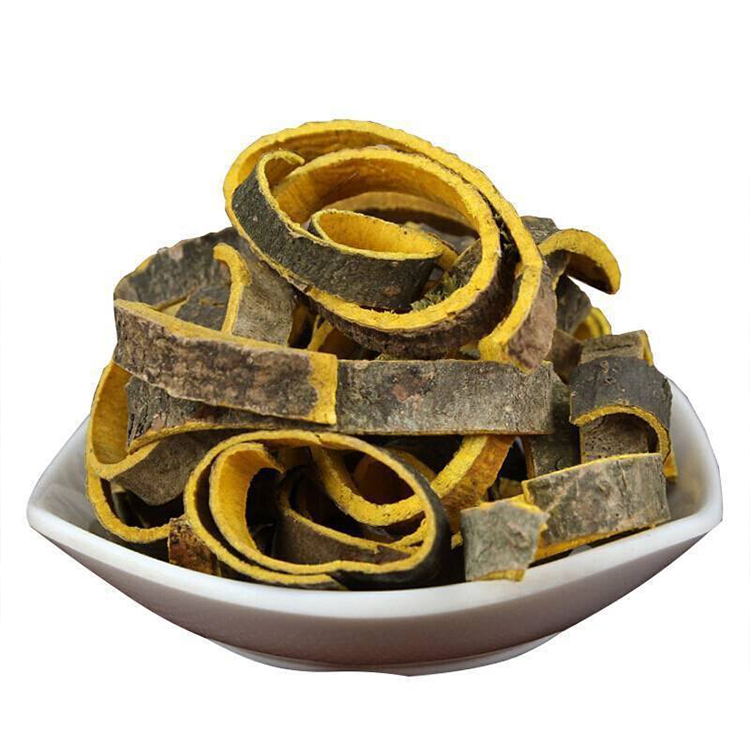
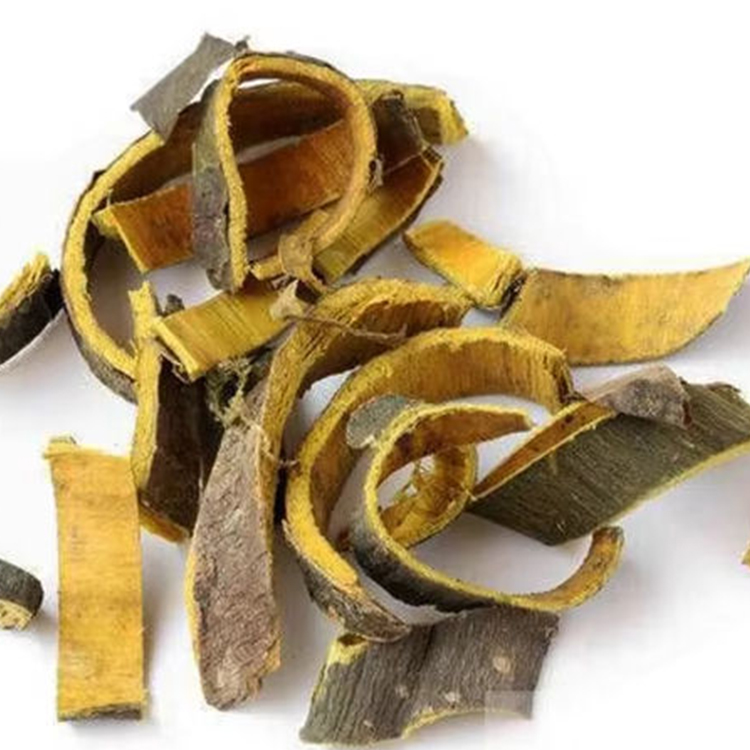
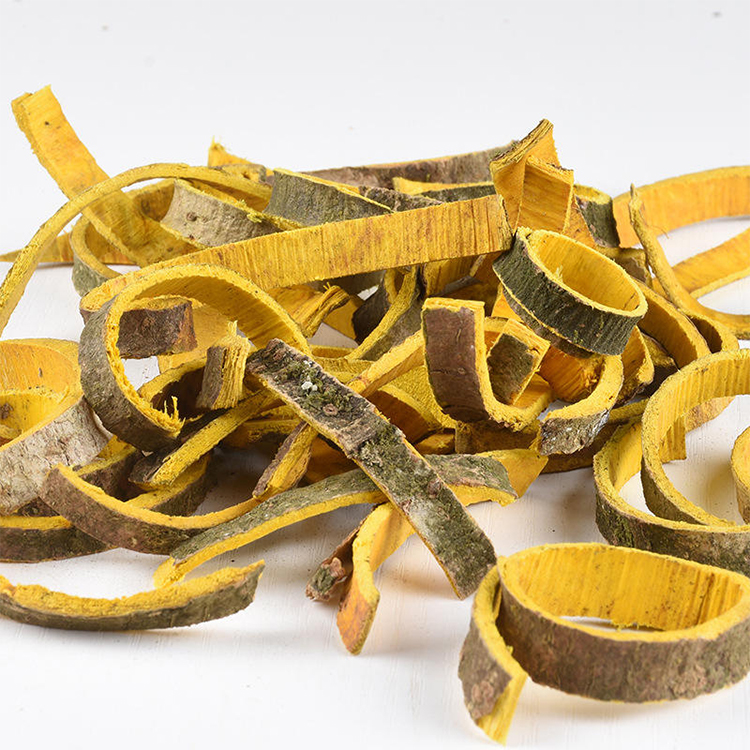
That is the first thing I would tell any buyer evaluating Phellodendron Bark in bulk, because a photograph showing vivid yellow bark may look convincing while telling you almost nothing about botanical identity, alkaloid content, processing history, moisture, contamination, or whether the material is actually the species written on your purchase order.
So why are buyers still approving Huang Bai from photographs?
Phellodendron Bark, commonly traded as Huang Bai, Huang Bo, Phellodendri Cortex, Cortex Phellodendri, Amur cork tree bark, or Phellodendron bark, is not a commodity I would purchase using color alone.
The trade gets more complicated because the name Huang Bai has been associated with two closely related but chemically distinguishable materials: Phellodendron chinense Schneid. and Phellodendron amurense Rupr. A major scientific review distinguishes them as Phellodendri Chinensis Cortex and Phellodendri Amurensis Cortex, while the developing international standard ISO/FDIS 25584 explicitly covers bark derived from both species.
That distinction belongs on the purchase specification.
Not in the marketing brochure.
Phellodendron Bark Is Not One Anonymous Yellow Bark
If your specification simply says “Huang Bai, China origin,” it is weak.
A serious Phellodendron Bark specification starts with four separate identity fields:
Botanical species
Plant family: Rutaceae
Plant part: dried trunk bark
Processing state and cut form
The two names buyers encounter most often are Phellodendron chinense and Phellodendron amurense.
The distinction is commercially meaningful. Reviews of Phellodendri Cortex associate P. amurense, commonly called Guan Huang Bai, primarily with northeastern China, while P. chinense, commonly called Chuan Huang Bai, is associated more strongly with southwestern production areas. They overlap chemically, but they should not disappear into one generic warehouse code.
But a category page is the beginning of qualification, not the end.
Chuan Huang Bai and Guan Huang Bai Are Not Just Regional Nicknames
This is where procurement language becomes important.
Chuan Huang Bai generally refers to material derived from Phellodendron chinense.
Guan Huang Bai refers to Phellodendron amurense.
Scientific work has repeatedly demonstrated that the two can be chemically differentiated. A 2023 study established LC-MS fingerprints for P. amurense and P. chinense and used multivariate statistical analysis to examine differences between them, reinforcing a point experienced botanical buyers already understand: related species may look similar while producing different chemical profiles.
And identification can go deeper. A DNA-based study found approximately 99% similarity in examined base sequences between the two species while still developing methods capable of differentiation. That is exactly why “they look almost the same” is a bad procurement argument.
The similarity is real.
So are the differences.
Color Is Useful — Until You Ask It to Do a Laboratory’s Job
Good Phellodendron Bark has a strong visual identity.
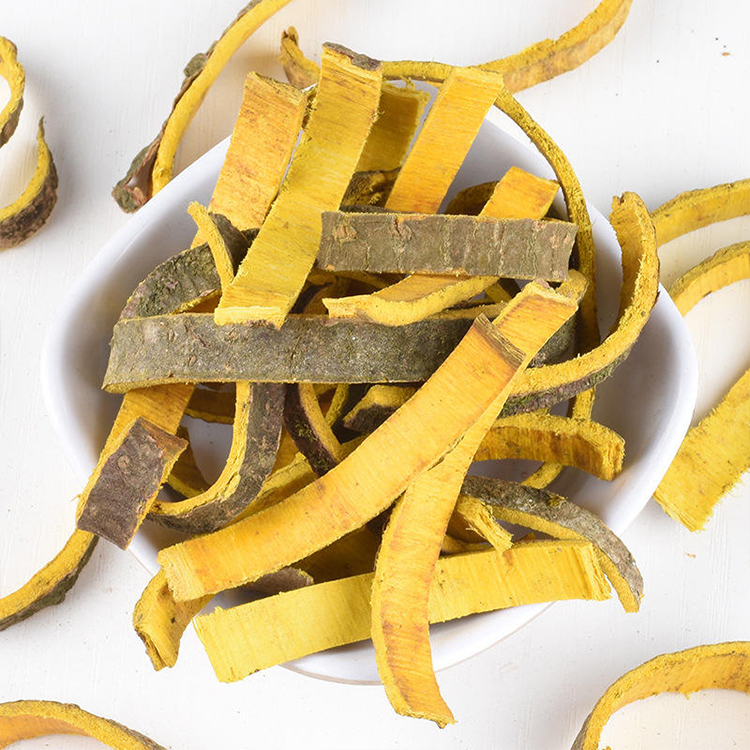
The internal bark is associated with yellow to yellowish-brown tones, while the exterior can appear grayish-brown, brown or more cork-like depending on species, age, preparation and how much outer tissue remains. A 2026 review of Phellodendri Amurensis Cortex describes its inner bark as bright yellow with a bitter taste and the cork layer as pale gray to grayish-brown.
That makes color useful for receiving inspection.
Useful. Not definitive.
Here is how I would interpret it:
Procurement signal
What it may tell you
What it cannot prove
Strong yellow inner surface
Material is visually consistent with expected Phellodendron bark characteristics
Correct botanical species
Gray-brown or brown outer bark
Normal exterior characteristics may be present
Correct origin or harvest age
Very dull or faded interior
Possible age, storage, oxidation or processing differences
Chemical failure without testing
Uniform unnaturally vivid yellow
Worth investigating further
High berberine content
Fibrous fracture
Consistent with bark structure
Purity or contaminant status
Strong bitterness
Consistent with alkaloid-rich Huang Bai
Exact alkaloid concentration
Weak bitterness
Possible variability, age, processing or low marker levels
Automatic rejection without analytical confirmation
A yellow surface is evidence.
It is not proof.
FDA Has Already Explained Why Appearance Is Not Enough
There is a regulatory lesson here that herbal buyers should not ignore.
In an August 13, 2024 warning letter, the U.S. Food and Drug Administration criticized a dietary supplement manufacturer for relying on physical characteristics such as color, smell and taste to identify certain botanical components. FDA stated that organoleptic specifications were not appropriate for confirming identity where components had physically similar characteristics. The agency also emphasized scientifically valid testing and adequate identity specifications. Read the FDA warning letter to Restorative Botanicals for the full context.
That was not specifically a Huang Bai enforcement case.
The procurement lesson still lands hard: color, smell and taste are screening tools, not a substitute for botanical identity testing.
For companies manufacturing supplements in the United States, FDA’s 21 CFR Part 111 compliance guidance also requires component specifications and lot traceability within the applicable CGMP system.
Pretty bark does not satisfy a quality system.
Bitterness Matters More Than Most Buyers Think — But Less Than Some Sellers Claim
Taste is part of the traditional identity of Huang Bai.
The material is characteristically bitter, and several isoquinoline alkaloids contribute to the chemical profile associated with Phellodendron species, including berberine, palmatine, jatrorrhizine, phellodendrine and magnoflorine. Berberine has the molecular formula C20H18NO4+, while palmatine is C21H22NO4+. A 2026 review of P. amurense lists these among major alkaloid markers used in quality assessment.
The temptation is obvious:
More bitter = more alkaloids = better material.
I would not sign a purchase specification based on that equation.
Human bitterness perception is not HPLC. Particle size, dryness, extraction into saliva, storage conditions, processing state and individual sensory perception can all affect what somebody thinks is “very bitter.”
Still, bitterness has value.
If a reference sample is distinctly bitter and the production lot is strangely flat, I investigate. I do not argue with the warehouse team about whether the bitterness is a six or an eight.
I send the sample to the lab.
Chemistry Changes With Processing
Processing complicates the picture further.
A 2023 Frontiers study used UHPLC-Q-Orbitrap MS, PCA, OPLS-DA and hierarchical clustering to compare raw, salt-processed and charred Phellodendri Chinensis Cortex. Researchers found that the samples separated into distinct groups and reported significant chemical changes after processing, including changes involving berberine, palmatine, jatrorrhizine, magnoflorine and phellodendrine. In total, the researchers screened 48 compounds between comparison groups and identified 10 showing significant transformation patterns in processed materials. Read the Frontiers study.
Think about what that means commercially.
A buyer comparing raw Huang Bai with processed Huang Bai as if only the color changed is comparing different chemical states.
This problem is not unique to Phellodendron. Our Mulberry Root Bark sourcing guide makes the same procurement point from another direction: bark preparation can change measurable chemistry, so peeling, drying and processing records belong in the specification rather than in a supplier’s verbal explanation.
Origin Should Be a Data Field, Not a Story
“Origin: China.”
I hate that specification.
China covers enormous climatic, ecological and agricultural variation. If origin affects your botanical identity, constituent profile, traceability or regulatory documentation, the procurement file should reach at least province or defined sourcing region where commercially practical.
For Phellodendron, this matters even more because species and geography are connected.
Research has specifically examined provenance variation in berberine content of Phellodendron amurense grown in Northeast China, and modern reviews continue to identify geographic origin, harvest conditions and storage as variables associated with differences in marker content.
So I would request:
Country of origin
Province or defined production region
Botanical species
Cultivated or wild-collected status where relevant
Harvest year
Plant part
Processing location
Supplier batch number
Manufacturer lot number
Laboratory sample ID linked to that exact lot
Ten fields.
Not difficult.
The Numbers Show Why Species Must Stay on the COA
One of the more useful pieces of data comes from a 2019 scientific review comparing historical quality requirements for the two materials.
The review reported historical minimum markers of 3.0% berberine hydrochloride and 0.34% phellodendrine hydrochloride for P. chinense-derived material, compared with 0.60% berberine hydrochloride and 0.30% palmatine hydrochloride for P. amurense-derived material under the standards cited by the authors.
Do not treat those older figures as a universal current import specification.
Do notice the message.
Different material. Different marker logic.
More recently, a 2026 review summarizing the Chinese Pharmacopoeia 2025 standard for Phellodendri Amurensis Cortex reported:
Test
Reported PAC criterion
Berberine hydrochloride
≥ 0.60%
Palmatine hydrochloride
≥ 0.30%
Loss on drying
≤ 11.0%
Total ash
≤ 9.0%
60% ethanol-soluble extractives
≥ 17.0%
The same review notes that berberine in Phellodendri Amurensis Cortex may vary substantially with geographic origin, harvest timing and storage, reinforcing why one marker result cannot replace the rest of the supplier file.
And there is another development buyers should watch: as of August 2026, ISO/FDIS 25584, “Traditional Chinese medicine — Phellodendron chinense and Phellodendron amurense bark,” remains under development at the Final Draft International Standard stage. That is a strong signal that international trade specifications for these materials are becoming more formalized, not less.
The Phellodendron Bark Specification I Would Actually Send a Supplier
I would not write:
Huang Bai, good yellow color, high quality, no mold.
That is not a specification.
I would write something closer to this:
Botanical Identity
Product: Phellodendron Bark / Huang Bai Botanical species: Specify Phellodendron chinense Schneid. or Phellodendron amurense Rupr. Family: Rutaceae Plant part: Dried trunk bark Commercial form: Whole bark, strips, slices, cut pieces or powder Processing: Raw or specifically declared processed form
Origin and Traceability
Require production region, harvest year, processing site, manufacturer name, lot number and enough traceability to connect the commercial shipment to the sample tested by the laboratory.
Do not accept one COA covering “current stock.”
I want the lot.
Organoleptic Release Checks
Set a reference sample for:
Exterior color
Interior yellow tone
Characteristic odor
Bitter taste
Fibrous fracture
Cut size
Visible foreign matter
Insect activity
Mold
Abnormal staining
Keep that reference sample.
The Chinese Medicine Purchasing Guide contains additional procurement controls for botanical materials where appearance, processing, storage and documentation must be considered together rather than independently.
Laboratory Controls
The final test panel depends on intended use and destination market, but commercial buyers should normally discuss:
Botanical identity
TLC/HPTLC or appropriate chromatographic identity
HPLC marker assay
Moisture or loss on drying
Total ash
Acid-insoluble ash where applicable
Foreign matter
Heavy metals
Pesticide residues
Microbiological limits
Mycotoxins where risk assessment requires them
Sulfur dioxide where relevant
Extractives where the governing specification requires them
Do not copy limits from somebody else’s product.
Define the destination market first.
Packaging and Storage
Dry bark still moves moisture.
For export shipments, specify inner liner material, outer bag or carton, net weight, sealing method, pallet configuration where required, storage conditions and whether humidity exposure during consolidation or sea freight creates a realistic risk.
A damp container can destroy an excellent sourcing decision.
And documentation travels with the physical risk. Before booking an international shipment, buyers should review what documents are needed to import Chinese herbal ingredients so the Latin name, plant part, invoice description, lot number and quality file tell the same story.
What Separates a Good Huang Bai Supplier From a Cheap One
Price is easy to compare.
Evidence is harder.
When I evaluate a Phellodendron Bark wholesale offer, I want to know whether the supplier can answer the following without disappearing for three days:
Which species is this?
Not “Huang Bai.”
Which Latin species?
Where was this batch grown or collected?
Not “China.”
Which region?
When was it harvested?
Is the sample from the same batch you will ship?
What processing has been applied?
What markers were tested?
Can I see the analytical method and numerical results?
Can you maintain that specification for the next order?
That last question matters more than buyers think.
A beautiful first sample followed by inconsistent commercial lots is not a supplier relationship. It is bait.
For buyers comparing multiple cortex materials, the Barks Chinese Medicines collection is useful for structuring species-specific sourcing instead of treating “medicinal bark” as one raw-material class.
FAQs
What is Phellodendron Bark?
Phellodendron Bark is the dried trunk bark of plants in the genus Phellodendron, principally Phellodendron chinense Schneid. and Phellodendron amurense Rupr. in the Huang Bai supply chain, and is commercially traded as Huang Bai, Huang Bo, Phellodendri Cortex, Cortex Phellodendri, or Amur cork tree bark depending on species and market terminology.
Professional buyers should specify the Latin binomial, Rutaceae family, trunk-bark plant part, processing state, production origin, cut form and applicable analytical standard rather than purchasing only against the generic name Huang Bai.
Why is Phellodendron Bark yellow?
Phellodendron Bark is characteristically yellow because its internal bark contains naturally occurring chemical constituents, including yellow-colored isoquinoline alkaloids such as berberine, while the outer cork may remain gray, grayish-brown or brown; therefore, the visible color depends on species, bark layer, preparation, age, processing and storage rather than one fixed shade.
Yellow color is useful during receiving inspection, but it should never be used alone to confirm species, marker concentration or purity.
Why is Phellodendron Bark bitter?
Phellodendron Bark is naturally bitter because the bark contains multiple alkaloids, including berberine, palmatine, jatrorrhizine, phellodendrine and magnoflorine, creating the strong bitter sensory profile traditionally associated with Huang Bai; however, perceived bitterness is qualitative and cannot be converted reliably into an exact measurement of alkaloid concentration or pharmaceutical quality.
Use taste only as an organoleptic comparison against an approved reference sample. Use validated analytical methods for marker quantification.
What is the difference between Phellodendron chinense and Phellodendron amurense?
Phellodendron chinense and Phellodendron amurense are two closely related Rutaceae species supplying Huang Bai-type medicinal bark, historically associated with Chuan Huang Bai and Guan Huang Bai respectively; they overlap in major alkaloids but differ in geographical distribution, chemical ratios and quality-control markers, so professional purchasing specifications should identify them separately.
Chromatographic fingerprinting, multicomponent assays and botanical identity methods provide far stronger differentiation than appearance alone.
How should bulk buyers test Phellodendron Bark?
Bulk buyers should test Phellodendron Bark with a risk-based specification combining botanical identity, organoleptic examination, chromatographic identification, quantitative marker assays, moisture or loss on drying, ash, foreign matter and destination-specific contaminant controls such as heavy metals, pesticides and microorganisms, while linking every result to the exact commercial lot being purchased.
The appropriate methods and limits should follow the botanical species, intended application and governing market standard rather than a generic supplier COA.
What should I ask a Phellodendron Bark supplier before ordering?
A Phellodendron Bark supplier should be able to provide the exact botanical species, plant part, production region, harvest or production batch, processing form, cut specification, packaging configuration, lot-specific COA, analytical methods, marker-compound results, contaminant testing and traceability records connecting the approved sample with the material that will actually be shipped.
If the supplier cannot distinguish P. chinense from P. amurense, or sends the same undated COA for every inquiry, I would stop discussing price until the identity problem is solved.
Buy Phellodendron Bark by Evidence, Not by Yellow Color
Phellodendron Bark looks simple.
It isn’t.
Color gives you a first clue. Bitterness gives you another. Origin explains part of the variation. But none of those variables can stand alone.
The buying decision should connect species + origin + processing + sensory reference + analytical chemistry + contaminants + lot traceability.
That is the specification.
If you are sourcing Phellodendron Bark for herbal distribution, decoction pieces, extract production, supplement manufacturing or other bulk applications, review the available Phellodendron Bark Huang Bai bulk supply and request a lot-specific quotation with your required species, cut form, quantity, destination country and testing standard.
Ask for the COA before you negotiate the last few cents per kilogram.
Cheap bark is expensive when you have to reject it.
Our low MOQ of 1 kg (2.2 lb) makes it easy to order Chinese herbal slices or wholesale Chinese medicine herbs. Private-label and bilingual labeling are also available.
Delivery Cycle & Support
We have a fast 7-day lead time. We provide free samples, COA reports, and technical support to help you bring high-quality bulk Chinese herbs to market.
Quality & Certifications
Our products are manufactured in a GMP-certified facility and meet ISO22000 standards. All Chinese herbs are third-party tested for heavy metals, pesticides, and microorganisms.