Most buyers talk about origin like it is poetry. I do not. In herb sourcing, a region matters only when it cuts risk, stabilizes chemistry, shortens lead times, and gives you cleaner audit trails. This piece explains which major herb-producing regions actually deliver those gains, where they fail, and how serious buyers should judge them.
I have watched importers obsess over a cheaper FOB quote, ignore harvest timing, moisture control, cut specification, and lot genealogy, and then act shocked when the same herb arrives with a different odor, a different extract yield, or paperwork that falls apart the moment QA asks one serious question. Why keep pretending origin is just a marketing story?
The market is big enough now that lazy sourcing gets expensive fast. According to the American Botanical Council’s 2025 Herb Market Report, U.S. retail sales of herbal dietary supplements hit $13.231 billion in 2024, up 5.4% year over year, which means more volume, more scrutiny, and a lot less tolerance for sloppy upstream control.
So here is my blunt view: the real supply advantage of a major herb source region is not that the place sounds famous. It is that the region gives you repeatable raw material, denser processing know-how, better trader intelligence, faster replacement options, and cleaner proof when regulators, customers, or your own technical team start asking for documents.
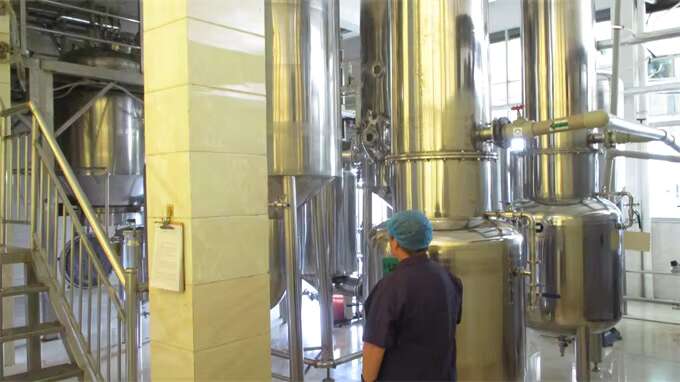
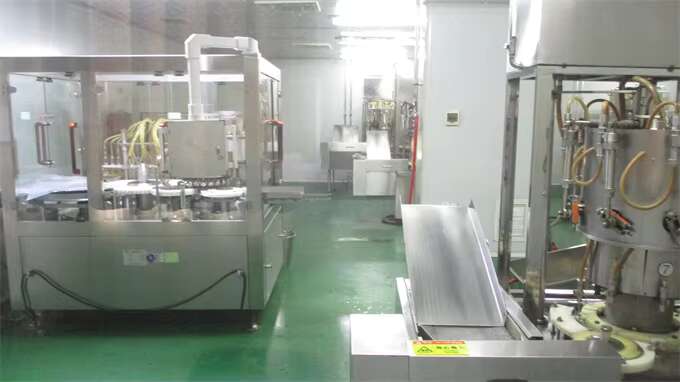
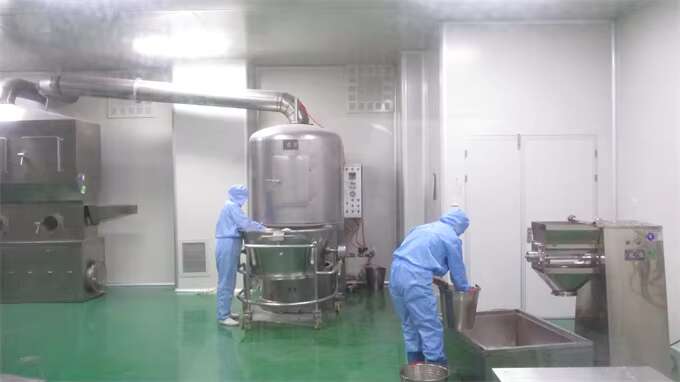
That is exactly where the structure of how to source Chinese herbal products and traceability from farm to finished slices stops being “content” and starts becoming operating discipline. GuoCao’s own site leans hard on seven regional growing bases, GMP and ISO 22000 processing, third-party COA testing, and batch traceability because buyers who move volume care about those boring details far more than they care about pretty farm photos.
Table of Contents
What a source region actually buys you
A major herb source region gives you a cluster advantage.
When herbs are grown, dried, cut, sorted, warehoused, and traded inside a mature regional cluster, the buyer gets something money alone cannot buy in a fragmented supply chain: faster information, better benchmarking, replacement lots when one batch fails, and technical memory embedded in growers, brokers, and processors who have handled the same SKU for years. Isn’t that what “supply advantage” is supposed to mean?
The old global standard still points the same way. The WHO GACP guidelines for medicinal plants were built around controlled cultivation and collection practices, while the FDA’s dietary supplement CGMP guide makes it plain that foreign firms importing dietary supplements into the United States are still subject to 21 CFR Part 111, including written procedures, lot traceability, specifications, quarantine controls, and master manufacturing records. That is the real bridge between herb source regions and commercial value: a region is useful only if it helps you satisfy GACP upstream and Part 111 downstream.
The regions I would actually respect
Here is the working table I would use if the brief is supply, not folklore.
Port convenience can mask weak farm-level traceability
Audit backward, not just forward
Gansu wins when you need roots, not excuses
Gansu still matters.
And not because buyers like repeating “daodi” to sound educated, but because root-heavy supply chains live or die on agronomy, drying discipline, and regional processing muscle, and Gansu keeps showing up where those variables matter most. You can see it inside GuoCao’s own operating story, from about GuoCao’s planting bases and supply chain to the Dong Quai OEM case study from Min County, Gansu, where the company explicitly ties Min County origin to chemical profile consistency and reduced downstream variability.
Why Gansu works commercially
If I am buying Dang Gui, Huang Qi, or other root-and-rhizome materials, I want a region where the seller has already seen every common failure mode: dirty roots, weak sorting, over-drying, under-drying, mixed lots, bad slice uniformity, and transit damage. Mature root regions are not magic; they are simply better at making defects predictable.
GuoCao says it operates from Pingliang, Gansu, runs 30+ pieces of equipment across 15 processing steps, and can produce 2,500 tons of finished medicinal materials annually, while also claiming seven regional growing bases and 7-day dispatch on confirmed orders. I would not treat that as proof by itself, but I would treat it as a sign that the site’s best internal links should cluster around root and rhizome Chinese medicines, sourcing guides, and case studies rather than vague brand pages, because that is where the commercial argument gets made.
Ningxia, Xinjiang, Yunnan, and Sichuan each pay in different ways
This is where nuance matters.
Too many articles flatten herb source regions into a tourist brochure, but commercial buyers know each region pays you back through a different mechanism, whether that is arid-climate storage stability, trader density, species diversity, or better export prep, and each one also creates its own blind spots. Would you rather buy a famous origin with weak paperwork or a less glamorous one with clean lot control?
Ningxia and Xinjiang: dry-zone advantage is real
For fruit and seed herbs, I usually trust dry regions more than humid ones, all else equal, because drying burden, mold pressure, and storage risk are simply less ugly. Oklahoma State University notes that commercial goji production in China mainly comes from Ningxia and Xinjiang, which fits the broader market reality that arid zones often scale fruit materials better than wetter regions do. That logic also lines up neatly with GuoCao’s category structure for fruit and seed herbs and even Xinjiang-linked items in flower and whole herbs.
Yunnan: diversity is a gift and a headache
Yunnan is where buyers get tempted.
The species depth is attractive, specialty materials can be excellent, and the province carries real weight in items like Panax notoginseng, but diversity cuts both ways: more sourcing routes, more intermediaries, and more room for grade mixing unless the buyer has a hard spec and lab-confirmation discipline. I like Yunnan for differentiated materials; I do not trust it when the buyer wants “flexibility” but has not finished writing the acceptance standard.
Sichuan: speed, options, and the danger of mixed lots
Sichuan is commercially strong because it is dense, connected, and fast. That helps when you need spice-herb crossover items such as Sichuan pepper or formula-support ingredients like Chuan Xiong, and it is one reason an internal link to the site’s wholesale guide to importing herbal slices from China makes sense in this topic: major regions are not just farms, they are logistics and processing systems. But high availability often makes buyers careless, and mixed lots love careless buyers.
The hard truth: a famous origin will not save a weak spec
That is the trap.
I have seen buyers pay a premium for origin and then skip the exact controls that would prove the origin was worth paying for: moisture ceiling, ash, foreign matter, microbial plate count, Salmonella absence, pesticide screen, and heavy-metal limits for Pb, Cd, As, and Hg. What exactly did they buy besides a story?
The legal record is not subtle here. In the FDA warning letter to American Chinese Natural Herbs, Inc., the agency flagged missing plant-part identification, bilingual label failures, misleading quantitative labeling, missing disclaimer linkage, and undeclared allergen issues. In the FDA warning letter to Western Herb Products, Inc., the agency cited failures to establish specifications for identity, purity, strength, composition, and contamination limits. Those are not academic mistakes. They are the exact operational failures that turn “good origin” into bad business.
And contamination risk is not theoretical either. In the FDA’s Risk Profile on Pathogens and Filth in Spices, imported entry samples showed estimated Salmonella prevalence of 18% for ground coriander, 11% for ground red pepper, 10% for oregano, and 6.7% for black pepper in the FY2012-FY2015 data set. Different products, yes. Same lesson, absolutely: regional reputation means little if post-harvest control, kill-step logic, and release testing are weak.
Then there is geopolitics. In April 2025, Reuters reported that tit-for-tat U.S.-China trade measures had pushed tariffs on Chinese goods to 145% at that moment, hitting culture-linked import channels especially hard. I would be reckless if I told buyers region alone decides landed cost. Port exposure, tariff shocks, documentation readiness, and substitution strategy all matter too.
How I would judge the best herb sourcing regions in real buying work
I keep it simple.
If a supplier cannot map field to lot, lot to test report, test report to release, and release to shipment, I do not care how famous the county is, how many poetic stories they tell about mountain air, or how nice the sample looked in a glass jar. Why reward theater?
My non-negotiable filter
I would ask for five things before I praised any herb source region:
Origin proof tied to the lot, not to a generic brochure.
Batch genealogy showing harvest, drying, storage, slicing, and packing flow.
COA plus method logic, ideally including HPLC or TLC identity work where relevant and ICP-MS or equivalent for heavy metals.
A written acceptance standard for moisture, cut size, foreign matter, and micro.
Transit-readiness evidence, especially for long-water shipments and bilingual labeling if the destination market requires it.
What are the supply advantages of major herb source regions?
Supply advantages of major herb source regions are the measurable commercial benefits that come from buying herbs in places with proven cultivation, concentrated processing, standardized grading, and easier traceability, which together reduce batch variation, shorten lead times, improve replacement options, and lower compliance risk for importers and brands.
In practice, that means fewer surprises. A strong region gives you better raw-material depth, more experienced processors, more realistic pricing benchmarks, and a higher chance that origin, test data, and shipping documents will match each other instead of fighting each other.
How do I choose the best herb sourcing regions?
The best herb sourcing regions are the ones that match your target herb, dosage form, compliance market, and risk tolerance, while also providing verifiable lot control, realistic logistics, acceptable landed cost, and a supplier base capable of meeting your written technical specification without improvising after the shipment leaves port.
I would start by matching the SKU to the region’s real strength. Roots and rhizomes often favor places like Gansu when you need deep processing experience. Fruit and seed materials often perform better in dry-zone systems. Specialty items may justify Yunnan or Sichuan, but only if your paperwork and test discipline are tighter than average.
Are daodi regions always the best commercial option?
Daodi regions are not always the best commercial option because geographic authenticity can improve recognition and sometimes chemistry, but it does not automatically guarantee cleaner lots, better transit stability, stronger documentation, lower tariff exposure, or the specific cut, moisture, micro, and labeling controls your destination market demands.
I respect daodi. I just do not worship it. If two suppliers offer the same origin and one can show batch maps, method-backed COAs, and stable post-harvest control while the other cannot, the second supplier is selling mythology, not supply advantage.
What documents should a medicinal herb supplier provide?
A medicinal herb supplier should provide a lot-linked document package that includes origin records, COA results, batch identification, contamination controls, processing details, storage status, and export paperwork, so the buyer can verify identity, quality, legal compliance, and shipment readiness before product enters manufacturing or retail channels.
At minimum, I would want certificates of origin where relevant, lot numbers, phytosanitary or export documents when needed, COAs for heavy metals, pesticide residues, and microorganisms, plus a specification sheet that defines pass-fail limits instead of hiding behind vague words like “premium” or “natural.”
Your next move if you source herbs for profit
Do this now.
Take your top 10 or top 20 herb SKUs and rebuild the sourcing map by region, not just by supplier name, then score each source on four things: lot traceability, contamination control, transit readiness, and replacement speed. If a region cannot win on at least three of those four, it is not a supply advantage. It is just a habit.
Our low MOQ of 1 kg (2.2 lb) makes it easy to order Chinese herbal slices or wholesale Chinese medicine herbs. Private-label and bilingual labeling are also available.
Delivery Cycle & Support
We have a fast 7-day lead time. We provide free samples, COA reports, and technical support to help you bring high-quality bulk Chinese herbs to market.
Quality & Certifications
Our products are manufactured in a GMP-certified facility and meet ISO22000 standards. All Chinese herbs are third-party tested for heavy metals, pesticides, and microorganisms.