You want dong quai to move from a bench sample to real, repeatable production. You care about quality signals, fewer headaches, and speed to shelf. Let’s keep it straight. I’ll show the markers that matter, the tests that actually change decisions, the pilot-to-scale flow, and where GuoCao plugs in so you ship on time.
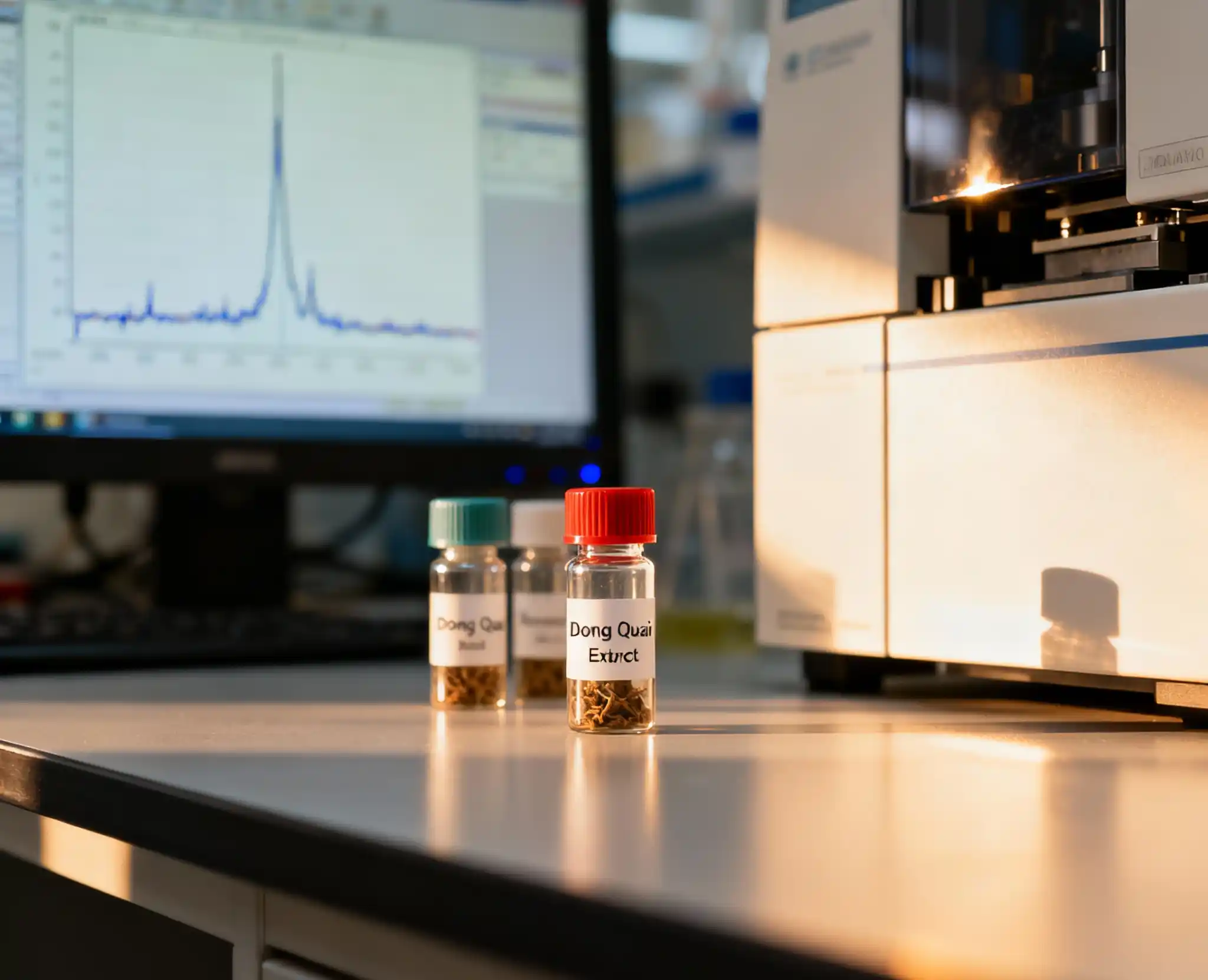
Two markers steer the bus: Z-ligustilide (volatile phthalide) and ferulic acid. They swing with origin, harvest, drying, and milling. Treat them as CQAs—critical quality attributes—right from sample day. Ligustilide hates light and oxygen, so we keep it dark, cool, and low-O₂. Ferulic acid drops with harsh processing; we don’t cook it to death.
Marker → risk → action (OEM playbook)
Marker (CQA)
Real-world risk
Lean test set
What to do (fast)
Z-ligustilide
Degrades from light/oxygen; losses during heat steps
HPLC or GC-MS for assay/fingerprint
Nitrogen headspace, short heat time, opaque/foil packs, fast transfer from dryer to pack
Ferulic acid
Lower after aggressive drying or grinding
HPLC-UV
Gentler dry curve, control particle size, match mill screen to blend
Botanical fingerprint
Adulteration / wrong species risk
HPLC fingerprint vs reference
Supplier ID test, retain reference lots, hold BPR release if outlier
(Keep the method stack simple: one strong chromatographic method for ID + assay + fingerprint, plus one multi-residue method.)
Geographical origin & daodi sourcing (Min County, Gansu)
Origin shapes the entire chemical profile. Min County, Gansu is a classic daodi region for dong quai. When you spec origin, you reduce variability later. Ask for origin documents, keep batch maps, and tie origin to your sampling plan. If you blend origins, note it in the MMR so the fingerprint stays explainable.
Explore raw-material families on your site to line up supply and formula early:
From sample to pilot batch to scale: cGMP (21 CFR Part 111)
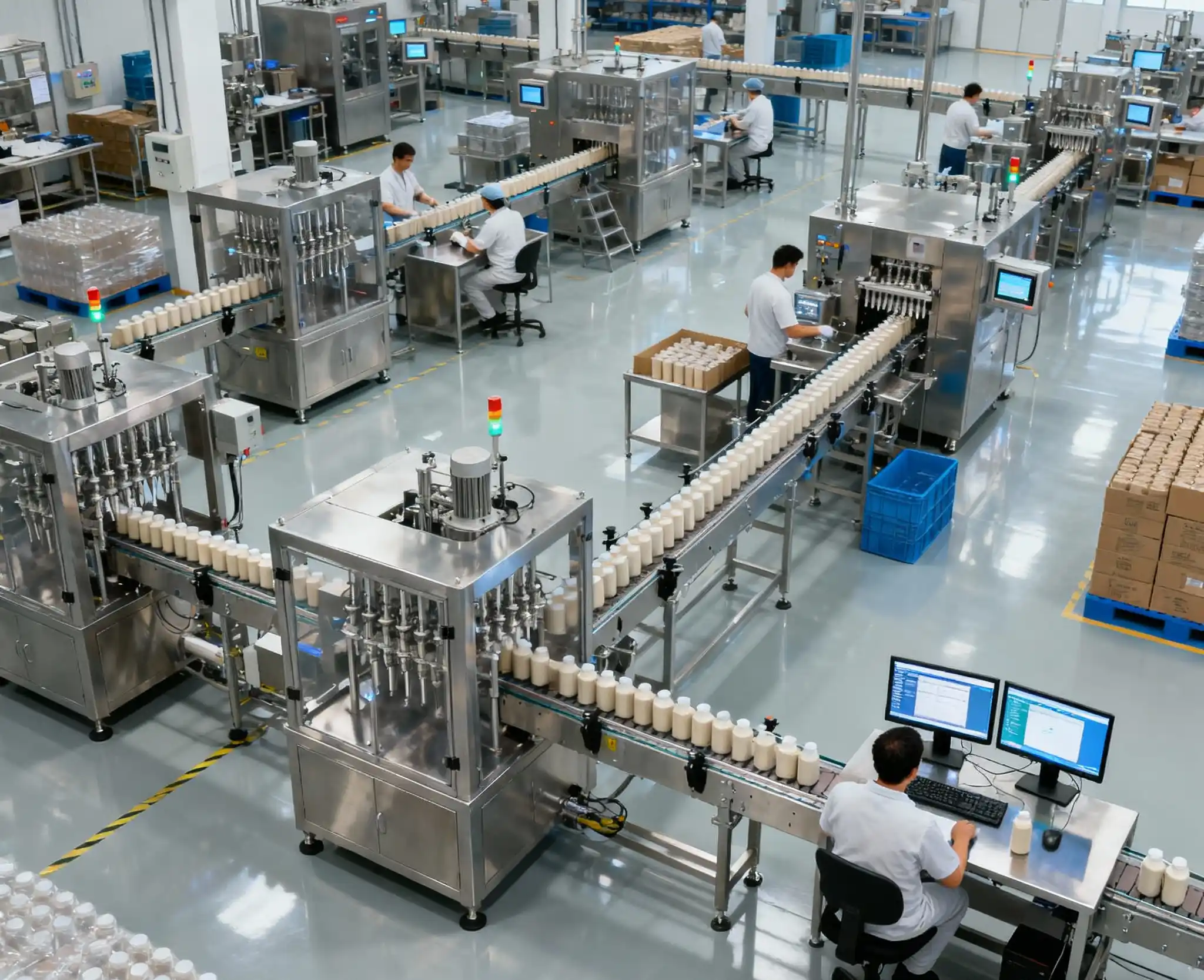
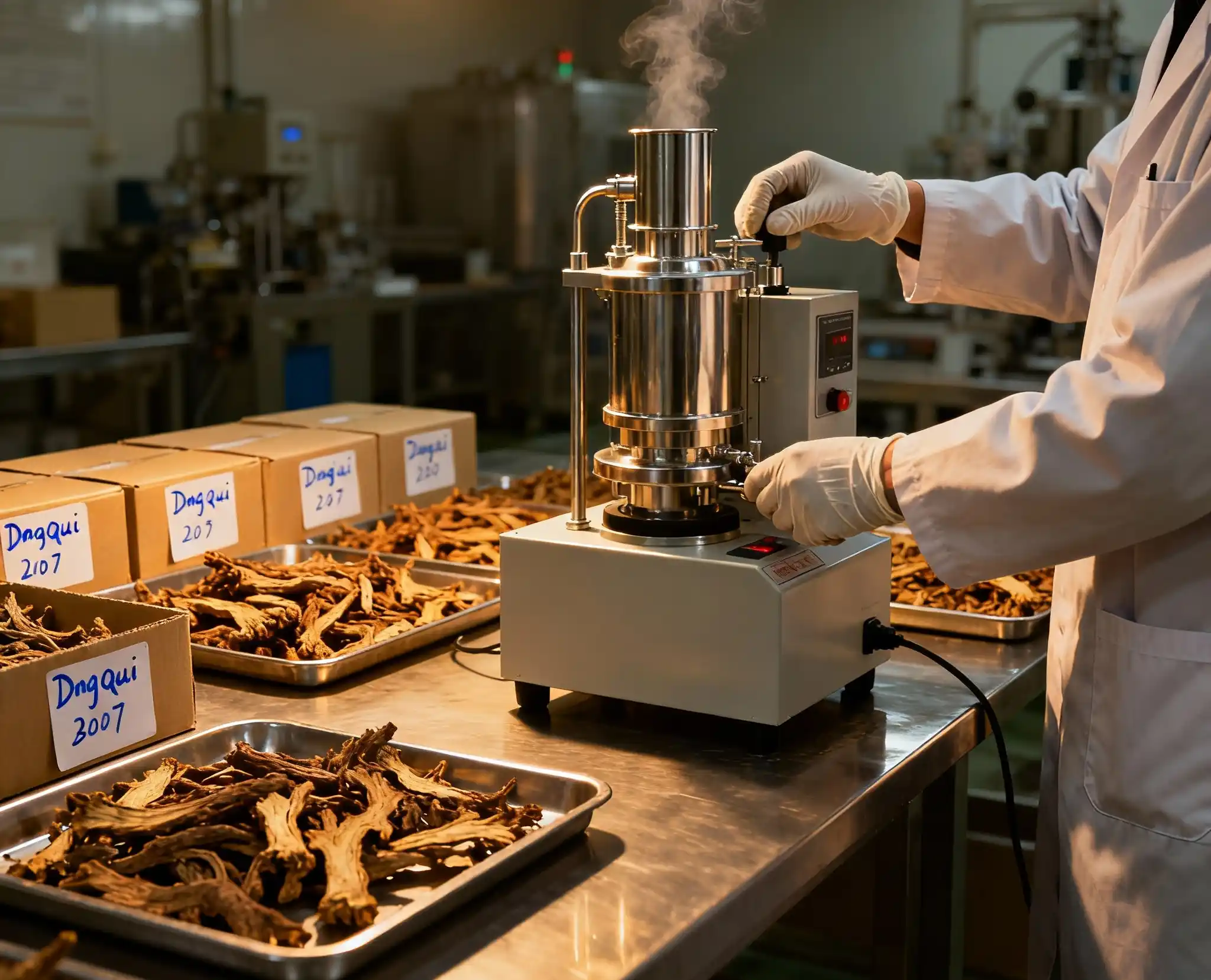
The clean pipeline: bench sample → pilot batch → scale validation → routine. You wrap it with cGMP paperwork: MMR (master manufacturing record), BPR (batch production record), incoming tests, in-process checks (IPC), and release sign-off. Skip the pilot and the scale will bite—uniformity drifts, seals fail, labels redo. We don’t skip.
GuoCao’s OEM/ODM services follow that rhythm: sample approval → pilot under GMP → scaled runs on our lines with standard paperwork so audits go smooth.
You don’t test everything every time; you test smart. For botanicals, USP <561> frames sampling and contaminants. For pesticides, AOAC 2007.01 (QuEChERS) handles multi-residue screens. For elemental contaminants, align with USP <232>/<2232> using ICP-MS. Put this in a matrix so the team knows what runs at incoming, in-process, release, and stability.
(Risk-based frequency keeps cost sane and speed high.)
Packaging engineering for volatile actives (ligustilide-safe)
Ligustilide wants to leave if you let it. So we aim for three things: low oxygen, low light, sane heat. Choose opaque laminates, use nitrogen flush if needed, minimize hold time between dryer and pack. If you go gummies or liquid shots, consider micro-encapsulation or an antioxidant system and prove it in stability. Not rocket sciense, just discipline.
Stay inside structure/function boundaries. Speak benefits like “supports healthy circulation” or “supports menstrual comfort.” Don’t imply disease treatment. Keep the standard disclaimer in place. For multi-region sales, build a label matrix by market so your claims and warnings travel cleanly.
Common guardrails
No disease claims.
Keep serving directions simple.
Add warnings for pregnancy, lactation, and anticoagulant use.
Log your 30-day notifications where needed.
Keep COAs on file; make traceability easy during audits.
Business value: why GuoCao for dong quai scale-up
GuoCao is a global Chinese herbal manufacturer with GMP lines, ISO 22000 food-safety system, room-temp/cool/controlled-atmosphere storage, and third-party COA capability. Capacity hits 2,500 tons/year. We support OEM/ODM, and our enzyme beverage line is live if your roadmap adds a functional drink. We ship across the U.S., Europe, Australia, Japan, Korea, Canada, Malaysia, Philippines, and more than 30 regions. You get one partner from raw slice to private-label pack.
Moisture creep after slicing. Fill weights wander and micro counts edge up. We shortened the post-slice hold time, switched liners, and used cool storage. Issue gone.
Flavor drift between lots. Dong quai isn’t coffee, but volatiles still move. We blended adjacent lots at pilot, locked a sensory panel, and mapped variance so marketing doesn’t chase ghosts.
Sealing window too narrow. Pouches looked fine, then opened in ship tests. We retuned dwell/pressure, added an extra peel-test, and validated on the real pack line.
Label over-reach across regions. One line on one label caused a market-specific delay. We built a claim/warning matrix so text swaps cleanly by country. Easy win, nobody argues later.
Test fatigue. Teams try to run every test on every batch. We moved to a risk-based matrix (USP <561>, AOAC 2007.01, USP <232>/<2232> anchors), set smart frequencies, and cut cycle time without cutting safety.
Mini “buyer’s checklist” you can tick today
Topic
What “good” looks like
GuoCao role
Origin control
Batch docs show defined regions (e.g., Min County/Gansu); ID test matches
Supplier audit + origin docs
Marker spec
Ligustilide/ferulic acid spec with method verified
Our low MOQ of 1 kg (2.2 lb) makes it easy to order Chinese herbal slices or wholesale Chinese medicine herbs. Private-label and bilingual labeling are also available.
Delivery Cycle & Support
We have a fast 7-day lead time. We provide free samples, COA reports, and technical support to help you bring high-quality bulk Chinese herbs to market.
Quality & Certifications
Our products are manufactured in a GMP-certified facility and meet ISO22000 standards. All Chinese herbs are third-party tested for heavy metals, pesticides, and microorganisms.