Mulberry Fruit Bulk Supply: Color, Sweetness, and Storage Stability
Bulk mulberries are easy to photograph and surprisingly hard to standardize. This buyer-focused guide explains how color, soluble solids, acidity, drying control, water activity, packaging, and storage records determine whether a lot performs—or becomes an expensive complaint.
Because a dark berry may signal strong pigment development, excessive ripeness, surface oxidation, uneven drying, or simply cultivar genetics, a procurement team that approves bulk mulberries from photographs is gambling with flavor, processing yield, and shelf life.
Why accept that risk?
I use a simple rule when assessing botanical ingredients: adjectives do not count as specifications. “Premium,” “naturally sweet,” and “carefully dried” sound reassuring, but none tells a buyer what will happen after 60 days in a warehouse, during extraction, or inside a finished tea pouch.
The commercial question is not whether mulberries look attractive today. It is whether the next shipment will match them.
Bulk Mulberries Are Not One Commodity
The phrase mulberry fruit wholesale can describe three very different products:
Fresh, highly perishable fruit intended for immediate processing
Frozen fruit or puree for beverages, jam, and extraction
Dried mulberry fruit, known in Chinese herbal trade as Sang Shen or Fructus Mori
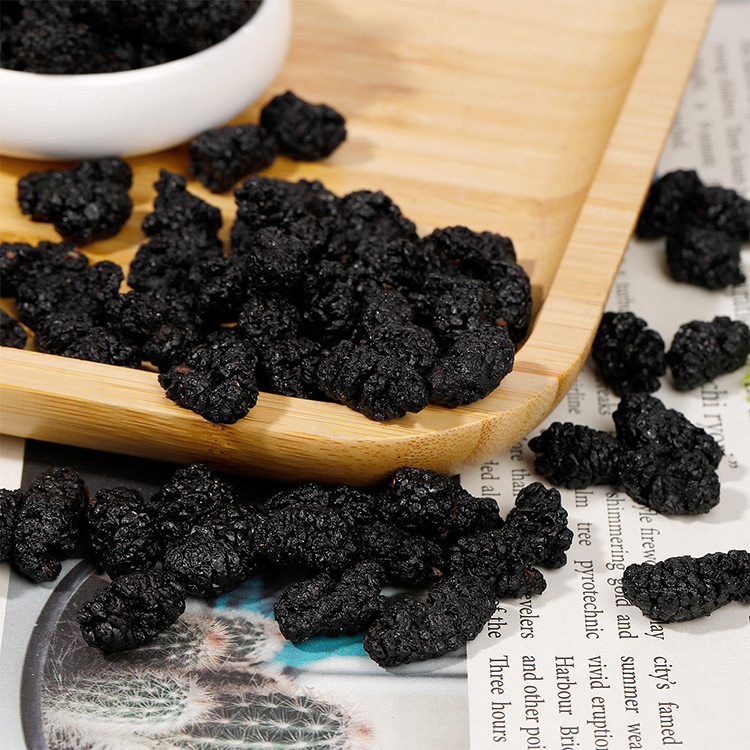
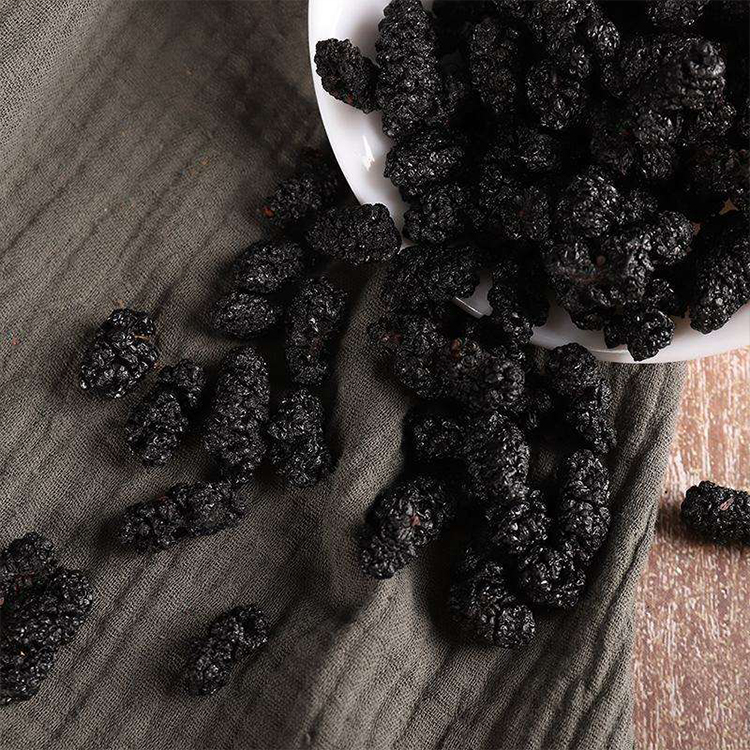
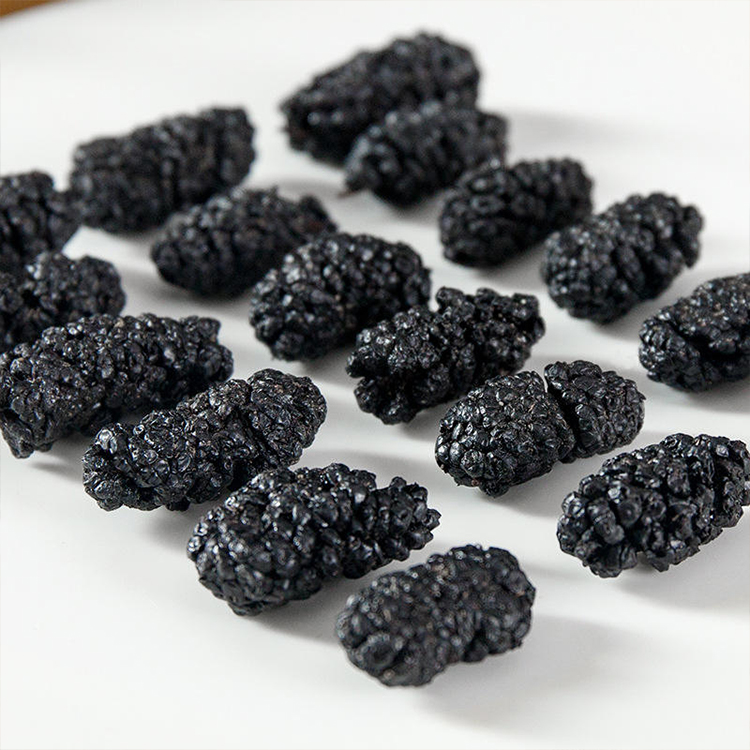
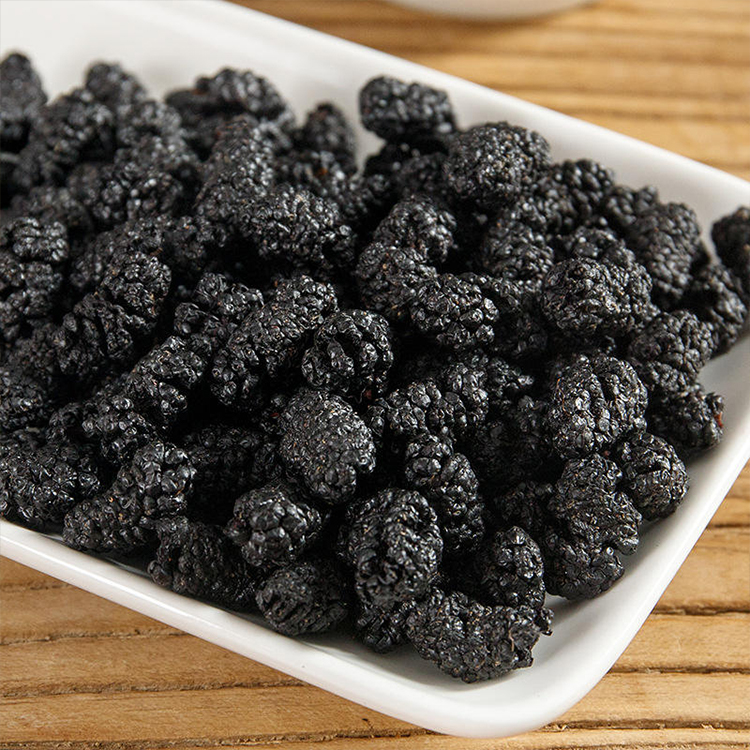
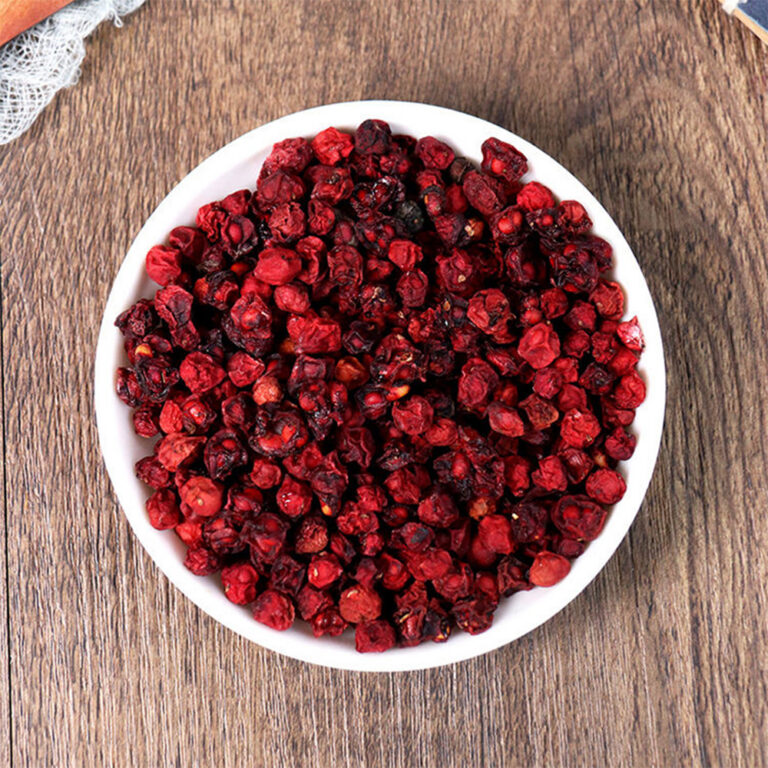
That distinction must appear in the purchase specification. The bulk wholesale mulberry fruit product page identifies the commercial material as dried fruit from Morus alba, typically dark red to black with a sweet, mildly tart taste. It is listed within the broader fruit and seed botanical ingredients category, alongside other dried fruits and seeds intended for herbal, beverage, food, and formulation programs.
That matters.
A specification copied from fresh-market berries will not properly control dried Sang Shen. Fresh fruit buyers focus on firmness, rapid cooling, decay, soluble solids, acidity, and transit temperature. Dried-fruit buyers must add water activity, moisture migration, yeast and mold risk, insect control, broken-fruit percentage, caking, packaging-barrier performance, and warehouse humidity.
The hard truth is that many sourcing failures begin before testing. The buyer ordered “mulberry fruit” but never defined the form precisely enough.
Color Is Evidence, Not Proof
Mulberry color is commercially valuable because consumers associate deep red, purple, and black tones with maturity, richness, and concentrated fruit character. Pigments such as anthocyanins contribute to those tones, while cultivar, maturity, oxygen, light, temperature, pH, and drying conditions influence how the color survives.
But darker is not automatically better.
A very dark dried lot may have excellent pigment density. It may also contain overripe fruit, heat-darkened pieces, oxidized surfaces, or excessive moisture that has encouraged discoloration. I would reject any supplier approval process based only on “dark red to black” unless the buyer also maintains a physical reference sample and measurable color limits.
How professional buyers should control color
Use three layers:
Visual standard: Keep an approved retention sample under controlled light. Compare new lots against it rather than against edited website images.
Instrumental measurement: Record CIELAB values—L*, a*, and b*—from a representative composite sample. For an internal consistency program, a buyer might set a maximum ΔE00 difference of 3.0 from the approved reference. That is an internal commercial tolerance, not a universal mulberry standard.
Defect classification: Separate acceptable natural variation from scorched fruit, pale immature pieces, mold discoloration, foreign berries, and excessive stem material.
And sample correctly. Taking ten attractive berries from the top of a carton proves almost nothing. A defensible inspection should pull from multiple cartons, depths, and production points.
A 2025 Food Chemistry: X study compared mulberry cultivars CS1 and D10 during 4°C storage and found that CS1 showed better storage resistance. After 12 days, the researchers also observed substantial metabolic differences involving carbohydrates, flavonoids, amino acids, and lipids. In plain language, cultivar identity affects storage behavior; color alone cannot reveal the full risk profile.
Sweetness Needs a Number—and Acidity Needs Equal Attention
“Sweet mulberries” is sales language.
For fresh fruit, sweetness is commonly tracked through soluble solids content, expressed as degrees Brix or percentage SSC. Yet Brix does not measure only sucrose, and it does not describe flavor by itself. Two lots with the same SSC can taste completely different when their acidity, maturity, aroma, and cultivar differ.
A 2025 BMC Plant Biology experiment harvested mulberries at 15.2% soluble solids and stored them at 0.5°C and 90% relative humidity for up to 15 days. The combined 1.0 mM melatonin and 1.0 mM putrescine treatment produced 4.35% weight loss, a 9.48% decay rate, and a respiration rate 29.89% lower than the control at day 15. The study is not a standard commercial treatment recommendation, but it provides useful evidence that sweetness, acids, respiration, decay, and storage conditions move together.
For bulk fresh mulberries, a buyer could begin pilot qualification around a 14–17°Brix receiving range, then adjust it for cultivar and application. Jam production may tolerate softer, sweeter fruit. Fresh retail cannot. Beverage formulators may care more about the Brix-to-acid ratio than Brix alone.
Dried fruit is different.
A refractometer reading taken directly from dried mulberries is generally not a clean lot-to-lot comparison unless the laboratory uses a controlled reconstitution method. Dried-fruit programs should instead define:
Total sugars or reducing sugars using a validated method
Moisture percentage
Water activity
Titratable acidity or organic-acid profile
Sensory reference for sweetness, tartness, cooked notes, and fermentation defects
Added-sugar status, where relevant
I am blunt about this: a sweet sample can still be a bad lot. Fermentation, moisture pickup, or over-drying may distort the flavor while making a few pieces taste intensely sweet.
A Practical Bulk Mulberry Specification
The table below is a commercial starting point, not a pharmacopoeial standard. Final limits should reflect the destination country, product form, processing method, shelf-life study, and end use.
Quality Attribute
Recommended Control
Practical Buyer Target
Warning or Rejection Signal
Botanical identity
Macroscopic identification plus authenticated reference; DNA or microscopy when risk justifies it
Confirm Morus alba, Morus nigra, or contracted species
Preferably below 0.60 for extended ambient stability, or validate additional controls
aw drift, condensation, caking, yeast or mold
Moisture
Oven, vacuum-oven, or validated rapid method
Product-specific limit supported by aw data
High average or large variation within the lot
Physical defects
Multi-carton composite inspection
Contract numeric limits for stems, broken fruit, foreign matter, and insect damage
No written defect definitions
Microbiology
Accredited laboratory testing
Limits matched to market and end use
Supplier provides generic or undated COA
Packaging
Defined liner, seal, carton strength, WVTR and OTR where needed
Moisture- and oxygen-resistant system validated for shelf life
Thin liner, weak seals, no packaging specification
Traceability
Lot code, harvest or production date, origin, processing records
One-step-forward and one-step-back documentation
Repacked lots with missing source records
Why water activity beats a vague moisture claim
Moisture percentage tells you how much water is present. Water activity, written as aw, indicates how available that water is for chemical reactions and microbial growth. They are related, but they are not interchangeable.
FDA preventive-controls guidance places many dried fruits in the intermediate-moisture category, generally between aw 0.60 and 0.85. It also warns that yeast and mold can still limit shelf life in this range. Foods below aw 0.60 generally have longer ambient stability, although formulation, packaging, contamination, and storage abuse still matter.
So “moisture below 18%” is not enough unless the supplier proves that the corresponding aw is stable throughout the lot and throughout the claimed shelf life.
Storage Stability Is Built Before the Warehouse
Buyers often ask, “How long can mulberries be stored?” That is the wrong first question.
Ask this instead: under exactly which temperature, relative humidity, packaging system, oxygen exposure, light conditions, and starting aw was the shelf life established?
Fresh mulberries have fragile tissue and high respiration. The 2025 BMC paper describes a commonly cited postharvest life of roughly 8–10 days and demonstrates why storage near 0.5°C with 90% relative humidity was used in the research design. Modified-atmosphere research has likewise examined temperature and package-gas control because mulberries deteriorate rapidly after harvest.
Dried mulberries fail differently:
They absorb moisture through weak packaging.
They darken under heat, oxygen, and light.
They develop caking or surface stickiness.
Yeast and mold emerge when aw rises.
Volatile fruit notes fade.
Insects exploit poorly sealed cartons or liners.
How to store fresh mulberries in bulk
Fresh mulberries should be precooled promptly, handled in shallow containers, protected from compression, and maintained within a validated cold chain near the buyer’s specified temperature. Temperature loggers should travel with commercial shipments because a delivery temperature alone cannot reveal a six-hour excursion during transit.
Do not wash fresh mulberries before storage unless the wash process and drying step are validated. Free surface water is an invitation to decay.
How to store dried mulberries in bulk
Dried mulberries should be stored in clean, dry, pest-controlled conditions, away from direct sunlight and strong odors. Use a sealed food-grade inner liner inside the export carton or drum. For humid destinations, specify packaging barrier data rather than accepting “moisture-proof” as a marketing phrase.
A stable lot can become unstable after packing.
That is why custom botanical packaging and OEM options should be discussed together with fruit specifications, not after the ingredient has already been approved. Packaging type, liner thickness, seal validation, pack size, and intended distribution climate influence the final stability program.
Supplier Qualification: The COA Is Only the Beginning
A certificate of analysis is evidence supplied by the seller. It is not independent proof.
For a new fresh mulberry supplier or dried Sang Shen exporter, I would request:
Legal company and manufacturing-site identity
Botanical source and origin
Harvest and processing flow
Drying temperature and endpoint controls
Water-activity records
Pest-management records
Packaging specification
Lot-specific microbiology, pesticides, and heavy-metal results
Retention-sample policy
Complaint, recall, and corrective-action procedures
Shelf-life protocol and supporting data
The GuoCao bulk-order FAQ states that samples, COA reports, private labeling, bilingual labeling, third-party testing, GMP production, and ISO 22000 controls are available. Those are useful qualification inputs, but buyers should still verify which claims apply to the exact facility, product, lot, test method, and destination market.
For U.S. importers, FDA’s Foreign Supplier Verification Program guidance is even more direct: applicable importers must conduct hazard analysis, approve suppliers, determine verification activities, and maintain records. FDA identifies onsite audits, sampling and testing, and review of supplier food-safety records as possible verification tools.
A glossy COA with no laboratory accreditation, sample date, test method, or lot number is decoration.
Nothing more.
FAQs
What are bulk mulberries?
Bulk mulberries are commercially traded lots of fresh, frozen, or dried Morus fruit purchased under an agreed specification covering species, maturity, color, sweetness, moisture or water activity, microbial limits, foreign matter, packaging, traceability, and shelf life rather than merely a visual promise of “premium quality.”
Fresh, frozen, and dried products require different logistics and tests. Buyers should state the species, form, end use, quantity, destination country, packaging, and required certificates in the initial request.
What are the best mulberries for bulk purchase?
The best mulberries for bulk purchase are lots whose cultivar, harvest maturity, processing method, sugar-acid profile, color range, water activity, contaminant limits, and storage history match the buyer’s end use, because tea, extract, snack, jam, beverage, and fresh-market programs require materially different specifications.
There is no universally “best” color or Brix value. A dark, soft fruit may work well for extraction but fail in retail distribution. A very dry fruit may store well yet produce weak flavor in tea.
How should fresh mulberries be stored in bulk?
Fresh bulk mulberries should be rapidly precooled, packed in shallow ventilated containers, protected from compression and free surface moisture, and maintained in a validated cold chain near 0–4°C with high relative humidity, because their delicate structure, respiration, water loss, and susceptibility to fungal decay sharply limit commercial life.
Use temperature loggers, inspect for juice leakage and mold, and agree on arrival tolerances before shipping. The supplier should disclose harvest time, precooling time, packing time, and transit duration.
How should dried mulberries be stored?
Dried mulberries should be sealed in food-grade, moisture-resistant packaging and stored in a cool, dry, dark, pest-controlled area under defined temperature and humidity limits, with water activity monitored because moisture migration can trigger caking, flavor change, pigment deterioration, yeast growth, mold growth, and shortened shelf life.
Do not rely only on warehouse temperature. Inspect package seals, pallet condition, condensation, liner integrity, aw trends, and evidence of insects during the full storage period.
Does darker mulberry color mean better quality?
Darker mulberry color can indicate stronger pigment development or greater maturity, but it does not independently prove higher quality because cultivar genetics, drying temperature, oxygen exposure, storage age, surface oxidation, excessive ripeness, and microbial damage can all produce darker or uneven visual appearance.
Combine color readings with identity, sensory evaluation, water activity, moisture, defect counts, microbiology, and retained-reference comparison. A good specification measures what the eye cannot.
Request a Lot-Specific Mulberry Quote
Do not ask only for “the best price on bulk mulberries.” Send a usable specification.
State whether you need fresh or dried fruit, Morus alba or another species, target color, sweetness or sugar method, maximum water activity, defect limits, microbiological requirements, packaging format, annual volume, destination country, and required delivery window.
Then request a representative pre-shipment sample and matching lot-specific COA.
Use the GuoCao contact page to request current availability, sample options, packaging details, test documentation, and a quotation for your wholesale mulberry fruit program. Compare the sample against a written specification before approving commercial production.
Our low MOQ of 1 kg (2.2 lb) makes it easy to order Chinese herbal slices or wholesale Chinese medicine herbs. Private-label and bilingual labeling are also available.
Delivery Cycle & Support
We have a fast 7-day lead time. We provide free samples, COA reports, and technical support to help you bring high-quality bulk Chinese herbs to market.
Quality & Certifications
Our products are manufactured in a GMP-certified facility and meet ISO22000 standards. All Chinese herbs are third-party tested for heavy metals, pesticides, and microorganisms.