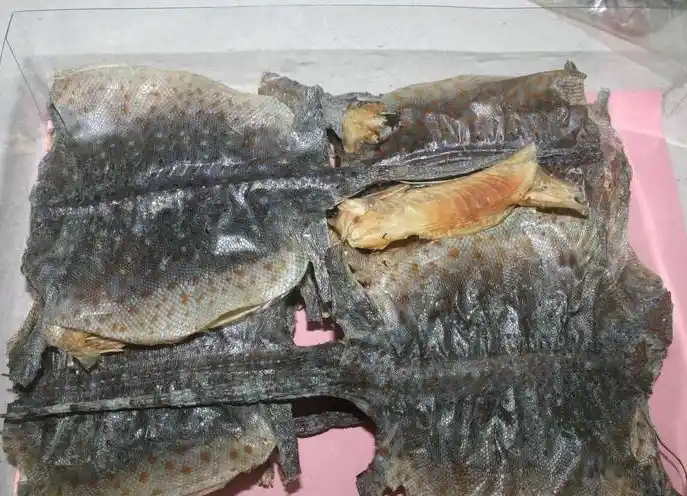
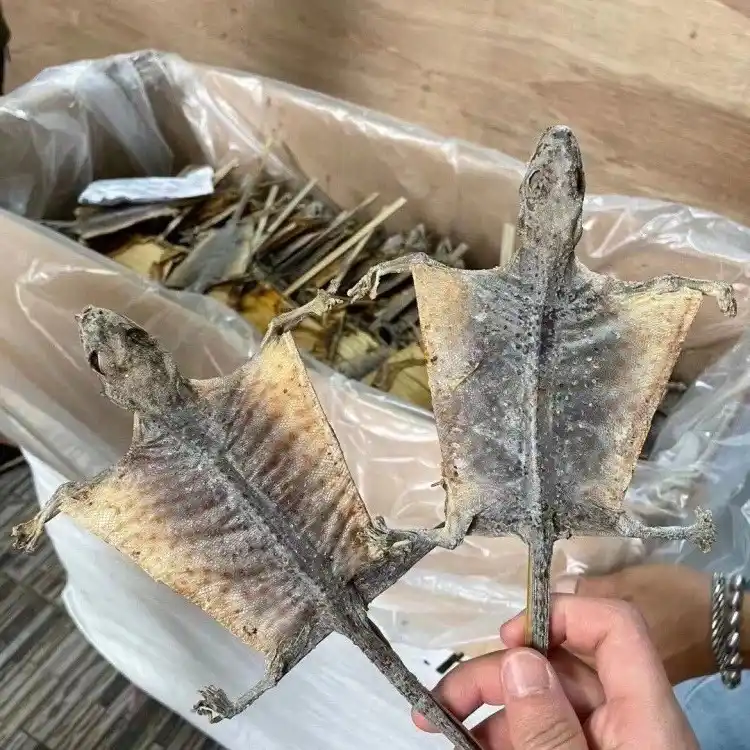
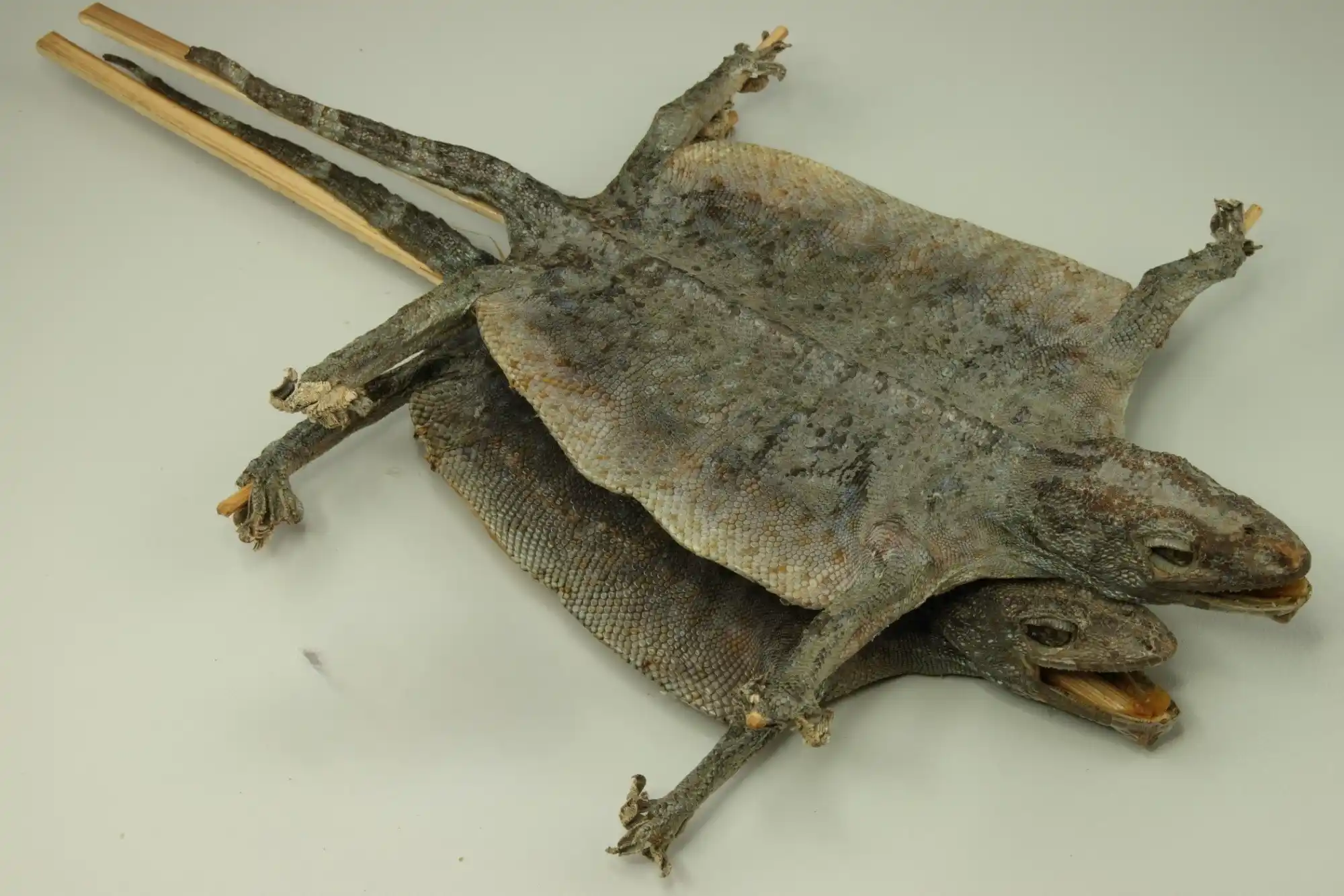
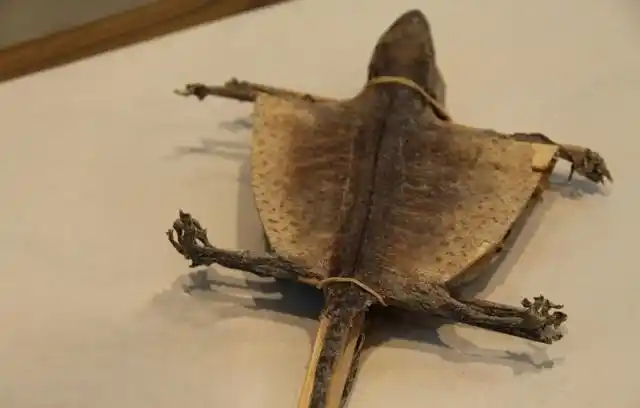
Buying Gecko (Ge Jie) isn’t hard. Clearing it is the hard part.
If you work in TCM raw materials, supplements, functional drinks, or hospital supply, you already know the vibe: the product looks fine, the cartons look fine, then customs asks one simple question—“Show me the paperwork.” If your doc pack is messy, you’re staring at a port hold, re-check fees, and a schedule that quietly dies.
This piece stays practical. No fluff. Just what buyers must verify so your shipment doesn’t get red-flagged.
Tokay gecko (Gekko gecko) vs “gecko” as a generic label: the naming trap
In international trade, “Ge Jie” often points to tokay gecko (Gekko gecko). But suppliers and buyers sometimes use “gecko” like it’s one clean category. It’s not.
Here’s the real pain: authorities don’t clear “common names.” They clear species and documents. If your invoice says “gecko,” your permit says a different Latin name, and your packing list uses a third spelling… you don’t have a shipment, you have a compliance puzzle.
So, buyer rule #1: lock the species name in writing before you place the PO, and force every document to match it. No “close enough.”
If you’re sourcing Gecko products as a category item, start by aligning your internal spec with your supplier’s listing, like GuoCao’s product page here: Gecko (Ge Jie) product listing. Don’t treat that as marketing text—treat it like the starting point for your compliance pack.
CITES Appendix II: Gekko gecko listing and the 26 November 2019 cutoff
This is the legal switch that buyers can’t ignore:
Gekko gecko is listed under CITES Appendix II
CITES listing changes from CoP18 took effect on 26 November 2019
Why that date matters: shipments moving after that cutoff typically require the right CITES documentation. If someone tells you “old stock, no docs needed,” don’t just nod. Ask for proof, in documents, not vibes.
Buyer rule #2: treat Appendix II as controlled trade, not “free trade.”
Appendix II trade controls: export permit and re-export certificate basics
For Appendix II specimens, buyers usually need to see one of these:
Export permit (issued by the exporting country)
Re-export certificate (used when goods previously imported and then shipped onward)
And then the destination may stack extra local rules on top. That’s where buyers get burned: you can have a “valid” export document, and still fail the destination’s entry steps.
Buyer rule #3: your route decides your document type. If the cargo hops countries, re-export paperwork becomes a big deal.
Export permit issuance: non-detriment finding and legal acquisition finding
CITES paperwork isn’t just a stamp. The permit system sits on two core checks:
Non-detriment finding (NDF): trade shouldn’t harm the species in the wild
Legal acquisition finding (LAF): the specimen must be obtained legally under the source country’s rules
You don’t need to write the NDF or LAF yourself. But you do need to avoid suppliers who can’t back up origin claims. If your supplier can’t explain source and chain-of-custody clearly, you’re inheriting compliance debt. It always comes due at the border.
Buyer rule #4: if it’s not traceable, it’s not shippable.
Buyer verification at the border: invoice match, original documents, endorsement
Most border checks are painfully simple. Officers compare:
Permit/certificate fields
Invoice description
Packing list quantities
Product form and labeling
Dates, stamps, and endorsement marks
If those don’t match, the shipment can stall fast. Not because anyone hates you—because mismatches are the #1 signal of risk.
Buyer rule #5: documents must match goods, line by line. Not “basically.”
Buyer verification checklist (use this before you pay the balance)
What you verify
What “clean” looks like
What triggers a hold
Species identity
Same Latin name on permit + invoice + packing list
“Gecko” only, or different Latin names across docs
Document type
Export permit OR re-export certificate matches the route
Wrong document for the route
Original paperwork
Original documents available for inspection
Photos, scans, missing originals
Endorsement/stamps
Correct stamps, signatures, endorsements where required
Unstamped docs, “we’ll stamp later”
Valid dates
In-date and consistent with shipping timeline
Expired permits, mismatched issue dates
Invoice description
Same product form, quantity, and unit details as permit
Invoice says one thing, permit another
Re-export chain
Clear origin + any re-export history documented
“Middle country” with weak backstory
Lot traceability
COA and batch info tie to the actual shipped lot
COA from a different lot, or no lot control
Quick ops move: make a one-page Doc Pack Cover Sheet with these items and require supplier sign-off. Sounds basic, works every time.
UK designated ports and EU Regulation (EC) No 338/97: extra layers buyers forget
A lot of buyers assume: “CITES is global, so rules are the same.” Nope.
Two common reality checks:
UK designated ports / airports: UK procedures can require specific routing and correct presentation at the border. If your freight goes to the wrong entry point, it’s a headache.
EU wildlife trade framework: The EU implements wildlife trade controls under Regulation (EC) No 338/97, and the EU can apply measures that feel stricter than what a buyer expects from CITES alone.
Buyer rule #6: your destination market sets the “last mile” compliance rules. Your exporter’s paperwork is necessary, not always sufficient.
Trade volume reality: why scrutiny keeps rising
This is the part buyers don’t love to hear: Gecko trade is big, and big trade gets watched.
Published research on tokay geckos discusses multi-million unit export volumes in certain years and highlights how large-scale trade increases pressure for enforcement and origin verification. When volumes scale, regulators naturally worry about mislabeling and mixed sources.
Buyer rule #7: the bigger your order, the tighter the questions. Bulk buyers should expect more checks, not less.
Documentation pack workflow: a simple “pre-clear” routine that saves your timeline
If you want fewer surprises, run your shipments like a pre-clear project. Here’s a workflow that works for buyers in supplements, hospitals, and ingredient distribution:
Spec lock Freeze species name, product form, labeling fields, and doc requirements.
Draft doc review (before production ends) Ask for draft invoice + packing list + permit field preview. Fix mismatch early, not at the dock.
Cross-check (the boring part that saves you) Match every line: name, form, qty, units, dates.
COA per lot + release status Tie the COA pack to the exact lot that ships. No lot swap, no “similar batch.”
Final doc pack sign-off Supplier confirms originals, stamps, and consistency.
Broker sanity check Broker confirms destination routing rules (UK/EU/US/etc). If something is off, fix it now, not later.
Yeah it’s work. But it’s less work than chasing a stuck container.
GuoCao fit: GMP production, ISO 22000, COA per lot, and doc packs that don’t fall apart
When you source animal and mineral TCM materials, you want a supplier that’s audit-ready, not just “can ship.”
GuoCao positions itself as a one-stop wholesale manufacturer for Chinese medicinal herbs and spices, including animal and mineral items, with global shipping and traceability focus: GuoCao home.
What matters to buyers (the stuff that reduces friction):
GMP herbal-slice production lines built for consistent processing and documentation
ISO 22000 food-safety system for hazard control and records
Third-party COA per lot (the “paper shield” that helps with customs and downstream QA)
Ambient / cool / MAP warehousing to protect quality during longer routes
OEM/ODM support when you need private label, spec customization, or formula-aligned slicing/processing
Global reach across 30+ countries/regions, which usually means they’re familiar with stricter market habits
If your pain point is “how do I stop sourcing chaos,” this is a good page to read: Custom herb sourcing for OEM production orders. It talks about identity checks like macro/micro exam and DNA methods, which is exactly the kind of control buyers ask for when markets worry about substitutions.
Our low MOQ of 1 kg (2.2 lb) makes it easy to order Chinese herbal slices or wholesale Chinese medicine herbs. Private-label and bilingual labeling are also available.
Delivery Cycle & Support
We have a fast 7-day lead time. We provide free samples, COA reports, and technical support to help you bring high-quality bulk Chinese herbs to market.
Quality & Certifications
Our products are manufactured in a GMP-certified facility and meet ISO22000 standards. All Chinese herbs are third-party tested for heavy metals, pesticides, and microorganisms.