When buyers talk about peony root, one question always pops up:
“Do I need white peony, red peony, or any peony is ok?”
If you work in a pharma factory and your friend works in a supplement plant, your answer will be very different. Same plant, very different buying logic.
White Peony Root (Radix Paeoniae Alba) vs Red Peony Root (Radix Paeoniae Rubra)
Processing and origin of White Peony Root and Red Peony Root
Most of the time, white peony root (Radix Paeoniae Alba, RPA) and red peony root (Radix Paeoniae Rubra, RPR) come from the same species Paeonia lactiflora. The split happens after harvest.
White peony root
Usually from cultivated fields in regions like Anhui, Zhejiang and other traditional TCM areas.
Process:
Dig out fresh roots
Wash, trim off head and fine roots
Boil or steam
Peel
Dry again, then slice
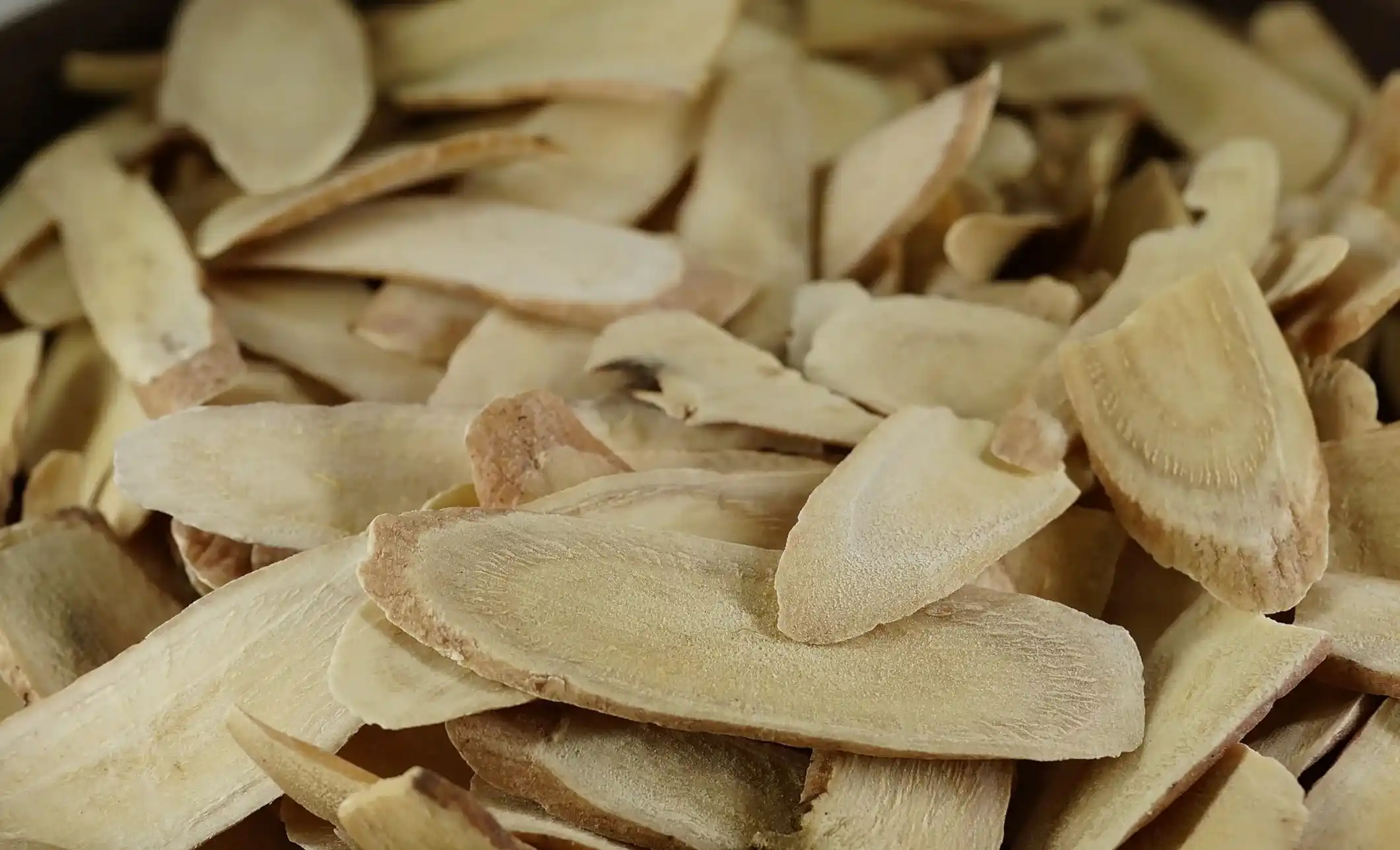
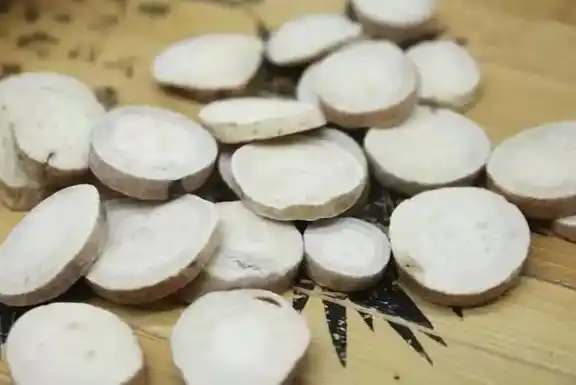
Slices look creamy white, uniform, cleaner.
Red peony root
More from wild or semi-wild resources in north and west areas like Inner Mongolia, northeast China, some mountain zones.
Process:
Dig, wash, remove soil and fine roots
Direct drying, no peeling, no boiling
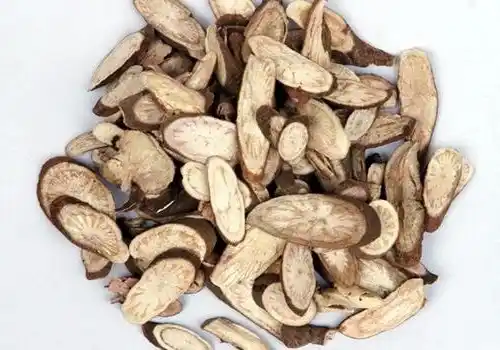
Outside skin brown to dark, cut surface white or pinkish.
For a buyer, it means:
White peony root = more processing cost, more control, more standard.
Red peony root = simpler processing, closer to raw root, more variation.
You can already see why pharma and supplement factories don’t think about them in the same way.
Active constituents and traditional functions of White vs Red Peony Root
Both white and red peony roots carry monoterpene glycosides like paeoniflorin, plus tannins, flavonoids and other small molecules.
GMP decoction slice production line for pharma-grade TCM slices.
Normal temperature, cool and modified-atmosphere warehouses to keep moisture and activity in range.
ISO 22000 food safety system for food and supplement side.
Third-party COA testing capability, ready for audits and tender files.
For pharma customers, that means:
You don’t start from zero when you build your own spec.
A lot of the “paper work” and basic validation is already in place.
Dietary Supplement Factories: Clean Label Needs for Red Peony Root and Peony Extract
On the dietary supplement or functional beverage side, you also care about safety and active level. But the language is different. Buyers talk more like:
“Is it clean label?”
“Any sulfur-fumigation?”
“Can we say standardized to X% paeoniflorin on the label?”
Typical White and Red Peony Root specifications for supplement brands
Most supplement factories buy peony as:
Whole sliced herbs for tea bags, decoction, traditional formats.
Powdered roots for capsules, tablets and blends.
5:1, 10:1 or standardized extract for higher loading in small serving sizes.
Common check points:
Heavy metals and pesticide residues under food or supplement limits.
Microbiology meet local rules.
Clear spec for extract ratio or paeoniflorin %, but usually with a wider range than pharma.
Buyers here also look across their full portfolio:
Combine peony with goji, jujube, angelica, etc from the same roots & rhizome herbs category.
You care a lot about story: origin, traditional usage, “no sulfur”, “low temperature drying”.
GuoCao is set up exactly for that kind of job:
Around 2500 tons annual capacity of herbs and slices, so scaling up is less painful.
OEM / ODM for Chinese herbal enzyme drinks, mixed herb beverages and tea bag lines.
Export experience to USA, Europe, Australia, Japan, Korea, Canada, Malaysia, Philippines and 30+ markets, so documents and registrations are not first-time trial.
How GuoCao Supports Pharma Buyers of White and Red Peony Root
For pharma, hospital and TCM clinic customers, GuoCao focuses on three things:
GMP-ready slices and roots
White peony root and red peony root processed on GMP decoction slice line.
Clear SOP for boiling, drying, slicing, sieving, metal detection.
Batch records you can show to your QA and auditor.
Audit-friendly documentation
COA with full panel, not only one or two lines.
If needed, extra third-party lab reports to match local pharmacopeia.
Support for hospital tender docs and long-term supply contracts.
Lot-to-lot stability
Normal, cool and gas-controlled warehouses to keep moisture and activity level stable.
Long-term cooperation with planting bases, so quality doesn’t jump every year.
You don’t want the QC team to re-write methods every season because the chromatogram suddenly look like another plant. That’s how we design our Chinese herbal decoction slices pipeline.
How GuoCao Serves Supplement, Beverage and Cosmetic Brands with Peony Root
For dietary supplement factories, functional drink brands, cosmetic raw material buyers, local herbal shops and spice wholesalers, GuoCao plays more like a flexible OEM partner:
Multiple product forms
Slices for teabags and traditional decoction.
Powder for capsules, tablets and blends.
Peony extracts with different ratios or marker levels.
ODM support
Co-develop peony-based enzyme drinks, ready-to-drink formulas and herbal concentrates.
Stable color and taste, so your drink or capsule looks same each batch.
Label-friendly wording: origin, processing, “no sulfur fumigation” when possible.
Reasonable lead time and MOQ, not too crazy for new launch.
We also serve distributors and local retailers who need bulk herbs, spice-like items and TCM ingredients. They come to GuoCao as a one-stop wholesale Chinese medicinal herbs supplier instead of juggling ten vendors.
Sometimes English from both sides not perfect, but spec talking is same language. That is enough.
Conclusion: Match Peony Root Type and Grade to Your End Use
White peony root and red peony root are not “who is better”. They are different tools for different jobs:
White peony root: more processed, more “nourishing”, very suitable for gentle formulas and pharma-level TCM products.
Red peony root: more raw, more “movement” and “cooling”, often used in circulation and heat related products.
For pharma factories, the key word is compliance. For supplement factories and drink brands, the key word is clean label + flexible spec.
then peony root becomes a very steady part of your supply chain, not a daily headache.
And if you still not sure which peony root grade fits your next project, you can always bring your finished product idea and spec draft, and let the raw material side talk back in simple, factory language.
Our low MOQ of 1 kg (2.2 lb) makes it easy to order Chinese herbal slices or wholesale Chinese medicine herbs. Private-label and bilingual labeling are also available.
Delivery Cycle & Support
We have a fast 7-day lead time. We provide free samples, COA reports, and technical support to help you bring high-quality bulk Chinese herbs to market.
Quality & Certifications
Our products are manufactured in a GMP-certified facility and meet ISO22000 standards. All Chinese herbs are third-party tested for heavy metals, pesticides, and microorganisms.