Purple Gromwell Root Sourcing: Color, Cut, and Application Control
Purple Gromwell Root is easy to buy badly because color, trade names, botanical identity, cut size, and intended application are often mixed into one vague specification. This sourcing guide explains how professional buyers can separate appearance from chemistry, control cuts, verify species, and qualify a bulk supplier.
A dark purple-red root may look commercially convincing, yet a serious Purple Gromwell Root specification has to separate botanical identity, root structure, pigment distribution, processing history, cut size, chemical markers, contaminants, and intended application before appearance is allowed to influence the purchasing decision.
Why would we trust one color photograph to answer all of that?
I would not.
For buyers comparing purple gromwell root wholesale offers, the first mistake is usually asking, “How dark is the root?” The better opening question is, “Exactly which botanical are you selling, under which pharmacopoeial or commercial reference?”
That distinction matters more than most supplier catalogs admit.
Purple Gromwell Root Has a Naming Problem Before It Has a Quality Problem
The trade names Purple Gromwell Root, Zi Cao root, Arnebia Root, Lithospermum Root, Shikon Root, and Lithospermi Radix are often used too loosely online.
They should not automatically be treated as interchangeable.
China’s current national pharmacopoeia changed the regulatory frame buyers should be using. The 2025 Edition of the Pharmacopoeia of the People’s Republic of China took effect on October 1, 2025, and China’s National Medical Products Administration describes it as a legal technical standard for relevant drug research, production, importation, distribution, use, and supervision. China NMPA announcement on the 2025 Chinese Pharmacopoeia
Recent research citing that 2025 pharmacopoeia identifies Chinese Arnebiae Radix, or Zicao, as the dried roots of Arnebia euchroma (Royle) Johnst. and Arnebia guttata Bunge. 2026 Arnebia euchroma quality study
But another legitimate pharmacopoeial system uses a different botanical.
Japan’s official medicinal-plant database identifies Lithospermi Radix, or Lithospermum Root, as the root of Lithospermum erythrorhizon Siebold & Zucc. The Japanese description notes a dark-purple exterior, peeling outer surface, pale-brown inner cortex, and yellowish xylem. Japanese medicinal plant database entry for Lithospermum Root
That creates a procurement trap.
“Zi Cao” and “Lithospermum erythrorhizon” are not enough by themselves
If your purchase order says only:
Purple Gromwell Root / Zi Cao
you have not written an adequate botanical specification.
For Chinese pharmacopoeial Zicao, a buyer may be discussing Arnebia euchroma or Arnebia guttata. For Japanese Lithospermi Radix, the defined source is Lithospermum erythrorhizon.
And commercial markets may apply the names even more broadly.
So my rule is simple: never approve bulk purple gromwell root until the RFQ, COA, carton label, supplier declaration, and your internal SKU all carry the same Latin binomial and plant part.
Buyers examining the material offered by GuoCao can start with the site’s Xinjiang Purple Gromwell Root (Zi Cao) bulk product page, but the commercial specification should still state the exact botanical identity required for the buyer’s destination market and application.
This is the same identity-first discipline I recommend when sourcing other easily confused roots. The site’s Scutellaria Root sourcing guide and Bupleurum Root sourcing guide show why a common trade name should never replace the botanical name, plant part, physical form, and governing specification.
Color Is Useful Evidence, but It Is Not an Assay
Purple Gromwell Root earns its name from chemistry.
In Lithospermum erythrorhizon, red-purple naphthoquinone pigments, including shikonin derivatives, accumulate heavily in the root bark and cork layers. Research indexed by the U.S. National Library of Medicine describes the roots as dark red to dark purple because of this outer-layer accumulation. NIH review of Lithospermum erythrorhizon and shikonin production
Shikonin itself has the molecular formula C16H16O5.
But that does not make “darker = better” a scientifically defensible purchasing rule.
The pigment is not evenly distributed through the root
For Lithospermum erythrorhizon, the dark coloration is concentrated toward the exterior. The woody interior is much lighter.
That means cut geometry changes what the buyer sees.
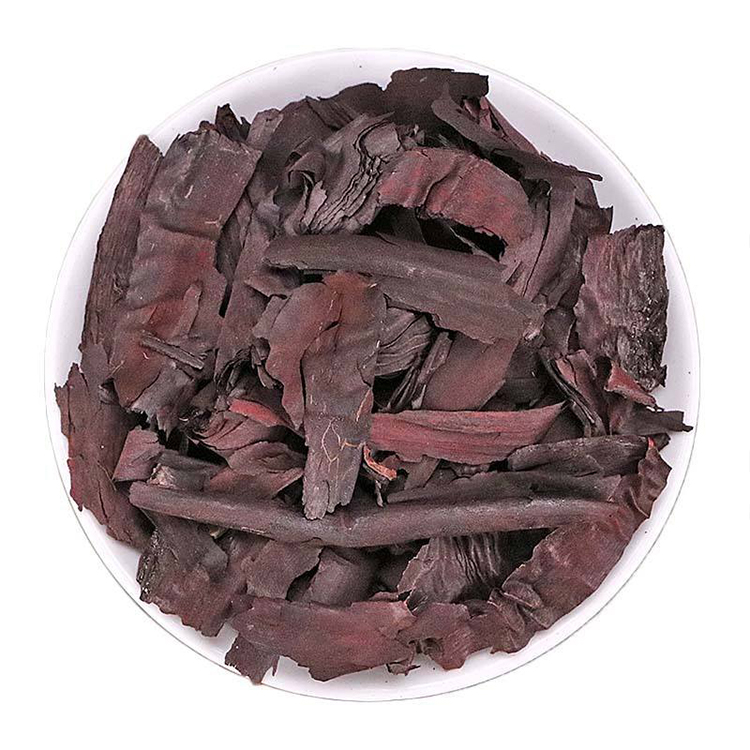
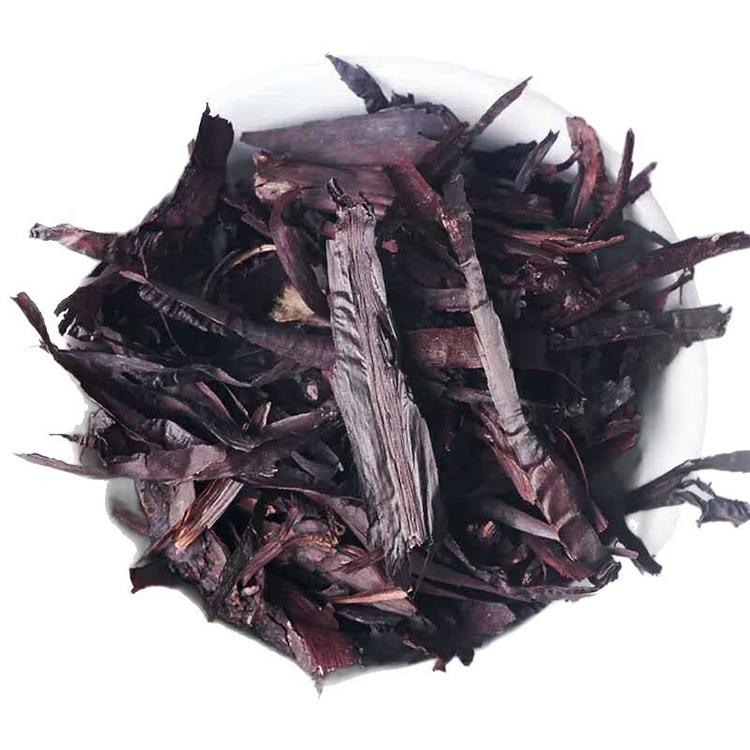
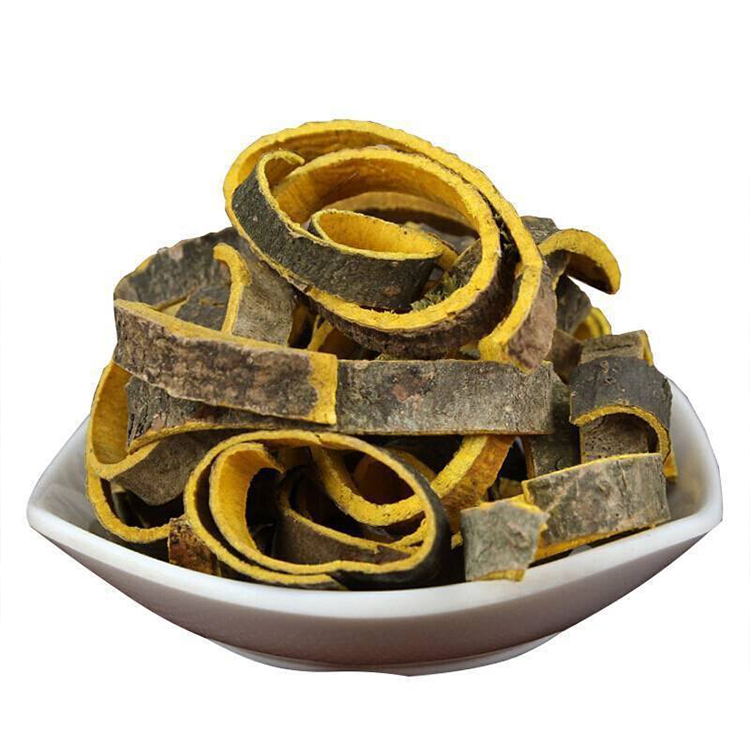
A thin transverse slice may show a purple exterior ring surrounding a much lighter core. Coarse fragments rich in bark can appear dramatically darker. Powder destroys most of that anatomical information completely.
So color must always be interpreted with:
botanical identity
cortex-to-wood proportion
root diameter
cut orientation
drying history
storage history
particle-size distribution
chemical testing
A supplier can therefore produce two visually different bags from botanically similar raw material simply by changing the cutting and sorting process.
Recent data show why visual grading is too weak
A 2026 study of Arnebia euchroma across different growth years reported total hydroxynaphthoquinone pigment contents ranging from 1.73% to 4.44%. The concentration of β,β′-dimethylacrylshikonin increased from 0.11% in two-year-old plants to 0.52% in seven-year-old plants. The researchers ultimately identified four years as the best overall harvest point in their study when chemistry, biomass, activity measurements, and economics were considered together. 2026 Frontiers study on Arnebia euchroma growth years and quality
That is a wide chemical range.
The same paper estimates Chinese domestic demand for A. euchroma at roughly 1,200 tonnes annually, while reported annual supply from wild resources is under 100 tonnes. Whether those figures remain stable year to year is less important than the purchasing signal: high-value material under supply pressure deserves tighter identity and substitution control, not looser control.
Processing changes the number again
One extraction study on Lithospermum erythrorhizon reported shikonin contents of:
Cut Size Changes the Product You Are Actually Buying
A vague request for “dried Purple Gromwell Root” leaves far too much room for interpretation.
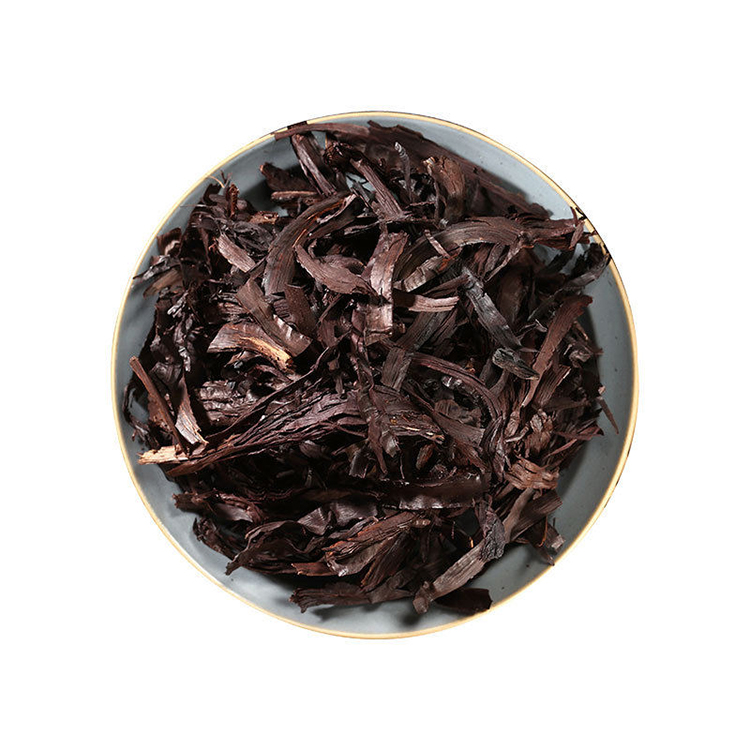
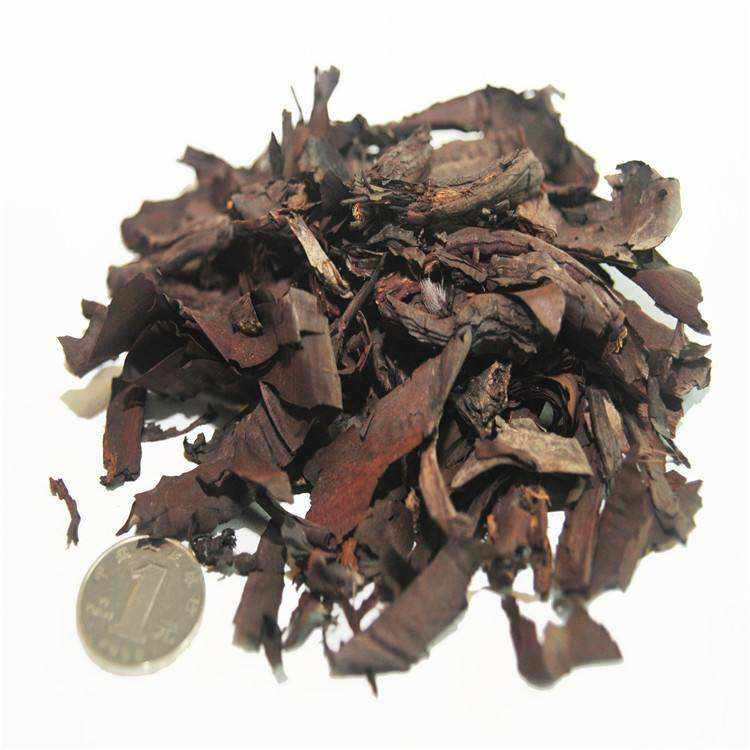
Whole root, thick slices, short cross-cuts, irregular fragments, coarse-cut extraction material, and powder behave differently in inspection, manufacturing, extraction, storage, and adulteration control.
This is one of those boring details that decides whether a shipment works.
Whole root gives QA more identity evidence
Whole or minimally processed Purple Gromwell Root preserves:
root diameter
branching pattern
external texture
cortex structure
wood-to-cortex ratio
fracture characteristics
natural color distribution
That makes gross substitution easier to detect.
It also creates extra work for the buyer who still needs cutting or milling.
Slices improve process consistency
Controlled slices can improve dosing, blending, extraction loading, packing density, and manufacturing repeatability.
But “sliced” is not a specification.
Write the thickness range.
If you approve a 2–4 mm reference slice, for example, do not allow the production lot to arrive as a mixture of dust, 1 mm chips, 8 mm chunks, and intact roots simply because all four are technically “cut root.”
The exact acceptance range should come from your process validation rather than from a generic supplier catalog.
Powder removes your visual safety net
Powder can be useful for extraction, blending, supplements, or further processing.
It also makes botanical inspection much harder.
Once the material is milled, you lose many macroscopic features that help distinguish cortex, woody tissue, root diameter, foreign matter, and substitute species.
So the more aggressively a supplier processes the root, the more analytical evidence I want.
That principle applies across Chinese herbal procurement. GuoCao’s Chinese Herbal Slices Supplier Checklist provides a broader framework for matching identity methods, COA review, contaminants, traceability, cut specifications, and supplier qualification to the physical form being purchased.
Match Purple Gromwell Root Specifications to the Application
There is no sensible “best Purple Gromwell Root” specification without an end use.
A decoction-piece distributor, extract manufacturer, cosmetic developer, botanical research laboratory, and U.S. dietary supplement manufacturer may all ask for something called Purple Gromwell Root.
They should not all receive the same specification.
Extraction buyers should control chemistry, not just shade
If the commercial value comes from shikonin or related naphthoquinones, the purchase specification should define how chemistry will be evaluated.
That could involve HPLC or another validated chromatographic approach.
Research on Lithospermum erythrorhizon has quantified shikonin-related compounds using detection around 520 nm, which corresponds to the strongly colored naphthoquinone system.
But the exact release method belongs in your validated specification.
Do not copy a research method blindly and call it QC.
Cosmetic buyers face another question: what is the ingredient doing?
If Purple Gromwell Root extract is being used in a cosmetic formula, distinguish a botanical extract used for formulation purposes from a material intentionally used to impart color.
For the U.S. market, FDA regulates substances used as color additives in cosmetics and publishes permitted-use tables together with applicable restrictions. “Natural” does not create an automatic exemption from color-additive rules. FDA list of color additives permitted for cosmetics
That is an application-control issue, not merely a supplier-quality issue.
U.S. supplement buyers cannot outsource identity to a PDF
This point deserves more attention.
Under FDA dietary supplement CGMP rules, manufacturers must conduct at least one appropriate test or examination to verify the identity of a dietary ingredient component, absent an applicable exemption. Supplier COA reliance for other specifications also requires supplier qualification and confirmation of reliability. FDA dietary supplement CGMP compliance guide
And FDA is still enforcing this.
In a June 5, 2026 warning letter to Mineral BioSciences, FDA said the company had failed to establish the reliability of suppliers’ COAs through confirmation testing. The agency also emphasized that 21 CFR 111.75(a)(2) does not allow a firm simply to rely on a COA to establish the identity of a dietary ingredient. FDA 2026 Mineral BioSciences warning letter
That should end the argument that a supplier PDF is enough.
It is not.
A COA Without Lot Control Is Just Office Paper
When I evaluate a purple gromwell root supplier, I would rather see a plain spreadsheet tied to the exact shipment than an impressive 12-page certificate package that cannot be connected to the bags in the warehouse.
The lot has to join the evidence chain.
At minimum, match:
accepted botanical name
plant part
country and region of origin
harvest or procurement lot
processing date
cut specification
batch number
COA number
packaging label
quantity
test date
laboratory
analytical method
specification limit
numerical result
“Pass” tells me almost nothing.
I want numbers.
Contaminants are not theoretical
The herbal sector continues to produce very real contamination failures.
On March 10, 2025, a U.S. recall covered four Zaarah Herbals products—Rasayan Churan, Gurmar Powder, Vasaka Powder, and Bhringraj Powder—after testing found elevated lead and inorganic arsenic. The products had been distributed in New York, New Jersey, Connecticut, and California; FDA’s notice reported no illnesses at the time of publication. FDA 2025 Zaarah Herbals lead and arsenic recall
Purple Gromwell Root was not the recalled ingredient.
That is not the point.
The lesson is that botanical procurement teams cannot treat heavy metals, pesticides, microorganisms, foreign matter, and identity as paperwork exercises merely because the incoming material “looks natural.”
How to Source Purple Gromwell Root Without Buying a Naming Dispute
This is the workflow I would use for how to source Purple Gromwell Root professionally.
1. Lock the botanical identity first
Write the Latin binomial and plant part before asking for the final price.
or, when Chinese pharmacopoeial Arnebiae Radix is required:
Arnebia euchroma (Royle) Johnst. — dried root
Do not allow the supplier to replace the botanical description with only “Zi Cao.”
2. State the governing market and application
Tell the supplier whether the material is intended for:
Chinese medicinal use
Japanese pharmacopoeial use
extraction
cosmetics
dietary supplements
research
other industrial processing
The answer changes the specification.
3. Approve a physical reference
Keep a sealed reference sample from the approved lot or development batch.
Photograph it under controlled lighting.
Record:
overall shade
outer-root appearance
fracture color
diameter distribution
cut size
bark retention
woody fraction
foreign matter
Then stop arguing about descriptive words such as “deep purple.”
Compare actual lots.
4. Define the cut numerically
State slice thickness, coarse-cut range, mesh, or particle-size distribution as appropriate.
Also define what happens to fines.
A shipment with 20% dust can behave very differently from a clean coarse cut even if both came from the same roots.
5. Select chemistry that reflects the commercial purpose
Depending on species and market, evaluate an appropriate fingerprint, shikonin-related marker profile, total hydroxynaphthoquinones, or other compendial parameters.
The 2025 Chinese Pharmacopoeia, as summarized in 2026 research on Arnebia euchroma, uses total hydroxynaphthoquinone pigments and β,β′-dimethylacrylalkannin as official marker compounds for that material.
Do not apply that statement automatically to Lithospermum erythrorhizon under another national monograph.
Standards follow identity.
6. Build a contaminant panel for the destination market
Risk-based testing may include:
Pb
As
Cd
Hg
pesticide residues
microbiological limits
mycotoxins where justified
sulfur dioxide where relevant
foreign matter
moisture
ash or extractives where required
“Third-party tested” is not a specification.
Ask what was tested.
7. Test the commercial lot, not just the sales sample
The sample should represent the shipment.
A hand-selected 200 g pre-sale sample tells you what the supplier can find.
A properly sampled production lot tells you what you are actually buying.
Those are different questions.
8. Put change control into the purchase agreement
Require advance notification if the supplier changes:
botanical source
cultivation area
wild versus cultivated status
processor
drying method
cut size
milling process
laboratory
analytical method
packaging
subcontractor
If a supplier cannot tell you when the source changes, you do not have repeatable sourcing.
You have repeated spot buying.
For companies importing multiple Chinese botanicals rather than a single SKU, the site’s guide to importing herbal slices from China provides useful context on customs documentation, batch consistency, and supplier controls that should sit alongside the Purple Gromwell Root specification.
What I Would Put in a Purple Gromwell Root Purchase Specification
A practical RFQ should look closer to this:
Specification field
Buyer instruction
Trade name
Purple Gromwell Root
Pinyin/trade synonym
Zi Cao, only when applicable
Botanical identity
Declare exact Latin binomial
Plant part
Root
Pharmacopoeial reference
State applicable market/monograph
Physical format
Whole / sliced / coarse cut / powder
Cut range
Define numerically
Appearance
Approved reference standard plus written description
Moisture
Numerical buyer or compendial limit
Foreign matter
Numerical limit
Chemical identity
Approved method/fingerprint
Marker compounds
Application- and monograph-specific
Heavy metals
Numerical limits for target market
Pesticides
Defined panel and limits
Microbiology
Application-specific limits
Origin
Country, region, cultivation source
Lot traceability
Mandatory
COA
Lot-specific numerical results
Retained sample
Required
Change notification
Required before shipment
Notice what is missing?
“Premium grade.”
I would delete that phrase from almost every botanical RFQ.
It has no analytical meaning.
What the Best Purple Gromwell Root Supplier Should Be Able to Prove
The best Purple Gromwell Root supplier is not necessarily the supplier with the darkest product photograph, lowest price per kilogram, longest list of certifications, or most aggressive claim about Xinjiang origin.
The better supplier is the one that can repeatedly connect identity, processing, appearance, chemistry, contaminants, traceability, and commercial shipment records to the same lot.
Ask five uncomfortable questions:
Which exact species will appear on the invoice and COA?
What happens if our independent identity test disagrees with yours?
Can you show three recent lot COAs rather than one sample COA?
Will you notify us before changing origin or processor?
What is your written procedure if the shipment fails agreed testing?
Purple Gromwell Root is a commercial name used for red-purple Boraginaceae roots associated with shikonin-type naphthoquinone pigments, but professional buyers must identify the exact species because Chinese Arnebiae Radix and Japanese Lithospermi Radix can refer to different pharmacopoeial botanical sources, making the Latin binomial essential in procurement specifications.
The term may appear alongside Zi Cao, Shikon Root, Lithospermum Root, Arnebia Root, or Lithospermi Radix. These names should not be assumed to mean exactly the same material across countries, pharmacopoeias, and suppliers.
Is Zi Cao root the same as Lithospermum erythrorhizon root?
Zi Cao root and Lithospermum erythrorhizon root should not automatically be treated as identical because China’s current pharmacopoeial Zicao is Arnebiae Radix from Arnebia euchroma or Arnebia guttata, while Japan’s Lithospermi Radix is defined as the root of Lithospermum erythrorhizon Siebold & Zucc.
Commercial naming is less disciplined than pharmacopoeial naming. That is why the purchase order, COA, labels, laboratory methods, and internal material code should all state the botanical source rather than relying only on “Zi Cao.”
How do buyers judge Purple Gromwell Root quality?
Purple Gromwell Root quality is judged by combining verified botanical identity, root-part confirmation, characteristic appearance, controlled cut size, moisture and foreign-matter limits, appropriate chemical fingerprints or marker assays, contaminant testing, origin traceability, lot-specific documentation, and confirmation that the specification fits the material’s intended manufacturing or regulatory application.
Color can support inspection because shikonin-related pigments concentrate in the outer root tissues, but appearance alone cannot confirm species, chemical strength, cleanliness, or regulatory conformity.
Does darker Purple Gromwell Root contain more shikonin?
Darker Purple Gromwell Root may contain more visible pigment-rich outer tissue, but color intensity alone cannot reliably predict shikonin content because species, root age, bark proportion, cut geometry, cultivation conditions, drying, storage, extraction method, and individual shikonin derivatives can all influence the appearance and analytical result.
Use a controlled visual standard for receiving inspection and an appropriate analytical method when chemical composition matters commercially. Treat color as screening evidence, not the final release test.
What is the best cut size for bulk Purple Gromwell Root?
The best Purple Gromwell Root cut size is the particle range that matches the buyer’s validated process: whole roots preserve morphological evidence, controlled slices support traditional or retail applications, coarse cuts can improve extraction handling, and powders simplify blending but require stronger analytical identity control because visible botanical characteristics have been destroyed.
Instead of requesting merely “cut root,” define slice thickness, coarse-cut range, mesh size, fines allowance, and retained reference sample before commercial production.
How do I choose the best Purple Gromwell Root supplier?
The best Purple Gromwell Root supplier is one that consistently ships the exact declared botanical species and plant part, maintains controlled physical specifications, supplies lot-specific numerical test data, supports independent verification, traces material to origin and processing records, manages contaminants, keeps retained samples, and provides written change-control and nonconformance procedures.
Start with evidence before price. Review multiple historical lots, compare samples against commercial shipments, verify the laboratory methods, and confirm that the supplier can support the regulatory and documentation requirements of your destination market.
Build the Specification Before Requesting the Final Quote
Do not send a supplier an inquiry that says:
“Please quote your best Purple Gromwell Root.”
Send this instead:
Botanical name + plant part + destination market + application + whole/cut/powder format + target cut size + annual volume + required chemical testing + contaminant limits + packaging + documentation requirements.
Then request a representative sample and lot-specific COA.
Our low MOQ of 1 kg (2.2 lb) makes it easy to order Chinese herbal slices or wholesale Chinese medicine herbs. Private-label and bilingual labeling are also available.
Delivery Cycle & Support
We have a fast 7-day lead time. We provide free samples, COA reports, and technical support to help you bring high-quality bulk Chinese herbs to market.
Quality & Certifications
Our products are manufactured in a GMP-certified facility and meet ISO22000 standards. All Chinese herbs are third-party tested for heavy metals, pesticides, and microorganisms.