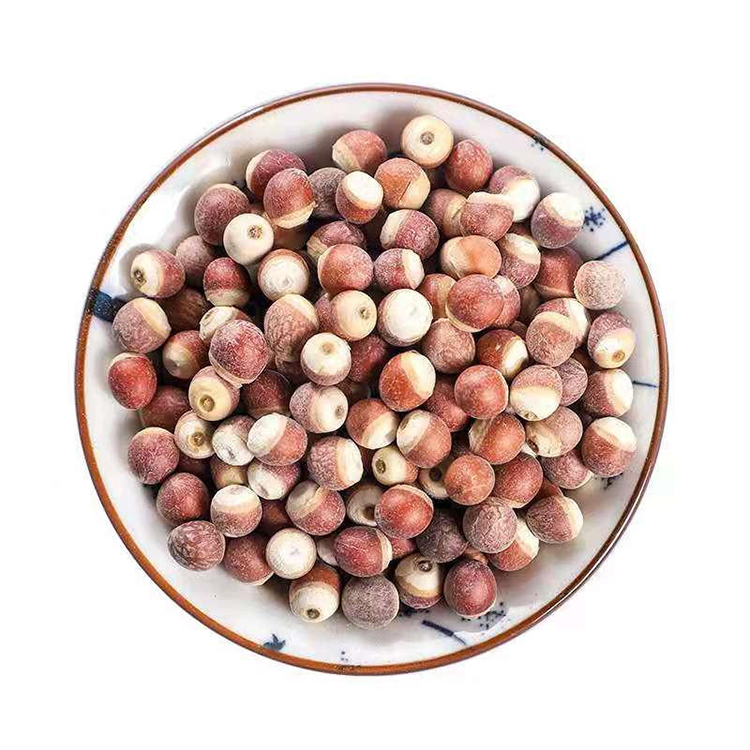
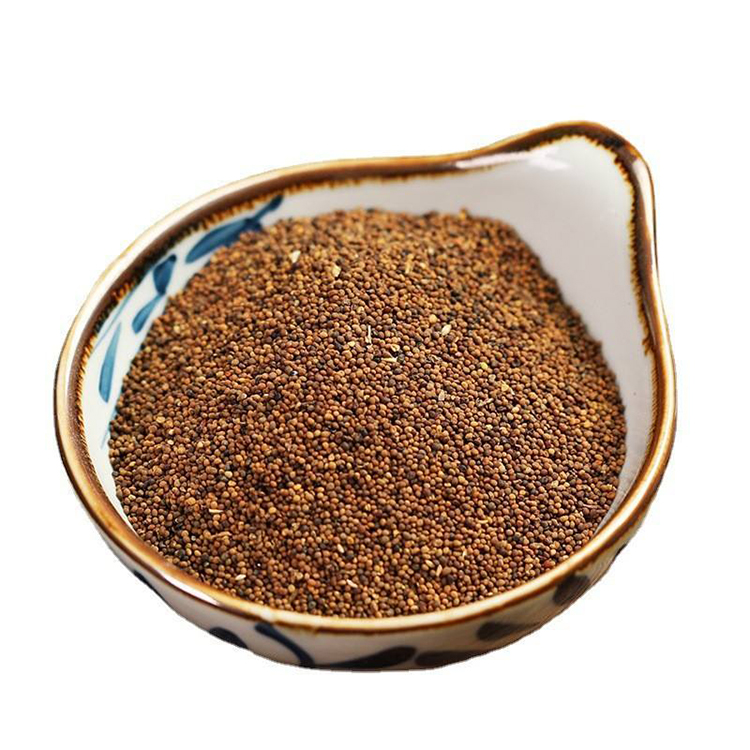
If you export He Shou Wu (Polygonum multiflorum, Fo-ti), you’re not only shipping a root. You’re shipping risk that many regulators already know very well.
This root sits in the “hair, anti-aging, tonic” scene. At the same time, doctors and agencies link it with herb-induced liver injury. For buyers in the US, EU, Australia, Japan and more, He Shou Wu is never just another rhizome in a big herb list.
The good news: with the right processing, testing and paperwork, it can still move smoothly as bulk slice, extract raw material or ready formula. That’s exactly the gap a full-chain manufacturer like GuoCao fills. We don’t just sell herbs. We help you pass customs, audits and label checks.
You can see that logic across our product ranges on GuoCao’s main site: roots and rhizomes, flowers, fruits and seeds, plus OEM work for teas and enzyme drinks for global clients.
He Shou Wu (Polygonum multiflorum) hepatotoxicity and herb-induced liver injury (HILI)
Regulators never wake up and suddenly dislike a single plant. They react to patterns. For He Shou Wu, the pattern is clear by now.
Clinical reports from several countries describe liver injury after people used products that contain this herb. In liver-injury registries, herbal and dietary supplement cases already take a big slice of the pie, and Polygonum multiflorum shows up again and again in that basket.
For an export brand, this means one simple thing: this ingredient starts the conversation in the “high-attention” group, not the “low-risk” group. Pharmacies, hospitals and supplement factories will ask more questions. Border inspectors may pull more samples.
Clinical liver injury cases linked with Fallopia multiflora / He Shou Wu
If we cut away all the medical jargon, the case story looks like this:
People use a product that contains He Shou Wu, often for hair, energy or anti-aging.
After some days or weeks, blood tests show liver enzymes going up; some feel tired, itchy, or yellow in the eyes.
Most recover when they stop the product, but a small group becomes very sick and need intensive care.
Australia is the clearest public example. Their agency collected a small but serious cluster of liver-damage reports related to products with Fallopia multiflora, then issued a safety advisory. Labels now must warn that this herb may harm the liver in some people. Some products also got recalled.
So when a buyer sees He Shou Wu in your spec sheet, they don’t only see a tonic. They see HILI risk that must be handled on the manufacturing side, not pushed to the final brand only.
To be honest, if your supplier can’t even say this out loud, that’s already a red flag.
Processing requirements for Polygoni Multiflori Radix in Chinese Pharmacopoeia
Most of the modern safety story for this root goes back to a very old practice: processing with black soybean decoction.
Traditional Chinese medicine rarely uses raw He Shou Wu for long time use. It uses processed Polygoni Multiflori Radix, where the root is cooked together with a thick black-bean soup, then steamed and dried. Research today basically confirms what doctors in the past already felt: proper processing reduces some of the chemical fractions linked with liver injury.
Traditional steaming with black soybean decoction and modern GMP slicing
The Chinese Pharmacopoeia describes a flow roughly like this:
Clean and select roots.
Cook black soybeans to make a strong decoction.
Mix or soak the root slices until they are fully soaked with this liquid.
Steam for a fixed time, then dry to a defined moisture level.
Cut into even slices for decoction or further extraction.
Modern studies show lower levels of free anthraquinones and related compounds after this treatment, and normally also lower toxicity in animal tests. The details of numbers are less important than the message:
Regulators want to see clear, repeatable processing, not “hand-wave” stories.
So for export buyers, good processing spec looks like this, not like a poem:
how many hours of steaming;
typical steaming temperature;
ratio between root and black-bean decoction;
final moisture range and slice thickness.
At GuoCao’s root and rhizome line, we run these steps on a GMP herbal-slice production line. The line is built for standard roots like Ginseng, Astragalus and Salvia, and He Shou Wu plugs in to the same process control: fixed cycle, stable moisture, lot tracking and batch records.
You don’t just say “we follow tradition”. You prove it with SOPs and batch documents, so the overseas QA team can sleep at night.
Heavy metal, pesticide and aflatoxin limits for herbal medicinal products
Even if you solved liver-toxicity worries with good processing, you still face the classic contaminant trio: heavy metals, pesticide residues and mycotoxins.
EU Ph. Eur. vs Chinese Pharmacopoeia contaminant control
In many markets the technical numbers look like this (simplified):
Parameter
Typical limit in herbal-drug standards*
What it means in real life for He Shou Wu
Cadmium (Cd)
about 1.0 mg/kg max
You can’t buy from random polluted areas; soil and water must be checked and locked.
Lead (Pb)
about 5.0 mg/kg max
Old sheds, roadside drying and dirty bags push Pb up. That lot is dead on arrival at customs.
Mercury (Hg)
about 0.1 mg/kg max
Very low ceiling; needs strict farm source and regular lab checks.
Aflatoxin B1
often 2–5 μg/kg
If your drying and storage is careless, mold wins and the batch loses.
Total aflatoxins
often 4–10 μg/kg
Forces you to treat post-harvest storage as real QA, not only logistics.
*Different markets use slightly different numbers, but the order of magnitude is similar.
For an exporter this kind of data translate into one simple rule:
Every export batch of He Shou Wu needs a full COA panel: heavy metals, multi-pesticide screen, aflatoxins and micro. No “maybe later”.
On GuoCao’s Chinese herbs and spices catalog, all products, including He Shou Wu, run under ISO 22000 food-safety system plus third-party COA. Combined with normal-temperature, cool and modified-atmosphere warehouses, this cuts down mold risk and keeps aflatoxin numbers in the safe zone.
If you don’t control this part, the cargo may still load into container, but it might not walk out of the port on the other side.
WHO GMP and herbal processing practices for He Shou Wu manufacturers
WHO guidelines for herbal medicines say something very simple but very strict: you can’t split “processing” and “GMP” into two separate worlds.
For a root like He Shou Wu, this means:
documented cleaning, cutting and drying steps;
controlled steaming and black-bean processing;
clear batch records that link farm, warehouse and final slice.
GuoCao’s plant works as a one-stop system: GMP herbal-slice lines, ISO 22000 food-safety, and around 2,500 tons annual capacity across roots, flowers and whole herbs. This is not just big number showoff; it means we can standardize the flow and still offer OEM / ODM custom cuts, private label and bulk packs for different extraction plants and tea brands.
Sometimes customers ask “can you do a little different processing just for us?” Yes, we can tune thickness or cut type. But the core controls stay: same GMP line, same HACCP plan, same documentation. That is what regulators want to see if something goes wrong and they start an audit.
Regulatory safety advisories for He Shou Wu (TGA, FDA, EMA)
TGA safety advisory for Fallopia multiflora (He Shou Wu)
The Australian story is now a classic case study in many risk-management slides. Their regulator got several liver-injury cases where people used products with Fallopia multiflora. The agency didn’t ban the herb, but it did three strong moves:
Public safety advisory explaining the risk.
Required warning labels on all products with this plant.
Product recalls when labels or documentation were not good enough.
This is very important for exporters: once one strict country takes such action, other agencies read the same data. The risk perception changes world-wide. A buyer in Europe or North America will think, “if Australia is this careful, I also need better paperwork”.
International risk perception
Even without formal bans, He Shou Wu now sits on the mental “watch list” for many reviewers:
In drug-style registration, they see serious liver-injury history, so they ask for stronger safety package.
In food-supplement scene, they expect at least internal risk-assessment and proper warnings, not just “natural, so safe” marketing.
For border checks, they treat this herb similar to other sensitive ingredients: more sampling, more questions, sometimes slow release.
This kind of thing are annoying for importers. But if you show strong processing controls and solid test results, the conversation changes from “why did you use this risky herb?” into “ok, how did you manage that risk?”.
Compliance and documentation checklist for He Shou Wu export OEM brands
Think in checklists, not slogans. Many professional buyers and big wholesalers quietly use a list like this when they pick a supplier.
Raw vs processed status clearly stated
Is the product raw root or processed Polygoni Multiflori Radix?
Is the black-bean steaming method written into the spec and COA?
If your supplier can tick all six boxes and show real documents, not only nice words, you’ve already solved 80% of the regulatory headache before the first container leaves port.
Our low MOQ of 1 kg (2.2 lb) makes it easy to order Chinese herbal slices or wholesale Chinese medicine herbs. Private-label and bilingual labeling are also available.
Delivery Cycle & Support
We have a fast 7-day lead time. We provide free samples, COA reports, and technical support to help you bring high-quality bulk Chinese herbs to market.
Quality & Certifications
Our products are manufactured in a GMP-certified facility and meet ISO22000 standards. All Chinese herbs are third-party tested for heavy metals, pesticides, and microorganisms.



for-Export-Markets-2.webp)
for-Export-Markets-3-scaled.webp "Regulatory Risks and Processing Requirements of(He Shou Wu)for Export Markets 1")
for-Export-Markets-1.webp "Regulatory Risks and Processing Requirements of(He Shou Wu)for Export Markets 2")
for-Export-Markets-4.webp "Regulatory Risks and Processing Requirements of(He Shou Wu)for Export Markets 3")