Short, practical, zero fluff. You want a plan you can ship. Let’s talk demand, margin levers, packaging moves, and real sourcing—then tie it back to GuoCao so you actually get it done.
Private label keeps winning shelf space. Retail buyers like the value story, and shoppers accept store brands when quality holds. Tea sits in a sweet spot: daily ritual, functional promise, friendly price ladder. That means you can push a premium look and still keep velocity. No wild claims here—just a category that behaves steady and rewards good execution.
So what? If you bring clean-label herbal blends, strong QA, and retail-ready packs, you help the buyer lift margin and keep turns. That’s how you land and expand.
Profit Margins in Private-Label Herbal Tea (Levers, Not Myths)
Margins don’t “happen.” You design them. In herbal tea, the big swings come from packaging decisions, format choices, and supply discipline. We won’t compute cost line items here, but we’ll show where teams usually leak profit.
COGS Levers: Format, Material, Count per Pack
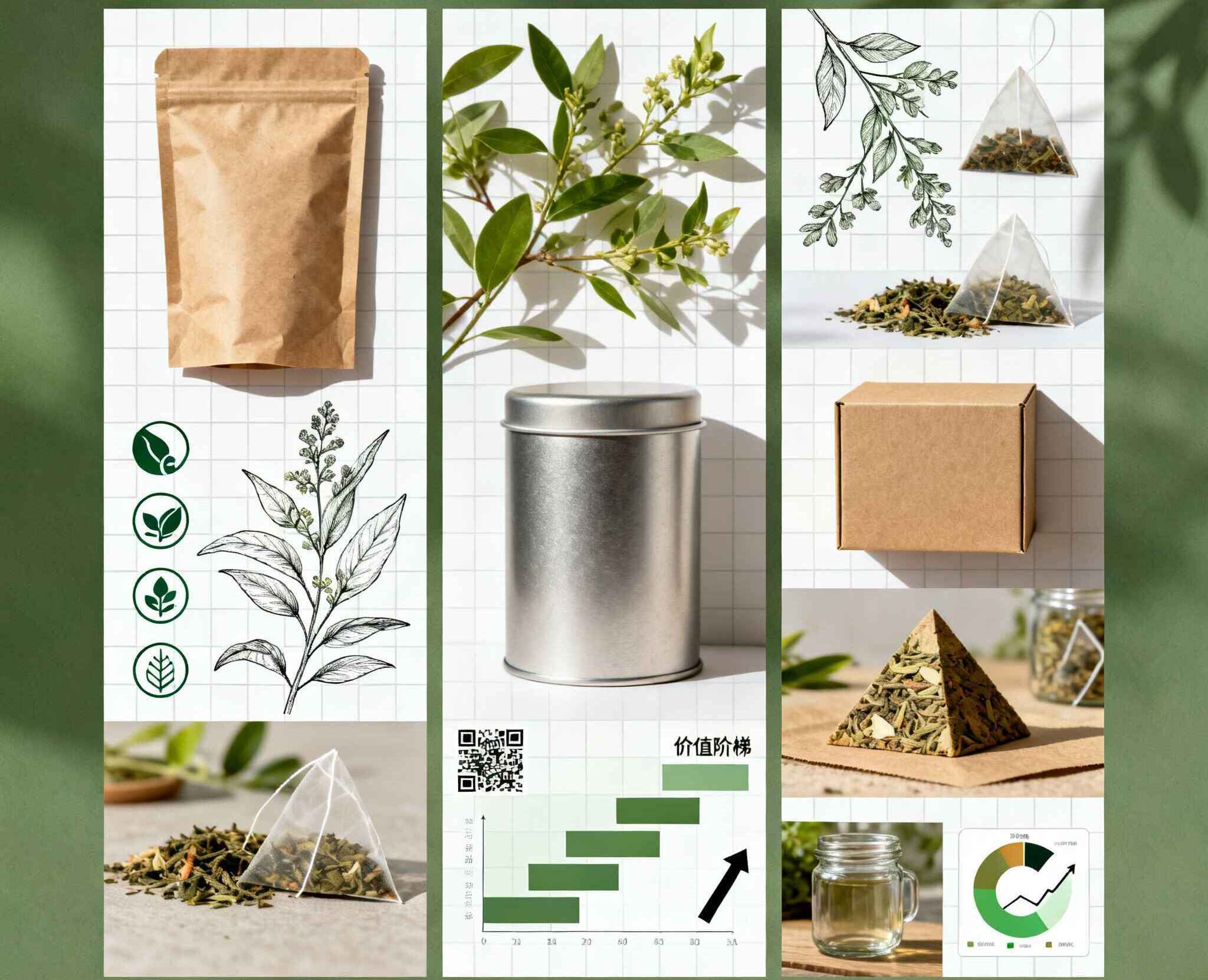
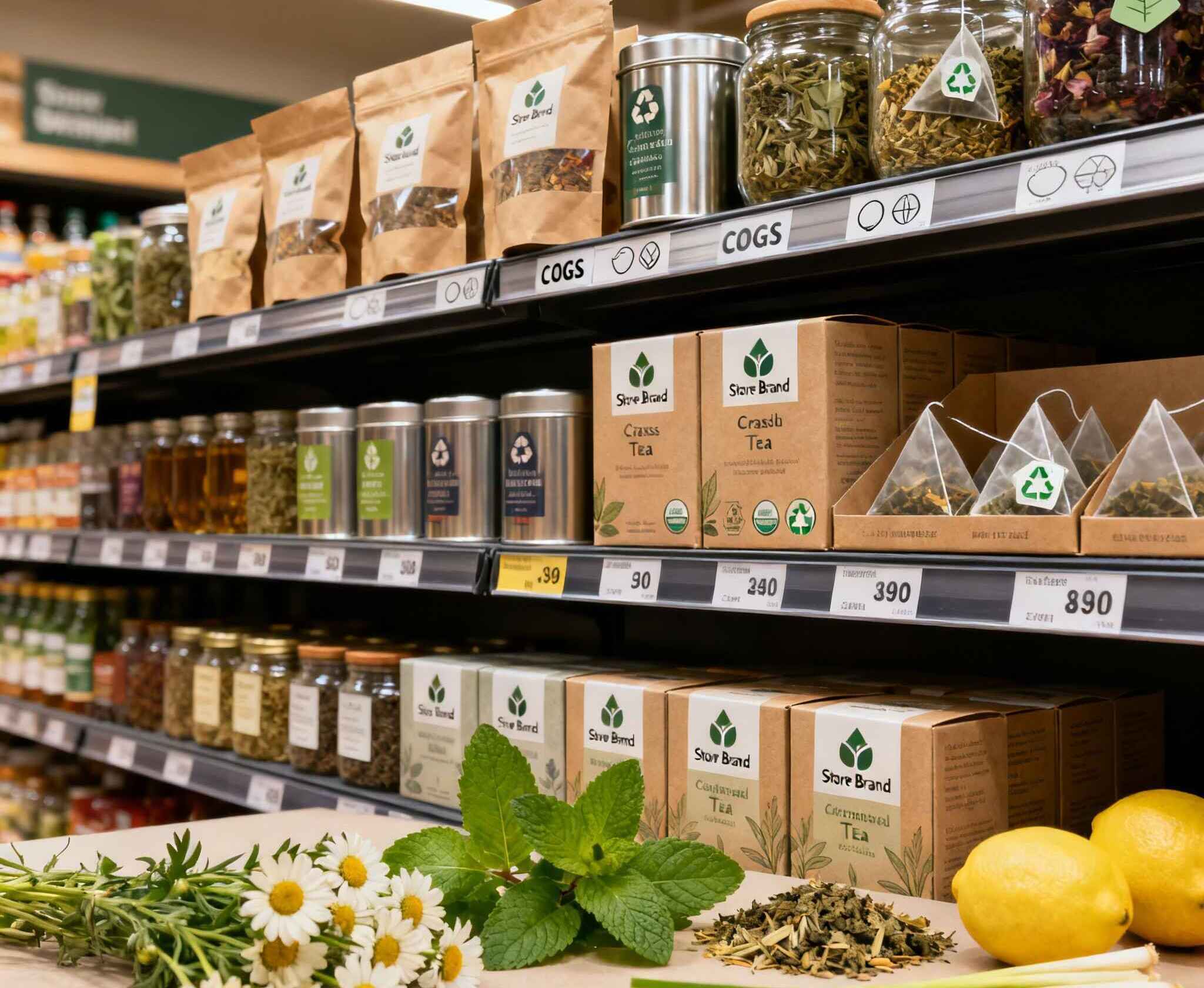
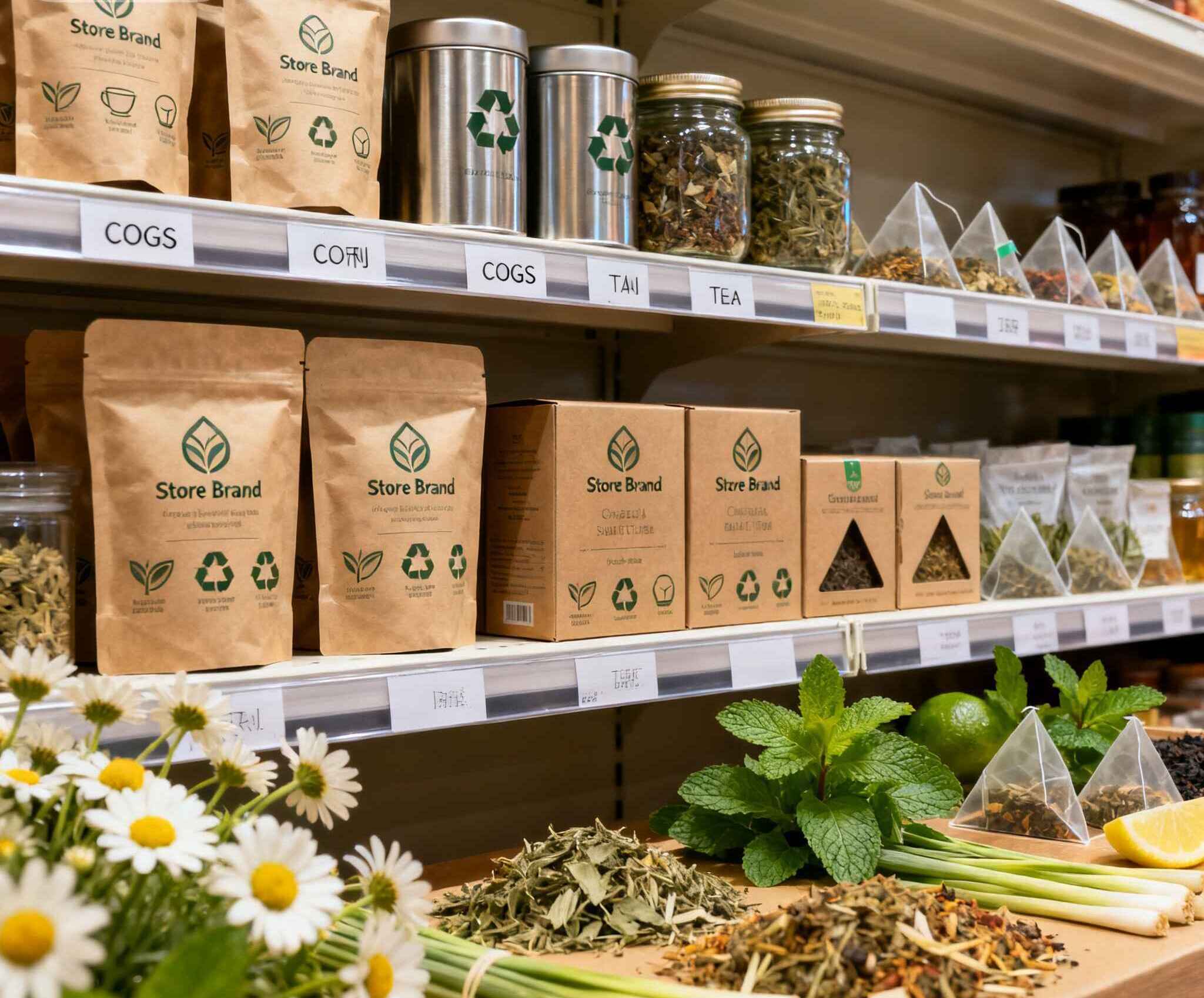
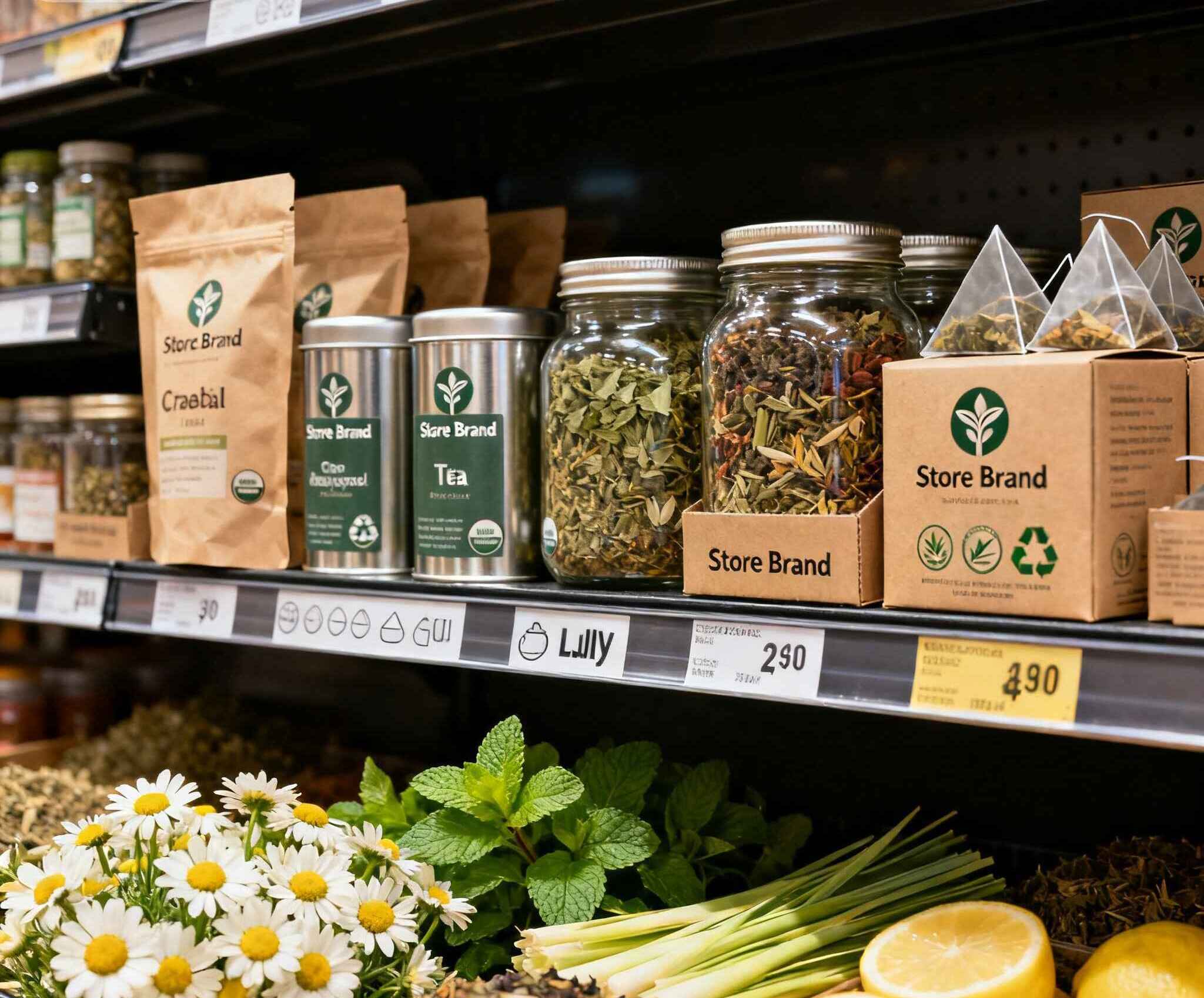
Format: loose-leaf, flat sachets, or pyramid bags. Pyramids brew fast and feel premium; flat sachets ship cheaper; loose-leaf screams authenticity but needs the right audience.
Material: PLA/cellulose meshes vs nylon/PET; paper-first or mono-material overwraps; cartons vs pouches. Choose what matches your claims (compostable, recyclable, plastic-lite).
Count per pack: 10–20 units hits more SRPs. Smaller count = trial; larger count = pantry value.
Carton vs pouch: pouches cut freight and storage; cartons win on shelf blocking.
Certs: organic/fair-trade/halal/kosher—great for filters, but they add ops steps. Bake them in, don’t bolt them on.
Channel Math: SRP, Velocity, Trade Terms
SRP bands: pick lanes, not everything. If you straddle budget and premium, you confuse.
Velocity vs trade spend: don’t sink the unit economics with promo calendars you can’t support.
Retail ops: plan MOQs, lead time, fill rate, OTIF; lock forecast windows early; keep changeovers lean.
Claims and copy: set realistic benefits (calm, digest, sleep vibe). It ain’t rocket science—clear beats clever.
Packaging drives both shelf appeal and margin. It also keeps you on the right side of EPR policies and retailer scorecards.
Compostable Tea Bags and Sachets (PLA, Cellulose)
PLA or cellulose pyramid bags: premium look, faster infusion for cut-sifted herbs and flowers.
Threads, tags, adhesives: make sure the whole system matches the claim, not just the mesh.
Home vs industrial compostability: be specific. Your QA/marketing team should align on exact language.
Mono-Material Overwraps and Paperization (Design for Recycling)
Mono-material films or paper-first wraps: reduce complexity and help recycling pathways.
Ink/adhesive choices: low-migration, food-contact compliant, test data on hand.
Carton design: SRP (shelf-ready packaging) for fast stocking, optional window only if it doesn’t break the recyclability story.
Microplastics in Tea Bags (Risk and Trust)
Risk lens: some legacy bags can release micro-/nanoplastics at brew temps.
Response: shift to PLA/cellulose or go loose-leaf where brand fits.
Message: explain why you chose a material. Simpler: “We brew clean, we keep it clear.”
Ingredient Sourcing: Barks Chinese Medicines (Use Cases, Scenarios, Flavor Notes)
Barks bring depth, aroma, and history. Below are eight GuoCao links (your own site) you can plug into PL blends. No outside links, just your inventory:
Blend scenarios: chai-adjacent warmth, sleep/chill, breath-support, “morning focus,” “after-meal calm.” Keep claims compliant. Use sensory language, not medical promises.
GuoCao OEM/ODM Capabilities (GMP, ISO 22000, COA, Global Supply)
GuoCao is a global manufacturer of Chinese medicinal herbs and spices with a GMP herbal slices line, ISO 22000 food safety system, ambient/cool/MA warehousing, and third-party COA capacity. Annual output up to 2,500 tons. We support OEM/ODM customization. Fermented botanical beverages are live in production. Products move across the U.S., Europe, Australia, Japan, Korea, Canada, Malaysia, the Philippines, and more than 30 regions. We serve pharma companies, supplement makers, commercial groups, hospitals, beverage brands, cosmetics raw-material buyers, and distributors.
Why it matters: you avoid supplier roulette. You get batch-level traceability, consistent cut-sizes, and real QA/QC. That means fewer surprises during line trials and fewer headaches at receiving. Kinda obvious, but still.
Evidence Table (Buyer Questions, Proof You Can Show)
Buyer question (CPG/Retail)
Evidence / answer
Proof you can show (no external links)
Is private label herbal tea growing?
Category stays resilient; retailers add premium store SKUs as shoppers trade into value.
Internal sell-in deck; retailer POS snapshots; your own velocity from pilot doors.
Will your packs meet EPR and sustainability asks?
Mono-material or paper-first wraps; compostable PLA/cellulose where fit; accurate claims.
Packaging spec sheets; compostability notes (home vs industrial); migration/ink statements.
Are your materials microplastics-safe?
We avoid legacy PP/nylon bags in favor of PLA/cellulose; loose-leaf option available.
Material declarations; supplier letters; brew-test logs.
Can you hit OTIF with MOQs?
Locked cut-specs, forecast windows, buffer stock for A-SKUs.
Capacity statement; line schedule; safety stock plan.
Is your QA robust?
ISO 22000 food safety, GMP line, third-party COA; HACCP and PCQI on file.
Latest COA templates; batch traceability maps; SOP excerpts.
Any real sourcing depth?
Bark portfolio covers flavor, function stories, and price tiers.
Links to your own SKU pages (see above); process photos if needed.
Packaging Options vs Margin Pressure – Quick Matrix
Packaging format
Margin pressure
Sustainability path
Brew quality
Shelf impact
Ops complexity
Loose-leaf pouch
Low–Medium
Paper/mono-material pouch; minimal plastic
High (for connoisseurs)
Moderate
Low
Flat sachet + overwrap
Medium
Paper-first overwrap; mono-material film
Medium
Good (neat rows)
Medium
Pyramid sachet (no envelope)
Medium
PLA/cellulose mesh; carton or pouch
High
Premium feel
Medium
Pyramid sachet + envelope
Higher
Compostable envelope if feasible
High
Premium + hygienic
Higher
Tin + inner bag
Higher
Recyclable metal; consider PCR content
Medium–High
Giftable, eye-catching
Higher
Tip: run one premium format and one value format. Let the shopper self-select. Don’t make every SKU costly to run.
Product Development Workflow (Pilot, Measure, Scale)
Define the jobs-to-be-done: calm, focus, digestion, winter warmers. Pick 2.
Pick format path: flat sachet for value; pyramid for premium. Keep SKUs tight.
Choose materials: PLA/cellulose meshes, paper-first wraps, mono-material where possible.
Build blends with barks: cinnamon for warmth; magnolia for calm; eucommia for depth; eleutherococcus for daytime blends; tiny phellodendron for backbone; mulberry root bark for a clean finish; dictamni for a sharp lift; aucklandia for classic resin note. Use micro-dose on the stronger ones.
QA and claims: align copy with material science and brewing behavior. Keep it clean, compliant, and human.
Operations plan: lock MOQs, lead time, line changeover windows. Model cases per pallet, master carton dims, ship tests.
CTA: “Source with GuoCao. Lock specs. Pilot two SKUs. Scale if it sticks.”
Site alignment: Your site title already sets the tone—Wholesale Chinese Medicinal Herbs and Spices Supplier – GuoCao. Your meta line—one-stop herbs & spices supplier across animal & mineral, roots & rhizome, fruits & seeds, flowers & whole herbs, barks—maps cleanly to category pages and buyer filters.
GuoCao Commercial Value (Why Us, Why Now)
Speed to shelf: OEM/ODM ready, stable supply, real documentation.
Global proof: shipments across 30+ countries and regions; used by pharma, supplement processors, beverage makers, hospitals, distributors.
Our low MOQ of 1 kg (2.2 lb) makes it easy to order Chinese herbal slices or wholesale Chinese medicine herbs. Private-label and bilingual labeling are also available.
Delivery Cycle & Support
We have a fast 7-day lead time. We provide free samples, COA reports, and technical support to help you bring high-quality bulk Chinese herbs to market.
Quality & Certifications
Our products are manufactured in a GMP-certified facility and meet ISO22000 standards. All Chinese herbs are third-party tested for heavy metals, pesticides, and microorganisms.