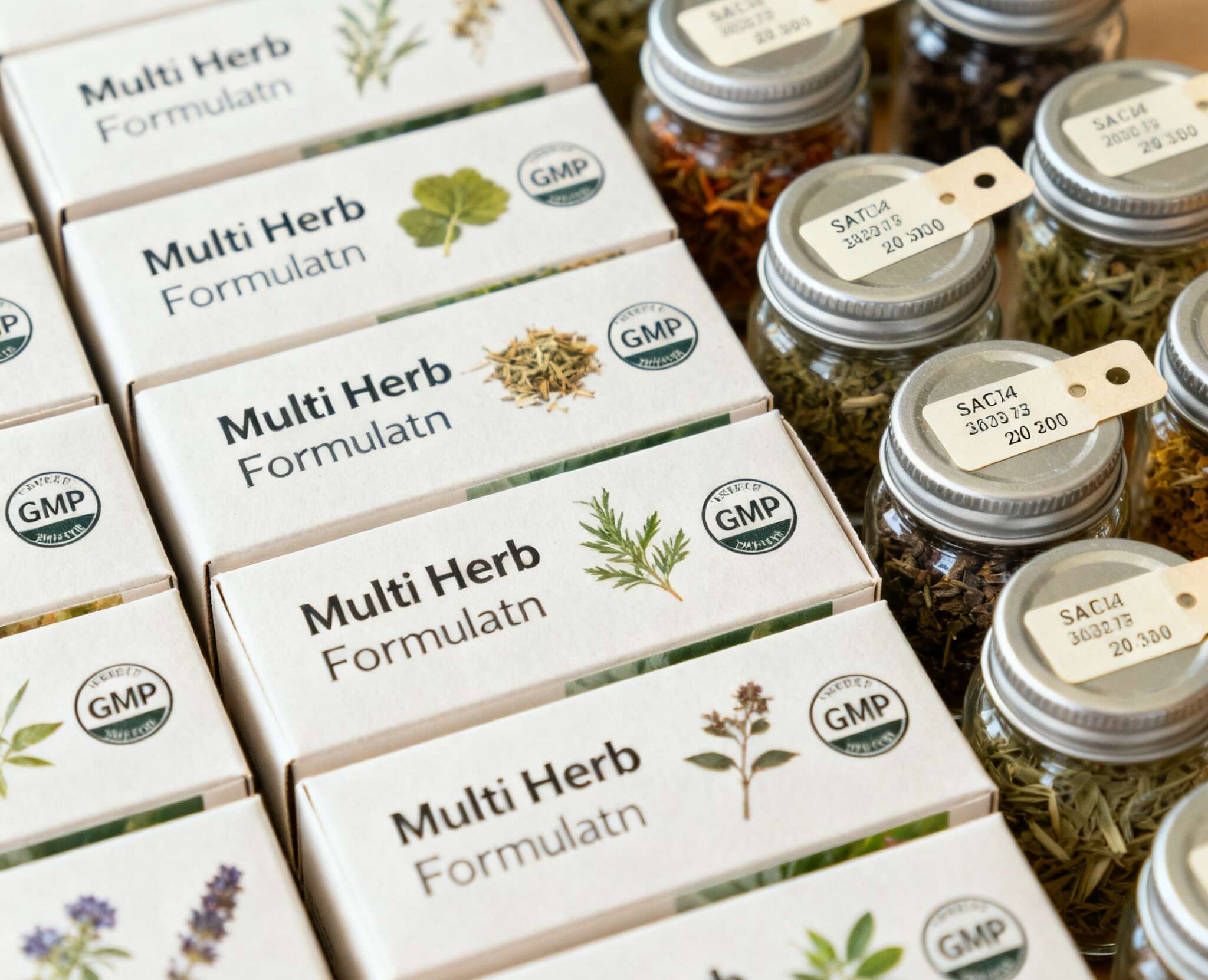
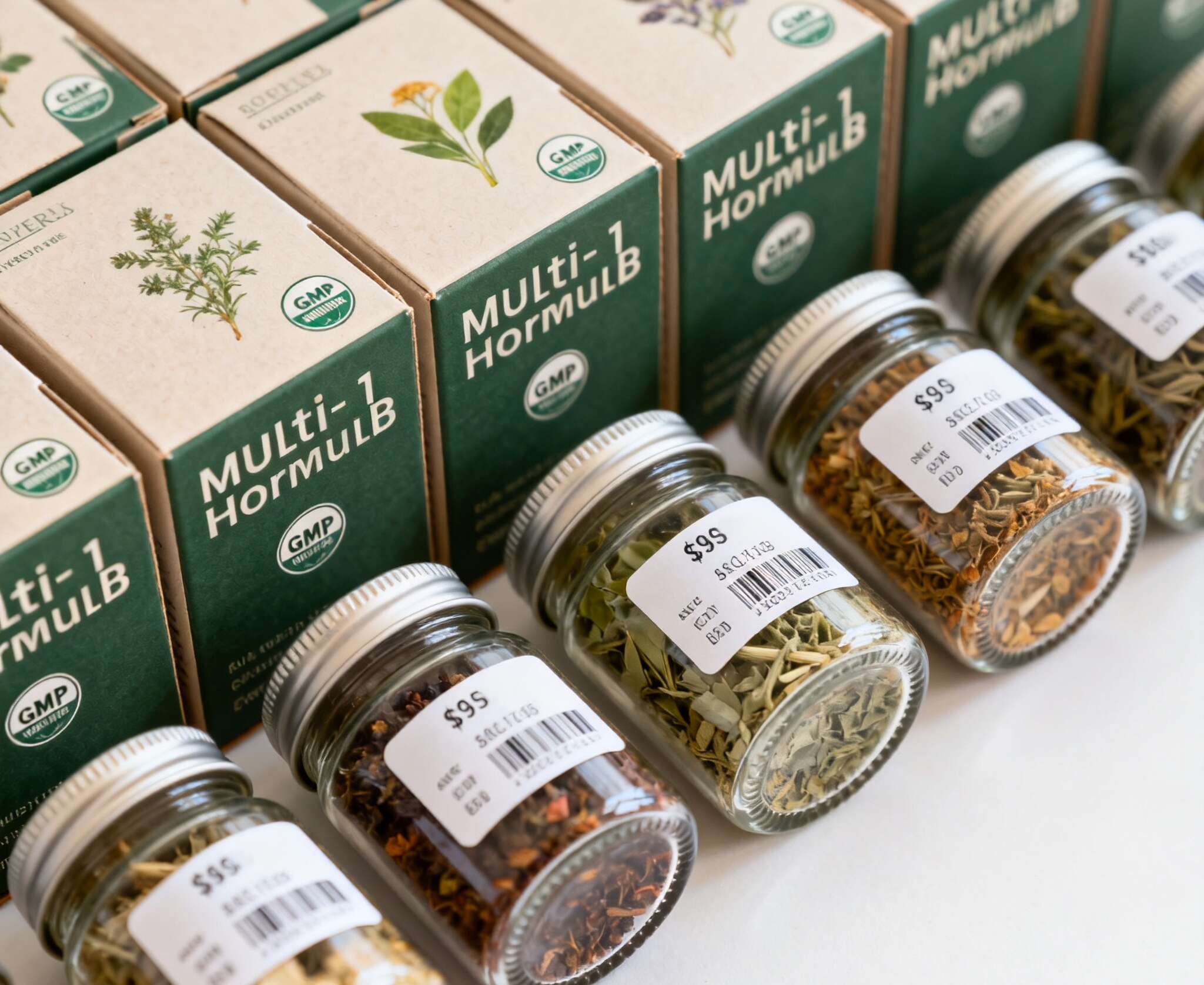
Short take: singles move fast on shelf; formulas win in protocols. Quality control, compliant claims, and supply-chain discipline make both work. GuoCao can handle either path—clean spec, clean paperwork, clean launch.
Market Trends: Single Herbs vs. Multi-Herb Formulas
In retail, single herbs usually grab attention first. Shoppers search one plant, one benefit, one clear label. A single-ingredient SKU keeps the panel tidy and the promise simple. It’s quick to educate, easy to add to cart, and friendly to PPC and SEO.
Formulas tell a wider story. They aim at multi-pathway support—digestion, sleep, stress, women’s balance, you name it. That story plays best where you have time and trust: practitioner networks, hospital procurement, functional programs, or DTC brands that teach. You need more copy, more QA, and a consistent narrative. When the education lands, repeat purchase tends to be steadier. Not always, but often.
Bottom line: use singles as your “front door.” Add focused blends when you’ve earned a minute of the customer’s attention.
Regulatory Compliance: FDA DSHEA, EU Traditional Herbal Registration, Japan Kampo
FDA DSHEA Structure/Function Claims (United States)
Under DSHEA, dietary supplements can make structure/function claims like “supports joint comfort” or “helps maintain immune function.” You can’t claim to diagnose, treat, cure, or prevent disease. Singles and formulas live under the same rule set. Keep records for your substantiation. Notify appropriately. Label clean. Sounds basic, but this is where many teams trip.
EU Traditional Herbal Registration (European Union)
The EU offers a traditional herbal route. You show quality, safety, and evidence of long-standing use. Singles fit nicely; formulas also pass if you document identity, specs, and rationale. The heavier the blend, the heavier the technical file—more markers, more fingerprinting, more method validation.
Kampo in Medical Channels (Japan and beyond)
Kampo practice relies on fixed classical formulas with standardized specs. Practitioners prescribe named blends. That’s why multi-herb products see strong traction in clinician-led channels. If you sell into practitioner programs globally, expect questions about classical names, fixed ratios, and batch-to-batch sameness.
Quality Control: HPLC/UPLC Fingerprinting, Multi-Marker Assays, COA Discipline
Singles: pick a primary marker (sometimes a set). Validate the method. Confirm identity (macro/micro, chemometric where relevant). Set ranges that reflect both science and supply reality. Release with a tight COA.
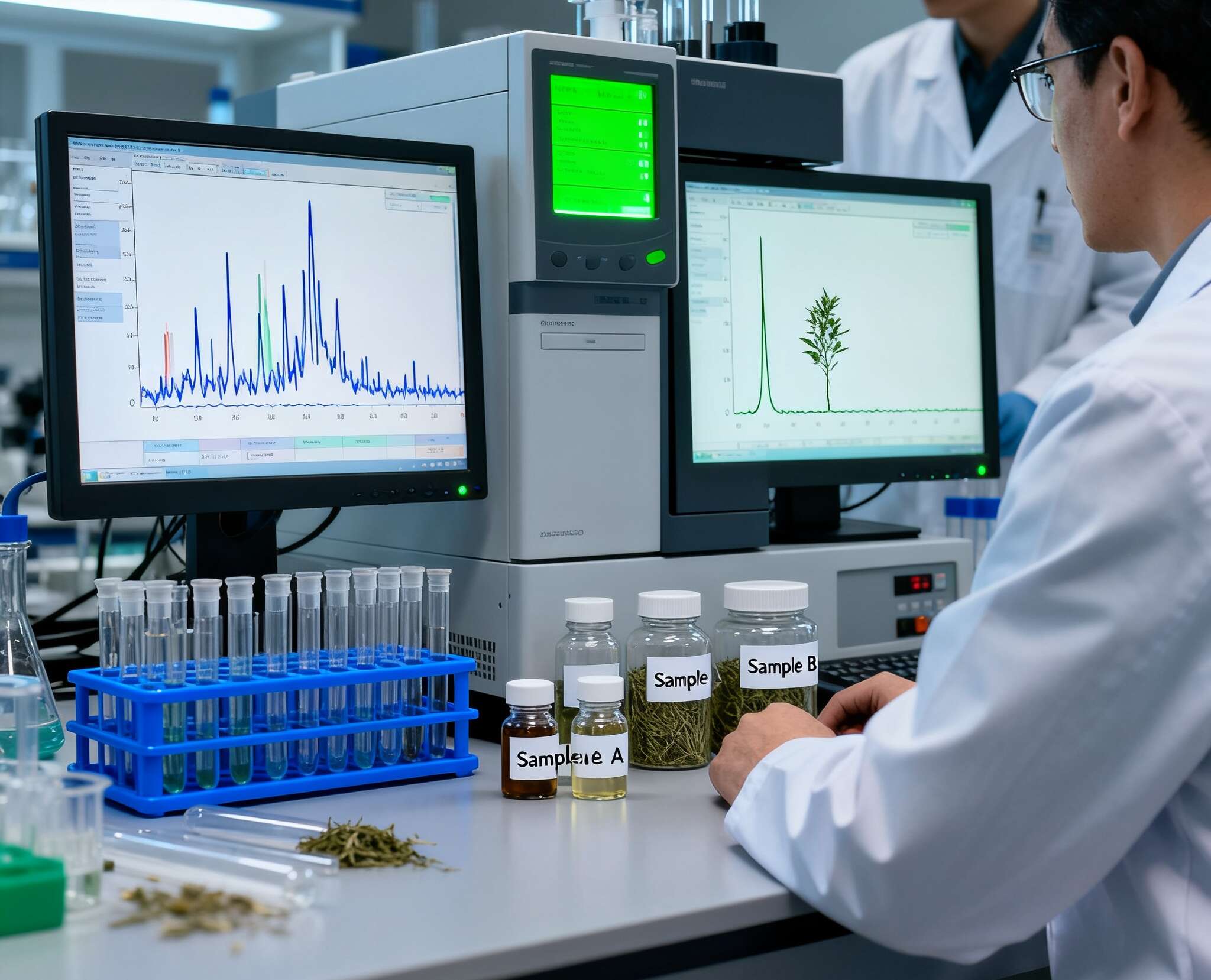
Formulas: go beyond one marker. Use HPLC/UPLC fingerprints to track the chemical “neighborhood” plus multi-marker quant to anchor key actives. Many teams add UHPLC-HRMS for deeper profiling and comparability when the harvest shifts. It’s more work, but it’s what makes a blend reproducible—today, next season, and next year.
Don’t skip: heavy metals, pesticide residues aligned to target regions, micro limits, solvent residues (if extracts), and stability (real-time and accelerated). Shelf life shouldn’t be a guess. Prove it. Then keep proving it.
Safety and Herb–Drug Interactions: Practical Risk Notes
Liver signals: some botanicals carry rare but real hepatotoxicity flags. Track them. Add label language. Build customer-service scripts.
Anticoagulant scenarios: some herbs can nudge warfarin PK/PD. Others not so much. Don’t over-promise. Keep a short, plain FAQ for pharmacists and clinicians.
Allergens & residues: watch sulfites, molds, cross-contact. Keep your vendor questionnaires and lab screens current.
Population guidance: pregnancy, pediatrics, polypharmacy—write conservative use notes. Don’t bury them.
We get it—none of this looks “marketing.” But it reduces returns, protects your brand, and earns trust. That’s money saved you don’t see on a spreadsheet.
Supply Chain and Sourcing: From Farm to BOM
Formulas pull in more raw materials, so they raise the BOM count and the variance risk. Weather shifts; borders get sticky; yields swing; color and odor drift. Singles still see swings, but they’re simpler to dual-source and qualify.
Use a few boring but powerful tools:
Second source plans (pre-qualified, not “we’ll find one later”).
Change control (region change → comparability pack → QC sign-off).
Spec-driven buying (buy to spec, not to the lowest tag).
Lead with two or three singles that match your audience’s search intent. Keep the PDP clean. Use plain language S/F claims. Line up MOQ and lead time with seasonal demand. When velocity shows, add a 3–5 herb blend to solve a clear use-case. Teach why the blend exists, not just what’s in it.
Practitioner Program (Formulas First)
Practitioners want repeatable protocols. Give them a standardized formula with a method-validated fingerprint and a one-pager on safety, interactions, and directions. Provide SOPs for titration and follow-up. Ship dependable COAs. Return rate goes down; confidence goes up.
If taste and mouthfeel matter, you’ll often favor single extracts or very tight blends. Control bitterness and astringency. Watch dispersibility and particle size. Keep micro and preservative decisions aligned with target markets. Small tweaks here prevent big recalls later.
Comparison Table: Formulas vs. Single Herbs in Commerce
Topic
Multi-Herb Formulas
Single Herbs
What It Means
Storytelling
Multi-pathway, pattern-based, needs education
One plant, one benefit, fast to teach
Singles are your front-door SKUs
Evidence frame
Traditional rationale + mechanistic mapping
Focused literature around one marker
Different proof styles; both valid if honest
QC workload
Fingerprint + multi-marker + comparability
Primary marker(s) + identity + routine screens
Blends need heavier QC
Claims (label)
Same DSHEA rules; tighter space to explain
Clear S/F line on a small label
Singles read cleaner on PDP
Supply chain
More inputs, more variance, more change control
Fewer inputs, simpler dual-sourcing
Blends need second sources pre-qualified
Risk mgmt
More variables → more diligence
Fewer variables → easier scripts
Build FAQ for interactions
Brand moat
Proprietary ratios + story + clinical use
Ingredient brandability + speed
Choose moat type, don’t mix messages
GuoCao OEM/ODM and Global Fulfillment
GuoCao is a global manufacturer focused on Chinese medicinal herbs and spices. We run GMP herbal-slice lines, ISO 22000 food-safety systems, and third-party COA testing. Our facilities include normal/cool/controlled-atmosphere warehouses. Annual capacity hits 2,500 tons. We support OEM/ODM for capsules, slices, granules, powders, and functional beverage bases. We service pharma companies, supplement makers, hospitals, beverage brands, cosmetics formulators, distributors, and agents across 30+ countries and regions.
Want to browse raw material categories for your BOM?
We keep documentation ready for audits. We maintain traceability from lot to label. And if a season runs rough, we don’t hide it—we flag it, fix it, and keep you shipping. Not perfect tho, but we’re straight with you.
QC Stack: What Pass/Fail Looks Like (No Drama, Just Process)
Identity: macro/micro ID; chemical ID; DNA barcoding where fit.
Fingerprinting:HPLC/UPLC for blends to track the pattern, not just the peak.
Potency: single or multi-marker assays with validated ranges.
Contaminants: heavy metals, pesticide residues (target-region MRL logic), micro limits.
Stability: real-time + accelerated; label the shelf life you can prove.
Release: COA with method references, spec ranges, and lot traceability.
Change control: raw origin change → comparability → QA sign-off before go-live.
If you’re building a formula, ask our team to set up the fingerprint early. Saves headaches later when a farm moves or a crop comes in louder than last year.
Safety & Labeling Checklist: Structure/Function, Interactions, Customer Care
Write structure/function claims in plain English. Keep them tight.
Include use notes for pregnancy, pediatrics, and chronic meds.
Prepare a one-page interaction FAQ for anticoagulants and enzyme inducers/inhibitors.
Train customer support. A calm, clear script prevents blow-ups.
Store instructions matter: temp, light, humidity. Put them on the label, not just in a spec.
SEO and Content Hooks (Keep It Human, Not Hypey)
Use problem-first headlines: “Sleep support without groggy AM,” “Digestive comfort after heavy meals,” “Everyday stress steadying.”
Write short intros. Give one proof point. Show the bottle. End with a simple call to action.
For formulas, add a “why these herbs together” block. Keep it to three sentences; nobody wants a textbook on a PDP.
Avoid stiff jargon in consumer copy. Keep the science in tech notes and COAs where buyers expect it.
Mini Case Examples (real-world patterns, no names)
Retail startup: launched two singles that matched top search intent, then a compact 4-herb blend. Singles built velocity; the blend built AOV and retention. The team kept specs tight and PDPs short.
Clinic network: standardized a classical-style formula with fingerprint QC. Provided dosing SOPs and a one-pager on herb–drug interactions. Reorders stabilized; fewer “is this the same as last time?” calls.
Functional beverage line: used one single extract and one micro-blend to balance taste. Solved bitterness with particle-size control and a different excipient. Micro passed; scale-up didn’t drift.
Our low MOQ of 1 kg (2.2 lb) makes it easy to order Chinese herbal slices or wholesale Chinese medicine herbs. Private-label and bilingual labeling are also available.
Delivery Cycle & Support
We have a fast 7-day lead time. We provide free samples, COA reports, and technical support to help you bring high-quality bulk Chinese herbs to market.
Quality & Certifications
Our products are manufactured in a GMP-certified facility and meet ISO22000 standards. All Chinese herbs are third-party tested for heavy metals, pesticides, and microorganisms.