Rail is not the cheap option for herbs. It is the disciplined option. This piece breaks down when China-Europe rail freight for herbs actually works, when sea still wins, and why most failures come from moisture, specs, and customs paperwork rather than the train itself.
I have watched too many buyers treat the China-Europe Railway Express like a shiny logistics slogan, when dried licorice, astragalus, Angelica, and codonopsis care about much duller things: condensation, sulfur residue, lot traceability, moisture drift, and whether the importer can defend every line of the file from the commercial invoice to the EU border post.
Want the blunt version?
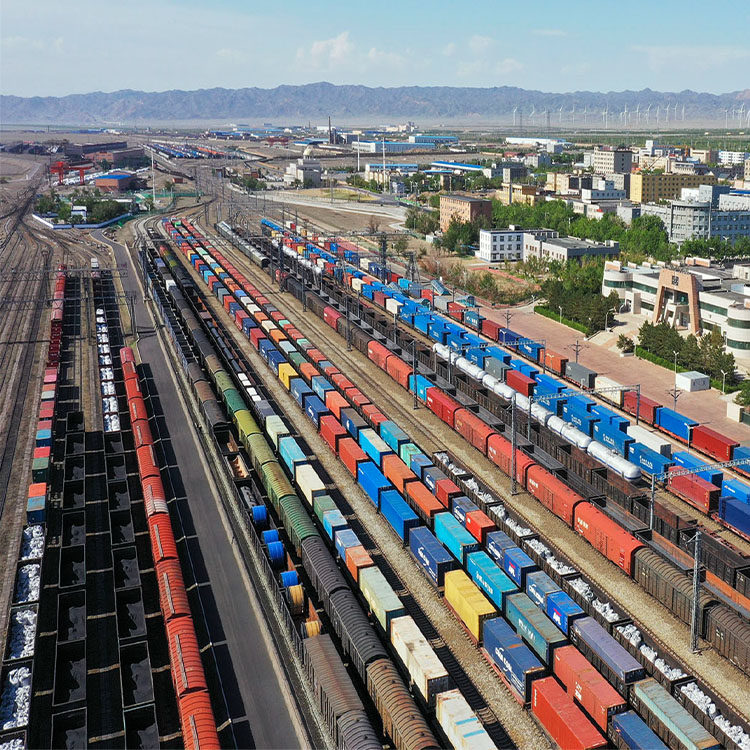
For herbs, rail is not “best” by default. It becomes attractive only when sea is too slow, air is too expensive, and the cargo is valuable enough that quality loss hurts more than freight cost. That middle ground is wider than many importers admit. According to China’s State Council archive, the network had already reached 120,000 cumulative trips by November 2025 and moved goods worth more than USD 490 billion; then, in the first two months of 2026 alone, the corridor handled 3,501 trips and 352,000 TEU, up 32% and 25% year on year.
And that matters.
Because once a corridor gets that big, the question changes from “does it exist?” to “which herb SKUs actually deserve to ride it, under what spec, and with what legal classification?” That is where most so-called China-Europe Railway Express case study content turns soft, vague, and honestly a bit useless.
Table of Contents
The route gets interesting when sea stops behaving
Sea looks cheap.
But cheap stops being cheap when time-sensitive or quality-sensitive botanicals sit too long in unstable shipping conditions, especially when containers are rerouted, rehandled, or delayed outside the buyer’s sales calendar. In January 2024, Reuters reported that one exporter’s container cost to Europe jumped to roughly USD 7,000 from USD 3,000 in December, and rerouting around the Cape of Good Hope could add two weeks to schedules.
That is the moment rail starts making sense.
Not because rail is magical, but because many herb businesses live in an awkward margin structure: they cannot absorb air freight, they do not want 40-day water exposure, and they really do not enjoy arguing about soft slices, mold, or missing batch alignment after arrival. I do not buy the lazy claim that rail is a premium badge. I see it as delay insurance for the right botanical profile.
The numbers that matter more than the brochures
Most brochures flatter.
Real buyers look for traffic, growth, and shock data, because those numbers reveal whether the corridor is mature enough for repeat herbal programs rather than one-off hero shipments.
Signal
What happened
Why herb buyers should care
Network scale
120,000 cumulative China-Europe freight train trips by Nov. 2025; goods value above USD 490 billion
This is no pilot project. The corridor has enough depth to support recurring Chinese medicinal materials export to Europe.
2026 momentum
3,501 trips and 352,000 TEU in Jan.–Feb. 2026, up 32% and 25% YoY
Capacity is expanding, but forecast discipline still matters because herbal loads are documentation-heavy.
Maritime shock
Reuters: container cost to Europe rose to about USD 7,000 from USD 3,000 for one exporter; Cape reroute can add two weeks
Sea loses its price advantage fast when herbs sit longer, arrive late, or miss seasonal sales windows.
Why dried herbs are good rail cargo and bad rail cargo
Herbs are fussy.
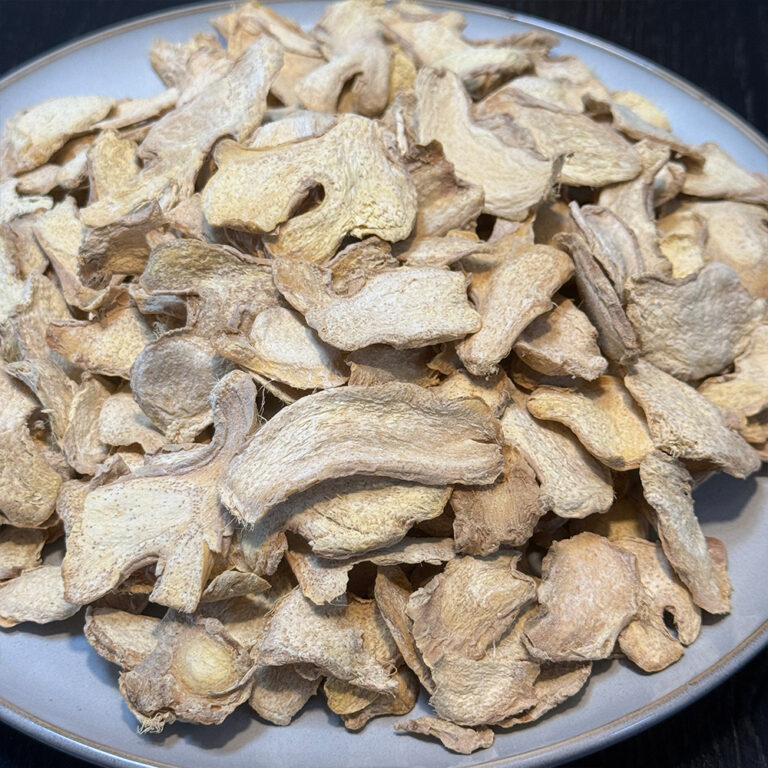
Dried roots and rhizomes often fit rail better than people think, because they pack dense value into manageable volume, avoid the full price shock of air, and benefit from shorter transit than sea. The site’s own root and rhizome medicinal materials collection is basically a list of the usual suspects: Dang Gui, Huang Qi, Ren Shen, Fu Ling, Bai Shao, Gan Cao. That is not random. Those are exactly the kinds of herbs buyers keep moving into nutraceutical, decoction, tea, and functional beverage channels.
But here is the hard truth.
Not every herb behaves the same on the train, and anyone who quotes “15 days versus 40 days” without talking cut size, micro load, or sulfur risk is selling romance, not operations. In GuoCao’s TCM decoction cut-size guide, Angelica Root / Dang Gui is shown as a thin slice around 1–2 mm, Astragalus / Huang Qi as a thicker 2–4 mm slice, and Licorice / Gan Cao as thin-to-mid with an explicit sulfur-fumigation risk note. That is the sort of detail I trust, because it tells me the seller understands how form affects breakage, moisture behavior, extraction profile, and claims risk.
This is where buyers get lazy.
If you are moving herbs by rail, you need a transit spec, not a pretty PDF. The site’s buyer spec for Dang Gui that survives long transit is unusually blunt, and I like that. It talks about container condensation, measurable moisture limits like ≤10.0%, and example yeast-and-mold limits below 100 CFU/g, which is exactly how a serious importer should write acceptance criteria. Why would you spend on rail and then leave your QC standard fluffy?
The compliance trap nobody likes to discuss
The train is easy.
Classification is the hard part, because “herbs” can land in very different regulatory buckets depending on form, intended use, and destination market. If you are shipping raw plant material or infusion ingredients, the EU can trigger plant-health and food/feed controls; if you are marketing a finished traditional herbal medicinal product, the legal gate is different. The European Medicines Agency states that the EU’s simplified traditional herbal registration route comes through Directive 2004/24/EC, which amended Directive 2001/83/EC, while the European Commission’s Access2Markets plant-health and food safety guidance makes clear that plant products may face plant-health control, contaminant control, pesticide-residue control, and entry procedures tied to risk category.
So what does that mean in practice?
It means your traditional Chinese medicine logistics plan can fail even when the rail booking is perfect. GuoCao’s customs documents for herbal imports article gets one thing exactly right: customs officers do not buy stories, they buy alignment. The piece flags wrong Latin binomials, weight mismatches, and missing lot cross-references as hold triggers, while also explaining CHED-PP in TRACES, phytosanitary certificate logic, and the difference between plant-product entry handling and higher-risk categories.
And yes, paperwork is boring.
But your wholesale guide to importing herbal slices from China should still force the basics: invoice, packing list, COA, origin certificate, phytosanitary certificate where needed, and copies of GMP or ISO certificates. The same guide also says non-sulfur-fumigated slices should be written into the RFQ and supported in every COA. That is not picky. That is self-defense.
Three cases that tell the truth better than sales copy
Case one: the Red Sea shock made rail look rational again
Costs exploded.
When Reuters documented January 2024 Red Sea disruption, the takeaway for herb importers was not abstract geopolitics; it was the ugly math of time, cash flow, and inventory aging. One exporter said container cost to Europe jumped from about USD 3,000 to USD 7,000, while rerouting around the Cape could add two weeks. For dried botanicals with moisture sensitivity, cash tied up in transit, or fixed promotion windows, that changes the rail-versus-sea calculation immediately.
Case two: licorice already rides this network
This already happened.
In August 2022, Xinhua documented a China-Europe freight train arriving in Xi’an carrying raw materials of liquorice, a Chinese medicinal herb, from Turkmenistan. That matters because it proves medicinal botanicals are not hypothetical cargo on this corridor; they are already embedded in Eurasian rail movement at raw-material level.
Case three: the herb-Europe link is getting more formal
Small shipment. Big signal.
A December 2025 trade and customs update from the China-CEEC business network reported that a 2.1-ton shipment of traditional Chinese medicinal materials, including astragalus and codonopsis, cleared inspection and was dispatched to Poland, with Gansu’s cumulative TCM-material exports to European countries up more than 200% year on year. I would not build a five-year market forecast on one trade bulletin, but I would absolutely treat it as evidence that inspected, EU-bound medicinal-material lanes are maturing.
So when should you actually choose rail for herbs?
My answer is simple.
Choose China-Europe rail freight for herbs when the SKU is dry, higher-value, documentation-ready, and vulnerable to time or humidity drift, but not so urgent that you need air. Think licorice slices, astragalus, codonopsis, Angelica, selected seeds, and standardized decoction pieces with strong COA discipline, clear plant-part declarations, and arrival release criteria written before loading.
And when should you avoid it?
Avoid rail when your file is messy, your consignee is vague on EU entry requirements, your herb behaves badly under moisture stress, or your buyer still has not decided whether the product is a raw plant ingredient, a food-use botanical, or a medicinal product. No route fixes classification confusion. No train beats a bad dossier.
FAQs
What is the China-Europe Railway Express for herbs?
The China-Europe Railway Express for herbs is an intercontinental rail-freight option used to move dried botanical raw materials, decoction pieces, and selected medicinal plant products between Chinese origin hubs and European inland terminals when importers need transit materially faster than sea freight but far cheaper than air. For practical buyers, it is a timing tool, not a branding exercise.
Is rail better than sea freight for Chinese medicinal herbs?
Rail is better than sea freight for Chinese medicinal herbs when the cargo has moderate-to-high value density, meaningful sensitivity to long transit, and strong documentation support, because the savings from avoiding extra dwell time, moisture exposure, or missed launch windows can outweigh the higher freight spend. But if the herb is low-value, extremely stable, and not time-sensitive, sea still wins.
What documents matter most when shipping herbs from China to Europe by rail?
The core document stack for shipping herbs from China to Europe by rail is a batch-linked customs and compliance file that usually includes commercial invoice, packing list, COA, origin certificate, phytosanitary certificate where applicable, correct HS mapping, and EU-side pre-notification or TRACES handling when the commodity falls under plant-product controls. In my experience, most border pain comes from mismatched Latin names, wrong plant-part descriptions, and sloppy lot references.
Which herbs are the best fit for China-Europe rail freight?
The best fit for China-Europe rail freight is usually dried, shelf-stable, medium-to-high-value herbal material such as licorice root, astragalus slices, Angelica root, codonopsis, ginseng-related items, and selected seeds or bark products that can justify higher freight through better timing, cleaner inventory turns, and lower quality risk than long sea transit. Fresh, fragile, or poorly specified herbs are bad candidates no matter how good the route looks on paper.
Our low MOQ of 1 kg (2.2 lb) makes it easy to order Chinese herbal slices or wholesale Chinese medicine herbs. Private-label and bilingual labeling are also available.
Delivery Cycle & Support
We have a fast 7-day lead time. We provide free samples, COA reports, and technical support to help you bring high-quality bulk Chinese herbs to market.
Quality & Certifications
Our products are manufactured in a GMP-certified facility and meet ISO22000 standards. All Chinese herbs are third-party tested for heavy metals, pesticides, and microorganisms.