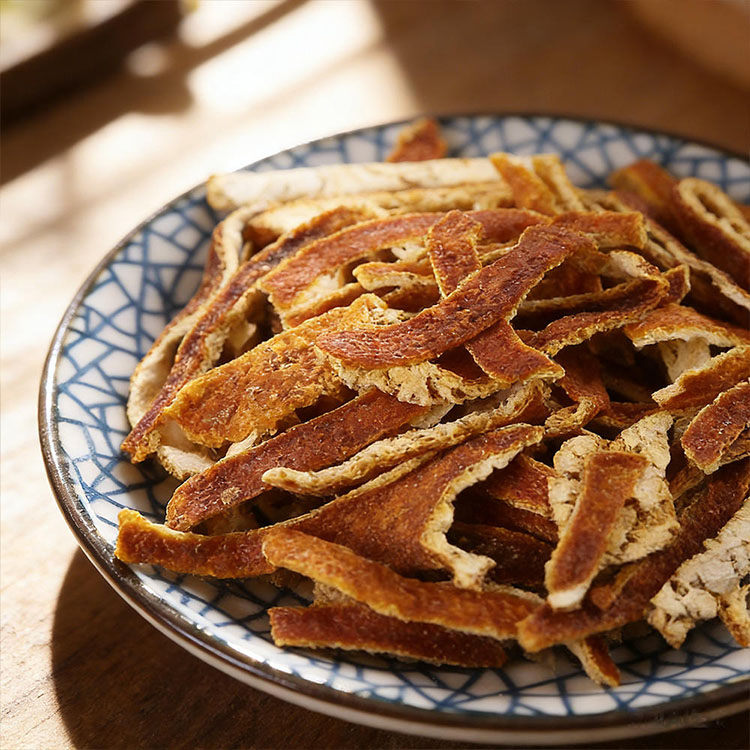
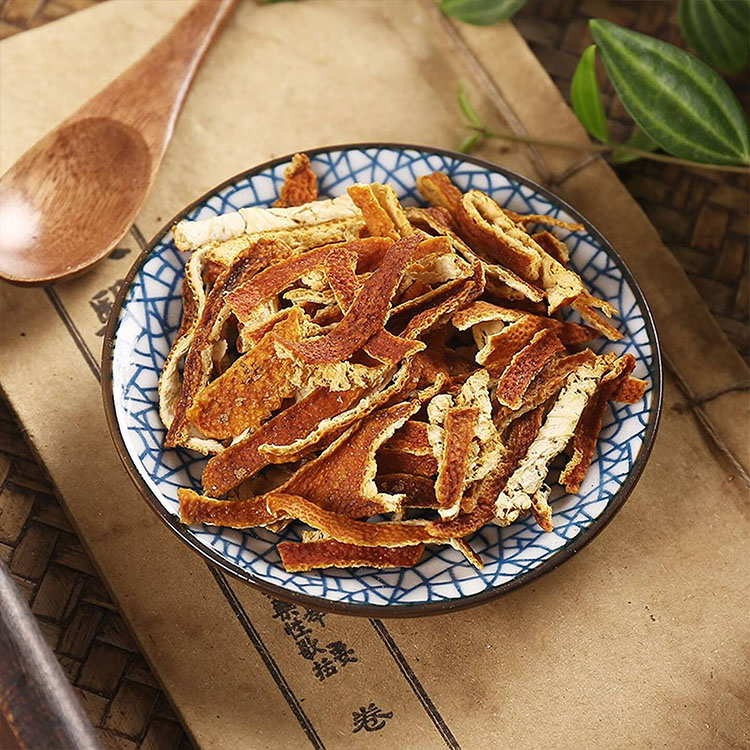
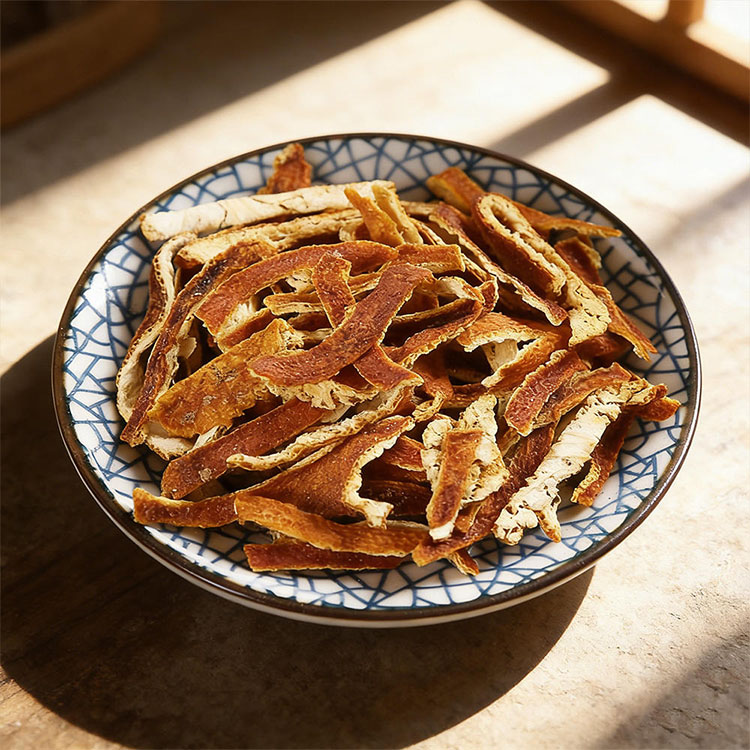
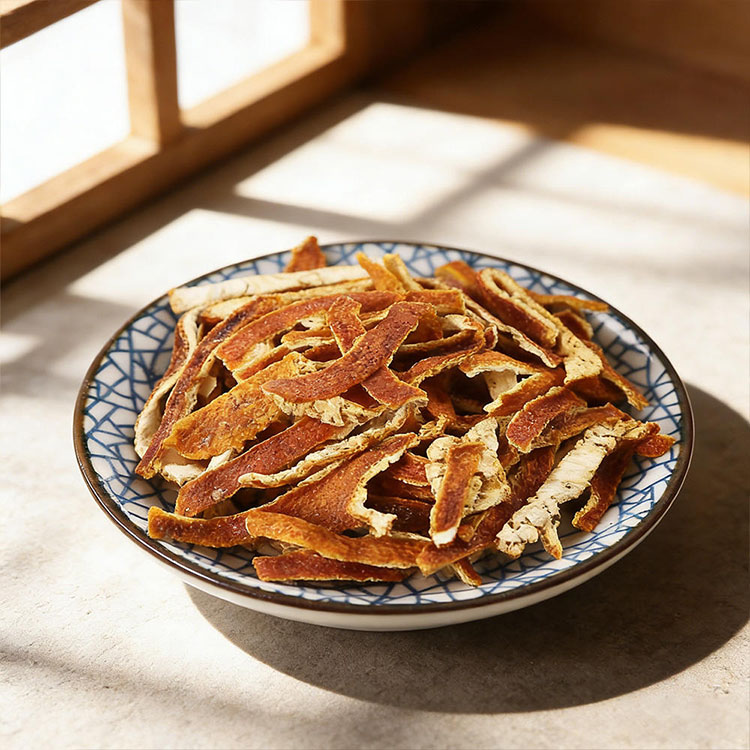
Aged Tangerine Peel (Chen Pi): how to document aging year without compliance headaches
Most “aged Chen Pi” claims collapse the second someone asks for dates, lot genealogy, and storage logs. Here’s how I would document harvest year, first drying date, storage continuity, relabel events, and batch release so a Chen Pi age claim survives due diligence instead of starting a paper war.
Most aged Chen Pi claims fall apart in ten minutes
Most labels wobble.
I have watched botanical sellers talk big about “3-year,” “5-year,” or “10-year” Chen Pi as if age were self-proving, and then go strangely quiet when a buyer asks for the first drying date, the inbound lot number, the warehouse history, the COA linkage, and one clean explanation of what “aging year” even means on that SKU.
Why start a fight you cannot finish?
Here is the hard truth I wish more suppliers would say out loud: there is no magic Chen Pi-only rulebook that tells you exactly how to print an age claim for Pericarpium Citri Reticulatae or Citrus reticulata. What regulators and serious buyers care about is much less romantic and much more enforceable: truthful labeling, lot-level traceability, storage control, release records, and the ability to connect a claim on a bag to documents in a file. FDA’s dietary supplement cGMP guidance requires unique lots to be traceable to supplier and date received, requires written master manufacturing records and batch production records, and requires records to be kept in an auditable form. The EMA’s GACP guideline says the same thing in a different accent: growing, collection, and primary processing of herbal starting materials need documentation, not folklore. FDA’s dietary supplement cGMP guide and the EMA GACP guideline are not subtle about that.
And distrust is earned.
A 2024 review in Natural Product Reports found adulteration rates of 56.7% in ginkgo leaf samples, 42.2% in black cohosh, 28.5% in echinacea, 17.1% in elder berry, and 16.5% in turmeric, with licensed or registered herbal medicines showing lower risk than products sold as dietary or food supplements. When I see numbers like that, I do not treat an age claim as a charming brand story. I treat it as a claim that needs a paper trail. Read the 2024 Natural Product Reports review if you think the market polices itself.
The enforcement side is uglier.
In 2015, the U.S. Department of Justice said the USPlabs indictment alleged the company imported ingredients from China using false certificates of analysis and false labeling, then misrepresented the source and nature of those ingredients. And in June 2025, Reuters reported that the 9th Circuit revived a supplement mislabeling case against ProSupps, holding that a single test showing a misleading label was enough for the case to move forward. Different products, same lesson: once your paperwork and your label stop matching, the fun ends fast. See the DOJ enforcement action summary and Reuters’ ProSupps mislabeling report.
Table of Contents
What regulators actually care about, not what brokers gossip about
Paper first.
If you sell Chen Pi into food, tea, supplement, or cross-border herbal channels, I would stop obsessing over whether a customer says “vintage,” “aged,” or “old peel,” and start defining four boring things with military precision: the date aging begins, the lot code that carries that date forward, the storage conditions during aging, and the release rule for the final packed unit.
That is where the real risk lives.
FDA’s traceability framework is useful here even if your exact Chen Pi SKU does not map neatly onto every FSMA 204 trigger. The agency says the Food Traceability Rule uses Key Data Elements and Critical Tracking Events, and in February 2026 it said Congress directed FDA not to enforce that rule before July 20, 2028. I would not read that as permission to relax. I would read it as a gift: extra time to build a clean record system before buyers start demanding it anyway. The logic of CTEs, KDEs, and a traceability plan is exactly the logic aged Chen Pi sellers should already be using. Read FDA’s Food Traceability Rule update.
My view is blunt.
If your file cannot answer “when did this lot start aging?” in under sixty seconds, then you do not have an age claim. You have a sales line.
The record stack I would demand before printing “3-year aged” or “5-year aged”
supplier name, harvest area, citrus species, raw peel lot, inbound date
“Xinhui” and non-Xinhui material get blurred together
First drying / aging-start record
The date the aging clock begins
drying completion date, moisture result, operator or facility, pre-aging lot code
nobody can agree whether “5 years” means harvest year or actual aged time
Lot genealogy sheet
Every code change from raw peel to packed SKU
inbound lot, internal lot, repack lot, customer SKU, date of transformation
one bag can no longer be tied back to one real batch
Storage continuity log
The peel stayed in controlled conditions
warehouse/location, temp/RH range, transfer dates, exceptions, corrective actions
age turns into warehouse myth instead of controlled inventory
Release packet
The lot was approved, not just sitting around
COA, QA release, photo record, packaging approval, label version
sales outruns QA and the label gets ahead of the file
Repack / blend declaration
Whether the age claim applies to one lot or a blend
lot percentages, youngest lot date, labeling rule, approval sign-off
blended lots become fake “10-year” material by arithmetic theater
Retain sample archive
A physical and visual reference survives disputes
retain sample ID, photos, seal date, location, retention term
every dispute becomes a memory contest
Separate age from origin
This matters.
If you use “Xinhui Chen Pi” in your copy, treat origin proof and age proof as two different files, even when they sit in the same folder. Age is a time claim. Xinhui is an origin claim. Mix them together and you will confuse your own team first, then your buyer, then your importer.
I have seen that movie before.
How I would define “aging year” so nobody argues later
Define the clock.
I would put a one-line definition in the spec sheet, the supplier agreement, and the label-approval form: “Aging year is calculated from the documented date of first complete drying of the lot, not from harvest, purchase, or repacking date, unless explicitly stated otherwise.”
Why be that strict?
Because harvest year is sloppy when peel sits wet, gets redried, gets repacked, or gets split across traders. First complete drying is not perfect, but it is operational, documentable, and much harder to fake by accident.
Bad wording versus defensible wording
Weak copy creates work.
“10-Year Chen Pi” looks dramatic, but if the file behind it is thin, that phrase becomes an invitation to argue about timing, blending, and continuity. I would rather see language like: “Produced from lot first dried in October 2019; packed in March 2026; storage continuity on file.” That sentence is less sexy. It is also far more likely to survive buyer review.
And here is my least popular opinion.
If you blend lots of different ages, the youngest lot should govern the public-facing age claim unless you are prepared to disclose the blend rule in writing. The supplement world already has enough label drama. We do not need Chen Pi sellers inventing wine language for dried peel.
What lab data can and cannot do
Testing helps.
But COAs are not birthday certificates. Moisture, microbiology, heavy metals, pesticides, and marker chemistry can support identity, release, and storage fitness; they do not, by themselves, prove when aging began. FDA’s own supplement cGMP material separates traceability, specifications, quarantine, approval, and recordkeeping for a reason. Buyers who understand that distinction are the buyers worth keeping.
Chen Pi aging year documentation is a lot-linked record file that ties one batch of Citrus reticulata peel to its drying date, storage history, lot-code changes, test results, and release status so the age printed on a label can be checked without guesswork, supplier memory, or back-filled spreadsheets. That is the standard I would use internally, because FDA-style traceability and recordkeeping systems punish vague paperwork sooner or later.
Can I claim “5-year aged Chen Pi” if a trader tells me it is five years old?
No, a trader’s verbal claim is not enough; a defensible “5-year aged Chen Pi” statement needs dated upstream records, linked lot codes, storage continuity, and a written rule explaining whether the claim is based on harvest date, first drying date, or the youngest lot in a blend. Without that file, the claim is a sales promise, not a controlled statement, and recent mislabeling cases show courts are not always patient with sloppy labels.
Is Xinhui Chen Pi the same thing as aged Chen Pi?
No, Xinhui Chen Pi and aged Chen Pi are not the same claim; one is an origin claim tied to place, while the other is a time claim tied to documented aging, and a serious seller should keep separate evidence chains for each one even when they apply to the same lot. I would require county- or area-level sourcing proof for Xinhui and a separate aging-start record for the age statement, because buyers will question them differently.
Does a COA prove Chen Pi age?
A COA proves that a batch met stated test items at release, but by itself it does not prove the material’s aging year because chemistry, microbiology, and contaminants can support identity and quality while saying nothing definitive about when storage actually began. I like COAs. I just refuse to pretend they do the job of lot genealogy, storage logs, and retained records.
How long should I keep Chen Pi age records?
For U.S. dietary supplement records, 21 CFR 111.605 says written records must be kept for one year past shelf life, if shelf-life dating is used, or two years beyond the distribution date of the last associated batch; many serious importers keep age-claim records longer. I would too, because aged-botanical disputes tend to surface late, not early.
Our low MOQ of 1 kg (2.2 lb) makes it easy to order Chinese herbal slices or wholesale Chinese medicine herbs. Private-label and bilingual labeling are also available.
Delivery Cycle & Support
We have a fast 7-day lead time. We provide free samples, COA reports, and technical support to help you bring high-quality bulk Chinese herbs to market.
Quality & Certifications
Our products are manufactured in a GMP-certified facility and meet ISO22000 standards. All Chinese herbs are third-party tested for heavy metals, pesticides, and microorganisms.