Herbal enzyme drinks look simple on the label. In the tank, they’re not simple at all.
If you just “let it ferment” with random microbes, you get unstable taste, strange gas, and complaints from QA. If you plan your strain selection for lactic acid bacteria (LAB), yeast, and even postbiotics, you can turn the same herbs into a stable, export-ready product.
Below we walk through real strain strategies, link them with Chinese herbal raw materials, and show how this connects to GuoCao’s OEM/ODM herbal enzyme projects.
Lactic Acid Bacteria Strain Selection for Herbal Enzyme Drinks
When you build a herbal enzyme drink, LAB are the backbone. They control:
acid curve and pH,
flavor and mouthfeel,
release of polyphenols and flavonoids,
product stability and micro safety.
In most functional beverage projects you see a small core set of strains:
Lactiplantibacillus plantarum
Lacticaseibacillus casei / L. paracasei
L. fermentum
L. acidophilus
sometimes Bifidobacterium for a more “probiotic” angle
You don’t need ten strains inside one bottle. You need two or three that:
grow well in herbal extracts,
drop pH fast enough,
have strong enzyme systems to break cell walls and glycosides,
already sit on food-approved or probiotic lists.
For example, if your formula uses flowers and fruits from GuoCao’s flower and whole herbs and fruit and seed Chinese medicines, polyphenols can hit weak strains hard. L. plantarum and L. casei usually handle this kind of stress better than more delicate bacteria.
Mixed Lactic Acid Bacteria for Honeysuckle Beverage Antioxidant Activity
One study on honeysuckle beverage is very close to herbal enzyme reality. Researchers fermented honeysuckle drink with mixed LAB and played with temperature and inoculation level.
They found that:
higher fermentation temperature and right inoculum made antioxidant activity jump,
the mixed culture beat single strains on radical-scavenging power,
around 37 °C and medium inoculum gave the best balance of flavor and function.
For a brand owner or OEM client, the takeaway is simple:
Don’t just use “some probiotics”. Decide your main KPI: antioxidant strength, GABA level, polysaccharide breakdown, or just smooth taste.
Treat strain ratios like a process parameter, not a guess. A 1:1 mix of L. plantarum and L. acidophilus or L. casei often gives higher polyphenols and nicer sensory score than any single strain alone.
Quality Enhancement of Dendrobium officinale and Banana Juice Through Probiotic Fermentation
Another good case is Dendrobium officinale–banana juice. This is a combo of a medicinal orchid plus a sweet fruit base. After probiotic fermentation:
total flavonoid content went up,
antioxidant capacity increased,
sensory evaluation improved vs. unfermented juice.
This is exactly what many TCM brands want from enzyme drinks: more “function” and better taste at the same time.
If your formula uses herbs like Dendrobium, goji, hawthorn or similar items from GuoCao’s root and rhizome Chinese medicines and fruit and seed Chinese medicines, probiotic fermentation isn’t just nice marketing. It’s a practical way to unlock bound actives and smooth the flavor.
Plant-Based Paste Fermented by Lactic Acid Bacteria and Yeast: Functional Analysis
Single LAB fermentation is safe and easy to control. But when you want deeper aroma and a richer metabolite “soup”, you bring yeast into the game.
A well-known plant-based paste fermented by LAB and yeast showed that:
the paste contained multiple LAB species plus yeasts,
long co-fermentation produced high levels of phenolics and flavonoids,
the product showed antioxidant and immune related activities in lab models.
Lesson for herbal enzyme drinks:
Yeast is not only about alcohol; it releases vitamins, amino acids, and aroma compounds.
LAB then acidify and convert plant compounds into more bioavailable forms.
A controlled LAB + yeast system gives you more complexity than one single strain ever can.
Of course, co-fermentation also brings risk: gas, off-flavor, and unstable results if you rely on “wild” yeast from the air. That’s why a proper strain bank and seed culture SOP are non-negotiable in serious projects.
Co-Fermentation of Lactobacillus plantarum and Lactobacillus casei Improves Antioxidant Capacity
A more focused trial with apple juice used L. plantarum and L. casei together. Under optimized conditions (about 3 % inoculum, 37 °C, around one and a half day):
sensory scores went above ninety on a hundred scale,
total polyphenol content clearly beat the raw juice.
Even if apple is not a Chinese herb, the rule still holds:
the right pair of LAB + right process = higher bioactives and better taste.
When you ferment TCM-based drinks, you can use the same mindset. Start from small lab batches with two LAB strains, adjust temperature and time, and lock the best spot before you think about fancy label design.
Postbiotics and the ISAPP Consensus Statement on the Definition and Scope of Postbiotics
Now the hot word: postbiotics. Many enzyme drinks on the market claim this, but the word has a strict meaning.
The ISAPP consensus says a postbiotic is:
a preparation of inactivated microorganisms,
with whole cells and/or cell fragments still present,
that can bring a health benefit to the host.
So it’s not just “lactic acid” or “plant extract”. You need the killed cells plus their metabolites, and you need data.
For herbal enzyme drinks this fits very well because:
many products are pasteurized or filtered before filling,
viable counts drop during shipping anyway,
but the metabolites and cell wall fragments stay quite stable.
A practical route is:
Use LAB (and yeast if needed) to build a strong fermented base.
Apply controlled heat or other tech to kill the cells while keeping metabolites intact.
Standardize this as a postbiotic herbal enzyme beverage.
To do this at scale you need GMP and a clean QC system. GuoCao’s herbal enzyme production runs under GMP Chinese herbal slicing line, ISO 22000 food safety system, normal/cool/gas-controlled warehouses, and third-party COA. This helps a lot when you want to position your drink as a regulated postbiotic product in the USA, EU, Japan, Korea and more.
Research Progress of Polyphenols in Edible Plant Enzymes and Edible Plant Source Jiaosu
In China, edible plant enzymes and plant jiaosu already have an industry standard: T/CBFIA 08003-2017. Polyphenols sit in the key quality index list.
Recent reviews of polyphenols in edible plant enzymes show that:
fermentation usually increases the level of free polyphenols,
antioxidant activity rises together,
substrates like jujube, mulberry, sea buckthorn, blueberry, Dendrobium leaves and so on all follow this pattern,
final quality depends strongly on both raw materials and microbial composition.
For your R&D, that means:
choose herb portfolio and strains together, not separately,
always test polyphenols, flavonoids and antioxidant power,
dried spices to push a more culinary or RTD drink style.
You can build very different stories and still stay in one supply chain.
Data Snapshot: Scientific Fermentation and Herbal Enzymes
To make the picture clear, here’s a simple table that connects literature to real R&D work.
Table 1 – Key Fermentation Studies and What They Tell Herbal Enzyme Developers
Scenario / Study
Substrate & Microbes
Process Highlights
Main Outcomes for Herbal Enzyme Drinks
Plant-based paste with LAB + yeast
Mixed vegetables and fruits, multiple LAB + yeast strains
Long plant-paste fermentation
High phenolics and flavonoids; strong antioxidant and immune-related activity → co-fermentation can build a rich postbiotic matrix.
Honeysuckle beverage with mixed LAB
Honeysuckle extract, two LAB strains
Temperature and inoculum optimization
Best results around 37 °C and medium inoculation; higher antioxidant power and better taste than single strains.
Dendrobium officinale–banana juice
Medicinal orchid + banana; probiotic LAB
Probiotic fermentation
Increased flavonoids and antioxidant capacity, improved sensory performance → good model for “TCM + fruit” beauty or immunity drinks.
Apple juice with L. plantarum + L. casei
Apple juice; LAB co-fermentation
Inoculum around 3 %, temp near 37 °C, ~36 h
Radical-scavenging activity and polyphenols both up; sensory score above ninety → shows direct link between process control and function + flavor.
Edible plant enzyme polyphenol review
Various plant enzyme and jiaosu products
Focus on polyphenol and standard T/CBFIA 08003-2017
Fermentation tends to increase free polyphenols and antioxidant strength → herb choice and strain selection decide final functional level.
Wholesale Chinese Medicinal Herbs and Spices Supplier – GuoCao
All this science only works if you can actually get stable herbs and reliable processing.
GuoCao is a one-stop wholesale Chinese medicinal herbs and spices supplier plus a herbal enzyme and postbiotic drink manufacturer. The company runs:
GMP Chinese herbal slice production lines,
normal, cool and modified-atmosphere warehouses,
ISO 22000 food safety system,
third-party COA lab support,
annual capacity around 2500 tons,
export channels to more than thirty countries like USA, Europe, Australia, Japan, Korea, Canada, Malaysia and Philippines.
Clients include pharma companies, health supplement makers, functional beverage brands, hospital buyers, cosmetics raw material buyers, and distributors who need bulk herbs, herbal enzymes, or postbiotic fermented drinks.
Because raw herbs and fermentation sit in one group, you can go from sliced herb to finished enzyme drink without switching suppliers three times. That cuts a lot of project risk, even my grammar not perfect here.
Herbal Enzymes OEM/ODM, Private Label and Contract Manufacturing Scenario
Let’s translate all this into a simple project flow you can use with your team.
Step 1 – Product Position and Formula Draft
Choose your scenario: detox & skin, vitality, sleep & calm, liver support, or daily balance.
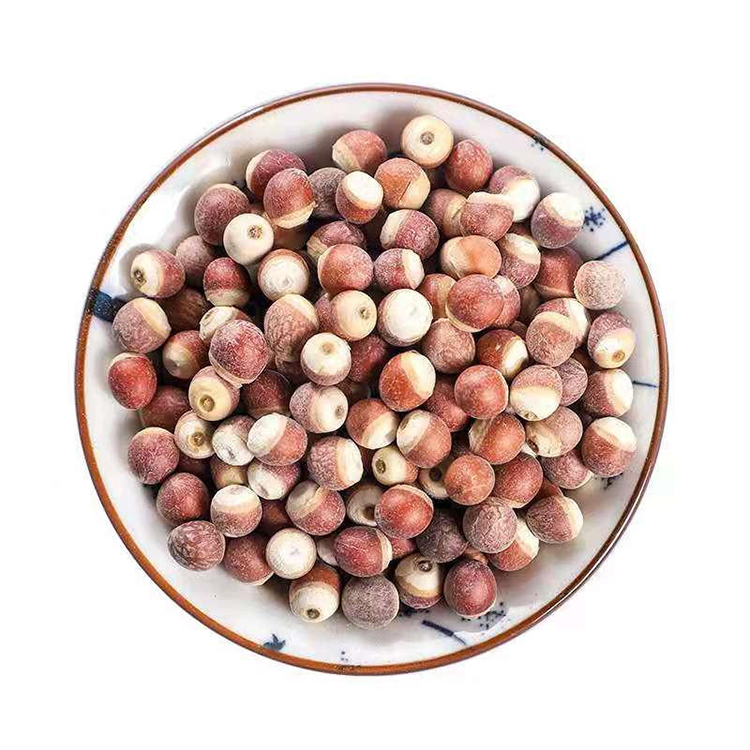
Pick 3–6 herbs from the GuoCao catalog (for example Job’s Tears, goji, hawthorn, chrysanthemum).
Create 2–3 formula samples with different herb ratios and sugar or juice bases.
Step 2 – Strain Screening and Process Route
Test 2–3 LAB strains (L. plantarum, L. casei, L. fermentum etc.) in your actual herbal base.
Add a defined yeast strain if you want more aroma and mouthfeel.
Set a seed culture SOP: inoculum level, temp, time.
This is basically doing for your herbs what the honeysuckle and apple studies did for their drinks.
Step 3 – Indicator Lock and Scale-Up
Lock target pH, total acid, polyphenols, flavonoids, and key actives from the herbs.
Decide whether you want live probiotics or mainly postbiotic value.
Run pilot tanks to check if data and flavor stay stable when the volume goes up.
Step 4 – Postbiotic Handling and Final Product Design
If you choose a postbiotic drink, design a heat or pressure step that inactivates cells but keeps metabolites.
Adjust sweetness, acidity, and aroma so consumers don’t feel the TCM taste is too strong.
Run stability tests for shelf life and export shipping.
Because GuoCao already runs herbal enzyme lines for OEM/ODM, private label and contract manufacturing, you don’t need to rebuild everything from zero. You just plug your branding and market strategy on top of an existing, verified process.
Closing
Herbal enzyme drinks don’t have to be mysterious.
When you pick LAB strains with clear roles, pair them with smart yeast, and design the product as a postbiotic system, you move from random “homebrew style” to a stable, scalable functional beverage.
Our low MOQ of 1 kg (2.2 lb) makes it easy to order Chinese herbal slices or wholesale Chinese medicine herbs. Private-label and bilingual labeling are also available.
Delivery Cycle & Support
We have a fast 7-day lead time. We provide free samples, COA reports, and technical support to help you bring high-quality bulk Chinese herbs to market.
Quality & Certifications
Our products are manufactured in a GMP-certified facility and meet ISO22000 standards. All Chinese herbs are third-party tested for heavy metals, pesticides, and microorganisms.