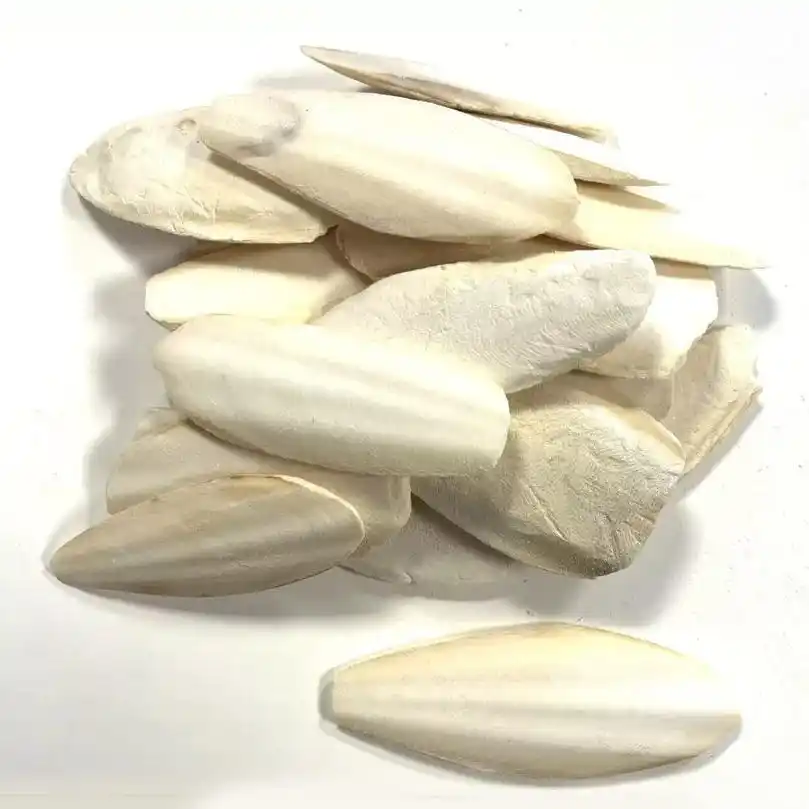
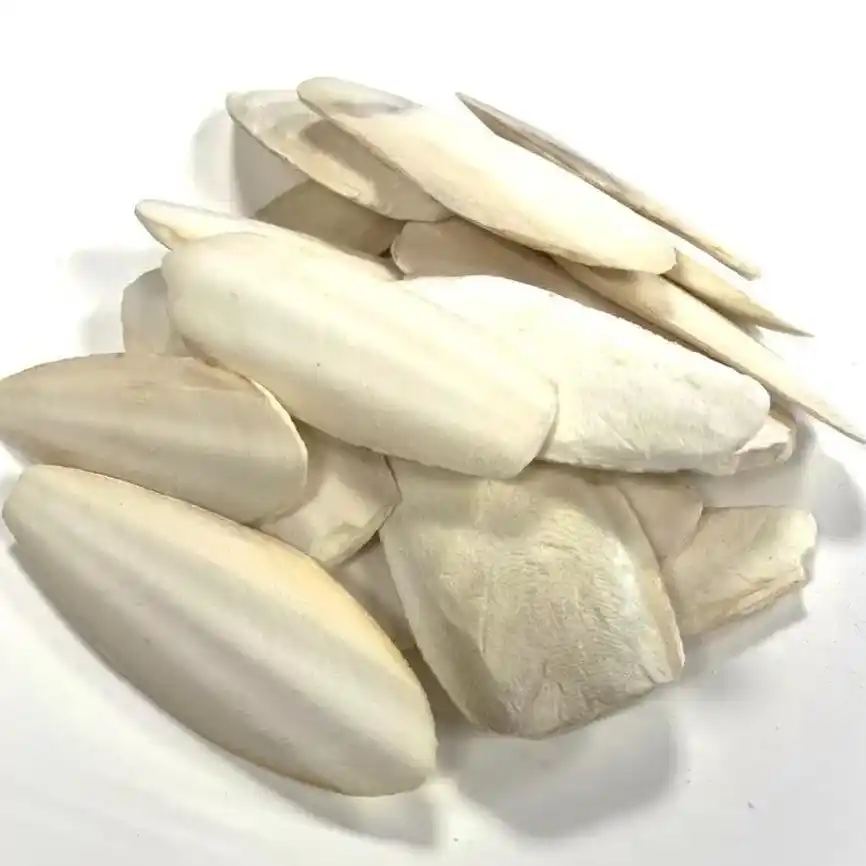
If you’ve ever opened a carton of cuttlebone and found clean blocks on top and dusty crumbs at the bottom, you already know the truth: shipping doesn’t “damage” cuttlebone… it reveals your spec.
Here’s my take: you don’t win with “better handling” alone. You win by writing clear size grading, defining fines, and building a packaging + documentation system that survives real logistics. Not showroom logistics. Real docks, real vibration, real pallet pressure.
GuoCao supplies cuttlebone as bulk dried blocks and runs it like a program—factory control, stable warehousing, and testing support—because that’s what importers and manufacturers actually need, not pretty photos. Start here if you want the product page and category context:
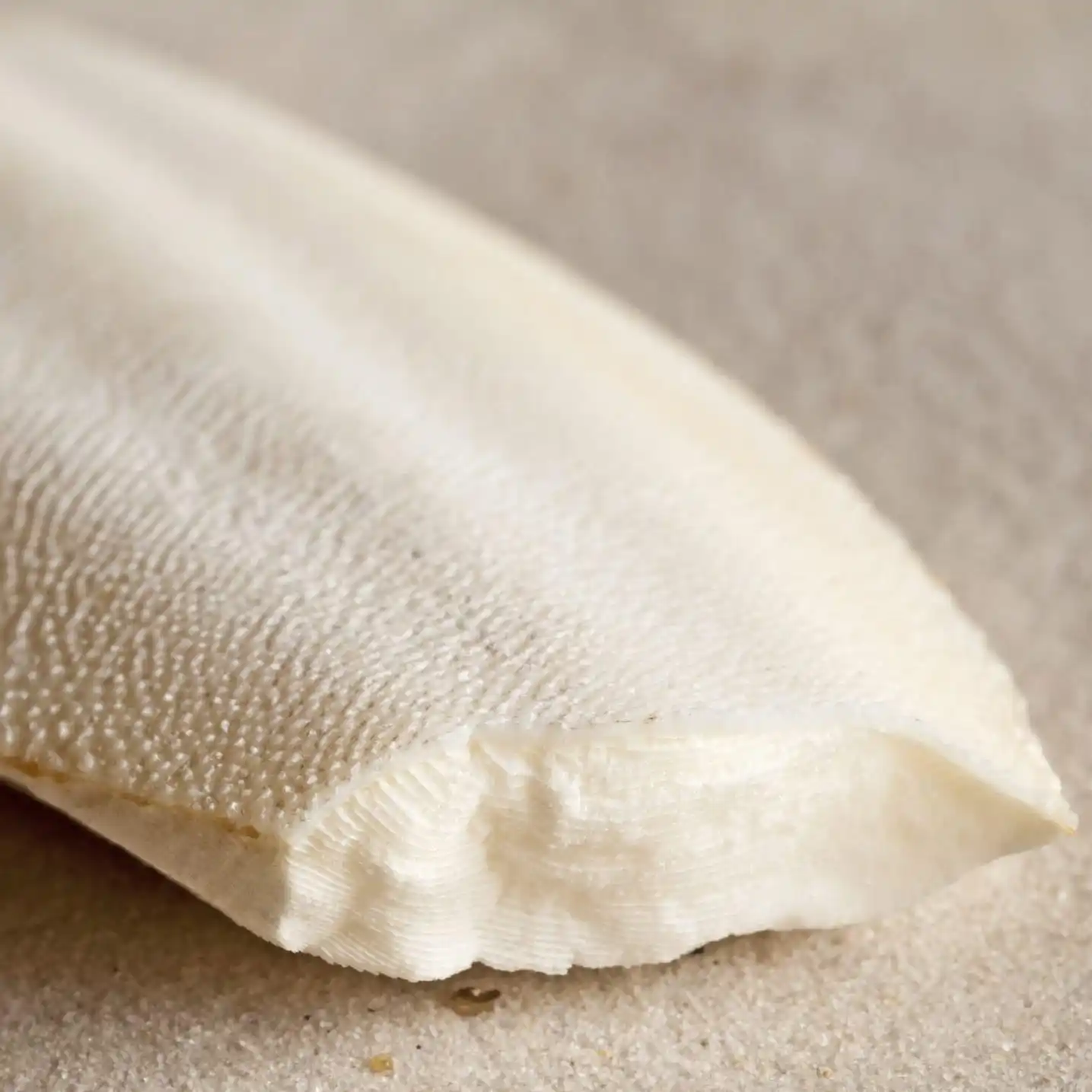
Cuttlebone is light and porous. That’s great for some downstream processing, but it also means edge chipping is normal and impact turns into fines fast. In logistics language, cuttlebone has high attrition risk.
Three things usually drive the mess:
Dock shock: drops, tosses, sudden impacts during loading and unloading
Vibration: long-haul trucking and ocean freight micro-hits the blocks for days
Compression: stacked cartons create slow crushing at the corners and edges
So don’t chase the impossible goal of “zero chips.” Instead, chase a spec that your team can verify in 10 minutes, and your supplier can hit every time.
Block size grading
Block size grading decides yield, not just appearance
Size grading isn’t cosmetic. It controls:
Line yield (how much becomes usable material vs dust)
Handling stability (bigger blocks survive better)
Processing fit (decoction, milling, blending, extraction—each wants a different cut)
If you don’t grade, you’re basically gambling. And buyers hate gambling with production schedules.
Size grade bands you can actually buy and sell
Here’s a practical grading layout you can drop into a buyer spec. It’s simple on purpose. Simple gets executed.
Grade keyword (PO language)
Size window (longest side)
Typical downstream scenario
Fines definition
Buyer pain it solves
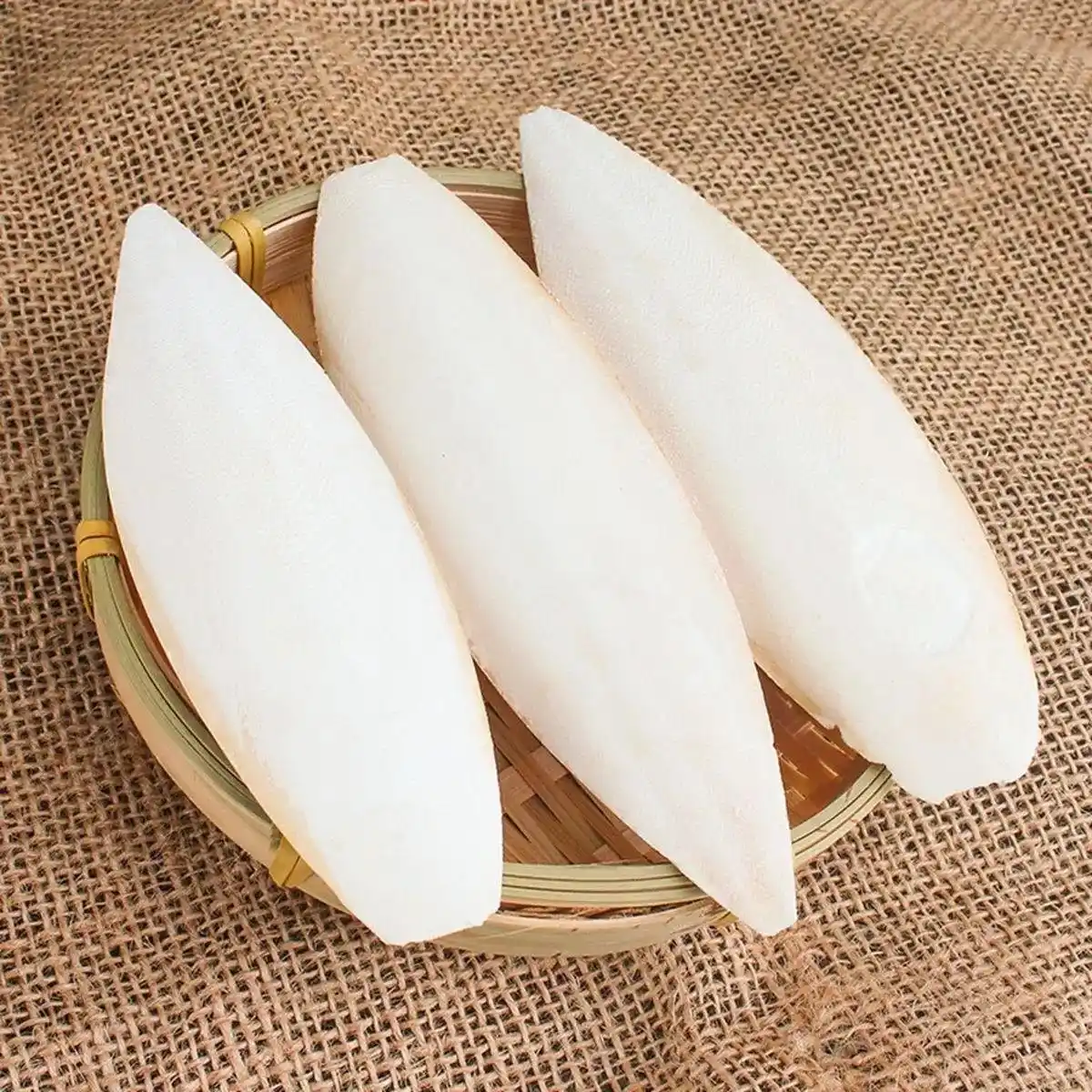
Whole blocks
8–14 cm
pharmacy packs, decoction rooms, premium lots
pieces under 1.5 cm
keeps visual consistency, less dust complaints
Large chunks
4–8 cm
controlled milling feedstock, batching
pieces under 1.0 cm
protects yield, reduces “bottom dust”
Small chunks
1–4 cm
fast milling, pre-blend lines
pieces under 0.5 cm
predictable grind time, easier QC
Powder grade
mesh-defined
capsules, sachets, tablets
mesh curve spec
stops clumping disputes and “too coarse” returns
Notice what I did: I didn’t say “broken = broken.” I defined fines as a measurable cutoff. That’s the difference between a clean claim and an endless email thread.
If you want a deeper look at how GuoCao handles grading logic across products, these pages help frame the mindset:
Fines limit: “Fines must be ≤ Y% by weight at arrival”
Sampling method: “Measured across multiple cartons, not one carton”
You don’t need fancy stats. You need a rule that your IQC team can repeat every time. If the rule changes every shipment, the supplier will never hit it, and your receiving team will never trust it.
Carton packaging and internal protection
If you ship cuttlebone like it’s rice, you’ll receive rice.
A realistic protective structure looks like this:
Inner pack: sealed bags to trap dust and stop cross-contamination
Mid layer: pads/dividers to prevent block-on-block collisions
Outer pack: strong cartons + tight void fill (no free travel inside)
Also: don’t “over-cube” the carton. Overpacking saves space but increases crushing. In ops slang, you’ll trade freight efficiency for corner collapse and edge fracture. That deal usually sucks.
GuoCao supports multiple packaging formats for bulk shipping and private label needs, so you can match pack style to your grade and route:
Most breakage doesn’t happen from one big accident. It happens from small forces applied for a long time.
If your pallet is too tall, or your carton strength is weak, the bottom layers take a beating. Then the buyer opens a carton and says “quality is bad.” But it’s really pallet pressure + transit vibration.
Two easy controls:
Keep pallet stacking consistent (same carton orientation, no random flips)
Use a pallet map and stick to it (so you can troubleshoot later)
Humidity and moisture control
Moisture doesn’t just affect “freshness.” It changes mechanical behavior during handling.
If the material picks up moisture, it can soften and smear dust. If it dries out too much, it can get extra brittle and chip more. And if the route swings between humid port air and dry warehouse air, you’ll see both issues in one shipment.
So write a moisture target. Keep it stable. Don’t chase perfect—chase controlled.
Incoming quality control (IQC) and AQL sampling
One pretty carton is not a sample
If your team opens only the top carton, you’re doing theater, not QC.
For cuttlebone, you want a quick incoming routine:
Pull cartons from different pallet positions (top, middle, corners)
Weigh a defined sample, separate fines by your cutoff, weigh fines
Record results + photos + carton code
This is basic AQL-style thinking without turning your receiving dock into a lab.
Bottom-of-carton dust check
This one is simple, and it catches more issues than people expect:
Always check the bottom of the carton.
Top layers lie. Bottom layers tell the story. If the bottom looks like chalk powder, you’ve got an attrition problem—either grade mismatch, pack design, compression, or rough route handling.
Traceability lot code and documentation pack
If you want fewer disputes and faster release, you need two things:
Traceability lot code that stays with the product through packing and shipping
A documentation pack that matches the lot code, not “generic paperwork”
When a buyer complains, “we’ll investigate” is weak. A better answer is: “Here’s the lot code, the test file, the packing map, and the corrective action.” That’s how real suppliers protect programs.
GuoCao builds traceability and compliance workflows into its supply model, which matters a lot in Animal & Mineral items where buyers often face higher scrutiny. Useful anchors:
They don’t just buy material. They buy risk reduction.
That’s why GuoCao highlights a GMP herbal slices production line, ISO 22000 food safety system, controlled warehousing (ambient/cool/MAP), and third-party COA capability. It’s not marketing fluff—it’s what keeps orders from turning into “hold” status.
If you’re evaluating supplier capability, these pages tell you how GuoCao frames it:
OEM/ODM and private label: where grading becomes a brand issue
Once you go OEM/ODM, breakage stops being a “warehouse problem” and becomes a brand problem. Because your customer doesn’t care what happened on a pallet. They only see what arrives.
That’s why private label programs need:
locked size grade bands
locked fines cutoff and limit
locked packaging design
locked label + lot code rules
GuoCao supports OEM/ODM customization and has the system pieces to keep those locks in place across repeat orders. Start points:
Our low MOQ of 1 kg (2.2 lb) makes it easy to order Chinese herbal slices or wholesale Chinese medicine herbs. Private-label and bilingual labeling are also available.
Delivery Cycle & Support
We have a fast 7-day lead time. We provide free samples, COA reports, and technical support to help you bring high-quality bulk Chinese herbs to market.
Quality & Certifications
Our products are manufactured in a GMP-certified facility and meet ISO22000 standards. All Chinese herbs are third-party tested for heavy metals, pesticides, and microorganisms.