Patrinia Root Procurement Guide for Bulk Herbal Buyers
Buying Patrinia Root in bulk is not just a price exercise. This guide explains how professional herbal buyers can verify Patrinia scabiosifolia identity, control Bai Jiang Cao substitution risk, review lot-specific COAs, set testing requirements, audit suppliers, and build a purchase specification that survives real import and manufacturing scrutiny.
That sounds like procurement theater until a buyer receives a shipment labeled “Bai Jiang Cao,” discovers that the botanical identity is unclear, the plant part does not match the purchase specification, the COA belongs to another lot, and the material cannot be released into production without additional testing.
Then the USD-per-kilogram saving disappears very quickly.
For professional buyers, Patrinia Root procurement should begin with a more uncomfortable question: what exactly are you buying?
The trade language around Patrinia is messy. Patrinia scabiosifolia is a recognized species; NCBI Taxonomy lists Patrinia scabiosifolia Link, 1821, Taxonomy ID 300888, while also recording Patrinia scabiosaefolia as a heterotypic synonym.
But commercial names such as Patrinia Root, Bai Jiang Cao, Herba Patriniae, and Latinized purchasing terms such as Patriniae Radix et Rhizoma are not automatically interchangeable specifications.
That distinction matters.
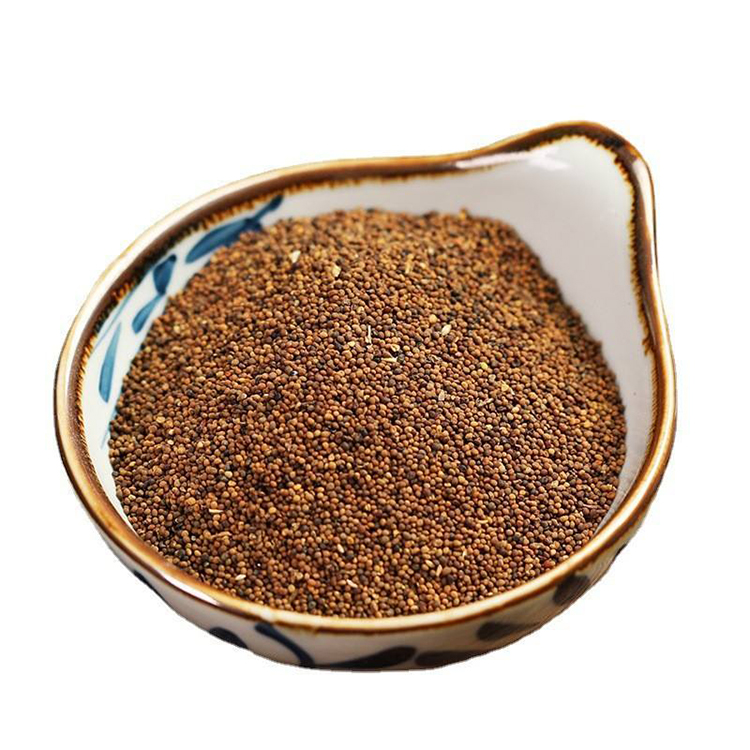
A 2025 paper in the Journal of Ethnopharmacology examined the real-world “Bai Jiang Cao” identity problem and specifically compared Patrinia scabiosifolia with Thlaspi arvense, a species reported as being misused under the same Chinese herbal name in the market. The researchers noted that Thlaspi arvense had greater commercial availability than Patrinia species in Hong Kong SAR herbal markets.
So when a supplier says, “Yes, we have Bai Jiang Cao,” my response would not be “What is your best price?”
I would ask for the Latin binomial.
Patrinia Root Identity Comes Before Patrinia Root Price
The weakest bulk herbal purchase orders contain a common name and a quantity.
“Patrinia Root, 500 kg.”
That is not a specification. It is an invitation to interpretation.
For bulk Patrinia root, the purchase specification should identify at least:
Here is the hard truth: common Chinese herbal names work well in traditional commerce until international quality systems demand botanical precision.
Then they become dangerous shorthand.
A review of Herba Patriniae literature identifies Patrinia scabiosifolia and Patrinia villosa as species historically associated with Bai Jiang Cao, while the 2025 comparative study documents the additional market problem of Thlaspi arvense being used under the same trade name.
Three names on a spreadsheet can therefore hide materially different plant inputs.
Would your receiving warehouse catch that?
Maybe.
Would your accounts-payable department?
Absolutely not.
That is why botanical identity needs to be settled before the purchase order, not during a customer complaint.
FDA provides a useful regulatory reality check. In U.S. dietary supplement labeling, botanicals may need the standardized common name or, where appropriate, the Latin binomial, and the plant part is also relevant. FDA import-refusal records have specifically cited products for failing to identify the botanical plant part and for failing to use an appropriate botanical name.
And identity mistakes can become import problems. FDA’s current Import Alert 54-12 concerning ginseng makes the principle painfully clear: using a botanical name for a plant that does not belong to the required genus can support detention without physical examination.
Different herb.
Same procurement lesson.
Build a Patrinia Root Specification That a Supplier Cannot Misread
A serious Patrinia root supplier should be able to quote against a specification rather than a photograph and a WhatsApp message.
This is what I would send.
Control Point
What the Buyer Should Specify
What Should Trigger Questions
Botanical identity
Exact accepted Latin binomial
Only “Bai Jiang Cao” or “Patrinia herb” shown
Plant part
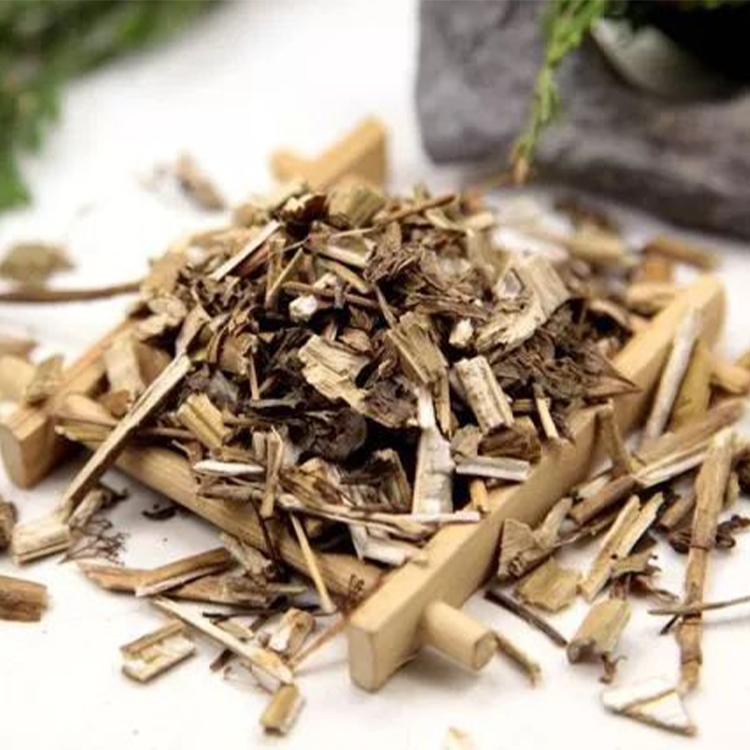
Root, root/rhizome, aerial portion, whole herb, or another agreed part
Plant part absent from COA or label
Commercial form
Whole, slices, cut pieces, granules, powder
Supplier substitutes another form without approval
Origin
Country plus province/region where commercially relevant
“China” is the only traceability information
Lot identity
Unique batch/lot number
COA lot does not match carton or invoice
Physical grade
Agreed appearance, cut distribution, fines and foreign matter
Sample looks cleaner than production lot
Moisture
Numeric limit based on your specification and market
COA simply says “Pass”
Heavy metals
Required elements and destination-market limits
No test method or numerical result
Pesticides
Market-specific multi-residue scope
Generic “pesticide free” statement
Microbiology
Relevant microbial limits and pathogens
Testing absent for ingestion applications
Packaging
Food-contact inner packaging plus agreed outer pack
Unsealed or moisture-vulnerable packaging
Documentation
Lot-specific COA and supporting records
Generic COA reused across shipments
Notice what I have not put in this table: one universal moisture limit, one universal pesticide standard, or one magical heavy-metal number.
I do not recommend inventing those limits.
A Patrinia Root importer selling into the United States, a European herbal-product manufacturer, a tea company, and a pharmaceutical buyer may not operate under identical specifications. Your destination market and finished-product category should determine the acceptance criteria.
Do Not Turn One Chemical Compound Into a Fake Quality Standard
Procurement teams love marker compounds because numbers look reassuring.
I understand the attraction.
Research on the root and stem of Patrinia scabiosifolia has reported triterpenoid-related constituents including oleanolic-acid and hederagenin derivatives. A Beijing Medical University-linked study published in 2000 isolated several compounds from ethyl acetate extracts of the root and stem.
For reference, PubChem lists oleanolic acid as C30H48O3, molecular weight approximately 456.7 g/mol, CAS 508-02-1.
Useful science?
Yes.
A universal release specification for every Patrinia Root order?
No.
Unless your pharmacopoeial, customer, regulatory, or internal specification establishes a validated marker requirement, do not copy a research compound into a procurement document just because an HPLC number looks sophisticated.
The same warning applies to fingerprints. A 2023 quality-evaluation study used UPLC fingerprinting and multi-component analysis on Patrinia scabiosifolia samples from Anhui, Henan, Hubei, and Chongqing, reflecting the industry’s interest in more objective differentiation of this material.
That can inform your analytical strategy.
It does not replace botanical authentication.
A COA Is Evidence Only When It Belongs to Your Lot
I have a simple test for a Patrinia root supplier.
Ask for the COA before talking about the container.
Then inspect the document as if you are trying to reject it.
Is the botanical name there?
Plant part?
Lot number?
Sampling or test date?
Method?
Actual result?
Specification limit?
Laboratory identity?
Approval signature?
Does that exact lot number appear on the commercial packaging?
If three of those questions produce vague answers, I would slow the purchase down.
FDA Does Not Treat Identity Testing as Optional Paperwork
For dietary supplement manufacturing in the United States, FDA’s guidance around 21 CFR Part 111 requires manufacturers to establish component specifications covering identity and relevant purity, strength, composition, and contaminant limits. FDA also states that at least one appropriate test or examination must ordinarily be used to verify the identity of a dietary ingredient.
Read that again.
Identity.
Not “supplier looks reputable.”
Not “sample color was good.”
Not “we have bought herbs from China before.”
Identity.
The exact analytical program will vary according to material form and risk. Macroscopy can be powerful for intact material. Microscopy may help in certain forms. TLC, HPTLC, HPLC, UPLC, spectroscopic methods, DNA techniques, or combinations of approaches may be justified depending on what is being authenticated.
Powder complicates everything.
Once Patrinia Root is milled, many morphological clues disappear. If your finished process needs powder, my preferred commercial sequence is simple: authenticate the incoming botanical first, retain the authenticated reference sample, and only then approve milling.
If you require custom particle size, blending, or grinding after release, the site’s bulk herbal blending and milling services guide explains the processing questions buyers should define before production.
Contamination Risk Does Not Care Which Herb You Ordered
Buyers sometimes make a strange assumption.
“My herb is not high-risk.”
Based on what?
Botanicals move through soil, water, harvesting equipment, drying areas, warehouses, grinders, workers, sacks, trucks, ports, and repacking operations. Contamination risk is a supply-chain property, not a personality trait of Patrinia Root.
The European Medicines Agency’s revised GACP guideline, published in August 2025, specifically addresses cultivation, collection, primary processing, hygiene, and contamination risks in medicinal plants and herbal starting materials.
WHO’s medicinal-plant GACP guidance has made the same broader point for years: quality assurance begins during cultivation and collection, not when somebody prints a COA.
Recent FDA Cases Show What “Botanical Risk” Looks Like in Practice
Consider a current example unrelated to Patrinia itself.
FDA Import Alert 99-19, updated in May 2026, lists Moringa powder shipments appearing adulterated because of Salmonella contamination.
Again: different plant.
Same warehouse nightmare.
There is an even harsher identity lesson. FDA Import Alert 54-10 documents serious cases involving Aristolochia species and aristolochic acid where traditional herbal materials were misidentified or confused partly because of similar or misunderstood traditional names. FDA describes aristolochic acid as both nephrotoxic and carcinogenic.
That is why I reject the phrase “our supplier knows Chinese herbs” as a quality-control argument.
Knowledge is useful.
Documentation is auditable.
What I Would Test for a Bulk Patrinia Root Program
Your final test panel should be based on intended use, destination law, customer requirements, supplier history, processing, and formal risk assessment.
For commercial discussions, these are the categories I would put on the table:
Botanical identity
Plant-part confirmation
Moisture or loss on drying
Foreign matter
Ash values where relevant
Heavy metals such as Pb, As, Cd, and Hg where required
Destination-specific pesticide residues
Total aerobic microbial count
Yeast and mold
Relevant pathogens such as Salmonella and E. coli
Sulfur dioxide where processing history justifies evaluation
Mycotoxins where the risk assessment warrants them
Chemical fingerprint or marker analysis when required by an applicable specification
And I want actual numbers when numerical testing is performed.
“Pass” hides information.
A result such as “0.XX mg/kg against a limit of X mg/kg,” accompanied by the method, tells the quality team something. A green checkmark does not.
How to Source Patrinia Root in Bulk Without Buying the Wrong Lot
So how do serious buyers actually run Patrinia Root procurement?
I would use five gates.
Gate 1: Supplier Pre-Qualification
Before samples, establish who is actually supplying you.
Manufacturer?
Processor?
Exporter?
Trading company?
Farm-linked processor?
None of those structures is automatically good or bad. But you should know which one you are paying.
A hand-selected showroom sample proves that the supplier owns twenty attractive roots.
It does not prove that the 500 kg lot looks the same.
Request the sample from the commercial lot whenever possible and record:
Lot number
Sample date
Sample weight
Appearance
Color
Odor
Cut form
Fines
Foreign matter
Packaging
Photographs
Keep part of it.
Retained samples solve arguments.
Gate 3: Document and Laboratory Review
Match everything.
Sample lot.
COA lot.
Bag label.
Invoice.
Packing list.
Pre-shipment inspection.
If the numbers do not connect, traceability is broken.
For a new Patrinia root supplier or high-value program, independent third-party verification before scaling is cheap insurance compared with testing after a container has crossed an ocean.
Gate 4: Trial Commercial Order
Do not discover a supplier’s operating discipline with your largest forecast.
Start with a controlled order.
Watch whether the commercial lot matches the approved sample. Measure document accuracy. Check response time. Inspect packaging integrity. Record deviations.
This is where “best Patrinia root supplier” becomes measurable.
The best supplier is not the salesperson who answers in three minutes.
It is the supplier whose second lot resembles the first.
Gate 5: Lock the Specification Into the PO
Verbal quality agreements evaporate.
Write the requirements into the commercial specification or purchase contract:
Exact botanical identity
Agreed plant part
Commercial form
Cut or particle size
Approved origin if relevant
Required test panel
Acceptance limits
COA requirements
Packaging specification
Lot traceability
Retained sample requirement
Change-control requirement
Pre-shipment approval
Rejection and retest process
And add one sentence that suppliers dislike but professional buyers need:
No substitution of species, origin, plant part, processing method, or production lot without written buyer approval.
That sentence can save months of arguments.
Patrinia Root Wholesale Price Should Be Compared Only After Grade Is Locked
Bulk herbal buyers often ask for three quotes and choose the middle one.
That is not sourcing.
It is spreadsheet decoration.
A Patrinia Root wholesale quotation can change because of botanical source, plant part, harvest availability, physical grade, cleaning level, cut form, milling requirement, test scope, packaging, certification requirements, order volume, and freight.
So normalize the bids.
Ask all Patrinia root suppliers to quote against the same specification.
Otherwise one supplier may be pricing cleaned authenticated cut material with lot-specific testing while another is pricing loosely sorted market stock.
Patrinia Root is a bulk botanical material sourced from plants in the genus Patrinia, most commonly Patrinia scabiosifolia in commercial discussions, but professional buyers should define the exact Latin binomial, plant part, processing form, origin, batch identity, and intended market before treating “Patrinia Root” as a complete purchasing specification.
The name alone is not enough because Bai Jiang Cao trade terminology has historically covered more than one botanical source, and modern research has also documented market use of Thlaspi arvense under the same Chinese herbal name.
How should buyers source Patrinia Root in bulk?
Bulk Patrinia Root sourcing is a controlled purchasing process in which the buyer first verifies botanical species and plant part, then establishes physical and laboratory specifications, reviews a representative sample and lot-specific COA, qualifies the supplier, conducts an appropriate trial order, and scales only after commercial batches demonstrate repeatable conformity.
Do not begin with price alone. Require the supplier to quote against a written specification so competing offers represent the same botanical identity, processing level, testing scope, packaging, and documentation.
What makes the best Patrinia Root supplier?
The best Patrinia Root supplier is a manufacturer, processor, or exporter that can repeatedly provide the specified botanical species and plant part while maintaining lot traceability, representative sampling, appropriate contaminant testing, accurate COAs, controlled processing, reliable export documentation, transparent change control, and a written procedure for handling rejected or nonconforming commercial lots.
A beautiful sample is useful, but repeatability is the real test. Ask how the supplier manages the second and third order, not only how it prepares the first sample.
Is Bai Jiang Cao the same as Patrinia scabiosifolia?
Bai Jiang Cao is a traditional Chinese herbal trade name associated with Patrinia materials, but it should not be treated automatically as an exact synonym for one species or plant part because literature records multiple Patrinia sources and recent research has documented Thlaspi arvense being commercially misused under the same herbal name.
That is precisely why the purchase order should state the accepted Latin binomial. NCBI currently recognizes Patrinia scabiosifolia Link under Taxonomy ID 300888.
What tests should a Patrinia Root COA include?
A Patrinia Root COA should document the tests required by the buyer’s intended use, destination market, formal specification, and risk assessment, normally beginning with botanical identity and then addressing relevant moisture, physical quality, heavy metals, pesticide residues, microbiological parameters, pathogens, and other contaminants or chemical markers where those controls are justified.
There is no responsible universal test panel for every market. U.S. dietary supplement manufacturers, for example, operate under identity and component-specification requirements in 21 CFR Part 111, while other product categories and jurisdictions may require different acceptance criteria.
Your Next Step: Request Patrinia Root by Specification, Not by Name
If you are preparing a Patrinia Root procurement project, do not send a supplier one line saying:
“Please quote Bai Jiang Cao.”
Send a real request.
Include the botanical name you require, plant part, whole or cut form, target cut size or powder specification, trial quantity, annual estimated volume, destination country, intended application, required contaminant panel, packaging format, certification needs, and whether you need a pre-shipment sample and lot-specific COA.
That changes the conversation immediately.
Weak suppliers will return to price.
Strong suppliers will return to specification.
For bulk Patrinia root, custom processing, samples, COA requirements, or commercial quotation discussions, submit those requirements through the GuoCao wholesale herbal inquiry page and ask the supplier to identify the exact botanical species and plant part before approving the quote.
Our low MOQ of 1 kg (2.2 lb) makes it easy to order Chinese herbal slices or wholesale Chinese medicine herbs. Private-label and bilingual labeling are also available.
Delivery Cycle & Support
We have a fast 7-day lead time. We provide free samples, COA reports, and technical support to help you bring high-quality bulk Chinese herbs to market.
Quality & Certifications
Our products are manufactured in a GMP-certified facility and meet ISO22000 standards. All Chinese herbs are third-party tested for heavy metals, pesticides, and microorganisms.