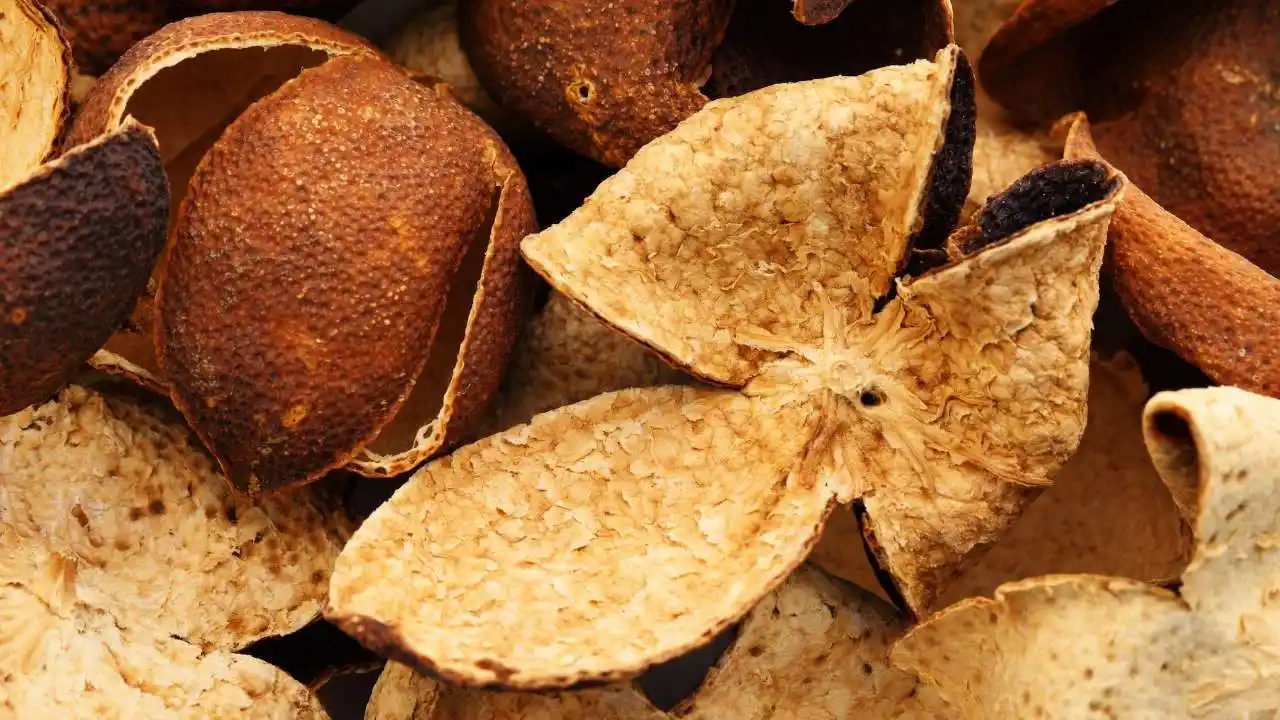
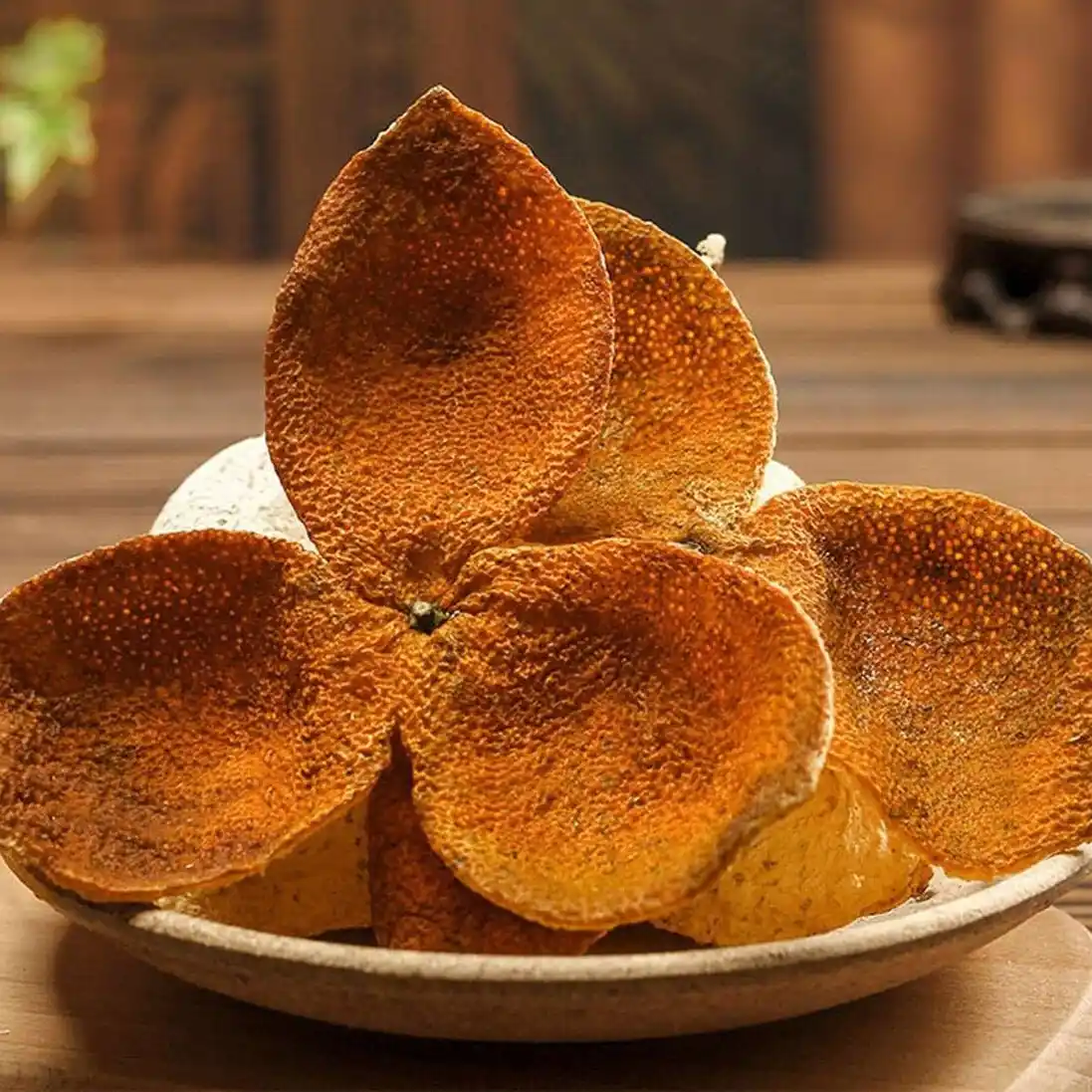
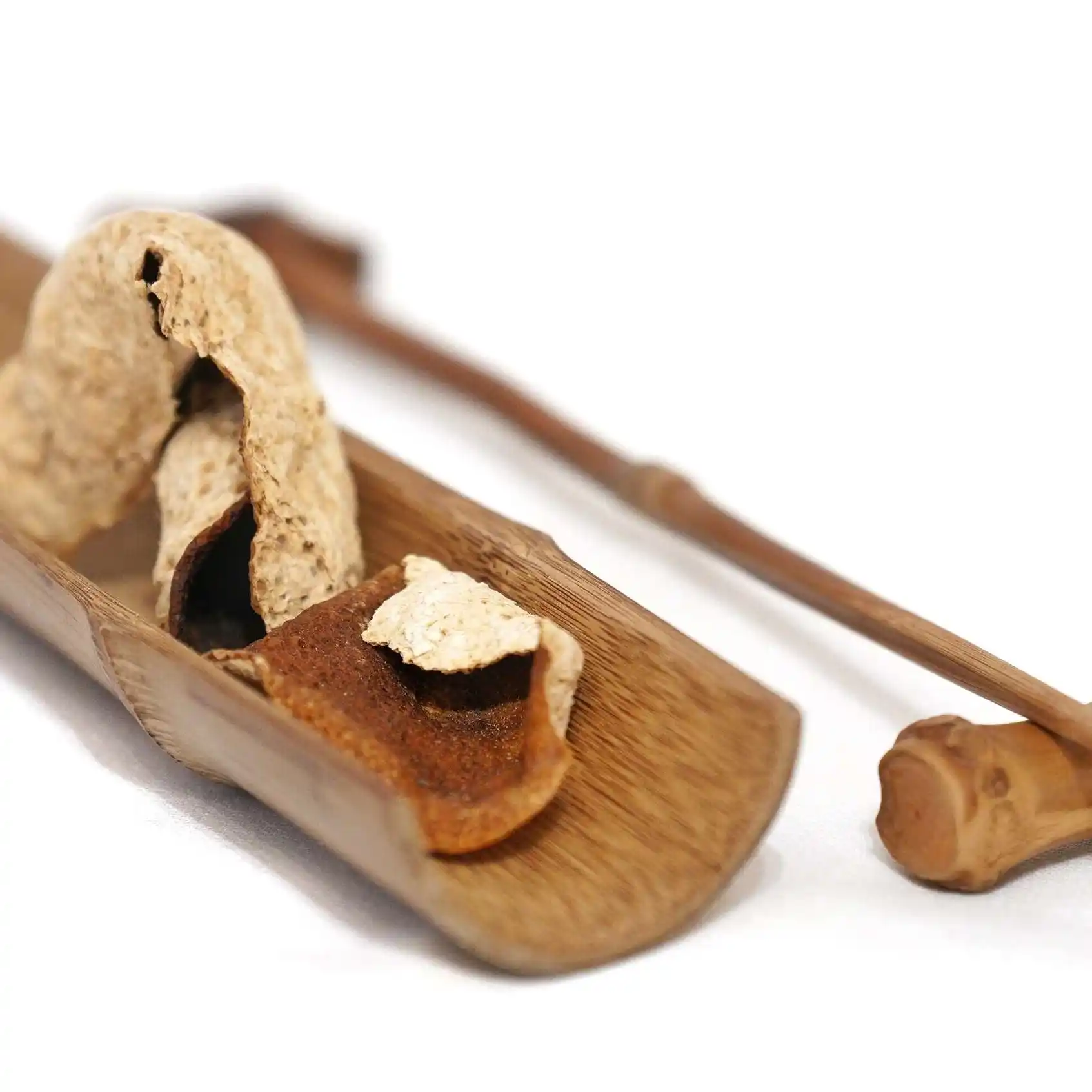
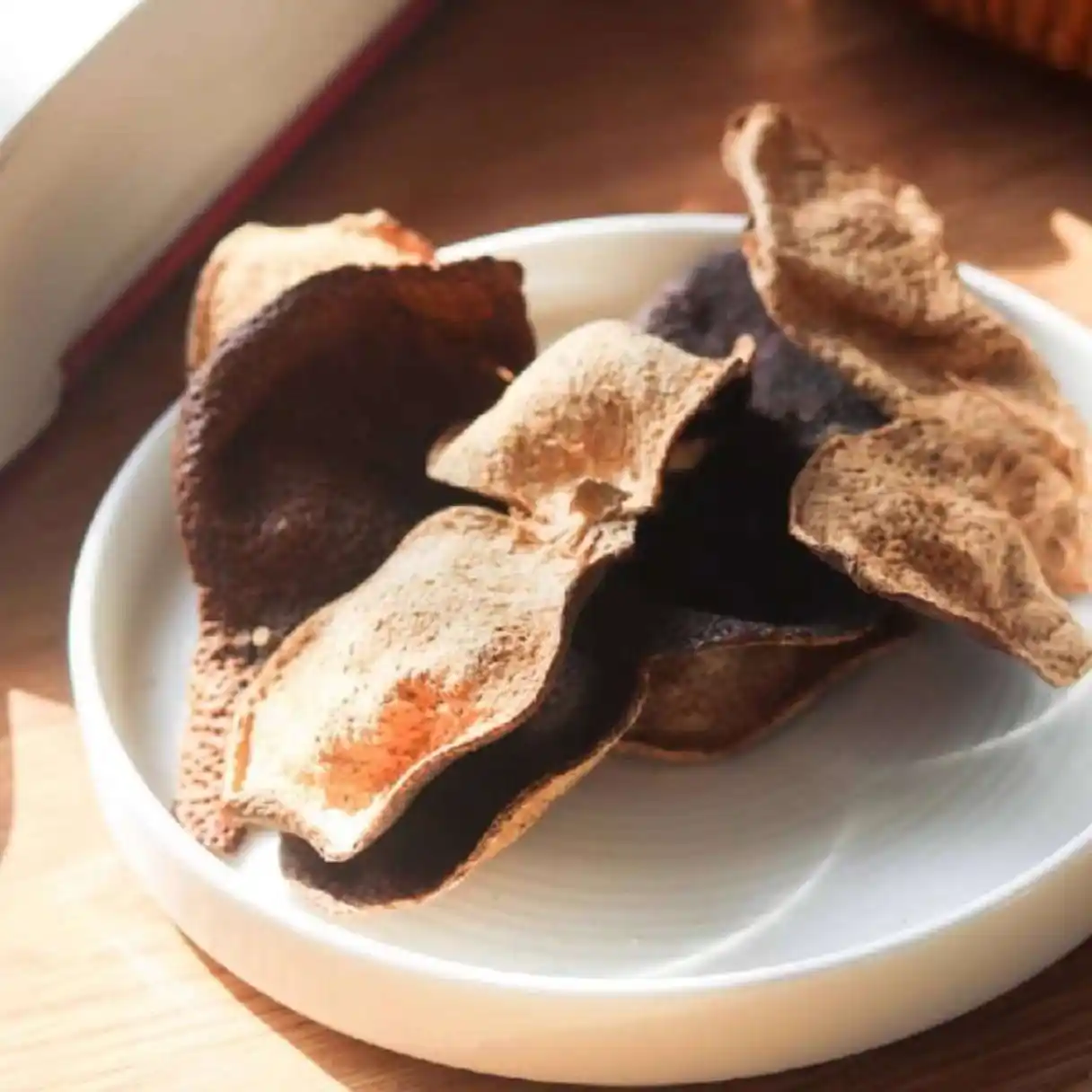
If you work with TCM herbs, functional drinks, or herbal supplements, you’ve probably heard this line many times:
“Chen Pi, the older the better.”
It sounds simple. But behind that line you have real changes in chemistry, taste, and also business value. Old tangerine peel is not just dry orange skin. It’s a slow-aged raw material that can lift both your formula and your brand story.
In this article we’ll look at what actually happens when tangerine peel ages, how that affects quality, and why buyers around the world choose aged Chen Pi from a professional supplier like GuoCao.
I’ll keep it straight, more like shop-floor talk than textbook.
Chen Pi (Pericarpium Citri Reticulatae) in Traditional Chinese Medicine
In Traditional Chinese Medicine, Chen Pi is the dried peel of tangerine or mandarin. After proper drying and years of storage, it becomes warm, aromatic, slightly bitter, slightly sweet. It goes mainly to Spleen and Lung channel.
Classic functions include:
moving Qi in the middle
drying Damp and transforming Phlegm
helping digestion and bloating
supporting appetite and relieving chest tightness
Fresh peel is just peel. Only after aging does it earn the name “Chen Pi” in the full sense. That’s why old Cantonese families keep jars of dark, dry peel at home for tea, soup and home formulas.
From a sourcing view, Chen Pi sits inside the broader basket of Chinese herbs and spices that many companies now use in teas, granules, capsules and functional beverages.
GuoCao positions itself as a one-stop wholesale supplier for animal and mineral drugs, roots and rhizomes, fruits and seeds, flowers and whole herbs, barks and more on the main site Wholesale Chinese medicinal herbs and spices supplier – GuoCao. For Chen Pi, that means you’re not buying a single herb in isolation. You’re building full formulas from one supply chain.
Aged Tangerine Peel Chemical Composition and Quality
So why do people insist “the older, the better”? Not just because of tradition. Aging really changes the inner content of the peel.
Flavonoids, Essential Oils and Polysaccharides in Aged Chen Pi
Inside Chen Pi you find three big groups that matter for quality:
Flavonoids and phenolic compounds These include hesperidin, naringin, polymethoxyflavones and others. Studies show that, in many samples, total flavonoid and phenolic levels increase with aging time, especially from about 3 to 10 years. Mid-aged peel often shows richer profiles than one-year peel.
Essential oils (volatile oils) Fresh peel has bright, sharp citrus oil. As it ages, small volatile parts slowly drop, and heavier aromatic molecules become more important. Aroma goes from “sharp citrus” to “deep, layered, slightly woody”.
Polysaccharides With aging, polysaccharides can change their structure. Some research found older peel has lower molecular weight polysaccharides and stronger antioxidant activity in lab tests, especially in long-stored samples.
You don’t need to quote every paper on your label. But you can confidently say: aging changes flavonoid content, aroma profile and antioxidant potential. That supports the old TCM saying in a way modern R&D teams can accept.
Sensory Changes of Aged Chen Pi by Years
For many brands, taste and smell decide if a formula can survive on shelf. So let’s talk about what your nose and tongue feel.
Real life is not always this clean, but the pattern is clear: you trade some sharpness for depth and balance as age goes up.
That’s why old Chen Pi is so popular in:
aged-peel Pu-erh tea
tonic soups
premium herbal drink concepts
When you smell a good old slice, you know it quickly. The peel is darker, the aroma is soft but long, and the aftertaste stays sweet-bitter on the tongue.
Wholesale Chen Pi Applications in Tea, Supplements and Functional Beverages
Aged Chen Pi is not just nice for home kitchen. It’s also a workhorse ingredient for many B2B clients: pharma companies, dietary supplement makers, functional drink brands, spice wholesalers, local retailers, and cross-border traders.
Aged Chen Pi in Chinese Herbal Tea Bags and Spice Blends
One of the easiest ways to use Chen Pi is in tea bags. GuoCao already supplies finished and semi-finished Chinese herbal tea bags with TCM-style formulas, food-grade filter paper and ready-to-fill blends.
Common scenarios:
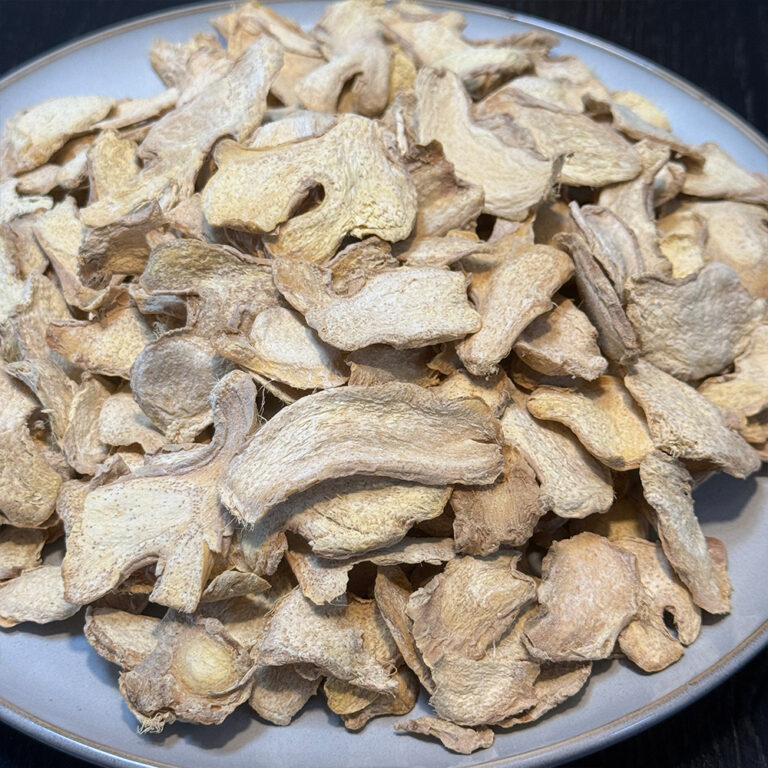
“After-meal comfort” blends with Chen Pi + ginger + hawthorn
“Lung & throat soothing” blends with Chen Pi plus flowers or roots
Seasonal wellness teas where Chen Pi gives a warming, drying, citrus-herbal note
Here Chen Pi does three jobs at once:
Flavor top note – aged citrus and herbal aroma
Story and positioning – clear TCM identity, easy to explain to consumers
Function tag – traditional support for digestion and phlegm-damp issues
If you buy raw slices instead of tea bags, you can combine Chen Pi with other categories like fruit and seed Chinese medicines and spices to build your own blends for decoction pieces, spice mixes or extraction.
On the technical side, you’ll care about:
cut size / mesh size for tea-bag filling or extraction
bulk density for filling machines
extractable solids for hot-water or alcohol extraction
micro limits so the final product passes QC in strict markets
A supplier with real GMP slicing lines and stable moisture control makes your QC team sleep better at night.
Chen Pi in Dietary Supplements and Enzyme Drinks
Chen Pi also works very well in:
powder mixes for stick packs or jars
capsule and tablet formulas aimed at digestion and metabolic support
enzyme and postbiotic drinks where herbs ferment together with fruits or grains
GuoCao doesn’t stop at dry slices. The company runs Chinese herbal slice GMP lines and also supports microbial enzyme drinks and postbiotic beverages. You can see this direction on their herbal enzymes and postbiotic drinks page.
For these products, Chen Pi gives you:
a traditional herb with good ferment compatibility
extra flavor and aroma to mask “ferment smell”
a polyphenol and flavonoid source that matches the TCM story on your label
R&D teams care about:
granularity (fine powder vs cut pieces)
flowability for capsule filling
moisture spec to avoid clumping
pesticide and heavy metal panels that match pharmacopeia or food code in each market
These are classic pain points. When a supplier like GuoCao sends full COA packages with each lot, including microbiology and residues, the registration and lab test process becomes much easier.
GuoCao OEM / ODM Chen Pi Supply and Manufacturing Strength
Aged Chen Pi may be traditional, but the supply chain needs to be modern.
GuoCao is a global Chinese herbal manufacturer with:
GMP Chinese herbal slice production lines
normal / cool / controlled-atmosphere warehouses
ISO 22000 food safety system
in-house and third-party COA testing capabilities
yearly output around 2,500 tons of herbal slices
OEM / ODM for herbs, spices, tea bags, enzyme drinks
Sales already cover North America, Europe, Australia, Japan, Korea, Southeast Asia and more. Documents for export and compliance are part of the basic package, not an extra favor.
Quality Control, COA and Compliance for Chen Pi Batches
From a buyer’s angle, “older is better” is only true when the product passes tests. Otherwise it’s just old peel.
Key control points that GuoCao focuses on:
Origin and raw material Correct citrus variety, proper drying, clean storage from the start.
GMP slicing and cleaning Dedicated herbal slice lines mean stable cut size, less cross-contam risk.
Warehouse conditions Normal, cool, and controlled-atmosphere rooms help avoid mold and off-odors during storage.
COA for each batch Moisture, ash, extract content, micro limits, heavy metals, pesticide screening, sometimes solvent residue depending on client spec.
Traceability Lot-number system that lets you track from finished product back to source batch.
This is the real “industry black talk” that solves pain: you dont want to repeat micro fail or residue fail in target market. Having a partner who understands pharmacopeia-level specs and food-grade specs saves alot of back-and-forth with labs and regulators.
Custom Chen Pi Scenarios with GuoCao OEM / ODM
Sometimes you don’t want standard slice only. You want a custom spec:
cut size adjusted for your decoction bag machines
blended formula with Chen Pi plus other herbs
private label tea bags ready to shelf
granule-friendly powder with certain mesh size and low moisture
This shortens lead time from idea to product. It also reduces the number of factories you need to audit. One supplier, one documentation flow, many SKUs.
Is Older Always Better? Practical Takeaways for Buyers
Let’s go back to the main question.
Is aged tangerine peel always better?
From TCM view: Yes, Chen Pi is meant to be aged. Fresh peel is not the same herb. Aging makes the nature warmer and more gentle. It fits the classic functions better.
From chemistry view: Aging influences flavonoids, essential oils and polysaccharides. Many mid-aged to long-aged samples show richer flavonoid and phenolic profiles and stronger antioxidant behavior in lab tests.
From sensory view: Old Chen Pi simply tastes and smells nicer. Less harsh, more depth, more “old tea and herbal shop” feeling. That matters a lot in teas and drinks.
But from a purchase view, the answer is a bit more detailed:
Older is only helpful when storage is correct. Mold and off odor kill any advantage.
You need age plus safety data: micro, residues, heavy metals.
For many commercial products, mid-aged Chen Pi (for example 3–10 years) already gives good balance of availability, quality and flavor. Ultra-old stock is rare and mainly for collection-type products.
So when you design a new digestion tea, a functional beverage, or a herbal supplement with Chen Pi, think like this:
Choose a trusted supplier with GMP, ISO 22000, COA and export experience.
Decide your target age range, cut size and moisture spec with them.
Align lab testing and documentation early, not after the first shipment.
Build your marketing story around both tradition (“the older, the better”) and modern control.
If you want to anchor this in one place, GuoCao gives you:
aged Chen Pi as a stable raw material,
a full ecosystem of herbs from fruits and seeds to spices,
OEM / ODM options for tea bags, spice mixes and enzyme drinks.
In the end, “the older, the better” still holds. Just make sure “older” means well-stored, well-tested and well-supplied, not just peel that sat somewhere for many years with no control.
Our low MOQ of 1 kg (2.2 lb) makes it easy to order Chinese herbal slices or wholesale Chinese medicine herbs. Private-label and bilingual labeling are also available.
Delivery Cycle & Support
We have a fast 7-day lead time. We provide free samples, COA reports, and technical support to help you bring high-quality bulk Chinese herbs to market.
Quality & Certifications
Our products are manufactured in a GMP-certified facility and meet ISO22000 standards. All Chinese herbs are third-party tested for heavy metals, pesticides, and microorganisms.