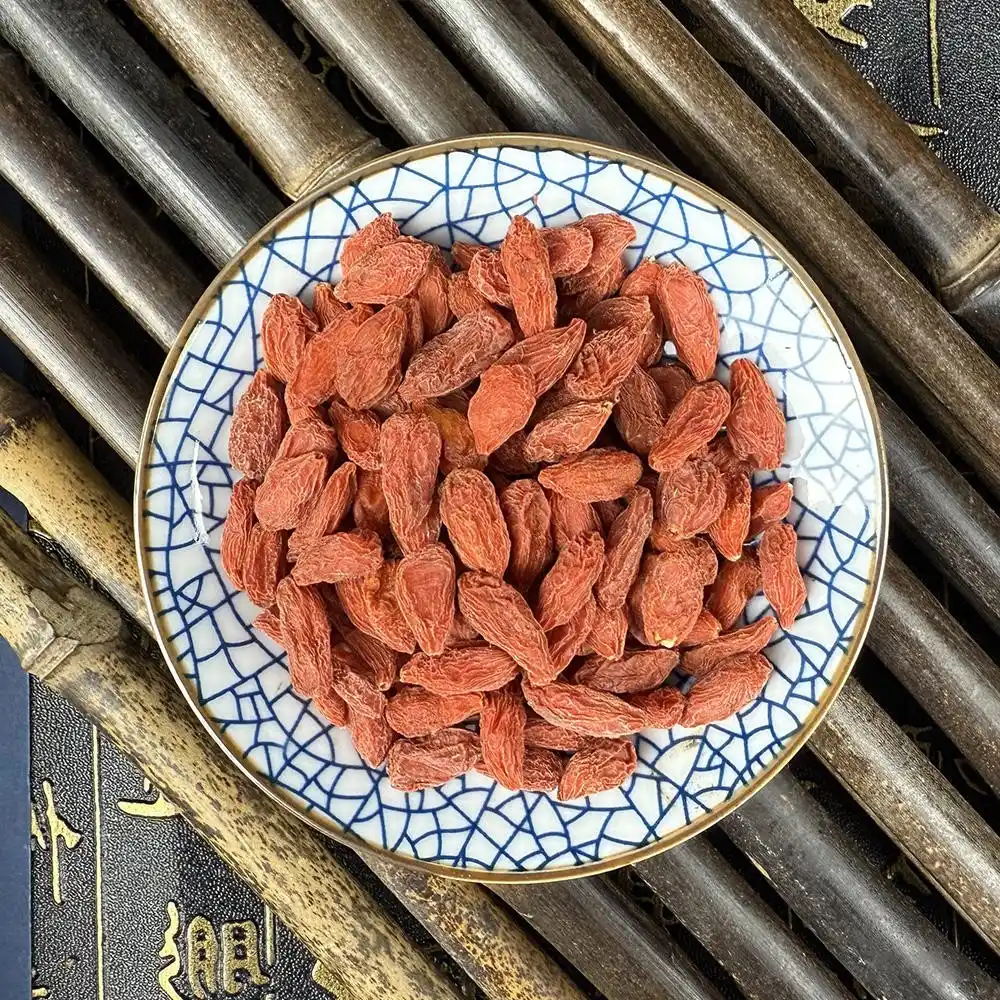
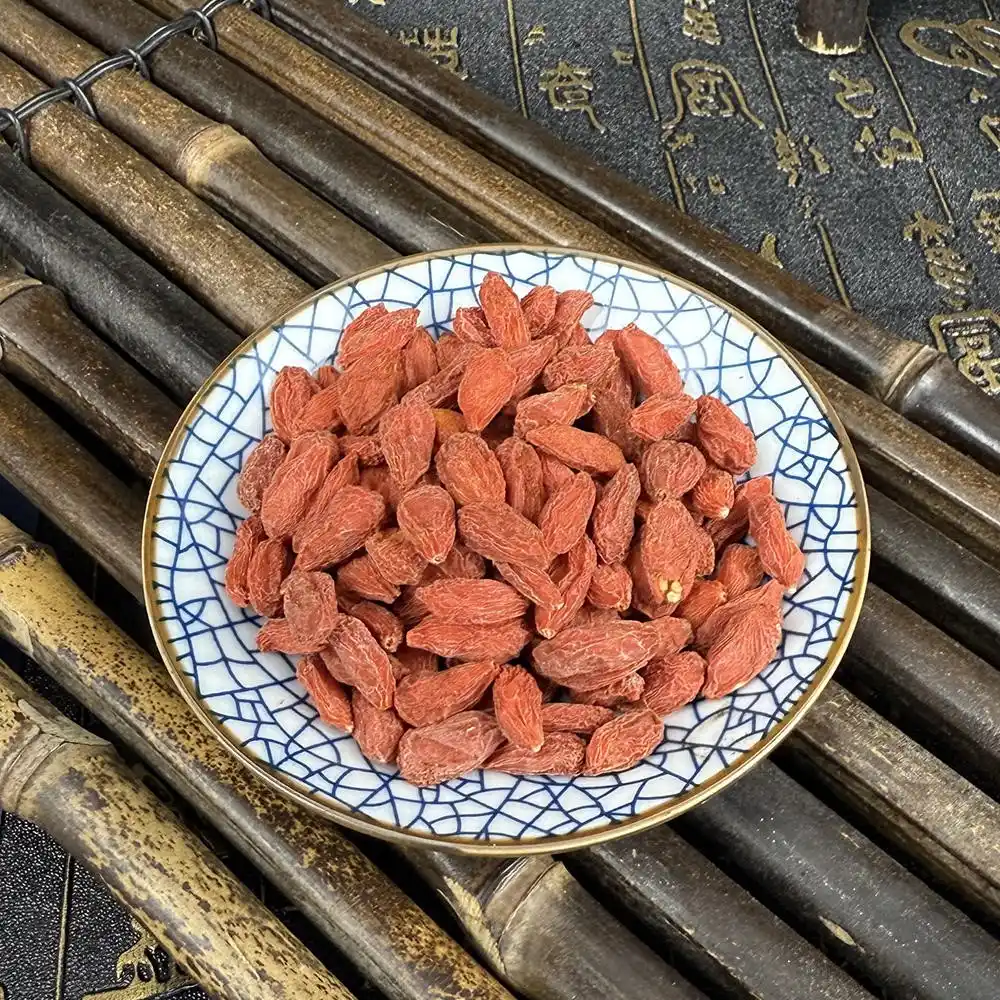
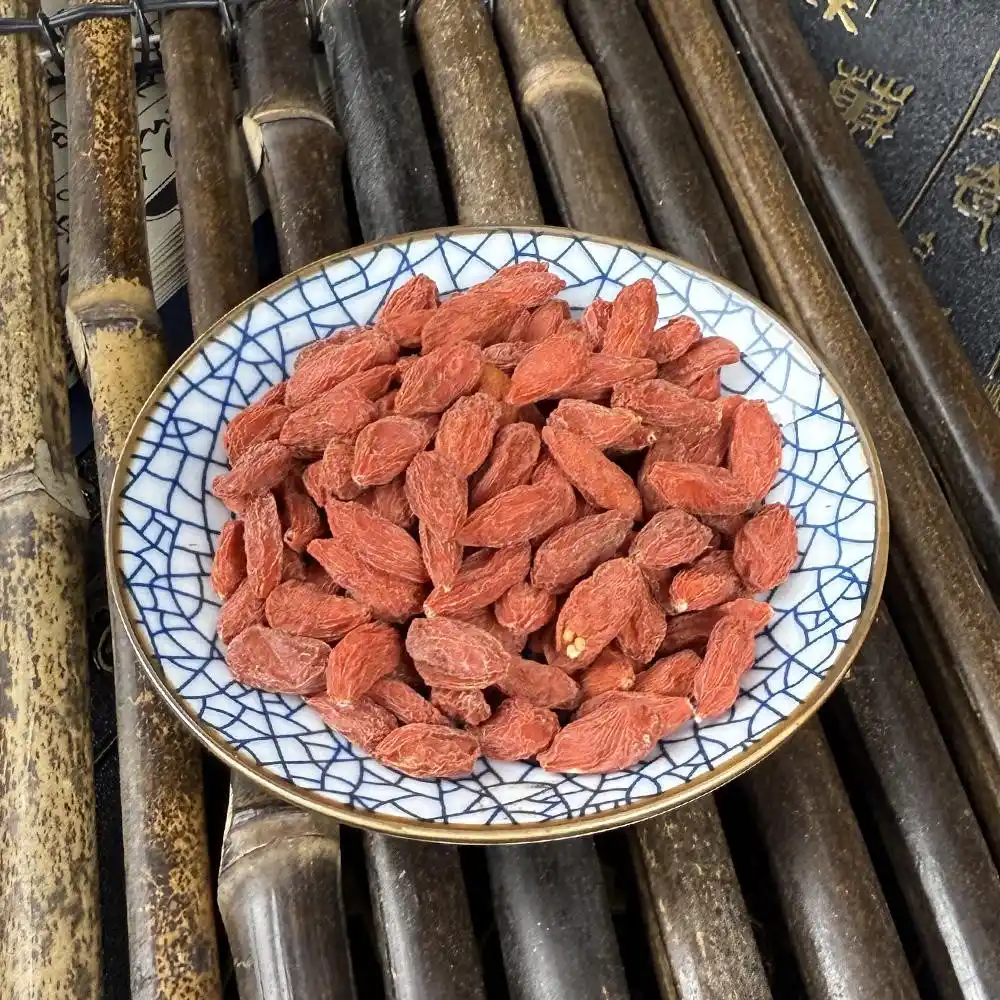
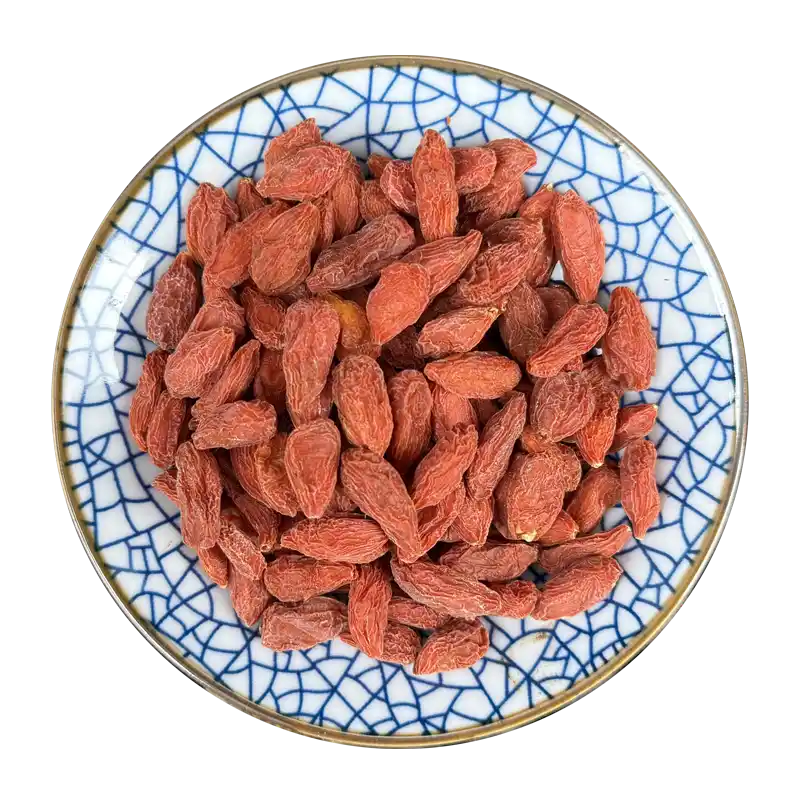
If you source goji berries in bulk, you’ve seen it. A lot arrives, you open the bag, and there’s a white layer on the fruit. Someone says “mold.” Someone else says “it’s sugar.” Then the order goes into dock hold, your warehouse flags it as NCR, sales gets nervous, and you burn days on photo ping-pong.
Here’s the truth: that white stuff is not one thing. And if your acceptance spec treats it as one thing, you’ll keep getting the same headache.
This article gives you a practical way to separate:
sugar bloom (sugar crystals)
sodium carbonate residue (Na₂CO₃)
mold (hard reject)
No fluffy talk. Just a spec you can run at receiving.
If you’re building a stable supply chain, you also need a supplier that can run the spec at scale and back it up with traceability and COA packets. That’s where GuoCao fits in (GMP herbal slices lines, ISO 22000 system, controlled warehouses, third-party COA ability, plus OEM/ODM support). You can skim GuoCao’s base info here: Wholesale Chinese Medicinal Herbs and Spices Supplier – GuoCao.
Sugar bloom vs mold in goji berries (Gou Qi Zi)
“White = mold” is a rookie rule. “White = sugar” is also risky. Your spec needs to say: what kind of white?
White residue is not one thing: sugar crystals, sodium carbonate residue, mold hyphae
1) Sugar bloom (sugar crystals) Goji berries are naturally high in sugar. In industry specs for dried wolfberry, you’ll see total sugar called out as a key quality marker (high sugar also explains why crystals can show up on the skin). Sugar bloom usually looks like tiny crystals, dry and a bit gritty. It often clears up with a warm-water wipe.
2) Sodium carbonate residue (Na₂CO₃) Some processors use sodium carbonate solution as a pretreatment step to weaken the wax layer and help drying. When the step isn’t controlled well (or rinsing is weak), you may see a faint, powdery residue. It’s not fuzzy, and it usually doesn’t smell “damp.” It’s more like… dust.
3) Mold (reject) Mold is not a “maybe.” Mold is a defect. It’s commonly defined as a non-usable berry in goji grading logic, right next to insect damage and disease spots. Mold often shows fuzzy growth, a musty odor, and sometimes internal discoloration when you split the fruit.
So your spec shouldn’t ask “is it white?” It should ask: crystal, residue, or hyphae?
Sodium carbonate (Na₂CO₃) dewaxing and white residue
This section saves you from a lot of false rejects.
Why factories use sodium carbonate solution pretreatment
Goji has a waxy skin. In drying and processing research, sodium carbonate pretreatment helps moisture escape faster. Translation: it can speed drying and support stable output. That’s why it exists in the first place.
How sodium carbonate residue shows up in incoming inspection
What buyers usually report:
very fine white powder
no fuzzy “hair”
no musty smell
powder drops after light rinse or wipe
If your acceptance spec doesn’t name this, your QC team will keep calling it mold. Then you’ll do chargebacks and claim wars for no reason. Not fun.
Moisture content 13.0% and water activity (aw) 0.60
This is where most disputes should end. Mold risk is mostly a moisture story.
Moisture content (≤ 13.0%) in dried wolfberry
In goji-related quality specs, moisture around 13% is a common control line for dried fruit. If your lot comes in higher than your agreed limit, you’re basically inviting mold during storage and sea freight. It’s like leaving bread on a wet counter and acting surprised later.
Water activity (aw) limits: “below 0.60” as a practical control line
Moisture % helps, but water activity (aw) tells you whether microbes can actually grow. In food safety guidance, molds/yeasts often need around aw ≈ 0.61, and aw 0.60 is treated as a strong “growth stops” zone for most microbes.
Small warning: some super dry-tolerant fungi can push lower, especially in high-sugar foods. So don’t treat aw as magic. Treat it as a smart barrier.
Key numbers you can actually put in a goji acceptance spec
Spec item (keyword)
Suggested acceptance
What it controls
Notes for buyers
Moisture content (%)
≤ 13.0
Mold risk, shelf stability
If you ship long distance, don’t be generous here
Water activity (aw)
Target ≤ 0.60
Mold/yeast growth window
Great for “container sweat” seasons
Coliforms
Low / compliant
Hygiene indicator
Use COA per batch
Sulfur dioxide (SO₂)
Compliant limit
Processing compliance
Put it in the COA packet so nobody argues
Appearance: moldy berries
0 tolerance
Food/TCM safety
Any fuzzy growth = quarantine
Appearance: sugar bloom
allowed if it passes tests
False reject reduction
Add a quick warm-water wipe test
Appearance: Na₂CO₃ residue
allowed if controlled
Process reality
Add rinse note + supplier process record
Incoming inspection acceptance spec for dried wolfberry (dried goji berries)
If your receiving team can’t run the spec in 10 minutes, it won’t happen. Make it simple.
Defect grading: Critical defect, Major defect, Minor defect
Critical defect (auto reject / quarantine cage)
visible fuzzy growth
musty odor
wet clumps with spoilage signs
any clear moldy berries
Major defect (hold + investigation)
moisture above limit
aw above target
abnormal odor (not musty, but “off”)
heavy foreign matter
Minor defect (accept with notes)
sugar bloom that clears with warm-water wipe
light powder residue consistent with Na₂CO₃ (no odor, no fuzz)
Goji absorbs moisture fast. If you don’t protect it, even good lots drift.
GuoCao highlights storage zoning like ambient/cool and modified-atmosphere setups as part of a controlled system. That matters because a spec is useless if the storage flow breaks it. If you want to browse how GuoCao positions supply + categories, start here:
How GuoCao supports the acceptance spec (COA, OEM/ODM, export-ready)
Let’s make this commercial, but real.
If you’re selling to pharma, hospitals, supplement brands, functional beverage makers, or distributors, your pain points are pretty consistent:
you need stable lots
you need documents that match
you need faster dispute closure
you want a supplier who can do OEM/ODM without chaos
GuoCao positions itself as a one-stop wholesale supplier with GMP lines, ISO 22000 system, controlled warehouses, and third-party COA capability, plus broad export coverage. That’s the kind of setup that can actually run this acceptance spec, not just promise it.
If you’re sourcing Gou Qi Zi, these pages are relevant:
If you need OEM/ODM (tea bags, sliced herbs, formula packs, even enzyme drink concepts), that’s usually where spec clarity pays back. Less “he said she said.” More “here’s the lot data, decision made.”
Our low MOQ of 1 kg (2.2 lb) makes it easy to order Chinese herbal slices or wholesale Chinese medicine herbs. Private-label and bilingual labeling are also available.
Delivery Cycle & Support
We have a fast 7-day lead time. We provide free samples, COA reports, and technical support to help you bring high-quality bulk Chinese herbs to market.
Quality & Certifications
Our products are manufactured in a GMP-certified facility and meet ISO22000 standards. All Chinese herbs are third-party tested for heavy metals, pesticides, and microorganisms.