Whole mulberry leaves look impressive, but tea-cut material may perform better in commercial brewing and packaging. This evidence-based comparison explains the real differences in extraction, consistency, processing costs, and quality control—and how manufacturers should choose between them.
Two shipments of mulberry leaf can originate from the same harvest, pass the same botanical identity checks, and carry similar chemical profiles, yet perform quite differently once the leaves enter a tea bag production line or commercial brewing process.
So why do buyers still judge mulberry leaf quality primarily by appearance?
Here’s the distinction I would make: whole mulberry leaves are generally better for premium loose-leaf presentation, while properly graded tea-cut mulberry leaf is usually more practical for tea bags and standardized manufacturing.
Neither format guarantees superior quality.
In fact, a beautifully preserved whole leaf can become an expensive processing problem. And a poorly graded tea cut can produce excessive dust, uneven extraction, and inconsistent filling weights.
The real question isn’t which format looks better. It’s which format delivers the required performance consistently.
Whole Mulberry Leaves vs Tea-Cut Material: The Physical Difference
Mulberry leaf, or Sang Ye , is the dried leaf of Morus alba L., a plant belonging to the Moraceae family. Its traditional pharmacopoeial name is Mori Folium.
For commercial buyers exploring bulk Mulberry Leaf (Sang Ye), the first distinction is processing rather than botanical origin.
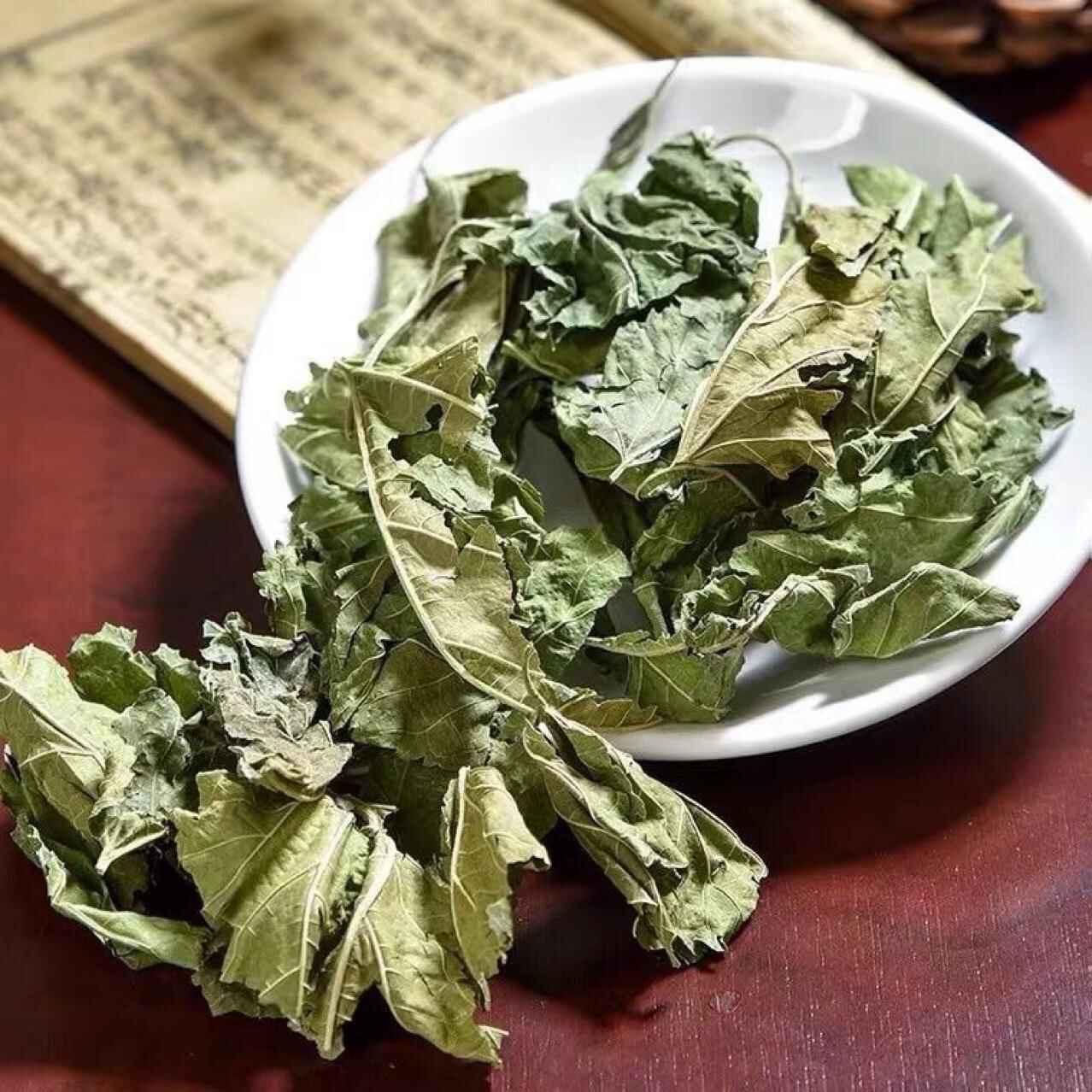
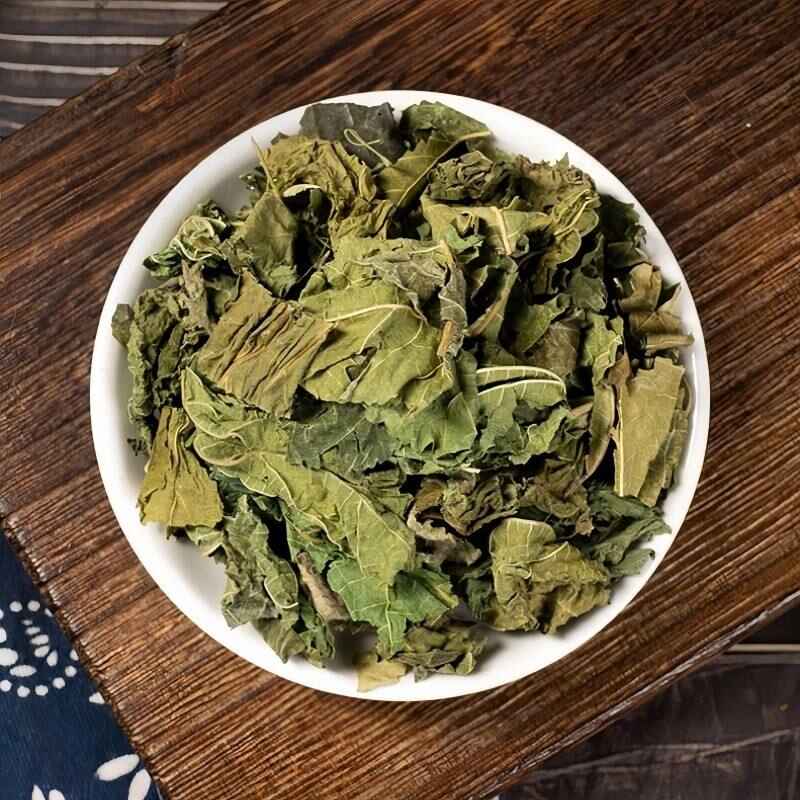
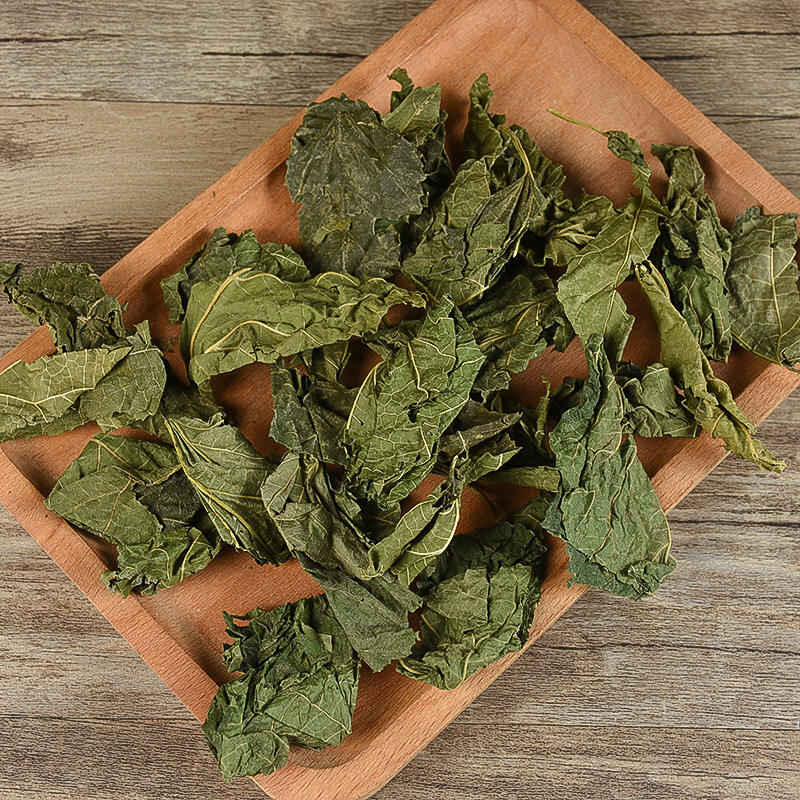
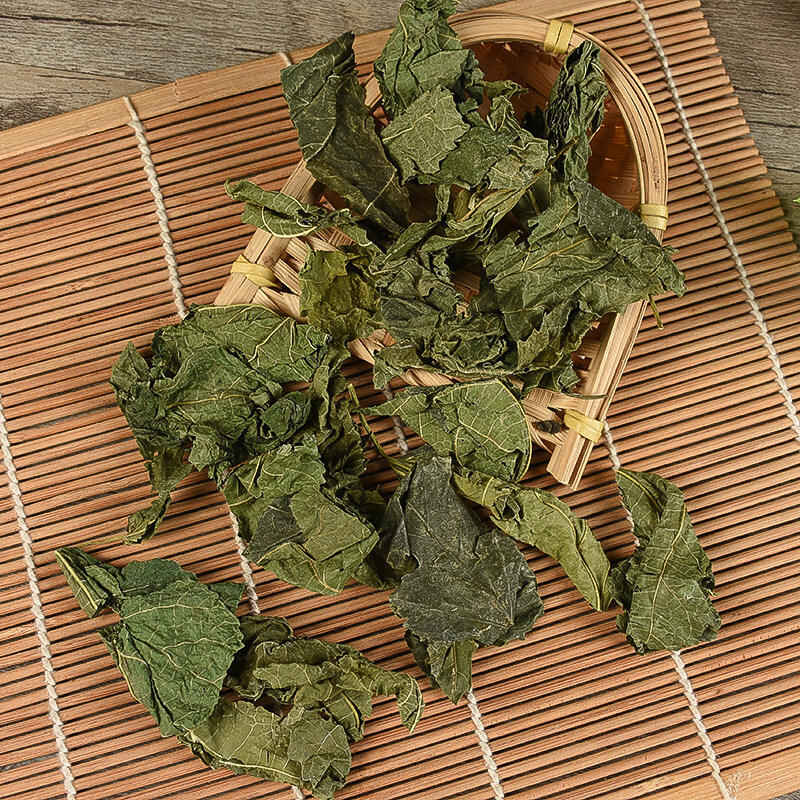
Whole Mulberry Leaves
Whole mulberry leaves retain much of their natural structure after harvesting and drying. Their recognizable shape, veins, and surface characteristics make them attractive for premium loose-leaf tea.
They also allow easier visual examination of certain botanical characteristics.
But whole leaves have limitations.
Their irregular shapes can complicate automated feeding, volumetric dosing, and packaging. They may also break during transportation, creating an inconsistent mixture of intact leaves and fragments.
For a loose-leaf retail product, that may be acceptable. For a high-speed tea bag line, it becomes a manufacturing issue.
Tea-Cut Mulberry Leaf
Tea-cut mulberry leaf is dried foliage mechanically reduced into smaller pieces. Cut and sifted mulberry leaf undergoes additional size separation to produce a more controlled particle distribution.
The purpose is straightforward: improve suitability for blending, brewing, and industrial packaging.
However, the term “tea-cut” does not guarantee a particular size.
One supplier’s tea cut may contain relatively large pieces, while another’s may include substantial powder and fine fragments.
Without a defined sieve specification, the description is incomplete.
Practical Comparison for Commercial Buyers
Quality Factor
Whole Mulberry Leaves
Tea-Cut Mulberry Leaf
Appearance
Recognizable, intact leaf structure
Smaller, more uniform fragments
Loose-leaf presentation
Generally preferred
Less visually distinctive
Initial extraction speed
May be slower
Often faster under identical brewing conditions
Tea bag production
Usually requires additional processing
Better suited to automated filling
Particle consistency
Naturally irregular
Can be controlled by cutting and sieving
Dust risk
Depends on drying and breakage
Depends heavily on fines removal
Botanical visual inspection
Easier
More difficult after cutting
Main quality concern
Breakage and irregular dimensions
Excessive fines and inconsistent cut size
Typical commercial application
Premium loose-leaf herbal tea
Tea bags, herbal blends, beverage manufacturing
My preference is to select the format based on the finished product—not the supplier’s most attractive sample photograph.
Does Tea-Cut Mulberry Leaf Actually Brew Better?
Smaller particles generally expose more surface area to water, which can accelerate extraction.
That’s a sound physical principle. But extraction speed and beverage quality are not the same thing.
Researchers examined how particle size influenced phytochemical extraction and starch digestion during simulated laboratory digestion.
The finest powder, at 160 μm, produced the greatest reduction in estimated glycemic index among the tested preparations: approximately 15% for cooked rice grains and 3% for rice slurries.
Importantly, these were in vitro laboratory measurements, not demonstrated clinical outcomes in people drinking mulberry tea.
The study also found that pulverization affected phytochemical concentrations and bioaccessibility.
What does this mean for manufacturers?
Particle size can change the properties of an infusion. It is a measurable processing variable, not simply a packaging preference.
But there is an important limitation: the study investigated micrometer-scale powders, not the larger tea-cut pieces commonly used in conventional tea bags.
We cannot use these results to claim that a particular commercial tea cut is always better than whole leaves.
Faster Extraction Has a Trade-Off
Smaller particles may release soluble compounds more quickly, but they can also create problems:
Fine particles may pass through unsuitable tea bag filters.
Excessive dust can produce cloudy infusions.
Uneven particle distributions can affect automated dosing.
Faster extraction may change bitterness and astringency.
Very fine material may complicate industrial filtration.
This is why I would not specify the smallest available particle size without testing the finished product.
For tea bags, a controlled cut generally makes more sense than uncontrolled milling.
The distinction matters throughout the herbal tea bag manufacturing process, where raw-material dimensions influence blending, dosing, packaging, and final product consistency.
Does Cutting Affect DNJ Content in Mulberry Leaves?
Mulberry leaves contain several naturally occurring compounds, including chlorogenic acid, flavonoids, and 1-deoxynojirimycin (DNJ).
DNJ, with the molecular formula C6H13NO4, is widely studied for its alpha-glucosidase inhibitory activity.
But cutting a leaf does not manufacture more DNJ.
Smaller particle size may influence the amount extracted into an infusion under particular conditions. The concentration originally present in the dried material is a separate question.
Researchers reported that commercial mulberry products examined contained approximately 0.1% DNJ.
Using selected young leaves and optimized production processes, they prepared a DNJ-enriched powder containing approximately 1.5% DNJ.
The enriched material was also tested in human volunteers for post-meal glucose responses.
The finding is interesting, but it does not demonstrate that ordinary mulberry leaf tea delivers the same results.
More importantly for procurement, the enriched powder was not created merely by changing the leaf’s cutting size. Raw-material selection and additional processing were involved.
A separate 2013 study examining 132 mulberry varieties, documented by the Food and Agriculture Organization’s AGRIS database, found DNJ concentrations in mature leaves ranging from 0.1341 to 1.472 mg/g of dry material.
That is approximately an elevenfold difference across the studied varieties.
And it exposes a weakness in many purchasing decisions.
If chemical consistency matters, comparing whole leaf against tea cut without considering the source material can produce misleading conclusions.
The right purchasing question is whether the finished material meets an agreed analytical specification—not whether one cutting format is inherently more potent.
How to Choose the Best Mulberry Leaf for Tea Manufacturing
I would make the decision according to three commercial applications.
Premium Loose-Leaf Tea
Choose whole mulberry leaves or large, recognizable leaf pieces when appearance forms part of the product’s value.
Prioritize color, aroma, intact leaf percentage, cleanliness, and resistance to breakage.
The customer can see the material. Presentation matters.
Commercial Tea Bags
Choose a controlled tea cut when consistent filling, predictable brewing, and compatibility with filter materials are priorities.
For private-label Chinese herbal tea bags, the appropriate particle size should be confirmed using the actual packaging equipment and intended tea bag material.
I would pay particular attention to fines content and the distribution of oversized particles.
Industrial Botanical Extraction
Evaluate several particle sizes rather than assuming finer material will produce the best commercial result.
A smaller cut may improve extraction speed, but filtration, product clarity, and operating costs can outweigh that advantage.
If both extraction time and chemical composition matter, test them independently.
The Quality Specifications I Would Demand Before Ordering
“Premium dried mulberry leaf” is a marketing description.
It isn’t a purchasing specification.
A reliable supplier should be able to agree on measurable acceptance criteria before commercial production.
For a mulberry leaf purchase, I would request:
Botanical identity:Morus alba L., with leaf confirmed as the intended plant part.
Physical form: Whole leaf, broken leaf, or a clearly defined cut and sifted grade.
Particle-size distribution: Agreed upper and lower sieve limits, including a maximum fines fraction.
Stem and foreign matter: Defined limits and an inspection method.
Moisture control: A measurable specification appropriate to storage, packaging, and shelf life.
Approved reference sample: A physical benchmark for comparing subsequent production lots.
The destination market also matters.
According to the U.S. Food and Drug Administration’s food manufacturing guidance, 21 CFR Part 117 establishes requirements addressing current good manufacturing practices and, where applicable, hazard analysis and risk-based preventive controls for human food.
Dietary supplements have separate manufacturing requirements under 21 CFR Part 111.
Buyers should therefore establish the finished product’s regulatory classification before accepting a generic supplier compliance statement.
And one more thing: an approved sample is useful only when the supplier can reproduce its agreed characteristics in subsequent shipments.
For broader documentation and commercial purchasing considerations, our mulberry leaf wholesale sourcing guide covers the additional requirements involved in establishing a repeatable supply program.
Test Whole Leaf and Tea-Cut Material Before You Commit
A simple comparison can eliminate considerable uncertainty.
I would obtain both formats from the same raw-material lot wherever possible. Otherwise, variations in harvest conditions and leaf composition may distort the results.
For an initial development trial, consider these conditions:
Test Parameter
Suggested Pilot Condition
Mulberry leaf weight
2.0 g
Water volume
200 mL
Water temperature
90°C
Infusion duration
5 minutes
Replicates
3 independent infusions per format
Key observations
Color, aroma, taste, sediment, filtration
Optional laboratory measures
Total soluble solids, phenolics, DNJ
These are proposed comparison conditions, not a validated universal brewing standard.
Use identical water, extraction time, containers, and agitation for both samples.
Then assess the characteristics that matter to your business.
Does one sample produce unacceptable sediment? Does a particular cut feed more reliably into the packaging machine? Is the difference in extraction meaningful enough to justify its processing cost?
I would also evaluate the usable yield after screening and packaging.
A cheaper kilogram of tea-cut mulberry leaf may not remain cheaper when excessive fines, reprocessing, and material rejection are included.
For commercial production, cost per kilogram of approved, usable material is a more informative metric than quoted price alone.
FAQs
What is the difference between whole mulberry leaves and tea-cut mulberry leaf?
Whole mulberry leaves are dried Morus alba leaves that retain much of their original structure, while tea-cut mulberry leaf consists of smaller, mechanically processed leaf pieces designed for more consistent blending, brewing, or packaging; their primary distinction is physical form rather than botanical identity or guaranteed chemical quality.
Whole leaves generally suit premium loose-leaf presentation. Controlled tea cuts are usually more convenient for commercial tea bag production.
Is whole mulberry leaf or tea-cut better for brewing?
The best mulberry leaf format for brewing depends on the intended infusion method, extraction time, desired sensory characteristics, and filtration system; whole leaves are suitable for loose herbal teas, while tea-cut material often supports faster initial extraction and more consistent processing when particle size is properly controlled.
Neither format guarantees a better-tasting beverage. The decision should be supported by comparative brewing tests.
Does tea-cut mulberry leaf contain more DNJ than whole leaves?
Tea-cut mulberry leaf does not inherently contain more 1-deoxynojirimycin than whole mulberry leaves because mechanical cutting changes particle dimensions rather than increasing the original concentration of the compound; DNJ content varies with botanical variety, leaf maturity, harvesting conditions, and processing, while particle size may separately influence extraction into water.
When DNJ consistency matters, request an appropriate lot-specific analytical assay instead of assuming that finer material contains more of the compound.
Final Thoughts: Choose Mulberry Leaf by Measurable Performance
Whole mulberry leaves and tea-cut material serve different purposes.
For premium loose-leaf products, intact botanical appearance can be a genuine selling point.
For commercial tea bags and repeatable beverage manufacturing, controlled tea-cut material often provides the stronger operational fit.
But neither format deserves automatic preference.
The right grade is the one that meets your requirements for botanical identity, cleanliness, particle size, infusion performance, manufacturing compatibility, and batch consistency.
That’s the standard I would use before approving a supplier.
Request Whole or Tea-Cut Mulberry Leaf Samples
GuoCao supplies bulk Chinese medicinal herbs and offers customized herbal processing and OEM/ODM services.
If you’re developing a loose-leaf mulberry tea, private-label tea bags, or a commercial herbal beverage, begin by comparing representative material samples against your intended manufacturing requirements.
Include your preferred cut, estimated quantity, packaging format, destination market, and required testing documentation in the inquiry.
Our low MOQ of 1 kg (2.2 lb) makes it easy to order Chinese herbal slices or wholesale Chinese medicine herbs. Private-label and bilingual labeling are also available.
Delivery Cycle & Support
We have a fast 7-day lead time. We provide free samples, COA reports, and technical support to help you bring high-quality bulk Chinese herbs to market.
Quality & Certifications
Our products are manufactured in a GMP-certified facility and meet ISO22000 standards. All Chinese herbs are third-party tested for heavy metals, pesticides, and microorganisms.