If you work with bone, joint or “yang” formulas, you probably heard this sentence many times: “Back is tight, knees feel weak, doctor says my bone density is not ideal.”
On the supply side the voice is different: “Specs not clear, COA missing test items, lead time unstable, client yelling on phone.”
Du Zhong (Eucommia Bark) is right in the middle of these two worlds. It’s a classic Chinese bark that targets bones and tendons in Traditional Chinese Medicine, and modern lab data also points to real effects on bone density and micro-structure. At the same time, it’s a very workable raw material for decoction slices, tea bags, capsules, enzyme drinks and more — exactly what a wholesale platform like GuoCao is built for.
Below we go through the TCM logic, the science, and then the real B2B scenes where Eucommia Bark actually earns its shelf space.
Eucommia Bark (Du Zhong) in Traditional Chinese Medicine for Bones and Tendons
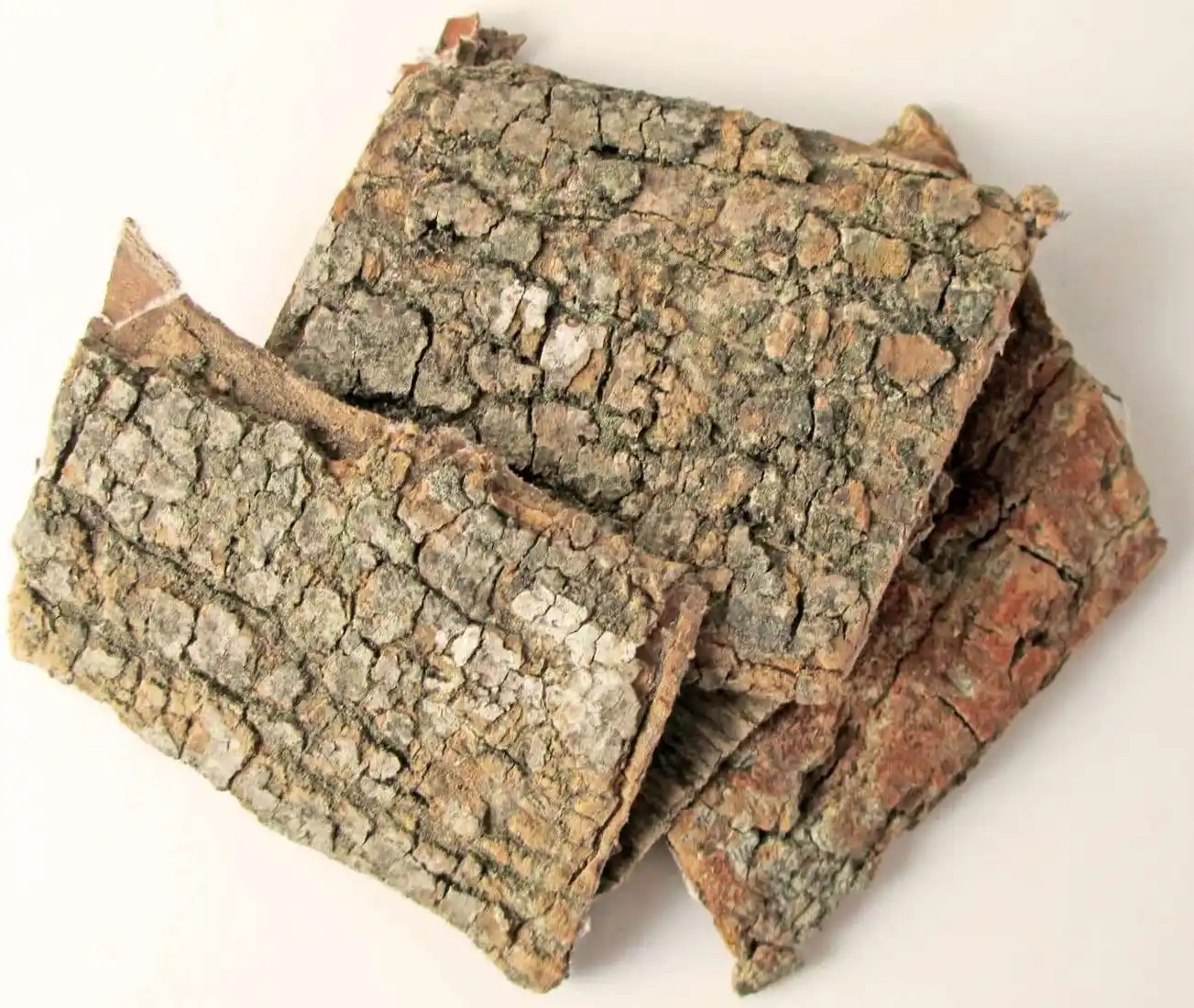
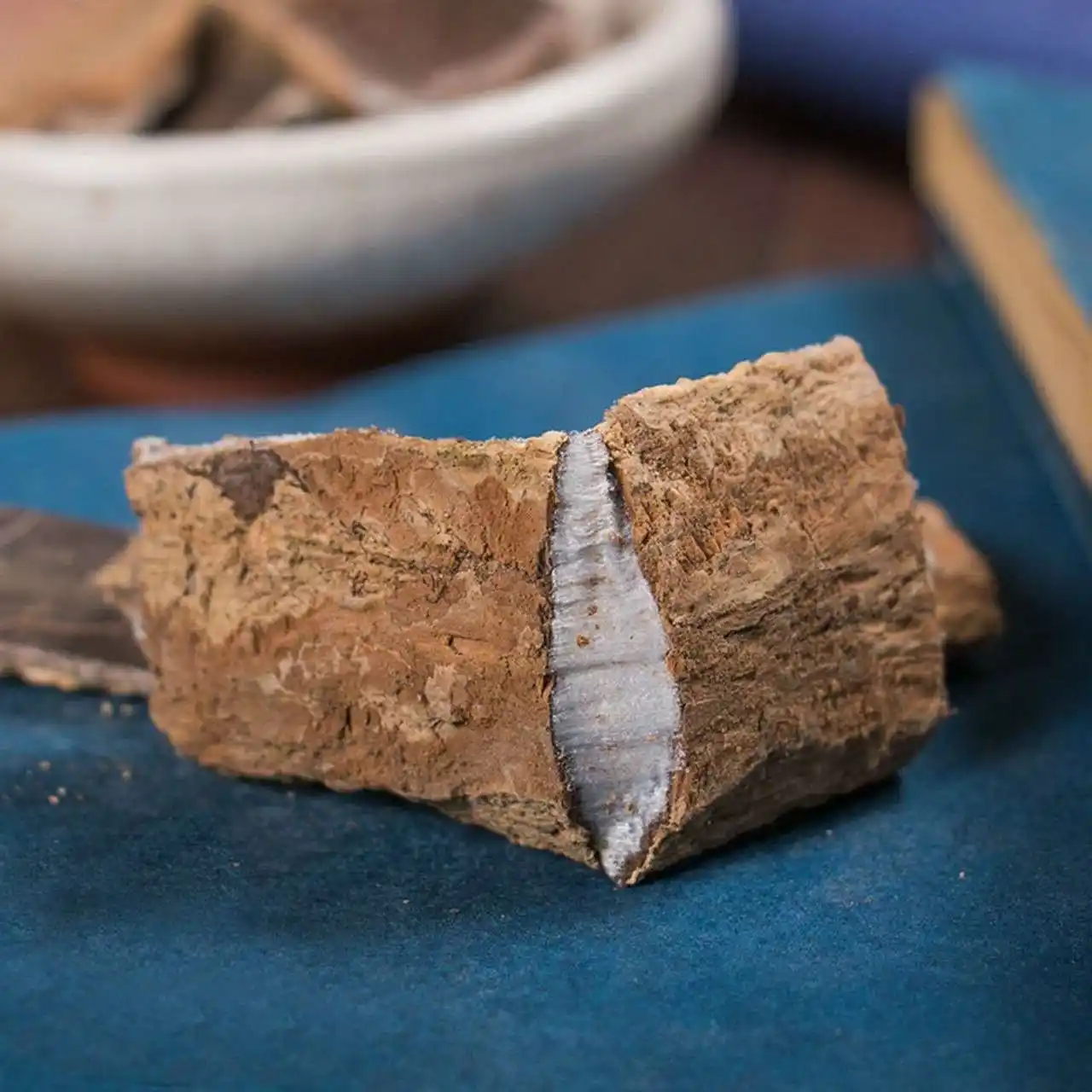
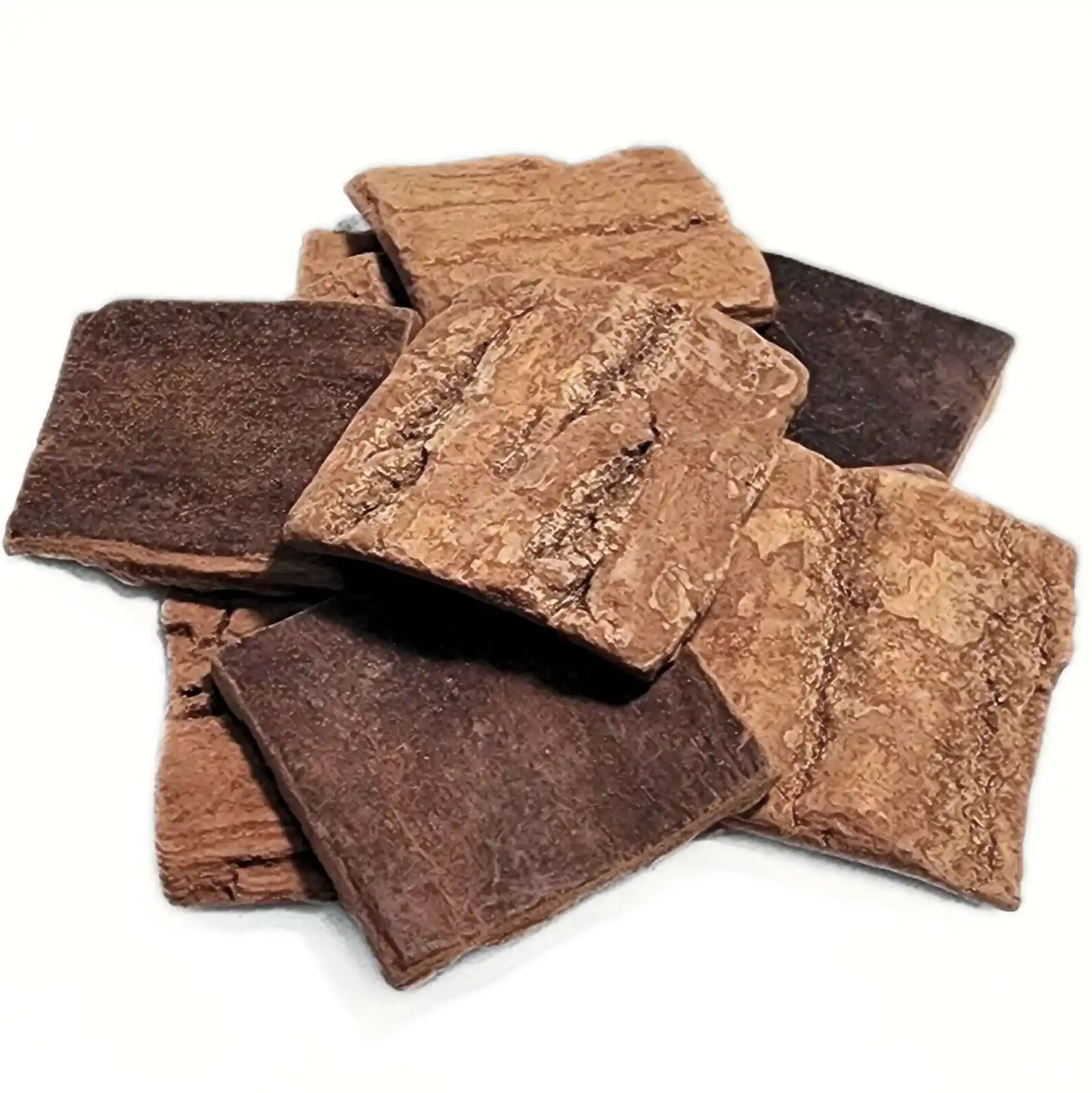
In the pharmacopeia, Eucommia Bark is Eucommiae Cortex, the dried bark of Eucommia ulmoides. On a purchase order it shows up simple: Du Zhong slices, dark brown cortex with fibrous texture. It lives in the barks family together with cinnamon, magnolia, phellodendron and more, just like you see in GuoCao’s barks cortex Chinese medicines category.
From TCM view it:
Tonifies Kidney and Liver.
Strengthens bones and sinews (tendons, ligaments).
Supports lower back and knees when there is soreness, weakness, or cold feeling.
In real clinic usage, Du Zhong often sits in formulas for:
Long-term lower back soreness in middle-aged and older people.
Knee weakness, fear of cold, “soft” joints.
Recovery stage after bone stress, strain or fracture (under professional guidance).
So the traditional promise is very clear: support the frame of the body, especially lumbar area and legs. That gives you a strong story base before you even mention lab data.
Modern Research on Eucommia ulmoides and Bone Density
You dont need to sell Eucommia only with history. Over the last years, research teams tested extracts, polysaccharides and flavonoids from Eucommia ulmoides in different osteoporosis and bone-loss models.
Animal studies on Eucommia extract for osteoporosis
In multiple rat studies with induced osteoporosis, Eucommia extract was given as daily treatment. Across these models, researchers saw patterns like:
Higher bone mineral density compared with control groups.
Better trabecular structure under micro-CT: more trabeculae, thicker beams, less empty gaps.
Changes in serum markers pointing to more bone formation and less bone breakdown (for example, lower bone resorption enzymes and higher bone-building proteins).
The exact numbers change by study, but the direction is very stable: Eucommia extract pushes bones toward denser and more organized structure, not just “a little bit better”.
Eucommia polysaccharides and osteoblast activity
Polysaccharide fractions from Eucommia Bark (you often see them called “Eucommia ulmoides polysaccharides” or EuOCP type names) were also tested:
In glucocorticoid-induced osteoporosis models, these polysaccharides helped repair broken trabecular network and increased bone volume.
In cell tests, osteoblasts exposed to Eucommia polysaccharides showed higher alkaline phosphatase (ALP) activity and up-regulated bone-related genes like RUNX2 and Osterix.
Blocking certain signaling pathways, like ERK/BMP-2/SMAD, reduced the effect, which means Eucommia seems to use these routes to push bone formation.
So the herb is not just “nourishing in theory”. It is talking to osteoblasts directly on pathway level.
Gut–bone axis and Eucommia flavonoids
Total flavonoids from Eucommia ulmoides were given to ovariectomized (OVX) rats — the classic post-menopausal bone-loss model. Outcomes included:
Less trabecular loss on micro-CT.
Better bone stiffness in mechanical tests.
More balanced intestinal microbiota, with higher diversity and beneficial strains.
This links Eucommia to the gut–bone axis story: not only helping bone cells, but also tweaking microbiome and inflammation, which many functional drink brands are already pushing in their marketing.
Summary table: Eucommia Bark and bone-related data
Study type
Model
Eucommia form
Main bone outcomes
What it suggests
Meta-style re-analysis of animal trials
Rats with induced osteoporosis
Eucommia ulmoides extract
Higher bone mineral density, improved trabecular number and thickness, better bone volume fraction, lower bone resorption markers
Extract supports overall bone mass and internal structure, not only “feeling better joints”.
Polysaccharide fraction study
Glucocorticoid-induced osteoporosis in mice + osteoblast cell lines
Eucommia polysaccharides
Restored trabecular network, higher bone volume, increased osteoblast markers (ALP, RUNX2 etc.), effect linked to ERK/BMP-2/SMAD
Du Zhong polysaccharides actively push bone-building cells and provide a mechanistic story.
Flavonoid fraction study
OVX rat model
Eucommia total flavonoids
Reduced bone loss, improved trabecular pattern, more balanced gut microbiota
Good fit for long-term bone-health scenes, where gut and inflammation are part of the story.
The data is preclinical, yes. But for a B2B buyer or R&D lead, this is enough to justify putting Eucommia Bark into the “bone and tendon support” basket and not only into generic “yang tonic” blends.
Du Zhong Use Scenes in Bone and Joint Health Products
Now, how does this translate into your real products, not only in lab slides? You can see Du Zhong sitting in several very clear scenes:
1. Decoction slices for clinics and hospitals
Hospitals, TCM clinics and chain pharmacies need clean, standard slices that can go directly into decoction.
Here the focus is boring but deadly important:
Uniform slice thickness for stable decoction strength.
Clean appearance, no mold, no foreign matter.
Full COA: micro, heavy metals, pesticide residues.
This is exactly the world of wholesale Chinese medicinal herbs and spices that GuoCao runs, with GMP herbal slices lines and ISO 22000 food safety system to keep everything predictable batch by batch.
2. Bone-health capsules and tablets for nutraceutical brands
Dietary supplement brands working on “Bone Support”, “Joint Mobility”, “Post-menopause bone care” formulas look for herbs that:
Have both traditional story (kidney, bones, tendons) and
Enough modern data to make structure/function claims that marketing can use.
Du Zhong fits nice here together with things like calcium, vitamin D, collagen, and other TCM herbs.
You can source the bark slices and do extraction in-house, or use GuoCao’s OEM/ODM capability to convert Eucommia into granules or more finished forms. Their plant already deals with roots & rhizomes, fruits & seeds, flowers & whole herbs, barks, animal & mineral categories, so mixing Eucommia with other raw materials is routine work, not a science project.
3. Tea bags and “daily ritual” bone support
Not everyone want to swallow tablets. A lot of consumers prefer warm drinks, slow ritual, simple ingredient lists.
For that, Eucommia can go into:
Lower-back and knee support herbal teas.
Menopause-friendly blends with Eucommia plus other mild herbs.
Night-time teas aiming at relaxation and recovery.
GuoCao already offers Chinese herbal tea bags, with OEM options for custom blends and small graphics on outer sachets. So you can move Du Zhong from the decoction pot into clean-label tea bags without reinventing packaging.
Eucommia Bark in Functional Beverages and Blood Pressure Support
There is another angle that many people miss: vascular support. Eucommia Bark and leaf extracts have been studied for effects on blood pressure and vascular function.
For drink brands, this is gold: you get a herb that touches both bones and vessels, two huge worries for aging consumers.
In functional beverage R&D, Du Zhong can:
Act as a key active in low-caffeine warm drinks for office workers with stiff backs and mild pressure concerns.
Pair with citrus peel, hawthorn, or other barks in bark-based blends — exactly the type of formula discussed in GuoCao’s articles on bark-based Chinese medicines and functional drinks.
Enter fermented formats and post-biotic drinks through the herbal enzymes line, which already covers Chinese herb fermentation and enzyme beverages.
The technical side matters a lot here: pH range, heat stability, flavor masking. That’s why working with a supplier who already slice, store and know bark behavior in big volume is easier than experimenting from scratch.
Quality Requirements for Eucommia Bark Slices in Bulk Procurement
Now we switch hats to purchasing and QA. For them, Du Zhong is not poetry. It’s a spec sheet.
Typical requirements look like this:
Form: dried bark slices, standard thickness, uniform size.
Appearance: dark brown outside, lighter inner cortex, no char or heavy breakage.
Microbiology: total plate count, yeast & mold, and pathogens all under strict line.
Residues: pesticides and heavy metals within global standards so product can ship to US, EU, Australia, Japan, Korea, Canada, Southeast Asia.
GuoCao’s Eucommia Bark comes out of a GMP Chinese herbal slices line, stored in ambient / cool / modified-atmosphere warehouses, backed by third-party COA. With about 2,500 tons annual capacity for herbs and spices combined, they can feed both hospital channels and supplement factories without killing supply.
From a QA point of view, that means:
Less back-and-forth for missing test items on COA.
Easier vendor audit because documents (GMP, ISO 22000) are already in place.
Lower risk of import delay because the documentation package matches customs expectations.
From a purchasing angle, low starting MOQ and flexible batch sizes make it more easy to pilot new SKUs without over-stocking the warehouse.
If you need to build your own spec sheet, GuoCao’s Chinese medicine purchasing guide is actually a good reference checklist for what to ask on every herb, not only Du Zhong.
GuoCao OEM / ODM Eucommia Bark Scenes
Because GuoCao runs both raw-material slicing and OEM/ODM projects, they can support different client types around Eucommia Bark:
Pharma companies and hospitals – bulk slices and granules for prescriptions, with tight specs and strong documentation.
Dietary supplement manufacturers – Eucommia as one of the active ingredients in bone-support capsules, tablets, and powders.
Functional drink brands – bark-based beverages, enzyme drinks, and post-biotic concepts; Eucommia can be part of the core matrix.
Cosmetic ingredient buyers – using Eucommia extract in topical products that talk about firmness and support (still need to follow local rules ofc).
Distributors and agents – need stable SKUs and clear product sheets for wholesale Chinese medicinal herbs, especially in regions where TCM is growing fast.
Because they already serve clients in America, Europe, Australia, Japan, Korea, Canada, Malaysia, Philippines and more, compliance and export paperwork around Eucommia Bark has been walked many times. That saves you lot of e-mail ping-pong.
If you’re watching market direction, their article on herbal tea market trends and Chinese herbal tea bags is also useful. It shows how retailers position bone and joint teas on shelf, and how habit-forming daily drinks beat “take it only when you are sick” products.
Where Eucommia Bark Fits in Your Bone and Tendon Product Line
Put everything together and Du Zhong looks very different from a random “old herb”:
In TCM, Eucommia Bark is a go-to tonic for bones, tendons, lower back and knees.
In modern research, extracts, polysaccharides and flavonoids from Eucommia show better bone mineral density, stronger trabecular structure and active changes in osteoblast and microbiota behavior in animal models.
In real products, it works across decoction slices, tea bags, capsules, enzyme drinks and functional beverages, so you can build full ladder of bone-and-tendon SKUs instead of one lonely product.
On the supply chain side, a platform like GuoCao gives you Eucommia Bark inside a complete system: GMP slicing, ISO 22000, third-party COA, OEM/ODM, and coverage of all main herb categories from Chinese herbs and spices to barks cortex Chinese medicines.
If your brand or company is building a serious bone and tendon line, it makes sense to give Eucommia Bark a fixed seat in the formula discussion, not just leave it in the “maybe later” basket.
You dont need crazy slogans. Just clear positioning: Du Zhong for bones, tendons, and long-term structural support, backed by both traditional usage and modern data, plus a supplier who can actually deliver the same quality, again and again, when your sales team finally push those SKUs into the real market.
Our low MOQ of 1 kg (2.2 lb) makes it easy to order Chinese herbal slices or wholesale Chinese medicine herbs. Private-label and bilingual labeling are also available.
Delivery Cycle & Support
We have a fast 7-day lead time. We provide free samples, COA reports, and technical support to help you bring high-quality bulk Chinese herbs to market.
Quality & Certifications
Our products are manufactured in a GMP-certified facility and meet ISO22000 standards. All Chinese herbs are third-party tested for heavy metals, pesticides, and microorganisms.