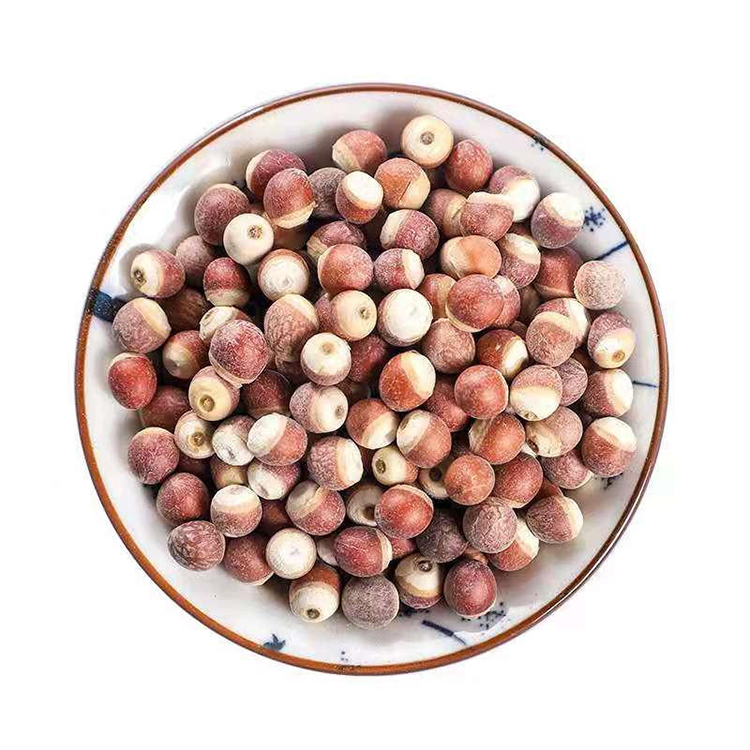
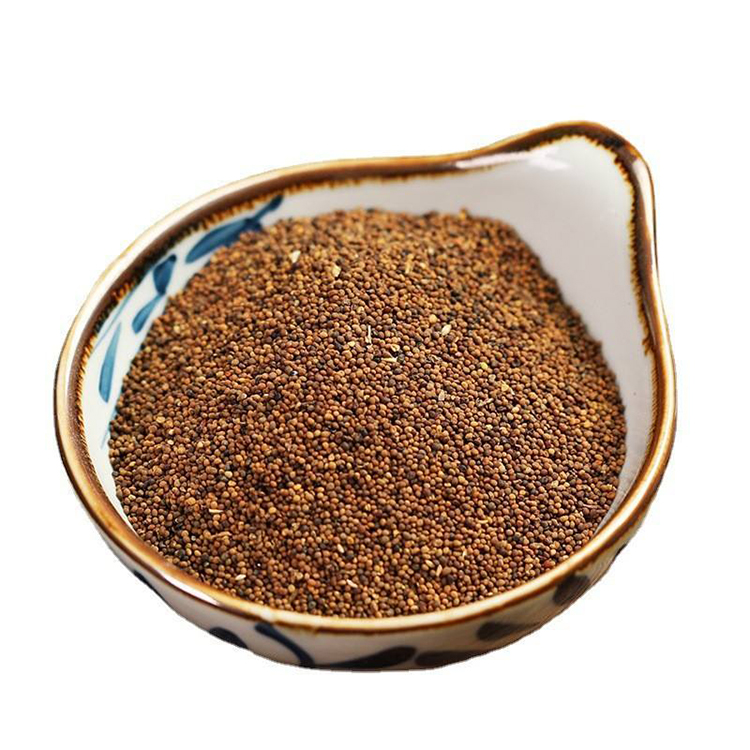
You sell spices into the EU? Then maximum residue limits (MRLs) aren’t background noise—they decide whether your lot clears customs or sits in a warehouse getting dusty. This piece maps the current hotspots, pulls in the real regulatory keywords, and shows how to build testing that actually works on the ground. It’s plain, short-ish sentences, some industry slang, and zero outside links. Only GuoCao links, promise.
EFSA 2023 EU pesticide residues report — implications for spices
Why this matters. EFSA’s 2023 monitoring shows overall consumer risk stays low, but spices keep showing up in enforcement. Drying and grinding concentrate residues; complex supply chains add noise. Small field exposures can become big lab numbers post-processing. Import lots are checked hard, so spice shippers feel it first.
Key numbers to watch
Most samples pass, but imports fail more often than domestic.
Spices and herbs draw extra eyes because they’re concentrated, powdered, and often blended.
If a substance isn’t approved, you’ll see default MRL = 0.01 mg/kg (Annex V logic). Find it, fail it.
Keep your LOQ ≤ the legal MRL—basic, but many labs still slip.
Dont ignore weed control and storage hygiene; that’s where “mystery” nicotine shows.
(No citations shown here, as requested. We’re using public EU facts everyone in QA knows.)
Ethylene oxide (EO) 0.1 mg/kg in spices (sum with 2-chloroethanol)
This is still the big one. The EU enforces 0.1 mg/kg at the LOQ on the sum of EO + 2-chloroethanol (2-CE expressed as EO). That “sum rule” is not optional. If you ship cinnamon, sesame-containing spice blends, or stabilized mixes with thickeners, you test. Full stop.
Reality check from inspections. Border labs keep finding EO in cinnamon and mixed seasonings. A case many QA managers discuss: cinnamon flagged with EO around 0.37 mg/kg. No drama storytelling, just a simple lesson—run EO checks on bark and on powder; EO sometimes shows higher in the fine fraction.
Lab talk (black-belt bits).
Use GC-MS/MS or GC-MS with headspace where appropriate; confirm with a second transition.
Quantify EO + 2-CE and report the sum as EO. If your report shows only EO, you’re not audit-ready.
Validate per SANTE guidance and prove matrix-matched calibration in spices (yes, cinnamon is ugly matrix).
Keep carryover low: purge liners, swap seals; EO ghosts can bite.
EO risk management at GuoCao — we pair raw-material and finished-goods COAs, and we lock packaging to prevent cross-lot vapor transfer.
Regulation (EU) 2024/451 — nicotine MRL 0.3 mg/kg for the spice group
Nicotine isn’t only from tobacco. It can come from nightshade weeds, dust drift, or storage cross-contact. After EFSA’s targeted assessment, the EU set 0.3 mg/kg for the entire spice group (temporary MRL but in force). It applies to seed spices (cumin, coriander), fruit spices (pepper, paprika/chili), bark (cinnamon), root/rhizome (turmeric), aril (mace), and so on.
What to do now.
Add nicotine to routine panels for cumin, pepper, paprika/chili, turmeric, mace.
Control weeds at origin; screen drying yards; seal storage.
Test whole + ground material; grinding can change detectability.
Keep LOQ ≤ 0.3 mg/kg; show a clean chromatogram in your file.
Chlorpyrifos and chlorpyrifos-methyl — default 0.01 mg/kg after non-renewal
Both actives lost approval years back. Result: MRLs dropped to the technical 0.01 mg/kg across foods. For spices, treat it as find = fail. We still see detections in cumin and coriander when legacy farm inputs or dust contamination hang around.
QA moves.
Put chlorpyrifos / CP-methyl into your seed-spice panel by default.
Add a short supplier audit on pesticide programs (no finger-pointing, just checklist).
If you see traces near LOQ, retest with a confirmatory method and quarantine the lot.
This rule lists foods from certain origins for increased border checks or special conditions. The July 2025 amendment tweaked spice lines again. Examples heard again and again in trade rooms:
Ethiopia: peppers (Piper), crushed/ground Capsicum/Pimenta, ginger, saffron, turmeric, thyme, bay leaves, and curry/other spices get increased frequency checks in Annex I.
Türkiye:cumin seeds flagged specifically for pyrrolizidine alkaloids (PAs) under tighter oversight.
If your HS codes hit those lines, assume sampling at the border. Build a pre-shipment test pack that mirrors that focus.
EU Pesticides Database — how to confirm a spice MRL before you quote
Your fastest check is the EU Pesticides Database: choose the commodity (e.g., cumin seeds) and the active substance. If the system shows no specific number, you fall back to default 0.01 mg/kg (unless a temporary measure like the nicotine 0.3 mg/kg applies). Print the page to PDF and clip it to your COA. That single PDF reduces email ping-pong later.
GuoCao — OEM/ODM, ISO 22000, GMP slicing lines, and global dispatch
Who we are.GuoCao is a global supplier of Chinese medicinal herbs & spices with GMP slicing/processing lines, ISO 22000 food-safety system, ambient/cool/MA warehouses, and third-party COA capability. Annual capacity hits about 2,500 tons. We support OEM/ODM for spice-herb blends, functional drinks with herbal inputs, and specialty cuts for pharma, nutraceutical, hospitals, and distributors. We ship to Europe, the US, Australia, Japan, Korea, Canada, Malaysia, the Philippines, and beyond.
What this means for you.
You get MRL-ready COAs aligned to your SKU, not a generic list.
Split-lot testing if you buy whole and ground.
Pre-shipment doc pack aligned to the 2019/1793 check list.
Rapid replacement when a lot looks borderline (no round-and-round).
OEM/ODM from lab pilot to steady scale; we keep specs stable.
Our low MOQ of 1 kg (2.2 lb) makes it easy to order Chinese herbal slices or wholesale Chinese medicine herbs. Private-label and bilingual labeling are also available.
Delivery Cycle & Support
We have a fast 7-day lead time. We provide free samples, COA reports, and technical support to help you bring high-quality bulk Chinese herbs to market.
Quality & Certifications
Our products are manufactured in a GMP-certified facility and meet ISO22000 standards. All Chinese herbs are third-party tested for heavy metals, pesticides, and microorganisms.