Whole-Flower Chinese Medicinals (e.g. Honeysuckle, Epimedium) Opportunities as Cosmetic Raw Materials

You want whole-flower TCM in skincare that works, scales, and passes audits. Let’s keep it real and practical. Whole blossoms like Honeysuckle (Lonicera japonica) and Epimedium (Yin Yang Huo) bring multi-target action—antioxidant, soothing, pigment-pathway tuning—without a tangled story. With GuoCao you also get the boring-but-critical stuff: GMP Chinese herbal slices line, ISO 22000 food-safety system, third-party COA, room-temp/cool/modified-atmosphere warehouses, and OEM/ODM support. Annual capacity up to 2,500 tons and global shipping to 30+ countries. It’s not flashy; it’s dependable.

Quick links for your team:


Whole Flower Chinese Medicinals e.g. Honeysuckle Epimedium Opportunities as Cosmetic Raw Materials 1

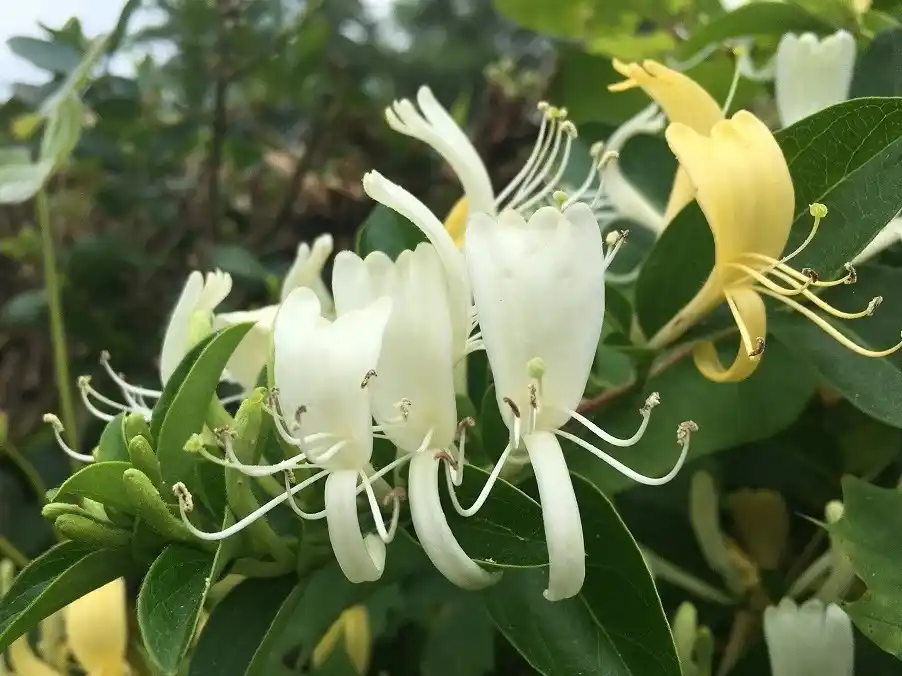
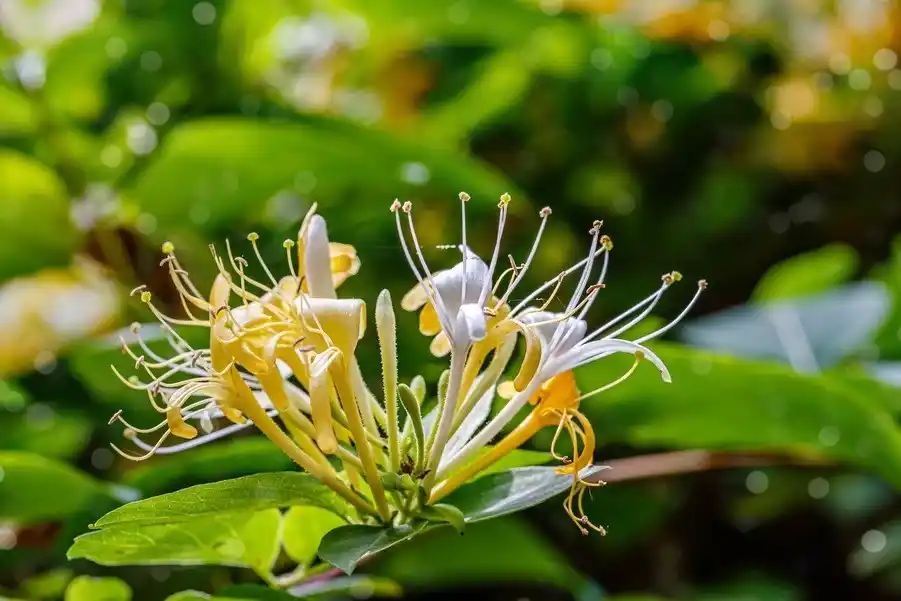
Honeysuckle (Lonicera japonica) antioxidant / anti-inflammatory / photoprotection — ingredients, data, scenarios

What it brings
Whole-flower Honeysuckle carries chlorogenic acid, caffeic acid, quercetin, luteolin, hyperoside—so you get ROS scavenging, enzyme inhibition (collagenase, elastase, hyaluronidase), and calming via TNF-α/IL-6 down-angle. In bench data, antioxidant readouts are strong (DPPH IC₅₀ ≈ 1.65 mg/mL; FRAP ≈ 1.17 mM Fe²⁺/g). That maps neatly to “after-sun comfort,” “urban shield,” and “photo-aging support.”

Why whole-flower (not only single compound)
You’re not gambling on one marker. The polyphenol bouquet spreads risk across targets. Different skin types? Still a consistent feel in use-tests. Less whiplash in reviews.

Where to source
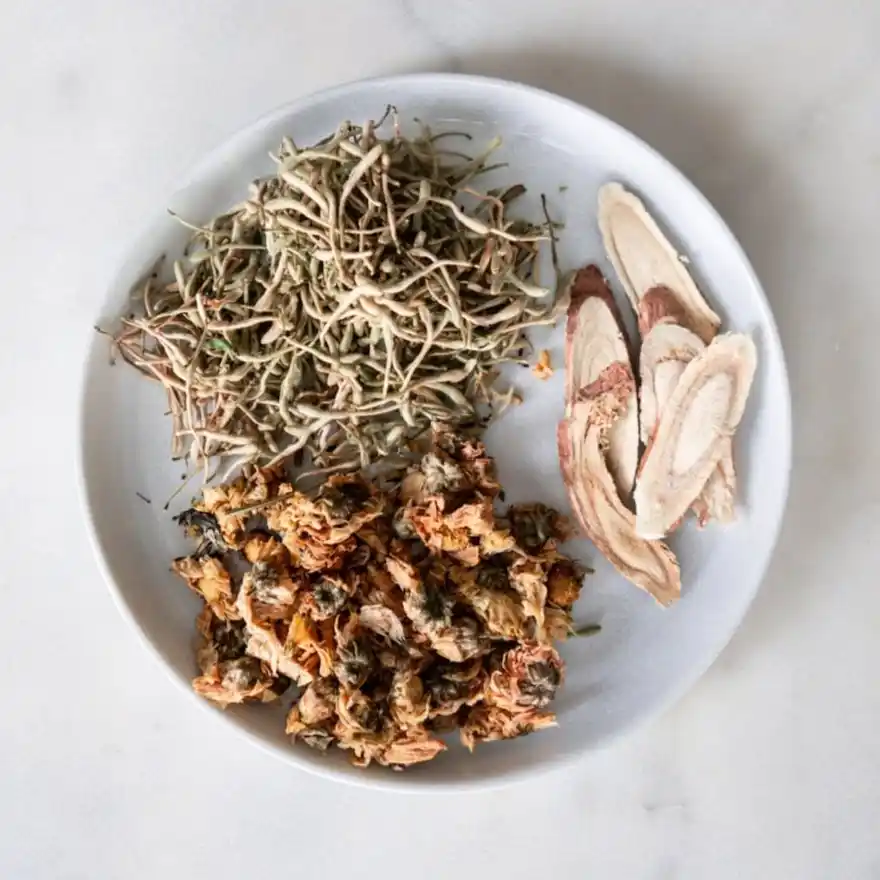
For SKUs and bulk, check Flowers & Whole Herbs and the specific Honeysuckle Flower page. GuoCao runs GMP lines + ISO 22000, and delivers COA per lot (pesticides, heavy metals, microbials). Your QA will ask on day one; you’ll have it.

Nanoemulsion delivery (whole-flower extract) — formulation keywords

  • System: O/W nanoemulsion or gel-cream; aim sub-200 nm for spread and light skinfeel.
  • Compatibility: pH 5.0–6.5 sweet spot; avoid strong oxidants in the same phase; gentle chelators help.
  • Spec talk: lock HPLC fingerprint (sum-phenolics), define mesh size / grind, residual solvent NMT per SOP.
  • INCI mapping: Lonicera Japonica Flower Extract.
  • Safety: run HRIPT and photo-irritation on finished goods, not just the raw.
  • Use scenes: after-sun calming toner, anti-pollution day lotion, “blue-light & outdoor stress” gel.

Epimedium (Yin Yang Huo) melanogenesis modulation — dual-direction evidence and control

Two directions, one herb
Leaf/whole-herb extracts with icariin/epimedin often promote melanogenesis in vitro around 10–40 μg/mL and show re-pigmentation in small animal models (ERK1/2 → TYR/TRP-1/DCT). Meanwhile, aglycone-rich fractions like icaritin can down-tune tyrosinase. So Epimedium isn’t stuck in one lane; your standardization decides the story.

How to steer it

  • Re-pigment track (night): epimedin-rich fingerprint; use for “healthy complexion recovery.”
  • Tone-evening track (day): aglycone-leaning profile; pair with niacinamide or VC derivatives for layered effect.
    Either way, set marker-to-marker ratios in the COA to avoid batch drift. Dont leave it fuzzy.

Where to source
Epimedium Leaf sits under Flowers & Whole Herbs. GuoCao supports bilingual labels, private specs, and OEM/ODM templates for fast onboarding.


Whole-flower matrix (Osmanthus, Chrysanthemum, Lotus, Rosa) — quick evidence pack

You don’t need a one-flower brand. Build a matrix for resiliency and story depth:

  • Osmanthus (Osmanthus fragrans) — tyrosinase inhibition; helps limit UV-triggered darkening.
  • Chrysanthemum (Chrysanthemum morifolium)0.5% water extract in a cream lowered melanin readouts; cultivars with higher total phenolics/flavonoids show stronger lab scores.
  • Lotus (Nelumbo nucifera) flower — elastase inhibition ~54–56% @ 200 μg/mL; a small n=21 user test indicated visible brightening.
  • Rosa (rugosa/hybrid) petals/buds — antioxidant & “anti-stress” NRF2-lean, barrier-friendly.

Heads-up: run HRIPT and allergen disclosure for fragrant flowers (rose, osmanthus). Safety first, marketing later.


Whole Flower Chinese Medicinals e.g. Honeysuckle Epimedium Opportunities as Cosmetic Raw Materials 2

Evidence table

Whole-flower (TCM)Main actives (snapshot)Skin benefits (claimable)Quant data (lab)Go-to scenesSpec & compliance
Honeysuckle (Lonicera japonica)Chlorogenic acid, caffeic acid, quercetin, luteolin, hyperosideAntioxidant, soothing, anti-photoaging; preservative-booster add-onDPPH IC₅₀ ≈ 1.65 mg/mL; FRAP ≈ 1.17 mM Fe²⁺/g; docking vs collagenase/elastase/HA-ase; TNF-α/IL-6 calmAfter-sun gel, urban shield lotion, calming tonerINCI: Lonicera Japonica Flower Extract; fingerprint + HRIPT
Epimedium (Yin Yang Huo)Icariin, epimedins; aglycones (icaritin)Melanin-pathway tuning: re-pigment or tone-even10–40 μg/mL boosts TYR/TRP-1/DCT via ERK1/2; aglycones damp tyrosinaseNight “complexion recovery” serum; even-tone essenceHPLC ratios on COA; regional INCI alignment
OsmanthusPhenylethanoid glycosides (acteoside)Tyrosinase inhibition; UV-color mitigationEnzyme & small in-vivo readoutsBrightening toner; UV-aftercare milkAllergen disclosure; IFRA-aware fragrance level
ChrysanthemumFlavonoids, volatile oils, phenolic acidsSoothing + tone0.5% w/w in cream ↓ melanin index; cultivar diff.Sensitive-skin brightening creamHRIPT; cultivar naming on spec
Lotus (flower)Flavonoids, tanninsAnti-wrinkle, brighteningElastase ~54–56% @ 200 μg/mL; n=21 users → brighter look“Oriental garden” anti-aging linePatch + HRIPT; dose control
Rosa (petal/bud)Rosarugosides, anthocyaninsAntioxidant; barrier supportNRF2/autophagy markers up-trendAnti-stress day creamAllergen list on pack

(Numbers are representative from peer-reviewed and lab data; confirm in your base with pilot batches.)


Regulatory & QA keywords — INCI / CosIng / IECIC / HRIPT (what buyers actually check)

  • INCI mapping first. Use exact plant part: “Flower Extract” means flower, not leaf.
  • CosIng / IECIC: verify listing and part-match; remember “historical max use” ≠ “allowed max.” Keep that sentence in your legal footers.
  • Safety file: microbiological limits, heavy metals, pesticide residues per brand spec; add photo-irritation if you talk outdoor/UV; always HRIPT on finish.
  • Claims: structure/function tone—“helps even tone,” “supports barrier,” “helps reduce the look of fine lines.” Clean, defendable, not over-reach.

If you need the pack fast, GuoCao can bundle docs inside the OEM/ODM Solutions workflow. It saves mailbox ping-pong.


OEM/ODM with GuoCao — de-risking the build

  • Traceable categories: start at Flowers & Whole Herbs and cross-blend with Roots & Rhizomes or Dried Spices for sensorial lift.
  • Factory & docs: GMP line, ISO 22000, warehouse options, and third-party COA—see About GuoCao.
  • Private label: slice thickness, grind levels, mesh size, HPLC fingerprints, bilingual labels.
  • Supply: year-round planning with buffer stock (cool/modified-atmosphere). No one enjoy OOS.
  • Service targets: pharma, hospitals, supplement makers, beverage brands, cosmetic raw suppliers, distributors/agents, large wholesalers, global buyers—exactly the crowd you sell to.

Whole Flower Chinese Medicinals e.g. Honeysuckle Epimedium Opportunities as Cosmetic Raw Materials 3

Real-world formulation playbook

1) Anti-photoaging gel (day “urban shield”)

  • Actives: whole-flower Honeysuckle extract (nanoemulsion), low-dose co-antioxidants, film former.
  • Why: ROS scavenging + collagenase/elastase angle → smoother look.
  • Ops: pH 5.5–6.0; fragrance-free or below allergen thresholds; run SPF as separate SKU (reg reasons).
  • QC: marker sum-phenolics; viscosity window; 45 °C 4–8 weeks; HRIPT.

2) Evening re-pigment serum (complexion recovery)

  • Actives: Epimedium fingerprint #RP (epimedin-rich), copper peptide, niacinamide.
  • Why: ERK1/2 pathway boost for re-pigment trend; skin looks more “alive” next week, not instantly.
  • Ops: avoid strong acids in same layer; gentle buffer.
  • QC: HPLC ratio control (epimedin/icariin), color drift watch.

3) Tone-evening essence (day)

  • Actives: Epimedium aglycone-leaning profile + vitamin C derivative + humectants.
  • Why: soft tyrosinase dampening without bleachy feel.
  • Ops: wrap with chelators; light emollients for slip.
  • QC: shade stability (UV cabinet), claim language sanity check.

4) Calming toner (post-sun, post-workout)

  • Actives: low-viscosity Honeysuckle whole-flower + panthenol, betaine.
  • Why: quick comfort; less redness look.
  • Ops: minimal fragrance; micro spec tight.
  • QC: PET test, preservative E-challenge if you go near-natural.

Go-to-market angles — quick copy that sells

  • “Whole-flower antioxidant base” → anchors your anti-photoaging line with real lab signals, not vibes.
  • “Targeted re-pigment vs. tone-even tracks” → same Epimedium family, two fingerprints, two SKUs. Clear shelf story.
  • “Matrix of East-Asian flowers” → Osmanthus/Chrysanthemum/Lotus/Rose add depth and seasonal drops.
  • “Compliance-ready raw materials” → INCI mapped, COA per lot, HRIPT on finish. Buyers sleep better, you sell faster.
Usually we will contact you within 30 minutes

MOQ & Customization

Our low MOQ of 1 kg (2.2 lb) makes it easy to order Chinese herbal slices or wholesale Chinese medicine herbs. Private-label and bilingual labeling are also available.

Delivery Cycle & Support

We have a fast 7-day lead time. We provide free samples, COA reports, and technical support to help you bring high-quality bulk Chinese herbs to market.

Quality & Certifications

Our products are manufactured in a GMP-certified facility and meet ISO22000 standards. All Chinese herbs are third-party tested for heavy metals, pesticides, and microorganisms.