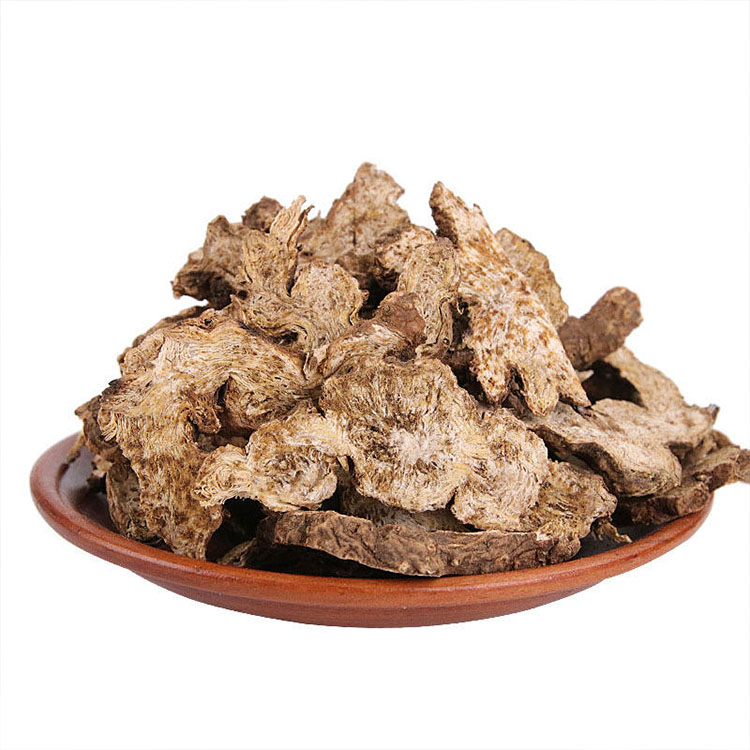
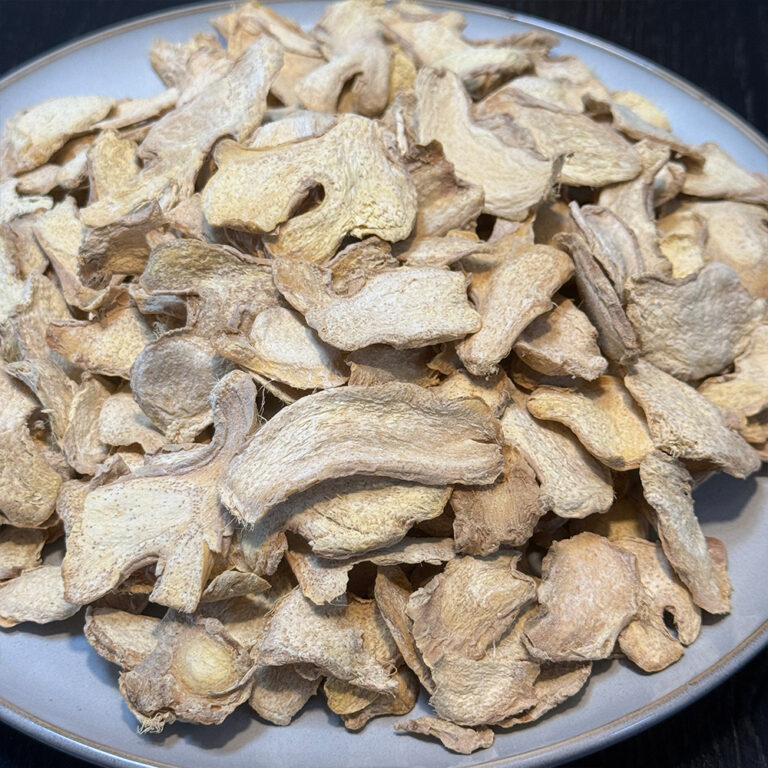
Atractylodes (Cang Zhu): sulfur-free vs conventional—what buyers should test (not argue)
I’m not impressed by “sulfur-free” on its own. For Cang Zhu, the smart move is to test sulfur dioxide residue, volatile markers like β-eudesmol, hinesol, and atractylodin, plus moisture, micro, pesticides, and supplier traceability across consecutive lots.
But “sulfur-free” is not a quality system, not a botanical identity test, not a marker assay, and definitely not a substitute for batch data when the lot in front of you can still be wet, weak, contaminated, or chemically drifted even if the sales sheet looks saintly.
So what are you actually buying?
I’ll say it plainly: the sulfur-free versus conventional argument wastes time because it turns a purchasing problem into a morality play. Serious buyers do not buy virtue. We buy repeatability. That means identity, sulfur residue, marker profile, moisture, micro, pesticide risk, and a supplier who can survive an audit without performing theater. Your own site already has the bones for that approach in its sulfur-free buyer checklist, the broader procurement guide for Chinese herbal products, and the compliance-focused piece on quality standards for Chinese herbal slices in international markets.
Table of Contents
Stop debating the claim
Three words first.
Test the lot.
That is the hard truth, because sulfur-free can mean “no sulfur fumigation ever” in one supplier’s mouth, “below our internal SO₂ line” in another, and “we hope you won’t ask for the raw result” in the worst shops, which is exactly why I would rather read a COA and a method sheet than listen to another polished origin story.
And yes, conventional Cang Zhu can still be commercially usable if it passes the right panel. Bad sulfur-free material also exists. Buyers hate hearing that, but procurement is not religion.
A 2024 enforcement case from FDA made the broader point the industry keeps dodging: paper claims collapse when supplier controls are weak. In the High Quality Organics warning letter, FDA described serious violations involving ready-to-eat herbs, spices, dried fruit, and dried vegetables, including failure to verify validated treatment parameters and supply-chain controls for pathogen risk. That is why I do not separate “sulfur talk” from real QA; if the system is sloppy, the lot is risky no matter how clean the slogan sounds.
What the data says when you stop talking and start measuring
Numbers matter.
A 2024 PLOS ONE study on rapid sulfur dioxide detection in Chinese herbal medicines built a lead-acetate strip method with an r² of 0.9992 and a 0–750 mg/kg linear detection range, which matters for one simple reason: receiving control does not need to be mystical anymore. You can screen fast, then confirm with the formal lab method. That should kill the lazy excuse that sulfur testing is too slow or too expensive to sit inside a buyer workflow.
But residue alone is not enough.
A 2024 Molecules case study on sulfur-fumigated herbs said the quiet part out loud: evaluating sulfur fumigation only at the level of sulfur dioxide residue “does not truly reflect” the chemical transformations created during fumigation. I agree. That is the missing sentence in half the market. A low SO₂ number can still hide a chemically altered herb, which is why Cang Zhu buyers need residue testing and marker-profile testing, not one or the other.
Now bring it back to Cang Zhu itself.
A 2023 PMC study on Atractylodes lancea chemotypes showed that origin materially shifts the volatile profile: the Hubei chemotype ran higher in β-eudesmol and hinesol, while the Maoshan chemotype ran higher in atractylodin and atractylon; the researchers detected 15 categories of VOC metabolites and identified 6 compounds plus 455 metabolites as candidate markers for differentiation. In other words, if a buyer ignores marker chemistry and buys on color plus story, that buyer is volunteering to pay premium prices for uncertain chemistry.
There is a second warning buried here. Different Cang Zhu lots can be “real” and still not be equivalent for your end use. A decoction-room buyer, a supplement extractor, and a formula house do not need exactly the same thing. That is why a product page like your Cang Zhu bulk supplier page should never stand alone; it should sit next to a test spec, a use-case note, and a release rule.
The buyer test stack I would actually put in the PO
Here is the part that matters.
Not vibes. Not arguments. Not screenshots from a trade-show brochure.
What to test
Preferred method
What you should ask the supplier to show
Why I care
Identity/authenticity
Macroscopic + microscopic ID, then TLC/HPTLC; DNA only if dispute is serious
Lab data wins; sensory still catches stupid mistakes
I would also write the commercial rule this way: release no Cang Zhu lot on a sulfur-free claim alone. Release it only after the supplier provides the identity data, SO₂ result, marker data or fingerprint, contaminant panel, and a retained sample reference. If your internal content team wants a supporting link path, this is where the article on custom herb products for pharmaceutical suppliers helps, because it already frames the methods buyers expect to see: HPLC, ICP-MS, TLC/HPTLC, and traceable COA logic.
Sulfur-free vs conventional in real purchasing terms
I’m going to annoy both camps now.
The sulfur-free camp often acts like the claim itself proves excellence. It does not. The conventional camp often acts like sulfur talk is just marketing panic. That is also wrong. Sulfur control matters, but it matters as one node inside a release system, not as the full system.
For U.S. food and supplement routes, the legal line is not imaginary either. Under 21 CFR 101.100, a sulfiting agent present at 10 ppm (mg/kg) or more is treated as detectable for labeling purposes, which is exactly why import-minded buyers should stop pretending sulfur is only a factory-floor issue. It is a document issue, a label issue, and, when mishandled, a market-access issue.
My own buying bias is simple. I would rather take a well-documented conventional lot with full data over a “sulfur-free” lot wrapped in adjectives. Better yet, demand three consecutive lot COAs. One clean batch can be luck. Three starts to smell like control.
And here is the insider point many people avoid saying out loud: if a supplier refuses to share actual SO₂ numbers, refuses marker ranges, or keeps switching the conversation back to color and aroma, they are not protecting proprietary knowledge. They are protecting optionality. Yours is the risk. Theirs is the margin.
FAQs
What does sulfur-free Cang Zhu actually mean?
Sulfur-free Cang Zhu is a commercial claim that should mean the herb was not sulfur-fumigated during post-harvest handling and that the batch shows appropriately low sulfur dioxide residue under a named test method, with identity and quality still confirmed by marker chemistry, contamination data, and batch traceability.
That is the strict version. The loose version floating around the market is why buyers need the method sheet, the COA, and the actual mg/kg result rather than a sales promise.
Which tests matter most when buying Cang Zhu in bulk?
The highest-value Cang Zhu test set for bulk buyers is a combined panel of authenticity testing, sulfur dioxide residue, volatile marker profiling for β-eudesmol, hinesol, and atractylodin, moisture or water activity, plus contaminant screening for pesticides, heavy metals, and microorganisms, supported by lot-specific documentation and a retained sample.
If you force me to rank them, I start with identity, SO₂, and marker chemistry. Everything else matters, but those three tell you fastest whether the lot deserves deeper work.
Can conventional Cang Zhu still be acceptable for professional buyers?
Conventional Cang Zhu can be fully acceptable for professional buyers when it meets the buyer’s written specification for identity, sulfur dioxide residue, marker composition, moisture, contaminants, and release paperwork, because the commercial risk sits in uncontrolled processing and missing data, not in the word “conventional” by itself.
I would never reject a lot on vocabulary alone. I reject lots on missing numbers, drifting chemistry, weak supplier verification, and paperwork that falls apart under scrutiny.
Is smell or color enough to judge sulfur-fumigated Cang Zhu?
Smell and color are useful sensory clues, but they are not sufficient evidence of sulfur fumigation status because sulfur dioxide can be quantified directly and sulfur-related processing can alter chemistry in ways that sensory review alone cannot map, especially when buyers need batch release decisions that will stand up in audits.
Use sensory as a red-flag screen, not as a release standard. The lab should finish the argument.
Your next move
Make it concrete.
Take your current Cang Zhu spec and add six lines today: identity method, SO₂ method, acceptable mg/kg result, volatile marker panel, contaminant panel, and retained-sample rule. Then hand that spec to the supplier and ask for three consecutive lots, not one handpicked hero batch.
My advice is blunt because the market deserves bluntness: stop arguing about sulfur-free as if it settles anything. Ask for the chromatogram. Ask for the SO₂ number. Ask for the three-lot trend. Then buy like an adult.
Our low MOQ of 1 kg (2.2 lb) makes it easy to order Chinese herbal slices or wholesale Chinese medicine herbs. Private-label and bilingual labeling are also available.
Delivery Cycle & Support
We have a fast 7-day lead time. We provide free samples, COA reports, and technical support to help you bring high-quality bulk Chinese herbs to market.
Quality & Certifications
Our products are manufactured in a GMP-certified facility and meet ISO22000 standards. All Chinese herbs are third-party tested for heavy metals, pesticides, and microorganisms.