You sell botanicals. You need them to ship clean, stay stable, and turn fast. Shelf life isn’t a mystery—it’s moisture, oxygen, handling, and proof. Below, we walk practical drying and preservation moves for Chinese herbal slices and spices, map them to real product families, and plug the steps into GuoCao’s catalog and capabilities.
Water Activity (aw) Control & Relative Humidity (RH) Targets
Water activity is your main safety knob for low-moisture goods. Moisture content tells you “how much water.” aw tells you “how available.” Control both.
aw & RH quick targets (copy-ready)
Control point
Practical target
Why it matters
Simple tools
Storage RH
Mid-50s to low-60s %, keep spikes short
High RH drives moisture into product → mold risk; too low can crack delicate botanicals
RH data logger, dehumidifier, weekly trend check
Ambient temperature
Stable room temp, avoid swings
Swings trigger condensation inside bags
Door discipline, airflow, no hard blasts
Water activity spot-checks
Check by risk class (high-oil, high-sugar first)
aw drifts with handling, packaging, and season
Handheld aw meter on the QC cart
Packaging barrier
Non-porous inner liner or composite bag
Blocks ambient moisture and odor pickup
Foil/PE liner, verified heat seals
Pallet build
Off floor, off wall, allow airflow
Cuts wicking and dead-air pockets
10–15 cm off floor; 20–30 cm from wall
Industry rule-of-thumb: drive finished goods to aw ≤ 0.85 for broad safety; remember some yeasts/molds can hang on near ~0.60, so don’t relax just because it “feels dry.” If RH jumps above the 60s for a day, treat it like a deviation—check seals, fix airflow, and log a mini-CAPA. Not glamorous, but it saves you.
Freeze-Drying (Lyophilization) vs Hot-Air Drying
Two main routes, different tradeoffs. Pick by quality target, throughput, and SKU risk (not “price”, no need to calculate anything).
Method
Quality & actives
Speed & throughput
Energy feel
Best for
Notes
Freeze-drying
Top retention of volatiles, structure, and color
Slower
Higher
Flowers, heat-sensitive roots, premium SKUs
Great rehydration; light texture
Hot-air drying
Solid for most roots, barks, many seeds
Faster
Lower
Bulk lines, robust parts
Tune temp/air speed to avoid browning
Vacuum-assist / microwave-vac combo
Balanced: fast + decent color
Fastest
Medium-High
Thick slices that trap moisture
Helps fix early case hardening
Solar-assist (screened)
Minimal gear, variable outcomes
Slow
Low
Low-risk raw feed
Use with pre-screened, low-risk items
Decision lens: targeting aroma and color? Consider freeze-dry. Need volume and stable mainstream quality? Tuned hot-air wins—with airflow and temperatures staged.
Case Hardening in Drying (what it is and how to dodge it)
What: surface dries too fast, forms a shell, traps moisture inside. Outside tests “dry,” but aw creeps up in storage—clumping, off-notes, later mold.
How to avoid:
Start at moderate inlet temperature, ramp later; keep airflow uniform.
Control slice thickness and bed depth; don’t choke trays.
Run in phases: set (surface), drive (bulk), polish (equalize).
If you see tough skins + wet cores, add pulsed drying or a short vacuum step to flatten the gradient.
Payoff: even moisture, brighter color, better rehydration, fewer returns.
Blanching Pretreatment (enzyme kill, color hold)
Short, controlled thermal or acid dips can help:
Enzyme deactivation to stop enzymatic browning/off-notes.
Mild acid dips (e.g., citric) to steady color and vitamin retention for some botanicals.
Sugar/salt pretreatments to tune osmotic flow on fruits/seeds and reduce skin stress.
Keep it light. You want “just enough” protection without cooking the herb. Log parameters and add a hold-and-release step in QA.
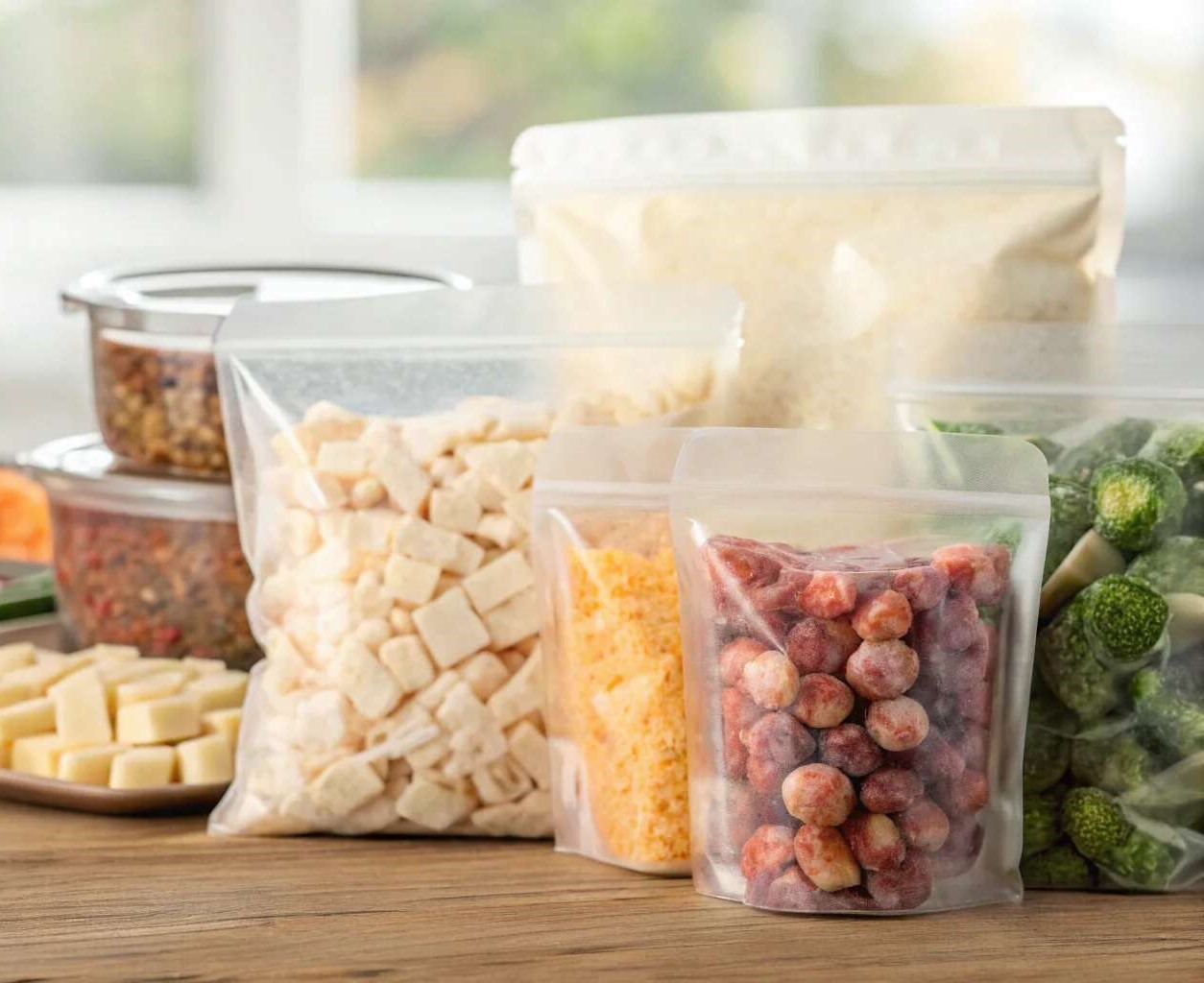
Oxygen speeds rancidity and feeds many aerobic microbes. MAP (nitrogen flush) and oxygen absorbers slow both, especially for high-oil spices and aroma-heavy flowers.
Good pairings:
High-barrier liner + oxygen absorber: dry spices that hate oxygen.
MAP (nitrogen) + foil laminate: flowers/whole herbs where aroma and light matter.
Desiccant + barrier: backup only—fix the room first; desiccant isn’t a band-aid.
Treat packaging like a CCP: seal strength checks, liner spec on the label, random pulls. This is boring, yes, but it’s shelf life on rails.
Warehouse Workflow: Segregation, FEFO, and “No-Excuses” Flow
Shelf life dies in messy traffic. Use a one-way path: inbound raw → pretreat → dry → cool-equalize → pack → finished goods. Color-code tools. Park treated lots on dedicated racks. Close containers when moving between rooms. Then run FEFO (First-Expired, First-Out), not FIFO—oils fade and color drifts over time.
Drying and packaging set the physics; systems make it stick. GuoCao runs GMP slicing lines under an ISO 22000 food-safety system, with ambient/cool/MAP warehouses and third-party COAs for every lot. Annual capacity reaches about 2,500 t, and we support OEM/ODM plus enzyme-based functional beverage runs. That mix—process + paperwork—means importers can drop our lots straight into FSVP and pass audits without chaos.
Thin slices dry faster but bruise aroma; thick slices risk moisture pockets. Pick a standard (e.g., 2–4 mm for flowers; thicker for sturdy roots) and lock it in your SOP. Keep bed depth even across trays. If someone says “center trays are always wet,” fix loading and airflow before blaming the dryer.
Airflow and Load Pattern
Uniform airflow beats brute heat. Stagger trays, don’t choke ducts, rotate trolleys on long runs. Add a brief cool-down/equalize step to relax moisture gradients.
Post-Dry Hold (Equalize)
After the run, hold product in a clean, low-RH room in breathable bins for short equalization. Then pack into final barrier bags. That one buffer step lets aw stabilize so it doesn’t creep later.
Packaging Mapper by Product Type
Product type
Barrier level
Oxygen control
Light control
Notes
High-oil spices
Highest
Yes (absorber or MAP)
Yes
Curb rancidity and aroma loss
Flowers & whole herbs
High
Yes (prefer MAP)
Yes
Protect aroma and color
Roots & rhizomes
Medium
Optional (by oil)
Optional
Hygroscopic; still needs barrier
Fruits & seeds
High
Yes
Optional
Oil management + FEFO
Barks
Medium
Optional
Optional
Watch odor pickup
Spec the liner, gas (if any), seal test, and label the lot. Keep it lean and repeatable. If a bag feels “soft,” don’t guess—pull a headspace oxygen (HSO) check and reseal if needed.
QA Shortlist: What Buyers Ask (answer in minutes)
COA set: heavy metals, pesticide residues, micro limits.
aw readings: spot-checks by lot, logged in release docs.
LOD vs aw: explain variance; show action limits.
Slicing spec: thickness range, mesh size if milled.
Storage conditions: RH/temperature bands and FEFO rules.
GuoCao bakes paperwork into the flow—GMP lines, ISO 22000 framework, third-party COAs, and ambient/cool/MAP warehousing—so you don’t rebuild the wheel each shipment. For private label or blends, see Custom Chinese Herbal & Spice Solutions and then Contact to lock liners, labels, and MAP settings.
Real-World Scenarios (no names, just what happens)
RH spike week: logger shows 72% overnight. Kick on dehumidifiers, close doors, add fans along wall lines, move flower SKUs to cool/MAP zone, pull quick aw checks on two high-oil items. File a one-page CAPA. Done.
Container “rain” on arrival: outside air is hot, container is cold. Crack doors to equalize. Stage pallets in a buffer room. If outer sacks feel damp, re-bag with barrier liner and relabel. Log it.
Flavor dip complaint: high-oil spice sat in breathable bags. Next PO, switch to foil-laminate liners and oxygen control. Problem shrinks.
Case hardening early signs: tough skin, wet core. Shift to pulsed drying, reduce initial temp, add a short vacuum step. Re-test aw after equalization.
Minor typo day: someone wrote “teh” in the batch note. We smile, fix the doc, and keep the spec tight. It’s fine. Humans do.
Our low MOQ of 1 kg (2.2 lb) makes it easy to order Chinese herbal slices or wholesale Chinese medicine herbs. Private-label and bilingual labeling are also available.
Delivery Cycle & Support
We have a fast 7-day lead time. We provide free samples, COA reports, and technical support to help you bring high-quality bulk Chinese herbs to market.
Quality & Certifications
Our products are manufactured in a GMP-certified facility and meet ISO22000 standards. All Chinese herbs are third-party tested for heavy metals, pesticides, and microorganisms.