When you move from TCM theory to real factory work, Panax Notoginseng (San Qi) becomes very concrete: mesh size, slice thickness, COA, line speed. You’re not just asking “is this herb good?”. You’re asking:
For my finished product, should I buy Panax Notoginseng as powder, as slices, or as extract powder?
Let’s walk through that question from a buyer and R&D view, and keep it close to the real production floor.
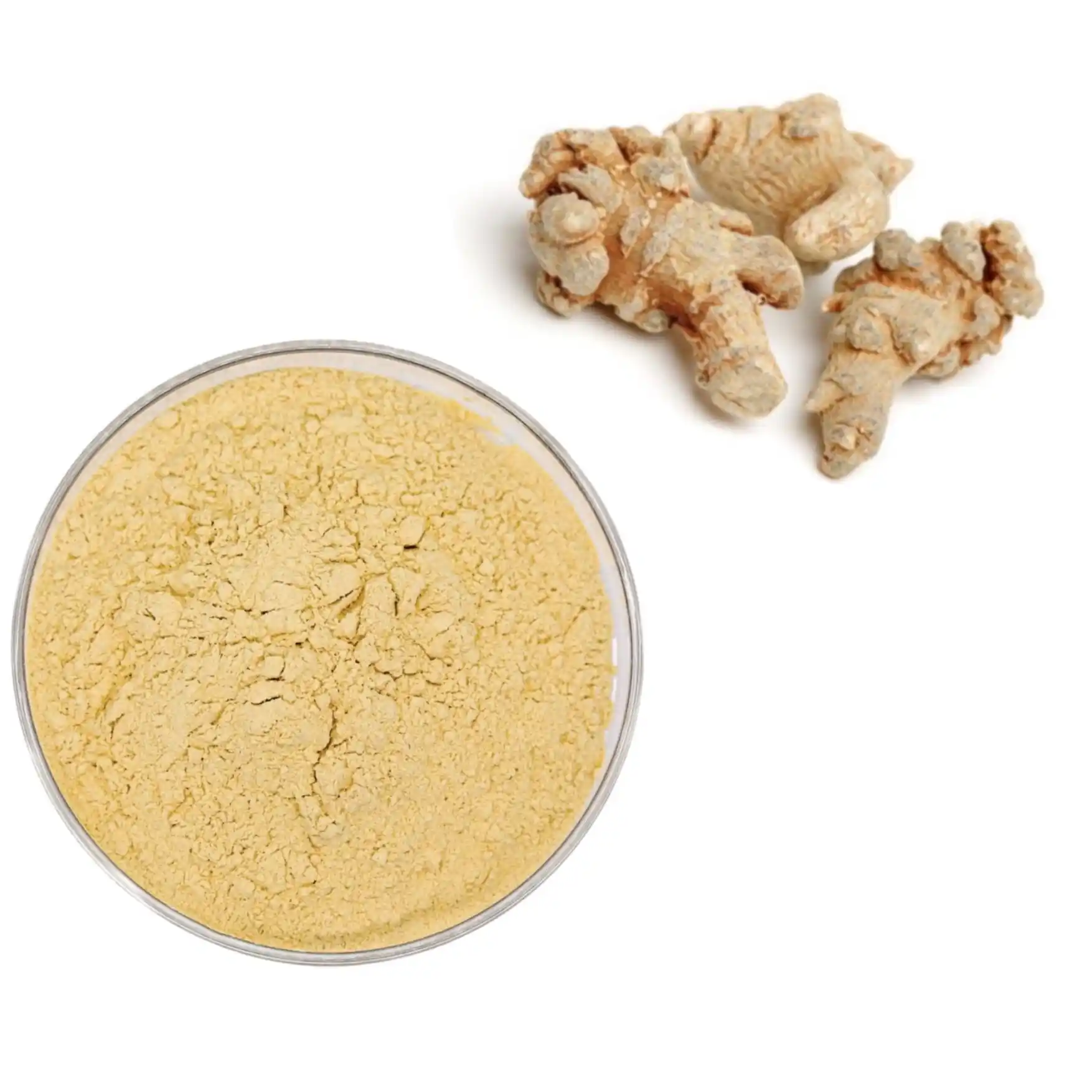
Panax Notoginseng root and rhizome overview for OEM and wholesale buyers
Main “work horses”: total saponins (Rb1, Rg1, Rd and friends), plus polysaccharides.
Raw San Qi: more focus on stop bleeding, move blood, reduce swelling.
Steamed San Qi: more on tonifying, antioxidant vibe.
GuoCao, as a wholesale Chinese medicinal herbs & spices supplier, runs GMP herbal-slice lines, ISO 22000 food-safety system, and third-party COA. With about 2,500 tons annual capacity and ambient / cool / modified-atmosphere warehouses, they can support both small pilot runs and big OEM batches from the same origin. Homepage for reference: Wholesale Chinese medicinal herbs and spices supplier – GuoCao.
So San Qi is not just a “magic root”, it’s a flexible raw material that can go into decoctions, capsules, enzyme drinks, cosmetics, you name it.
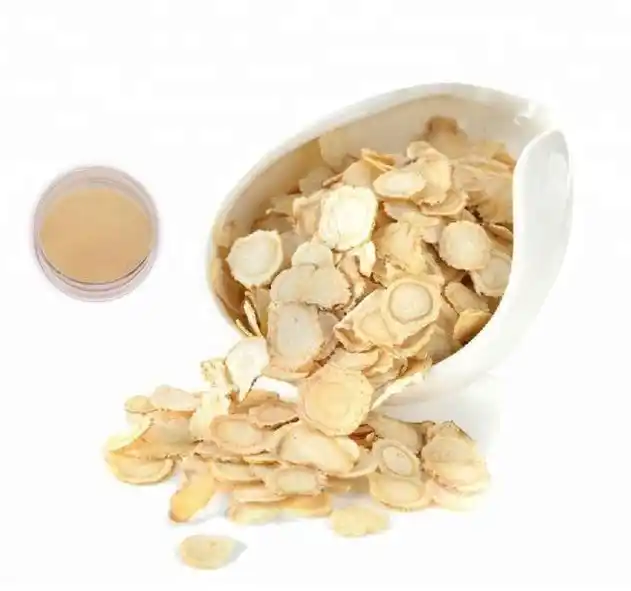
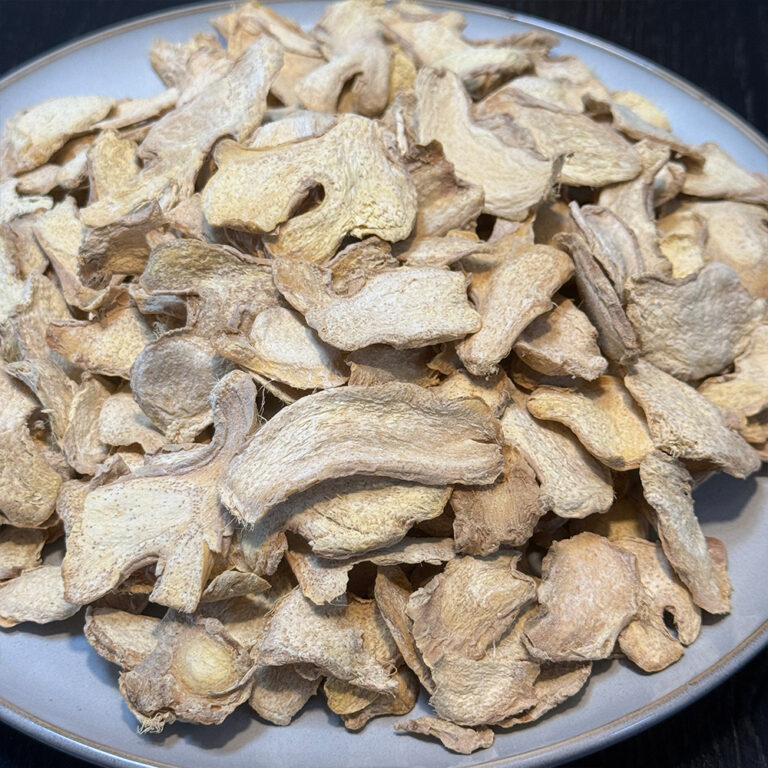
Panax Notoginseng slices for decoction pieces and TCM hospital formulas
Decoction piece standards for Panax Notoginseng slices
When you talk about San Qi slices, you’re basically talking decoction pieces. Here the real keywords are:
slice thickness and shape
moisture and ash
sulfur-free or not
pesticide and heavy-metal limits
origin traceability
Hospitals and classic TCM pharmacies love slices because they drop straight into the decoction pot. No change to SOP, no need to re-validate extract ratios. ISO-style standards and pharmacopeia give a clear frame, so QA feels comfy.
From GuoCao’s side, Panax Notoginseng slices come off GMP Chinese herbal slice production lines, stored in ambient / cool / gas-controlled warehouses with COA support. That fits well when your main customer is:
TCM hospital
clinic boiling room
regional decoction processing center
In these scenes, replacing slices with powder often means you must re-write decoction logic, so most buyers still stay with decoction pieces.
Practical scenes using Panax Notoginseng slices
Real-world usage of San Qi slices usually looks like this:
TCM prescriptions: combined with herbs like Dan Shen, Hong Hua in decoction formulas.
Hospital granules: pharmacy buys slices, then extracts and spray-dries in-house to make hospital-brand granules.
Export decoction pieces: sales to overseas TCM clinics that still boil herbs in traditional way.
Pain points that buyers complain about:
color drifting after long storage
smell not clean, sometimes light sulfur feeling
mixed origin, batch story not clear
too much powder at bottom of carton, hard to pass receiving inspection
This is where stable suppliers like GuoCao help: they separate lots, keep slice spec tight, and give full COA so your own QA team don’t spend half day arguing with inbound warehouse.
Panax Notoginseng powder and extract powder for tablets, capsules and functional drinks
Once you step into pharma factories, dietary supplement plants, functional beverage lines, powder and extract powder become the real stars.
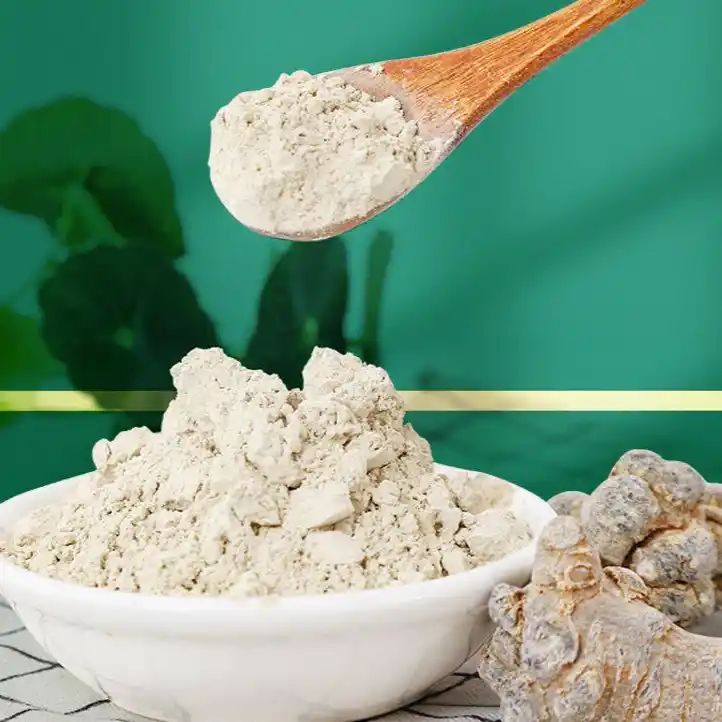
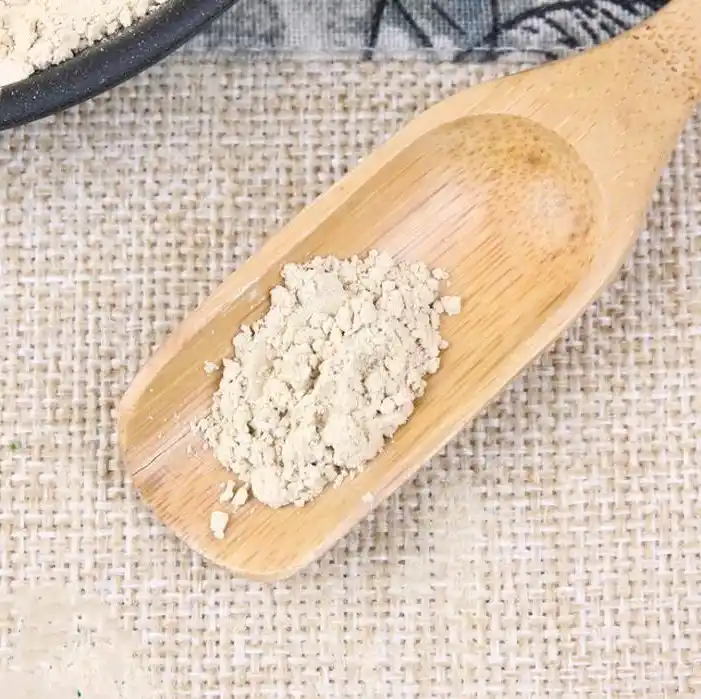
Micronized Panax Notoginseng powder and dissolution behavior
For micronized Panax Notoginseng powder, the core technical words are:
particle size (mesh, D90, D50)
dissolution rate
flowability (for tablet and capsule machines)
In tests, smaller San Qi particles usually dissolve faster and show better saponin release, up to a point. If you grind too crazy fine, powder may cake, flow bad, and sometimes dissolution drops again. So mesh size becomes a CQA, not just “one more line on spec sheet”.
In tablet and capsule scenes you typically want:
defined mesh size (for example 80–120 mesh window)
good flow under your feeder
stable moisture so powder doesn’t clump inside hopper
Here powder clearly beats slices. You can’t feed slices into a tablet press, unless you want the machine to cry.
Notoginseng total saponins extract powder for dietary supplements and cosmetics
Then we have Notoginseng total saponins (NTS) extract powder. This is where you see typical extract language:
DER (drug-extract ratio)
marker range for total saponins
residual solvent limit
microbiology spec
For dietary supplements, NTS helps you:
hit label claim without giant capsule size
keep batch-to-batch spec tight
simplify QC documentation for export to US / EU / Australia
For cosmetic and topical formulas, high-purity extract powder also makes life easier:
dissolves or disperses in cream / gel base
no gritty feeling on skin
better for in-vitro test and marketing story
GuoCao already supports enzyme drink and fermented herbal beverage projects, so they’re used to designing San Qi powder or extract for liquid lines as well, not only dry tablets. When you say “we run functional drink line, need easy-filter powder”, they understand what that means for mesh size and pre-treatment.
Finished product scenarios: how to choose Panax Notoginseng powder vs slices
Comparison table: Panax Notoginseng powder vs slices in different scenes
Below is a simple decision table. Values like “high / medium / low” are relative, not strict lab numbers, but they help you talk with your team.
Finished product scene
Recommended San Qi shape
Typical saponin release
Process complexity
Label story strength
Notes
Hospital decoction, clinic boiling
Slices (decoction pieces)
High after long boil
Low (classic process)
Very traditional
Best when doctors insist on decoction logic.
Pharmacy in-house powder, mortar mill
Slices → milled powder
Medium–high, depends on mesh
Medium (extra milling step)
Still “decoction piece origin”
Good for TCM chains that like to control grind by themselves.
Export tablets, film-coated tablets
Micronized powder
High, fast release
Medium–high
Modern + traditional mix
Need stable mesh and good flow for compression.
Capsules, softgels for supplements
NTS extract powder or fine powder
Very high per capsule
High only in development, later stable
Strong “standardized saponins” story
Often your regulatory team prefer extract for clear markers.
Quick decision checklist for product development teams
When your team sits in meeting room and tries to freeze spec, you can use this short checklist:
Is the end product boiled with other herbs?
Yes → Start from slices.
No → Go to next question.
Is the dosage form solid oral (tablet, capsule, granule)?
Yes → Use micronized powder or NTS extract powder.
Is the label claim heavy on exact saponin numbers?
Yes → Better choose standardized extract, with clear DER and marker range.
Do you need strong “traditional decoction piece” image on package?
Yes → Mention that your powder or extract comes from pharmacopoeia-grade slices, and source from a slice manufacturer like GuoCao, not a random trader.
This kind of simple tree already removes alot of back-and-forth between marketing, QA and production.
GuoCao OEM Panax Notoginseng supply and Chinese herbal slices advantages
GMP Chinese herbal slices and ISO 22000 safety system
GuoCao is not just a trader. It’s a Chinese herbal manufacturer with:
GMP herbal-slice production lines
ISO 22000 food-safety system
third-party COA for each batch
ambient / cool / MAP warehouses
yearly capacity around 2,500 tons
That set-up is very useful when you need one supplier to serve pharmaceutical factories, supplement plants, beverage brands, cosmetic labs, hospitals, distributors and agents at the same time.
Because everything sits under the same system, you can start with Panax Notoginseng slices, then later add powder or extract for new SKU, without changing origin or basic documentation logic.
OEM / ODM and global shipping for Panax Notoginseng ingredients
GuoCao also runs OEM / ODM projects for:
Chinese herbal slices under client brand
mixed herb formulas, including San Qi combinations
enzyme beverages and herb-based functional drinks
raw material supply for capsule / tablet factories
They ship to more than 30 countries and regions, including USA, Europe, Australia, Japan, Korea, Canada, Malaysia, Philippines and so on. For buyers, that means:
documents ready for customs (health cert, phytosanitary, etc.)
COA pattern your QA can plug into their system
one partner for many herbs, not just Panax Notoginseng
Sometimes English on documents is not 100% perfect, but the data is there, and that’s what keeps your line and your auditor happy.
Conclusion: choosing Panax Notoginseng powder or slices for your brand
If we wrap everything in one page, it looks like this:
Panax Notoginseng slices are best for decoction pieces, hospital formulas, classic TCM scenes. They follow pharmacopeia, are easy to explain to doctors, and fit boiling kettles directly.
Panax Notoginseng powder (especially micronized) works better for tablets, capsules, granules, instant drinks. You get faster dissolution and easier dosing, as long as you define mesh size and flow properly.
Notoginseng total saponins extract powder is the tool for international supplements, enzyme drinks, cosmetics where you need clear markers and tight batch control.
There’s no single “best” shape. There’s only right match between finished product scene and raw material form.
If you start from the scene first, then pick Panax Notoginseng slices, powder or extract with GuoCao as back-end manufacturer, you’ll spend less time fixing specs and more time launching products that actually move.
Our low MOQ of 1 kg (2.2 lb) makes it easy to order Chinese herbal slices or wholesale Chinese medicine herbs. Private-label and bilingual labeling are also available.
Delivery Cycle & Support
We have a fast 7-day lead time. We provide free samples, COA reports, and technical support to help you bring high-quality bulk Chinese herbs to market.
Quality & Certifications
Our products are manufactured in a GMP-certified facility and meet ISO22000 standards. All Chinese herbs are third-party tested for heavy metals, pesticides, and microorganisms.