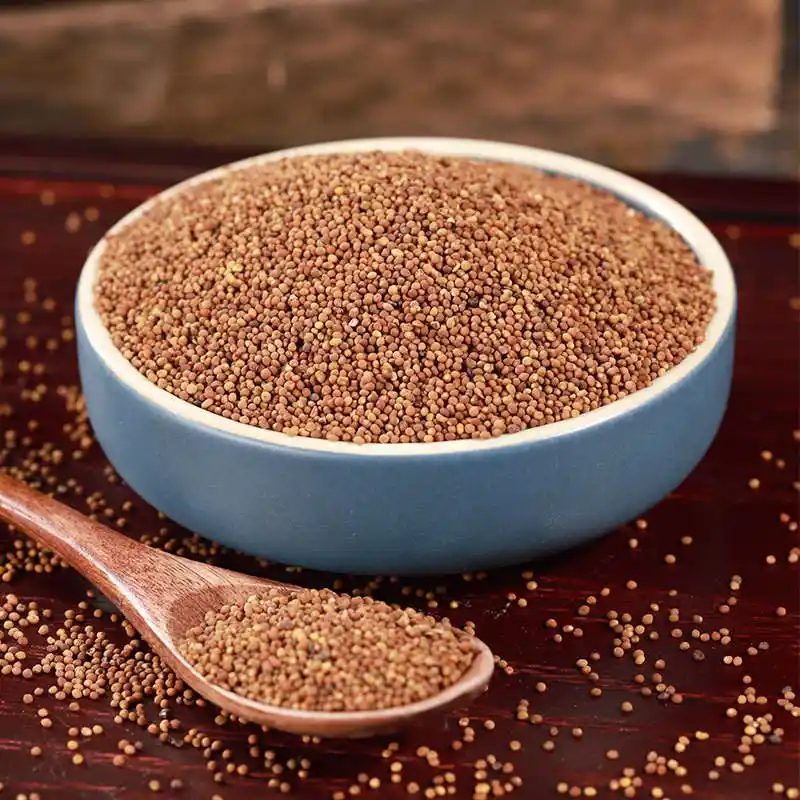
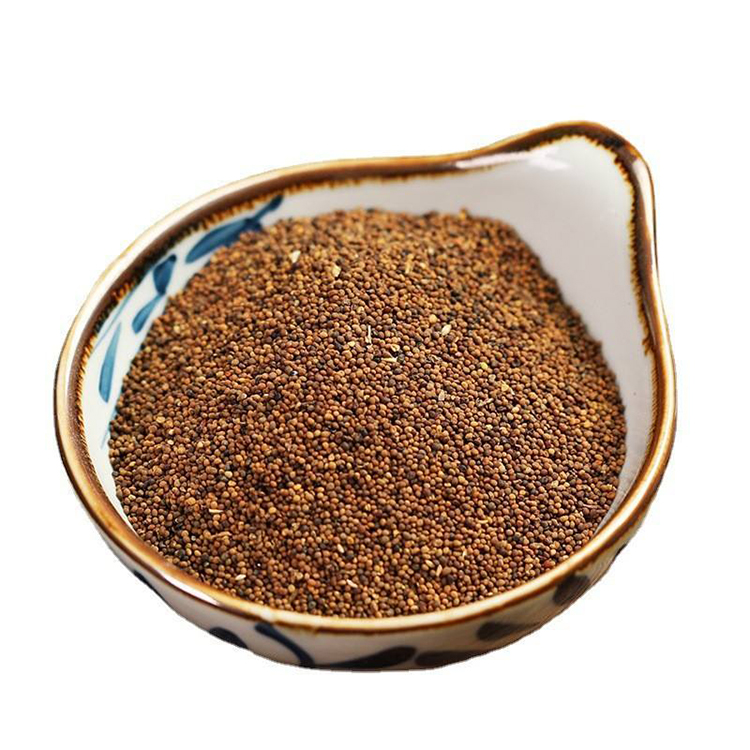
If you buy Tu Si Zi in bulk, you’ve probably heard the same line a hundred times: “It’s cleaned.” Cool. Cleaned how? With what limits? And who’s keeping the logs when an auditor asks?
Here’s my take: “Cleaned” isn’t a promise. It’s a spec. If you can’t measure it, you can’t defend it.
I’ll use real, published benchmarks (HKCMMS, WHO, AHPA, FDA guidance) and then show you how we run it at GuoCao—in plain English, ops style, no fluffy talk.
Foreign Matter (Appendix VIII): not more than 8.0%
HKCMMS (Hong Kong Chinese Materia Medica Standards) gives a clear limit for Cuscutae Semen (Tu Si Zi): Foreign Matter: not more than 8.0%.
That number matters because “foreign matter” is where most buyer headaches hide:
stray stems / weed seeds
soil clumps and sand
little stones that survive basic screening
random “mystery bits” that trigger customer complaints
WHO also says it straight: remove soil, stones, sand, dust, and other foreign inorganic matter before cutting or grinding. So if you’re processing Tu Si Zi into powder, granules, tea-bag cut, or even “lightly cracked seed,” you can’t skip cleaning upfront. You’ll just grind the problem smaller.
What I’d ask your supplier (simple but sharp)
What’s your foreign matter definition in writing? (plant parts, insects, mineral debris, etc.)
Do you sort and weigh foreign matter by category, or just eyeball it? (AHPA calls out visual/physical checks as standard practice.)
Can you show a before/after record per lot (incoming vs post-clean)?
Ash: Total ash not more than 10.0% and Acid-insoluble ash not more than 4.0%
HKCMMS sets:
Total ash: not more than 10.0%
Acid-insoluble ash: not more than 4.0%
Here’s the street-level meaning:
Total ash goes up when you’ve got extra mineral load (dirt, sand, general crud).
Acid-insoluble ash screams “silica-style contamination” (think sand/soil that won’t dissolve). It’s basically your “did we really remove grit?” meter.
If you’ve ever received Tu Si Zi that looks fine but feels gritty when rinsed—yeah, that’s the gap.
Water Content (Appendix X): Oven dried method not more than 10.0%
HKCMMS also sets Water content: not more than 10.0% (oven dried method).
This ties directly to cleaning and safety:
higher moisture = higher mould risk in transit
higher moisture = easier for dirt to cling and “cake”
higher moisture = storage instability (especially if you ship across climates)
So when someone says “we washed it,” you also need: How did you re-dry it, and what’s the final moisture spec?
Heavy Metals (Appendix V): meet the requirements
The Tu Si Zi monograph says heavy metals must meet requirements (Appendix V). HKCMMS Volume 10 gives the maximum permitted limits often referenced for CMM samples:
Arsenic 2.0 mg/kg
Cadmium 1.0 mg/kg
Lead 5.0 mg/kg
Mercury 0.2 mg/kg
Not every buyer uses HK standards, but these numbers are a clean baseline for setting a “floor” spec when you sell into mixed markets.
Metal Inclusion: “No detectable metal fragments” + challenge frequency
Metal risk is sneaky because it doesn’t always come from farms. It comes from processing:
vibrating sieves shedding wire bits
worn elevator buckets
loose fasteners
broken screens
maintenance shortcuts (yup)
FDA’s HACCP guidance on metal inclusion spells out a control strategy many plants borrow as best practice:
Set critical limits so all product passes through an operating metal detector and no detectable metal fragments remain.
Challenge the metal detector using validated sensitivity standards daily, before start-up, every 4 hours during operation, when processing factors change, and at end of processing.
Even though that doc targets seafood, the logic fits botanicals: verify the detector, don’t just own one. Logs beat promises every time.
Standards Snapshot Table (Tu Si Zi)
Spec item (keyword)
Limit / expectation
Why buyers care (real pain)
Typical control point
Source
Foreign Matter (Appendix VIII)
NMT 8.0%
Pebbles, stems, “trash” causes rejects and complaints
Pre-clean + final sort
HKCMMS Tu Si Zi monograph
Total ash (Appendix IX)
NMT 10.0%
Dirty lots look “fine” but fail lab
Cleaning + wash control
HKCMMS Tu Si Zi monograph
Acid-insoluble ash (Appendix IX)
NMT 4.0%
Grit/sand shows up in end product
Destoner + aspiration + sieve
HKCMMS Tu Si Zi monograph
Water content (Appendix X)
NMT 10.0% (oven)
Mould risk + clumping in shipping
Drying + warehouse control
HKCMMS Tu Si Zi monograph
Heavy metals (Appendix V)
Must meet requirements
Import holds and retail compliance
COA per lot
HKCMMS Tu Si Zi monograph
Heavy metals (baseline limits)
As 2.0 / Cd 1.0 / Pb 5.0 / Hg 0.2 mg/kg
Quick “floor spec” across regions
Third-party test
HKCMMS Vol 10 overview
Quick note: I tried to use the built-in PDF screenshot tool for these sources, but it returned a validation error in this session. I pulled the limits from the PDFs’ parsed text instead.
Sorting (garbling): removing dirt, dust, mud and stones
WHO calls out sorting/garbling as the first purity step, and it explicitly names what to remove: soil, dust, mud, stones, plus insects, rotten tissue, and extraneous plants.
So “stone removal” isn’t a nice-to-have. It’s part of basic primary processing.
The practical workflow that actually works
Pre-screen (remove oversize trash)
Aspirator (pull light stuff: husk, dust)
Gravity destoner (stone and heavy mineral drop-out)
Fine sieve stack (tighten to your cut size)
Magnet (line-side catch)
Metal detector (final CCP style control)
This is boring. That’s the point. Boring = repeatable.
AHPA Guidance: “remove… as much as practical” + don’t confuse limits with permission
AHPA’s foreign matter guidance makes two things very clear:
You should do visual and physical examination for all batches and remove soil, stones, sand, dust, glass, plastic, metal “as much as practical.”
A numeric tolerance does not mean you can allow “harmful foreign matter.”
So yeah, HKCMMS says foreign matter NMT 8.0%. That’s not a free pass for sharp metal or choking hazards. No buyer wants to explain that to a regulator.
Metal Detector Verification: challenge tests, logbooks, and “prove it” moments
If you only remember one thing, remember this: auditors love records.
The FDA guidance gives a clean verification rhythm: challenge the detector daily / before start-up / every 4 hours / when factors change / end of run. That’s basically a ready-made SOP skeleton.
“Processing factors change” in the herb world means…
you switch from raw seed to roasted seed
you change moisture level (rainy season lots)
you change packaging format (bulk bag vs small packs)
you ramp line speed
If you don’t re-verify, you’re guessing. And guessing is how you end up with a quarantine hold.
Where GuoCao fits (GMP + ISO 22000 + COA per lot)
If you want Tu Si Zi that’s audit-ready, you need a supplier who can run the paperwork and the process.
At GuoCao, we produce under GMP-certified facilities and an ISO 22000 food-safety system, and we back lots with third-party COA testing (heavy metals, pesticide residues, microbial limits). We also run ambient/cool/MAP warehousing and scale up to 2,500 tons annual capacity, with OEM/ODM support.
If you want to see how we talk about it on-site (and yeah, it’s pretty direct), these pages line up with this article:
Our low MOQ of 1 kg (2.2 lb) makes it easy to order Chinese herbal slices or wholesale Chinese medicine herbs. Private-label and bilingual labeling are also available.
Delivery Cycle & Support
We have a fast 7-day lead time. We provide free samples, COA reports, and technical support to help you bring high-quality bulk Chinese herbs to market.
Quality & Certifications
Our products are manufactured in a GMP-certified facility and meet ISO22000 standards. All Chinese herbs are third-party tested for heavy metals, pesticides, and microorganisms.