You want bark materials that smell right and clear micro. No drama, no fuzzy talk. Volatile oils bring value; the kill-step keeps you compliant. We’ll walk how to balance both, with shop-floor tactics, simple numbers, and links to the exact spots on our site so you can move fast.
Barks Chinese Medicines: volatile oils, aroma, and risk control
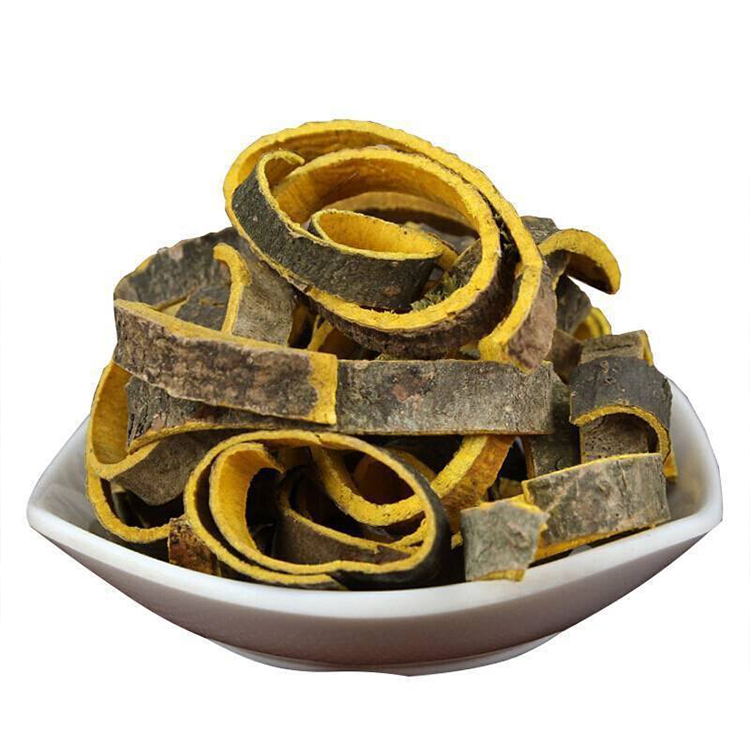
Bark drugs like cinnamon, magnolia, and phellodendron carry signature volatiles that drive aroma and claims. Heat can strip those notes; storage can dull them too. The job isn’t “avoid heat forever.” The job is hit lethality with minimal aroma loss.
Common pain point: “We passed micro, but lost nose.” Fix it with aw tuning, shorter dwell, and uniform heating. It’s not magic; it’s process discipline.
Kill step for low-moisture spices: ≥5-log Salmonella reduction
Let’s keep it plain. A kill-step is a validated process that achieves a specified log reduction (commonly ≥5-log for Salmonella on low-moisture matrices). It sits on your HACCP/PC plan as a CCP. You validate worst-case geometry and load. You verify each run with monitoring and records. And you control re-contam after the kill.
Why barks behave different: dense structure, low water activity, plus inherent antimicrobials in many bark species. With the right aw window, bark often reaches lethality at shorter exposure than leafy herbs. That’s your aroma-protection lever.
Water activity (aw) and thermal inactivation (D- & z-values)
aw shifts protein stability and microbial stress response. In ground cinnamon-type bark systems, data trends show D-values at 80 °C drop as aw rises. So a tiny pre-humidification before heat can shorten dwell and save top notes. Don’t chase perfect decimals; chase a repeatable window that your line can hit on Monday and also on Friday.
Example D-value trend for bark powders (illustrative window)
Temperature
aw (water activity)
D-value (minutes)
Plain-English takeaway
80 °C
0.20
~9.0
Kill is slow; long dwell risks aroma.
80 °C
0.30
~2.5
Reasonable window for short steam pulse.
80 °C
0.40
~1.0
Fast kill; watch clumping and color shifts.
90 °C
0.30
<1.0
High-temp-short-time helps, but guard against oil flash-off.
I know, the table looks a bit rough—its fine. It matches how teams really make decisions on the floor.
Steam sterilization: proven, scalable, but mind the nose
Steam (saturated/superheated) is everywhere, easy to document, and good for scale. But steam can clip volatiles and nudge color if you run long.
How to keep aroma while steaming:
Pre-condition aw into a tight band (for many barks, ~0.30–0.45 works well).
Use short, hot pulses, not long soaks.
Run thin beds, gentle agitation, and keep bed depth consistent.
Dry down fast to spec; don’t park material wet—teh nose walks away, and mold risk goes up.
If you’re building a full catalogue program, align your SKUs in All Herbs & Spices and tie each to a process window so purchasing, QA, and production aren’t arguing over words.
Radio-frequency heating (RF): uniformity for thick pieces
RF heats volumetrically. That’s gold for thick chips, quills, or mixed bark sizes where surface gets cooked before the core. Plants see shorter dwell and cleaner aroma versus long steam tunnels. You still validate worst-case: biggest piece, deepest bed, max load.
Quick line tips:
Sieve mixed chips so fines don’t over-process while chunks lag.
Map the field with realistic bed depth, not lab-perfect trays.
Use a brief steam “polish” post-RF if your spec demands it.
Need someone to actually build this with you? Our OEM/ODM custom solutions cover RF-forward process design, packaging choice, and label strategy, so you can launch SKUs without months of back-and-forth.
In-package steaming: kill + re-contam control
Running lethality in the final pack (valved or breathable) helps you finish strong:
You hit your log target with short exposure.
You block re-contamination between tunnel and sealer. Choose pack films that tolerate steam; validate valve performance and seal integrity. Keeps QA happy, keeps aroma in the bag.
Irradiation (e-beam): high lethality, minimal aroma shift
Irradiation often preserves color/aroma better than heavy wet heat. Market and labels vary by region, so align early with your regulatory and brand teams. Some buyers prefer thermal/RF for narrative simplicity; others pick e-beam for the quality hold. Both are legitimate tools; pick by customer and channel.
Process vs. aroma: quick comparison for bark users
Lethality path
Kill performance
Aroma retention
Color impact
Re-contam risk
Notes you can ship
Steam (tunnel/batch)
High, scalable
Medium (watch dwell)
Low–Med
Med
Pre-condition aw; thin bed; rapid dry-down.
RF heating
High with mapping
Med–High
Low
Med
Great for thick pieces; even heating.
In-package steaming
High
Med–High
Low
Low
Best for re-contam control; validate valve.
Irradiation (e-beam)
Very high
High
Minimal
Low
Label rules vary; check market first.
Practical bark scenes(use cases you can copy)
Cinnamon quills (8–14 cm): Temper to aw ≈0.35. Short steam pulse + RF finish. Vibratory bed to keep even exposure. Fast dry. Result: ≥5-log with minor aroma loss.
Cinnamon chips/flakes (mixed sizes): Sieve tighter; RF first, then a brief steam polish. Pack immediately or finish in-pack.
Magnolia bark slices: Dense pieces like thin layers; if no RF, split into two short steam passes with a dry-down between—don’t try one long cook.
Dusty fines/rework: Treat separately at lower throughput or you’ll cook the entire lot to save the cold spot.
Worst-case geometry (thickest pieces), max load, low airflow—create a real cold spot.
Map T/RH/time; show cumulative D-equivalents with the z-value you defend.
Include re-contam controls in the study, not only the heat.
Verification routine:
Log T, RH, dwell, load, bed depth each run.
Swab post-lethality zones.
Release by lot COA and traceability.
Keep a tight spec for volatile oil markers (range, not a single heroic number).
If you want a clean checklist for buyers, our Purchasing Guide pieces break down forms (slice/C&S/powder), residues panels, and release logic in real language.
Data table: bark process windows you can pilot
Parameter
Bark type
Practical window
Why it matters
aw (inlet)
Quills / chips
~0.30–0.45
Faster kill with less oil flash-off.
Bed depth
All barks
1–3 layers
Uniform energy; fewer cold spots.
Steam dwell
Steam or hybrid
Short-hot pulses (seconds–few min)
Cuts moisture uptake; protects nose.
RF time
Thick pieces
Tens of seconds–couple min
Volumetric heating evens the lot.
Dry-down
All
To spec quickly
Locks aroma; stops micro rebound.
Packaging
RTE treated
In-pack or immediate pack
Blocks re-contam; stabilizes quality.
Yeah, wording’s simple on purpose; your team doesn’t need poetry during shift change.
Buying & sourcing at GuoCao (direct category links)
GuoCao ships to North America, EU, Australia, Japan, Korea, Canada, Malaysia, Philippines—30+ regions—with GMP manufacturing, ISO 22000, normal/cool/MA warehouses, third-party COA testing, ~2,500-ton annual capacity, and live OEM/ODM for enzymatic/fermented drink lines. We serve pharma, supplement makers, hospitals, beverage brands, cosmetic raw-material buyers, distributors, and local retailers. If you buy in volume, we speak your language.
Scenes by buyer (where this fits your pipeline)
Buyer
Scene / Use
Pain point
What fixes it
Pharma & TCM hospitals
Prescription slices, decoctions
Micro compliance + clinical consistency
Treated barks + COA + marker ranges; align with Barks category.
Supplements & functional drinks
Extracts, shots
Aroma fade after kill
RF + short steam, quick dry, barrier pack; spec via OEM/ODM.
Spice blenders
RTE blends
Re-contam in open rooms
In-package steaming or sealed transfer; steady sourcing via Dried Spices.
Wholesale programs with multiple spec lines per item.
Close (short, human)
You don’t have to choose between safe and fragrant. Tune aw, heat evenly, keep dwell short, finish in-pack when re-contam bites, and log everything. If you want a supplier that speaks both plant and paperwork, GuoCao will build it with you—clean kill-steps, steady nose, and docs that survive audits. Ping us at Contact GuoCao and we’ll map your window, then lock it in. We’ll keep tweaking till it’s right—even if the bed depth misbehaves today.
Our low MOQ of 1 kg (2.2 lb) makes it easy to order Chinese herbal slices or wholesale Chinese medicine herbs. Private-label and bilingual labeling are also available.
Delivery Cycle & Support
We have a fast 7-day lead time. We provide free samples, COA reports, and technical support to help you bring high-quality bulk Chinese herbs to market.
Quality & Certifications
Our products are manufactured in a GMP-certified facility and meet ISO22000 standards. All Chinese herbs are third-party tested for heavy metals, pesticides, and microorganisms.