Tsaoko Bulk Supply Guide for Seasoning and Herbal Applications
Tsaoko is sold as a seasoning, botanical ingredient, and aromatic raw material, yet many wholesale offers fail to define species, crop year, drying method, microbial treatment, or lot-specific testing. This guide explains how professional buyers can separate usable dried pods from attractive but poorly controlled inventory.
A tsaoko bulk offer may arrive with dark brown fruit, a forceful aroma, an attractive origin story, and a certificate marked “qualified,” although none of those details proves that the botanical identity is correct, the drying process preserved the desired aroma, or the shipment is suitable for its final market.
So why do buyers still approve tsaoko from photographs?
I would not.
Tsaoko, commonly sold as Cao Guo, Amomum tsao-ko, or Chinese black cardamom, sits in an awkward commercial position. Food brands buy it for braises, soup bases, hot-pot seasoning, marinades, and compound spice blends. Herbal businesses may purchase the same-looking dried fruit for teas, extracts, powders, or traditional formulations.
The applications overlap. The specifications should not.
A seasoning company usually cares about aroma release, bitterness, pod cleanliness, grind behavior, microbial status, and repeatable flavor. A botanical manufacturer must also control identity, purity, composition, contaminants, supplier qualification, and claims risk.
That distinction changes everything.
Tsaoko Is Not Just Another Black Cardamom
Professional procurement starts with the scientific name, not the English nickname.
The established trade name remains Amomum tsao-ko Crevost & Lemarié. However, the Royal Botanic Gardens, Kew currently treats that name as a synonym of Lanxangia tsao-ko. A modern specification should therefore record both names rather than pretending botanical nomenclature never changes. (Plants of the World Online)
I would write the identity line this way:
Botanical identity: Lanxangia tsao-ko; commercial and pharmacognostic synonym: Amomum tsao-ko Crevost & Lemarié; dried mature fruit; family Zingiberaceae.
This is not academic decoration.
“Black cardamom” may also describe Amomum subulatum, the large cardamom associated with Nepal and northeastern India. It is a different species. A supplier that writes only “black cardamom” leaves the substitution door open, whether through carelessness, translation, or deliberate blending. Kew maintains Amomum subulatum as a separate accepted species. (Plants of the World Online)
Buy the species.
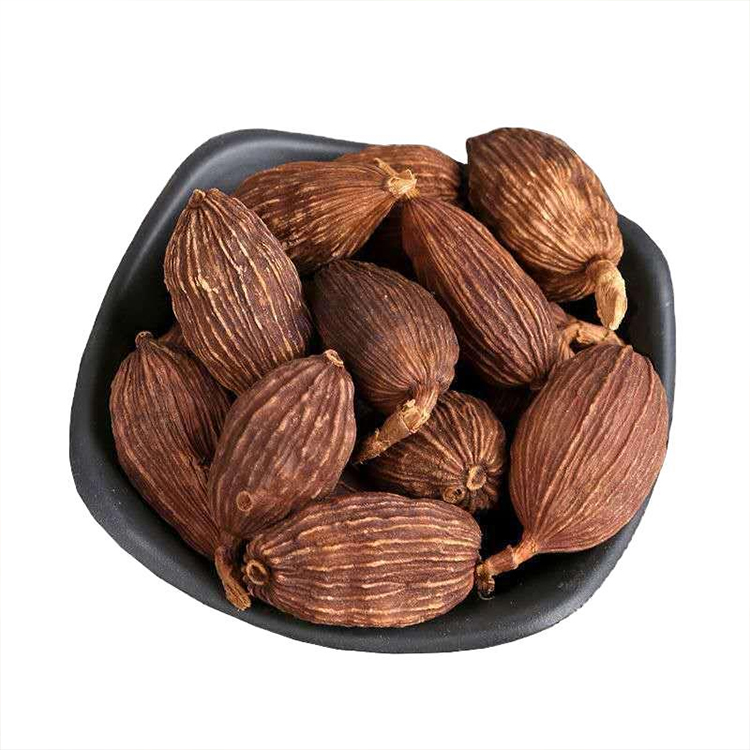
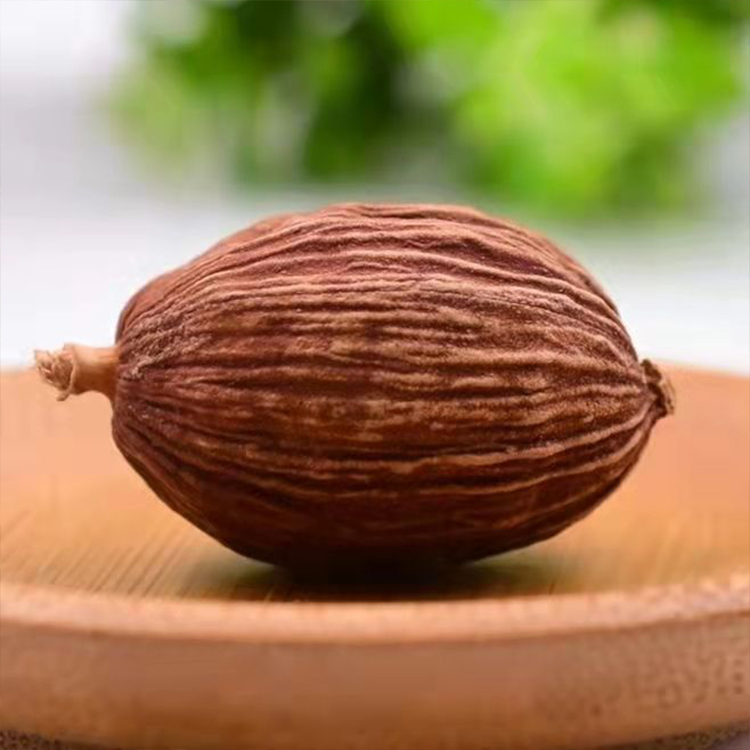
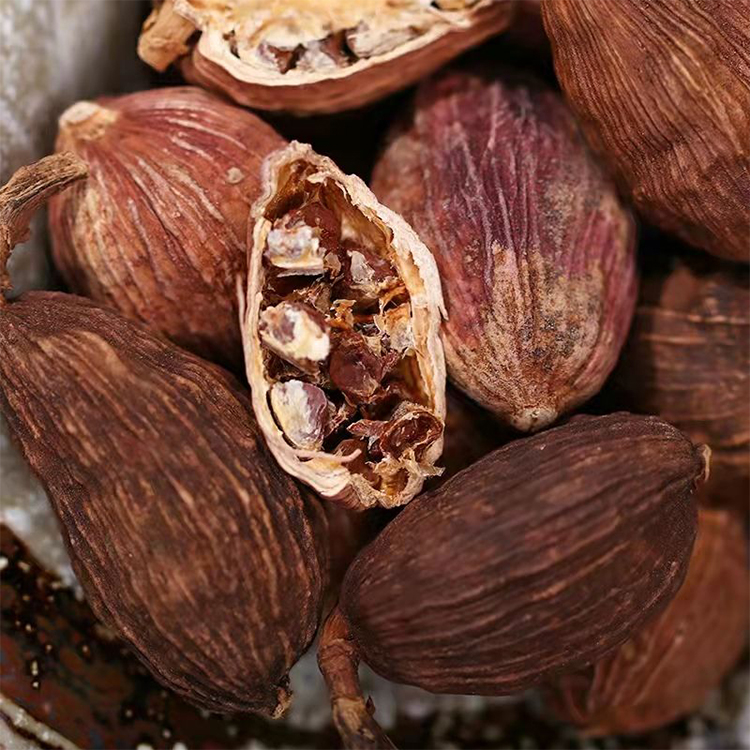
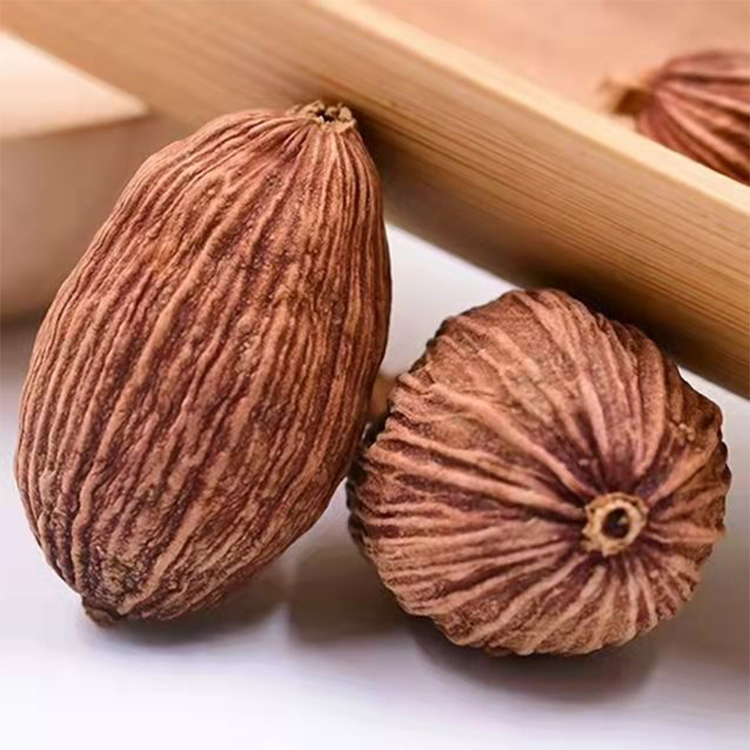
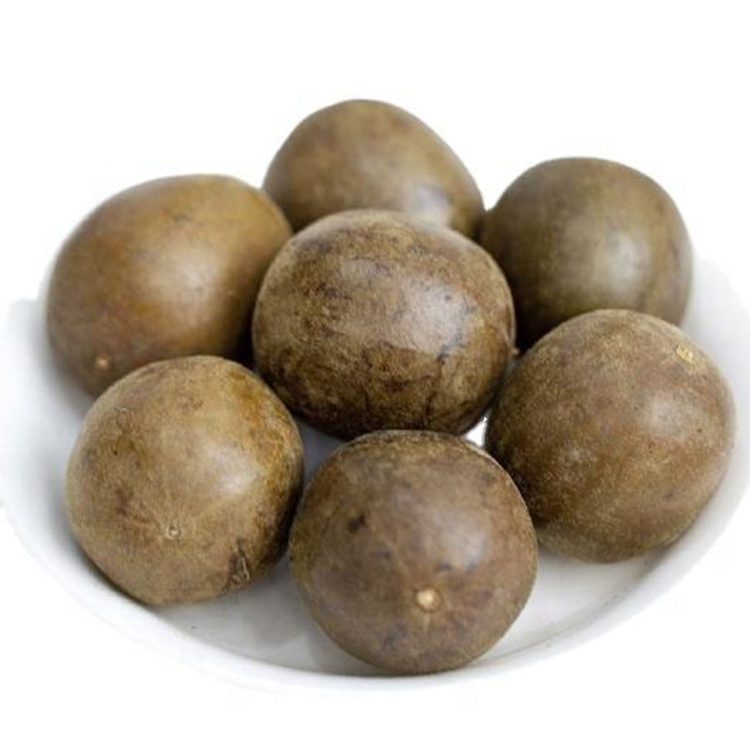
The Hong Kong Baptist University medicinal plant database describes Cao Guo as the dried mature fruit of Amomum tsao-ko, typically oval, approximately 2–4.5 cm long and 1–2.5 cm in diameter, with a brown or reddish-brown surface, three blunt ridges, longitudinal grooves, and three internal chambers. (香港浸会大学图书馆)
Those measurements are useful for incoming inspection, but they are not enough for authentication. Size changes with maturity, production area, drying loss, and grading. A large pod can still be stale. A dark pod can still be smoke-damaged. And a correctly shaped pod can still belong to a mixed lot.
Buyers needing a visual reference can compare the shipment against the site’s whole dried Tsaoko and Cao Guo product profile, but commercial approval should rest on a written specification and representative retained sample, not website photographs.
Why Tsaoko Bulk Aroma Changes Between Lots
Tsaoko is often described with lazy words: smoky, warm, pungent, medicinal, camphoraceous.
That is sales language.
The actual aroma is produced by a changing mixture of volatile compounds affected by genetics, altitude, maturity, pericarp-to-kernel ratio, drying method, storage temperature, oxygen exposure, and time since processing.
A 2024 molecular sensory study identified 49 odor-active compounds in fresh and dried tsaoko. Eucalyptol produced the highest reported flavor-dilution factor, FD 6561, in both fresh and dried samples. Other influential compounds included geranial, α-pinene, linalool, unsaturated aldehydes, and floral or fatty-smelling molecules whose relative impact changed after drying. (PubMed Central (PMC))
That matters in a seasoning factory.
A buyer may approve a sample because it smells strongly of eucalyptus-like eucalyptol, only to discover that the production lot has heavier woody, fatty, smoky, or bitter notes. Total essential-oil content alone may not expose that shift because two lots can contain similar amounts of volatile oil while carrying different compound ratios.
A regional study using GC-MS and GC-IMS also separated tsaoko essential oils by geographical origin. Samples differed mainly in terpenes, aldehydes, and esters, and one sample collected at 2,408 metres showed higher levels of many measured compounds than the other samples. That does not prove that higher altitude automatically produces superior tsaoko; it proves that origin can alter chemistry enough to justify lot-specific sensory and analytical approval. (PubMed Central (PMC))
The hard truth?
“Yunnan origin” is not a flavor specification.
Yunnan is the dominant production centre, and a 2025 habitat assessment reported that China accounts for more than 80% of global tsaoko production, with Yunnan, Guangxi, Guizhou, Chongqing, and Sichuan identified among the main production regions. Yet two farms inside the same province can differ in altitude, planting material, harvest maturity, drying fuel, and warehouse control. (Frontiers)
A serious purchase contract should record the province, county or production area where available, crop year, harvest period, drying method, and lot code.
Aroma Specifications for Seasoning Applications
For seasoning use, I would establish:
A retained reference sample approved by the buyer
A descriptive sensory profile, not merely “strong aroma”
Zero tolerance for musty, fermented, chemical, petroleum, or rancid odours
A defined tolerance for smoke character
Whole-pod, broken-pod, pericarp, and exposed-kernel percentages
Crop year and processing date
Storage and packaging history
Volatile-oil testing when formulation consistency justifies the cost
GC-MS fingerprinting for high-value extracts or tightly standardized blends
Smoke deserves special attention.
Some buyers expect a mild roasted or smoky character. Others consider it a defect. Uncontrolled smoke drying can overwhelm eucalyptol and citrus-like notes, create harsh burnt flavours, and make a clean broth taste like an ashtray.
“Traditionally dried” is not an excuse.
Seasoning and Herbal Applications Need Separate Specifications
Tsaoko can serve multiple product formats, but each format exposes a different failure mode.
Whole dried pods retain aroma better and allow visual inspection. Cracked fruit releases flavour faster but oxidizes more quickly. Powder is easy to dose, yet it hides foreign matter, accelerates aroma loss, absorbs moisture more readily, and creates more opportunities for cross-contamination during milling.
Herbal processing adds another layer. The buyer may need the whole fruit, pericarp, kernels, cut pieces, powder, or extract feedstock. A supplier cannot assume that a culinary-grade whole pod automatically satisfies the identity and contaminant controls required by a dietary supplement manufacturer.
Application and Risk Comparison
Application
Preferred Supply Form
Main Quality Priority
Common Commercial Failure
Braises, stocks and soup bases
Whole or lightly cracked pods
Slow aroma release and clean flavour
Weak aroma, excessive smoke, musty interiors
Hot-pot and compound seasonings
Cracked pods or controlled powder
Repeatable intensity and dosing
Lot-to-lot flavour drift and uneven grind
Sauce and marinade production
Coarse powder or extract feedstock
Fast extraction and low foreign matter
Oxidized powder or unstable colour
Retail spice packaging
Whole graded pods
Appearance, aroma and package stability
Broken fruit, insects, moisture pickup
Herbal tea or decoction blends
Whole or cut fruit
Identity, cleanliness and controlled bitterness
Mixed species or poor cut uniformity
Botanical powder products
Fine powder
Identity, mesh, microbiology and residues
Substitution hidden after milling
Extract manufacturing
Cracked fruit, kernels or specified whole fruit
Extraction yield and chemical consistency
Undeclared pericarp-to-kernel variation
Dietary supplement manufacturing
Buyer-defined component form
Identity, purity, strength, composition and contaminants
Generic COA accepted without verification
The United States treats dietary supplements differently from ordinary seasonings. Under 21 CFR Part 111, manufacturers must establish component identity specifications, set limits for relevant contamination, and conduct at least one appropriate identity test or examination for each dietary ingredient before use unless a formal exemption applies. (电子联邦法规)
That requirement is easy to misunderstand.
A supplier’s COA may support qualification, but it does not automatically replace the manufacturer’s responsibility. Part 111 also requires supplier qualification, periodic reconfirmation of supplier certificates, representative sampling, and quality-control review. (电子联邦法规)
For seasoning imports into the United States, the FDA Foreign Supplier Verification Programs rule requires risk-based supplier verification. Importers generally need an FSVP for each food and each foreign supplier, including hazard evaluation, supplier approval, verification activities, and corrective-action procedures. (U.S. Food and Drug Administration)
Your customs broker cannot do this thinking for you.
Herbal Tradition Is Not Clinical Proof
Tsaoko has a long record of traditional culinary and herbal use, but traditional use and laboratory activity should not be rewritten as proven human treatment claims.
Published studies have examined tsaoko essential oils, isolated compounds, antimicrobial activity, and other biological effects. Such work may support ingredient research. It does not automatically substantiate claims that a commercial powder, tea, capsule, or extract treats digestive disorders, infections, inflammation, or any other disease.
The FDA’s dietary-supplement claims guidance gives a blunt example: traditional-use descriptions and testimonials alone would generally be inadequate support for a botanical claim such as “improves vitality.” (U.S. Food and Drug Administration)
So separate three things:
Traditional-use documentation
Laboratory or animal research
Evidence supporting the exact finished-product claim and dose
Blending them together may create compelling copy. It may also create regulatory exposure.
Drying Method Is Part of the Ingredient
Most wholesale quotations describe tsaoko as “sun dried” or “machine dried” and move on.
That is not enough.
A 2022 study compared 12 pre-drying and drying approaches and found that the method changed volatile composition in both the pericarp and kernel. The researchers evaluated treatments including boiling-water pretreatment, microwave or oven pretreatment, air drying, sun drying, oven drying, microwave drying, freeze drying, electric baking, and smoke drying. (PubMed Central (PMC))
Method matters.
But temperature, duration, fruit loading, airflow, pretreatment, pod maturity, and final moisture matter too, which means the phrase “hot-air dried” still leaves major process variables unanswered.
For deeper storage controls, the site’s drying and botanical shelf-life guide explains why moisture percentage, water activity, packaging barrier, oxygen, relative humidity, and warehouse traffic need to be treated as connected controls rather than independent checklist items.
Questions to Ask About Drying
Ask the bulk tsaoko supplier:
Was the fruit sun dried, hot-air dried, electrically baked, freeze dried, or smoke dried?
Was boiling, blanching, microwave heating, or another pretreatment used?
What was the maximum product temperature?
Was temperature measured in the chamber or inside the fruit bed?
How long did drying take?
Was the pod dried intact?
Were pericarp and kernels processed separately?
What final moisture and water activity were achieved?
How long was the material cooled before packing?
Was the cooled product exposed to untreated raw material?
What fuel or smoke source was used?
Can the method remain stable across repeat orders?
A seller who answers “natural drying” has not answered the question.
The Tsaoko Bulk Specification Buyers Should Put in Writing
The word “premium” belongs nowhere in a serious specification unless it is followed by measurable criteria.
A working specification should cover identity, physical form, sensory quality, contaminants, treatment, packaging, documentation, and sampling. The exact limits depend on the destination country, application, customer standard, and whether the finished product receives another validated control step.
The following framework is a buyer-side starting point, not a universal legal standard.
Control Point
Recommended Contract Language
Why It Matters
Product name
Tsaoko, Cao Guo
Prevents naming ambiguity
Botanical identity
Lanxangia tsao-ko; synonym Amomum tsao-ko
Separates tsaoko from other black cardamoms
Plant part
Dried mature whole fruit, pericarp, kernel, cut fruit or powder
Prevents undeclared plant-part variation
Origin
Country, province and production area where available
Supports traceability and sensory comparison
Crop information
Crop year, harvest period and processing date
Exposes old inventory
Physical form
Whole, cracked, cut or powder; mesh where applicable
Controls processing behaviour
Pod dimensions
Buyer-agreed range and grading method
Improves visual uniformity
Broken fruit
Maximum percentage by mass
Protects appearance and oxidation stability
Foreign matter
Maximum percentage by mass
Controls soil, stems, stones and unrelated material
Insect damage
Defined maximum; live infestation not accepted
Protects storage and customer acceptance
Odour
Aromatic and characteristic; no musty, rancid, chemical or uncontrolled burnt odour
Converts “good aroma” into usable language
Smoke character
None, mild or buyer-approved reference intensity
Prevents sensory disputes
Moisture
Buyer-defined maximum with stated method
Controls clumping and storage instability
Water activity
Buyer-defined release target
Indicates water available for microbial activity
Volatile oil
Buyer-defined minimum where justified
Supports aroma consistency
Identity test
Macroscopy, microscopy, chromatography, DNA or validated combination
Reduces substitution risk
Microbiology
Defined limits and methods; Salmonella requirement based on use and market
Controls low-moisture food hazards
Pesticide residues
Destination-market panel and limits
Prevents border or customer failure
Heavy metals
Lead, cadmium, arsenic and mercury as applicable
Supports food or supplement compliance
Mycotoxins
Aflatoxins and other risk-based targets
Addresses mold-related chemical hazards
Treatment status
Untreated or specified validated reduction treatment
Prevents vague “sterilized” claims
Packaging
Food-contact liner, seal requirement and net weight
Controls moisture and odour transfer
Documentation
Lot-specific COA, traceability record and treatment certificate
Connects evidence to the shipment
Sampling
Agreed representative sampling plan
Prevents approval of hand-selected samples
Retained sample
Sealed buyer and supplier retains from shipment lot
Supports complaint investigation
The site’s tsaoko moisture and mold acceptance guide proposes moisture at or below 13.0% and a water-activity target at or below 0.60 as practical internal control lines for long-distance supply. Those numbers should be treated as buyer-side screening targets, not automatic legal limits for every market or application. (中药材生产商)
I care about the method too.
“Moisture: 12.5%” means little unless the COA identifies the test method, sample conditioning, laboratory, lot number, test date, and acceptance limit. Results from one outer sack cannot represent a container in which centre pallets experienced condensation.
And water activity is not moisture content. One measures available water; the other measures the total amount under the chosen method.
Low-Moisture Spices Still Carry Microbial Risk
Tsaoko feels dry, hard, and hostile to bacteria.
Do not confuse that with sterility.
FDA’s 2017 spice risk profile examined 7,250 retail spice samples across 11 spice types. In imported black pepper sampled at U.S. entry during fiscal years 2012–2015, 15 of 223 samples were positive for Salmonella, an estimated prevalence of 6.7%. At retail, 3 of 1,264 black-pepper samples were positive, or 0.24%. These figures concern black pepper, not tsaoko, but they show why untreated dried spices cannot be approved by dryness or aroma alone.
A nasty lesson followed.
The FDA report noted that some treated imported black-pepper shipments were accompanied by COAs reporting negative Salmonella tests, yet at least some certificates were based on a single 25 g sample rather than the much larger sampling mass FDA typically used at import. (U.S. Food and Drug Administration)
A negative result is only as persuasive as the sampling plan behind it.
The 2024 Treatment-Validation Warning
In July 2024, FDA sent a warning letter to High Quality Organics after finding that the company did not adequately verify whether third-party treatment parameters were validated to achieve an appropriate reduction of Salmonella in untreated spices.
A treatment certificate existed.
But FDA stated that the company had not comprehensively evaluated whether the documented parameters were appropriate for all treated products and did not maintain adequate validation documentation. (U.S. Food and Drug Administration)
That is an important procurement case because buyers often request a certificate carrying the words “steam treated,” “sterilized,” or “microbial reduction” without asking whether the process was validated for the specific spice, load, initial water activity, and equipment configuration.
Paperwork is not lethality.
The 2024 Cross-Border Spice Scrutiny
The same year, Hong Kong stopped sales of several Indian spice blends after detecting elevated ethylene oxide, Singapore recalled a related product, and regulators in other markets began reviewing the issue. Reuters later reported that MDH had experienced an average U.S. shipment-rejection rate of 14.5% since 2021, largely linked to Salmonella. (Reuters)
Those incidents were not about tsaoko.
They still matter because they show how quickly one treatment, pesticide, or pathogen-control failure can shift from a factory issue into a multinational enforcement problem. A dried spice buyer should therefore ask about pesticide control, fumigation agents, microbial reduction, post-treatment segregation, and destination-market legality before production begins.
Supplier qualification should expose whether a company controls variation or merely photographs its cleanest inventory.
I use a two-stage model:
Supplier Approval
Supplier approval asks whether the business has:
Verified botanical sourcing
Approved growers or collectors
Defined harvest and drying procedures
Lot-level traceability
Segregation between accepted and rejected material
Pest-control records
Calibrated moisture and water-activity equipment
Qualified laboratories
A controlled COA system
Deviation, complaint, recall and CAPA procedures
Treatment validation where microbial reduction is used
Documented packaging and storage controls
The site’s Chinese herb supplier audit process provides a wider audit framework covering identity, traceability, laboratory evidence, sulfur dioxide, heavy metals, microbiology, and corrective action.
Lot Approval
Lot approval asks whether the shipment being offered:
Matches the approved botanical identity
Comes from the declared origin and crop
Matches the approved retained sample
Meets sensory limits
Meets moisture and water-activity targets
Meets physical defect limits
Meets microbiological and chemical specifications
Carries lot-linked treatment and laboratory records
Uses approved packaging
Remains traceable through every carton or bag
A good supplier can ship a bad lot.
And a weak supplier can prepare one excellent sample.
That is why company approval cannot replace shipment approval.
Documents to Request Before Payment
Request:
Product specification signed by both parties
Commercial name and botanical name
Production-area declaration
Crop year and processing date
Lot-specific COA
Laboratory name and accreditation scope
Test methods
Pesticide panel
Heavy-metal results
Mycotoxin results where applicable
Microbial results
Treatment record and validation summary
Packaging specification
Representative pre-shipment sample
Traceability record
Allergen or cross-contact statement where relevant
Change-notification agreement
Nonconformance and claim procedure
A generic PDF titled “Quality Certificate” is not a lot-specific COA.
How to Source Tsaoko in Bulk Without Buying Blind
Begin with the application.
Do not ask, “What is your tsaoko wholesale price?” Ask whether the material will be used whole in soup, milled into seasoning, extracted, blended into tea, packed for retail, or manufactured as a dietary supplement component.
Then define the form.
Whole dried tsaoko pods give the buyer more visual evidence and generally protect aroma better. Cracked fruit improves extraction speed. Powder improves dosing but increases oxidation, moisture exchange, adulteration risk, and dependence on the supplier’s milling hygiene.
Next, approve a reference sample.
The sample should come from the available production lot, not a showroom jar. Seal one portion for sensory retention, use another for testing, and retain enough material for a later comparison with the delivered goods.
Then test by risk.
A culinary buyer may prioritize botanical identity, aroma, moisture, water activity, foreign matter, Salmonella, pesticide residues and heavy metals. A supplement manufacturer may add microscopy, chromatographic identity, marker compounds, mycotoxins, solvent residues for extracts, and Part 111 documentation.
Finally, write the rejection rules before shipping.
Who pays for retesting? What happens if the aroma differs? Is partial acceptance allowed? Can a failing lot be reprocessed? What evidence is needed? Which laboratory resolves disputes? How quickly must the supplier respond?
Contracts become useful when something goes wrong.
FAQs
What is tsaoko?
Tsaoko is the dried mature fruit commercially known as Cao Guo or Chinese black cardamom, usually traded under the botanical name Amomum tsao-ko, although Kew currently treats that name as a synonym of Lanxangia tsao-ko; it is used in savoury seasonings, aromatic blends, traditional herbal preparations, and botanical processing.
It belongs to the ginger family, Zingiberaceae. The fruit is typically brown to reddish brown, longitudinally ridged, strongly aromatic, and divided into three internal chambers containing clusters of seeds.
Is tsaoko the same as black cardamom?
Tsaoko is a type of spice frequently marketed as Chinese black cardamom, but it is not commercially or botanically interchangeable with every product sold as black cardamom, especially Amomum subulatum, the large cardamom associated with the Himalayan region and used in South Asian cuisine.
Buyers should therefore specify the botanical identity rather than ordering by common name alone. The species, aroma, pod structure, production origin, drying tradition, and final flavour can differ.
What is the best tsaoko for seasoning production?
The best tsaoko for seasoning production is a correctly identified, current-crop lot whose sensory profile, pod form, smoke intensity, moisture, water activity, foreign-matter level, microbial status, residue results, drying method, packaging, and lot-specific documentation match the intended recipe and manufacturing process.
There is no universal top grade. A whole-pod soup producer may prefer gradual aroma release, while a powdered seasoning manufacturer may care more about grind consistency, volatile retention, dosing strength, and microbial control.
What should a tsaoko bulk COA include?
A tsaoko bulk certificate of analysis should identify the exact shipment lot and report the product name, botanical identity, origin, crop or production date, physical form, moisture, applicable identity testing, microbiological results, pesticide residues, heavy metals, mycotoxins where risk-based, treatment status, test methods, laboratory, and release decision.
Additional results may include volatile oil, chromatographic markers, water activity, mesh size, ash, foreign matter, or extractive values. The correct panel depends on the destination market and whether the product is a food, supplement component, extract feedstock, or herbal preparation.
How do I find a reliable bulk tsaoko supplier?
A reliable bulk tsaoko supplier is a company that can connect representative samples, botanical identity, origin, drying records, lot-specific laboratory results, microbial-treatment evidence, packaging controls, traceability codes, deviation procedures, and repeat-order consistency to the exact material being quoted rather than relying on generic certificates and attractive photographs.
Review at least several recent lots. Verify the laboratory scope, inspect treatment validation, define change-notification rules, and test the shipment according to a written sampling plan before routine approval.
How should dried tsaoko pods be stored?
Dried tsaoko pods should be stored in sealed, food-contact packaging under stable, dry, cool and low-light conditions, protected from condensation, pests, floor moisture, strong external odours, temperature cycling, and prolonged oxygen exposure that can weaken aroma or encourage localized moisture migration.
Use pallets rather than placing bags directly on the floor. Track warehouse temperature and relative humidity, apply FEFO inventory rotation, inspect seals, and quarantine any lot showing musty odour, soft pods, internal clumping, insects, condensation, or visible fungal growth.
Build Your Tsaoko Bulk Specification Before Requesting a Quote
Do not send a supplier the message, “Please quote your best tsaoko.”
Send a requirement.
State the botanical identity, application, whole or powdered form, expected aroma, acceptable smoke character, crop preference, testing panel, treatment status, packaging, order quantity, destination country, and documentation requirements.
Then request a representative lot-linked sample.
For specification-based sourcing, use the GuoCao wholesale and OEM/ODM enquiry page and provide your target application, annual volume, required tests, packaging format, and destination market.
Buy the species. Test the lot. Control the process.
Our low MOQ of 1 kg (2.2 lb) makes it easy to order Chinese herbal slices or wholesale Chinese medicine herbs. Private-label and bilingual labeling are also available.
Delivery Cycle & Support
We have a fast 7-day lead time. We provide free samples, COA reports, and technical support to help you bring high-quality bulk Chinese herbs to market.
Quality & Certifications
Our products are manufactured in a GMP-certified facility and meet ISO22000 standards. All Chinese herbs are third-party tested for heavy metals, pesticides, and microorganisms.