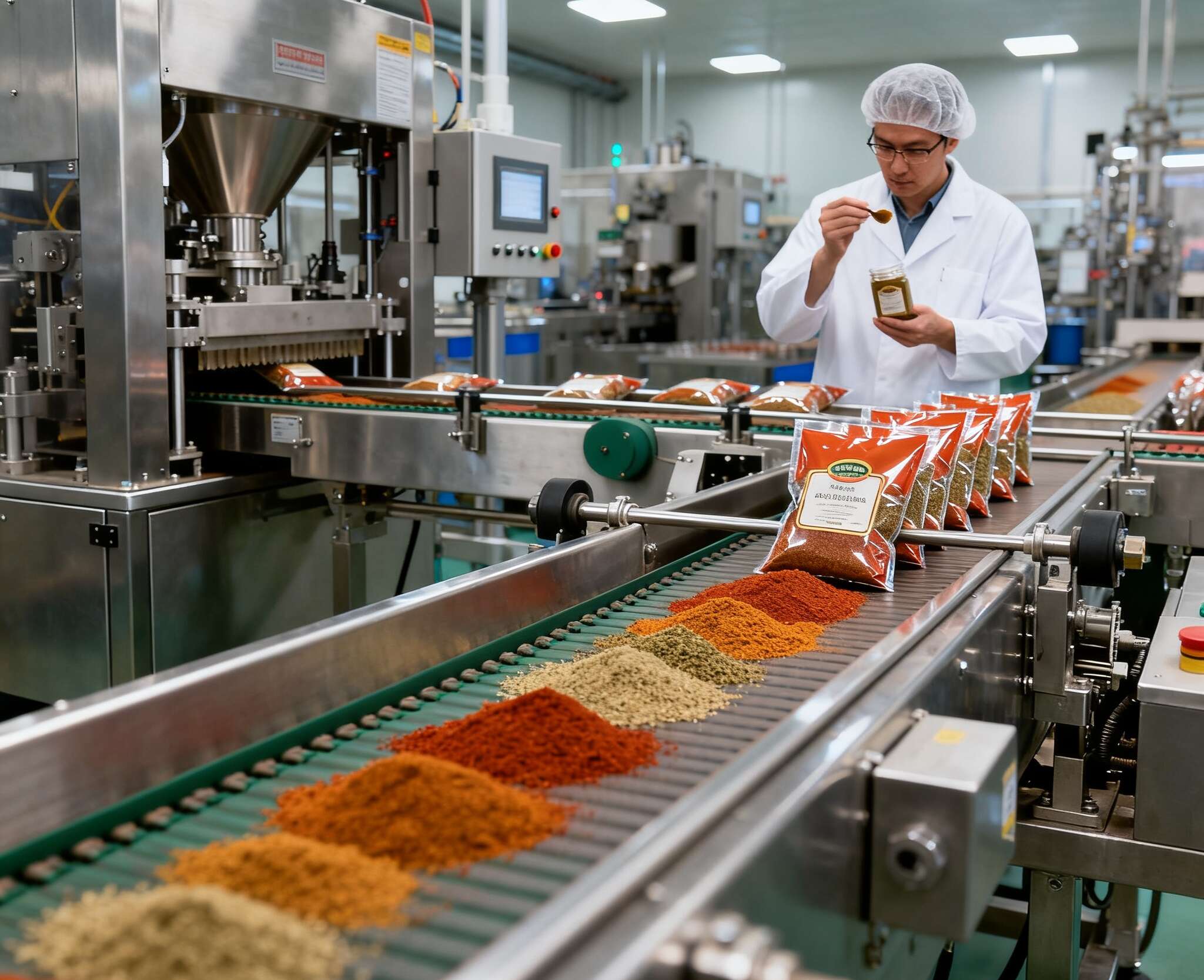
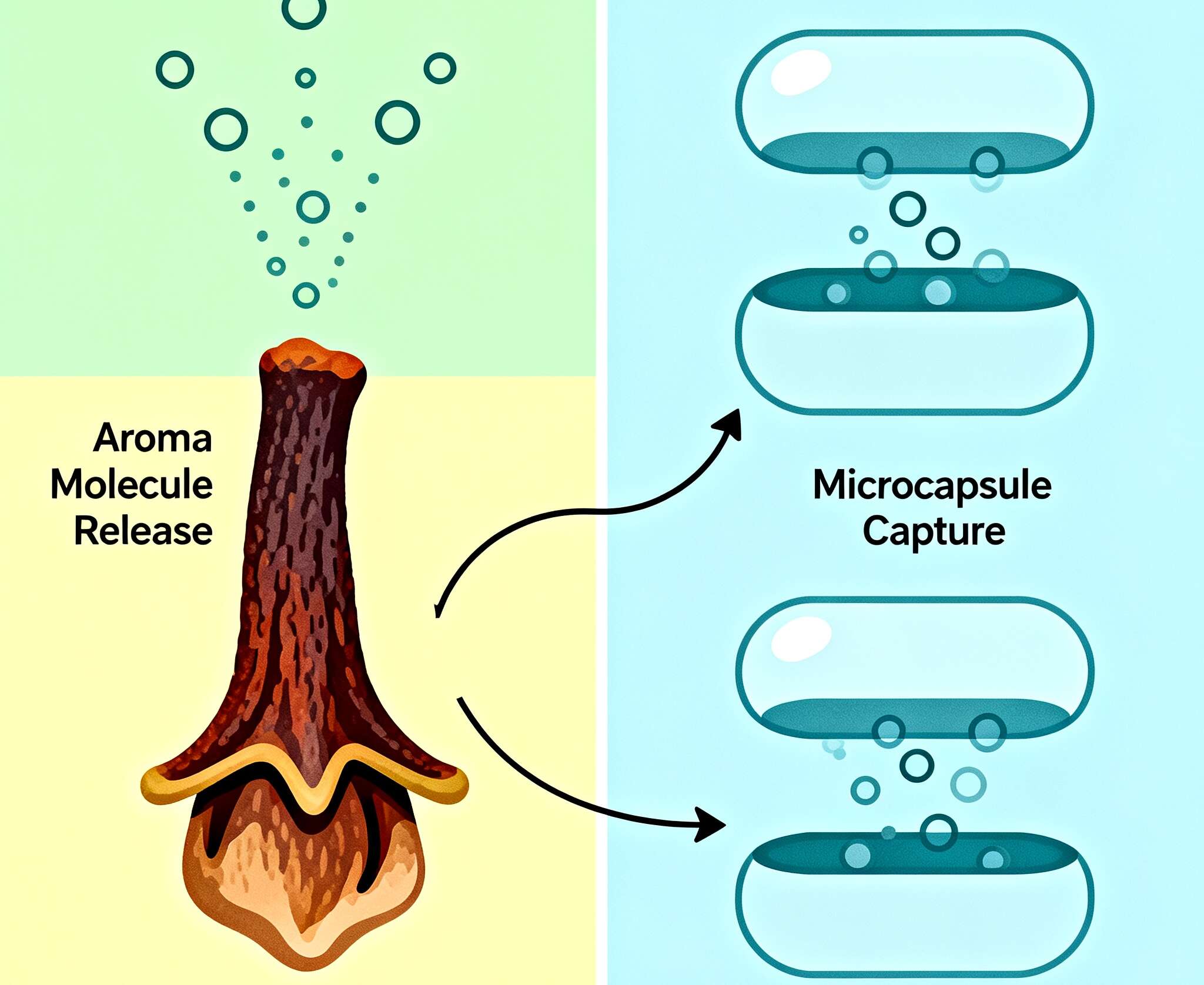
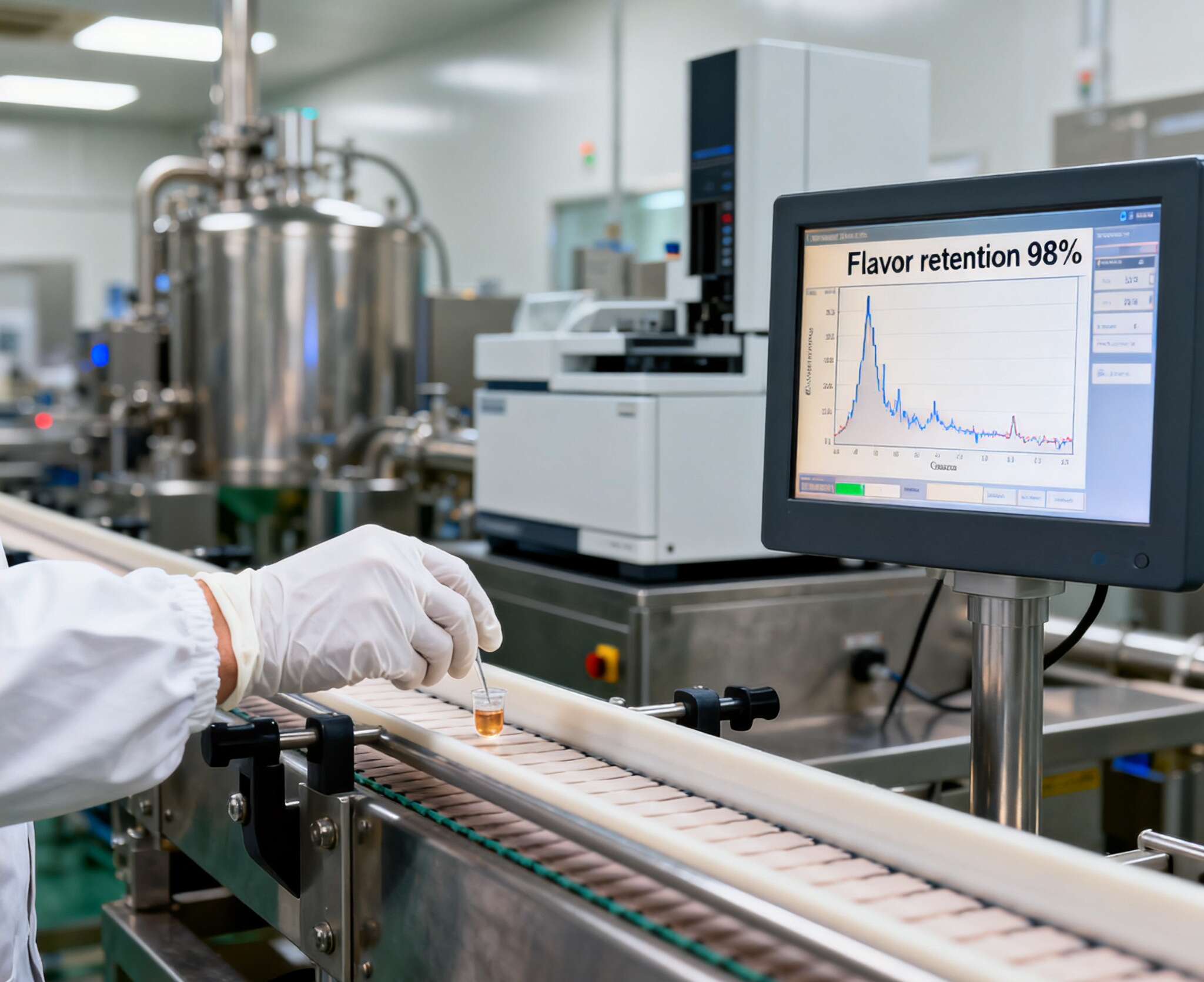
You don’t just want “more aroma.” You want stable aroma that survives grinding, blending, filling, shipping, shelf. That’s the point here—plain talk, real shop-floor moves. We’ll focus on Cinnamon, Clove, Cardamom, then hit the three levers that actually hold flavor: temperature control, oxygen control, and encapsulation. Along the way, I’ll show where GuoCao plugs in so you can spec fast and scale clean. (Brand hub: GuoCao • Chinese herbs & spices)
Cinnamon isn’t only cinnamaldehyde. It’s a bouquet—terpenes, aldehydes, esters—that shifts with heat and oxygen. If you grind hot or let powder breathe in open bins, you bleed volatiles. Do the simple things first:
Keep bark whole as long as possible; grind late.
Run cool grinding (cryo or semi-cryo) to avoid heat spike.
Pack fast with minimal headspace; nitrogen is your friend.
Heat-exposed formats (instant drinks, bakery premix) → microencapsulated cinnamon oil rather than naked oil.
Problem: oxygen in headspace + porous films = aroma loss. Fix:fill-flush-seal with the right film (low OTR), the right headspace ratio, and the right secondary to avoid scuffing.
Practical spec hints:
Film: match OTR to your risk and route.
Headspace: enough to protect the seal, not a balloon.
Operations: mill → hopper → filler in one flow; no long staging.
Warehouse: ambient vs cool vs MAP storage—stage by SKU risk. (Reference hub for buyers: Chinese herbs & spices)
Spray-dry microencapsulation (microcaps) for heat and time
When: any format that sees heat or long shelf—instant beverages, baking premix, seasoning sachets, function drinks. Why: the wall (gum arabic, WPI blends, etc.) locks aroma, lowers volatility, and gives clean dispersion. On real lines, micro-caps of cinnamon or cardamom keep top notes after oven/pasteurize where free oil fades. Brief like this: target volatiles (eugenol, cinnamaldehyde, 1,8-cineole, terpinyl acetate), desired release (mixing vs heat-triggered), particle size, carrier labeling.
Keep pods whole; crack → fill → seal; microcaps for beverage
VO%; GC-MS markers; moisture; sensory delta after heat
Notes: VO% = volatile oil percentage; aw = water activity; OTR = oxygen transmission rate; CQA = critical quality attribute. Dont over-expose powder to air. Tiny errors here compound alot across pallets.
Use-case mini-scenarios (no fluff, just how it goes)
Chai base for RTD You blend cinnamon, clove, cardamom. Thermal load dulls top-notes. Switch to microencapsulated cinnamon/cardamom, keep clove powder but grind semi-cryo just-in-time, and move to nitrogen-flush sachets for dry premix. Result: brighter nose post-thermal. Less top-up blends later. (Simple, not fancy.)
Snack seasoning line Plant runs hot. You see post-grind loss when bins sit open 3–4 hours. Fix the route: mill → closed buffer → filler, under chilled room, with inline nitrogen. Upgrade film OTR. You don’t need big speeches, just stop leaking aroma into the room.
Tea blends / functional infusions Keep bark/pods whole in bulk, crack on blend day, and seal. Where powder mouthfeel matters, aim coarse cut not ultra-fine; fines lose fast. Cardamom micro-caps carry through brewing better than free oil.
Process checklist (paste into your SOP)
Keep whole format as long as possible. Crack/grind late.
Semi-cryo/cryo for Clove & Cinnamon; cool room for staging.
Fill-flush-seal. Low O₂, low headspace, low OTR film.
Use microencapsulated oils for heat-touch formats.
Stage pallets in ambient/cool/MAP zones by SKU risk.
Ship promptly. Don’t over-hold finished powders; they breath out.
Do triangle tests monthly on retains; trend drift; raise CAPA if needed.
OEM/ODM manufacturing — GMP, ISO 22000, COA, warehouses
GuoCao runs GMP Chinese herb slices lines plus ISO 22000 food-safety system and third-party COA verification. We hold ambient / cool / MAP warehouses so different SKUs sit in the right micro-climate. Annual capacity hits about 2,500 tons, so you can ramp without changing vendor mid-season. We ship to 30+ countries and regions—U.S., Europe, Australia, Japan, Korea, Canada, Malaysia, Philippines, etc.—with docs setted for quick release. We also support OEM/ODM for spice blends, enzyme/herbal drink bases, and functional infusions. (Find us: Wholesale Chinese Medicinal Herbs and Spices Supplier — GuoCao • OEM/ODM)
Commercial angle: tighter retention = fewer reformulations, fewer deviations, faster batch release, happier repeat buyers. You protect nose, you protect margin, simple as that.
“Claim → Evidence style → What you do next” (fast handoff)
Claim (short)
Evidence style for buyers
What you do next (ops)
Cryo/semi-cryo grind keeps aroma in
Before/after VO% and GC-MS peak area; triangle test notes
Add chilled-mill or pre-cool; move to late-stage grind; link mill → filler
Nitrogen flush + barrier film slows loss
Headspace O₂ logs; retain sample panel notes by month
Pick film by OTR; set purge targets; verify seal integrity
Microencapsulated oils beat naked oils in heat
Bake/pasteurize trials with sensory deltas; volatiles residuals
Use micro-caps for heat-touch formats; set wall + particle spec
Whole → crack → fill beats early grind
Retention curve on open-bin vs sealed; temp/time graphs
Change SOP: keep whole pods/bark; crack close to fill; shrink staging
ISO-style VO% + GC-MS speeds release
Fewer lab disputes; quicker customs; cleaner COA chain
Bake in method + thresholds; align QA templates across regions
Why GuoCao for Spice OEM (quiet, practical reasons)
Process control: GMP shop-floor discipline, HACCP, line clearance, and batch traceability.
Our low MOQ of 1 kg (2.2 lb) makes it easy to order Chinese herbal slices or wholesale Chinese medicine herbs. Private-label and bilingual labeling are also available.
Delivery Cycle & Support
We have a fast 7-day lead time. We provide free samples, COA reports, and technical support to help you bring high-quality bulk Chinese herbs to market.
Quality & Certifications
Our products are manufactured in a GMP-certified facility and meet ISO22000 standards. All Chinese herbs are third-party tested for heavy metals, pesticides, and microorganisms.