You work faster when you can see what you’re doing and breathe easy. Dust kills both. In a small carpentry bay, a spice-grinding corner, or a TCM slicing line, airborne fines sneak into lungs, motors, and finished stock. Control it well and your shop stays safe, tidy, and compliant—and your brand looks pro. Let’s keep this straight, practical, and a bit punchy.
Wood dust health effects (OSHA, IARC)
Wood dust isn’t just a nuisance; it’s a health hazard. Long-term exposure links to respiratory irritation, asthma, and sensitization. It’s also classified as carcinogenic to humans (Group 1) with strong evidence for nasal and sinonasal cancers. Keep that front of mind when you set controls. We design for people first, not just for housekeeping.
Workplace Exposure Limits (UK WEL, EU BOELV)
If you sell into the EU or UK—or just follow best practice—know these benchmark limits:
EU BOELV (hardwood dust): 2 mg/m³ (inhalable, 8-hr TWA).
UK WEL:3 mg/m³ (hardwood) and 5 mg/m³ (softwood), 8-hr TWA. For mixed woods, apply the 3 mg/m³ hardwood limit.
These lines aren’t “nice-to-have.” They’re compliance targets—and smart operational goals. Lower dust = cleaner product, fewer reworks, less warranty pain.
Local exhaust ventilation (LEV) dust extraction
The primary engineering control is LEV—capture at the source with a hood, ducting, air mover, and collector. Put the hood close to the cut or grind; avoid dead corners in ducting; keep capture velocity up; maintain filters on schedule. LEV is the first line, not the last resort.
Table saw LEV hood performance (NIOSH >90% reduction)
An over-blade hood paired with under-table exhaust can cut emissions by over 90% when installed correctly. If your guard can’t accept a pickup, upgrade the guard-hood combo. It’s low drama, big win.
Random orbital sander retrofit (NIOSH ≈90%)
Add a secondary exhaust and switch to a slotted pad. Trials show about 90% reduction versus a standard aspirator-only setup. If you sand oak, MDF, or resinous woods day in, day out—this is your easy button.
Housekeeping and cleanup (WIS23, Class M)
Control doesn’t stop at the hood. Fine dust settles everywhere and gets kicked back up later.
Use vacuum cleaning equipment at least Class M for wood dust.
Skip compressed air and hand brushing; both just launch dust clouds.
Use antistatic hoses and tight couplings; no leaky joints.
Log your clean-down: who, when, where. Boring? Sure. Useful? Always.
Combustible dust basics (NFPA 664)
Dust can burn. In the right mix with air, it can explode. A simple checklist keeps you out of trouble:
Identify where dry, fine dust accumulates (ducts, beams, conveyors, baghouse hoppers).
Ground and bond metalwork; keep continuity.
Use spark detection/abort or isolation flap valves where it makes sense.
Provide deflagration venting on collectors sized for the worst credible scenario.
Do a Dust Hazard Analysis (DHA) and work the actions. Paperwork that saves skin.
Respiratory protective equipment (RPE)
Engineering controls first; RPE for residual risk. For woodworking and similar fines, APF 20 (e.g., FFP3/P3) is a practical baseline in heavier-dust tasks like sanding or clean-outs. Fit-testing and seal checks aren’t “nice add-ons”—they’re how you get the rating on the box. No fit, no protection.
Program, not a patch: combustible dust management
A tidy shop isn’t luck; it’s a system. Use a combustible dust management program to structure inspections, routes, schedules, roles, and sign-offs. Define zones. Set cleaning frequencies. Log results. Escalate when thresholds get hit. Audits go smoother, and nothing “falls between chairs.” It ain’t fancy, it’s just discipline.
Use-case table — controls that actually move the needle
Control measure
Scenario / Use case
Typical effect on dust
Where it fits
Over-blade hood + under-table exhaust
Ripping/cross-cutting on table saws
>90% reduction vs baseline
Production lines, job-shops
Added exhaust + slotted pad
Random orbital sanding
≈90% reduction vs standard aspirator
Prep/finishing cells
Correctly placed LEV hoods
High-velocity ejection points
Large reductions when capture velocity is maintained
Any woodworking
Class M vacuum, no compressed air
Routine cleanup
Prevents re-aerosolizing settled fines
Whole facility
RPE (APF 20)
Residual dust, sanding, hardwoods
20× reduction at the face if fitted right
Task-based backup
DHA + NFPA practices
Fine, dry dust in enclosed conveying
Cuts fire/explosion risk (programmatic)
Plants, larger shops
Tiny note: the numbers above come from lab and field trials; your mileage varies with setup, flow, and maintenance. Details matter.
Exposure-limit snapshot (compliance quick-look)
Jurisdiction / Rule
Limit
Notes
EU BOELV (hardwood dust)
2 mg/m³ (inhalable, 8-hr TWA)
Binding minimum across the EU.
UK WEL
3 mg/m³ (hardwood), 5 mg/m³ (softwood), 8-hr TWA
Mixed woods → 3 mg/m³ applies.
U.S. practice
Follow wood-dust guidance, not just nuisance-dust PELs
Design for best-available control with LEV first.
Dust control in herbal slicing and spice grinding (GMP + food safety)
If you run herb slicing, milling, or spice grinding, dust hazards look similar—but your food safety lens makes them even more critical:
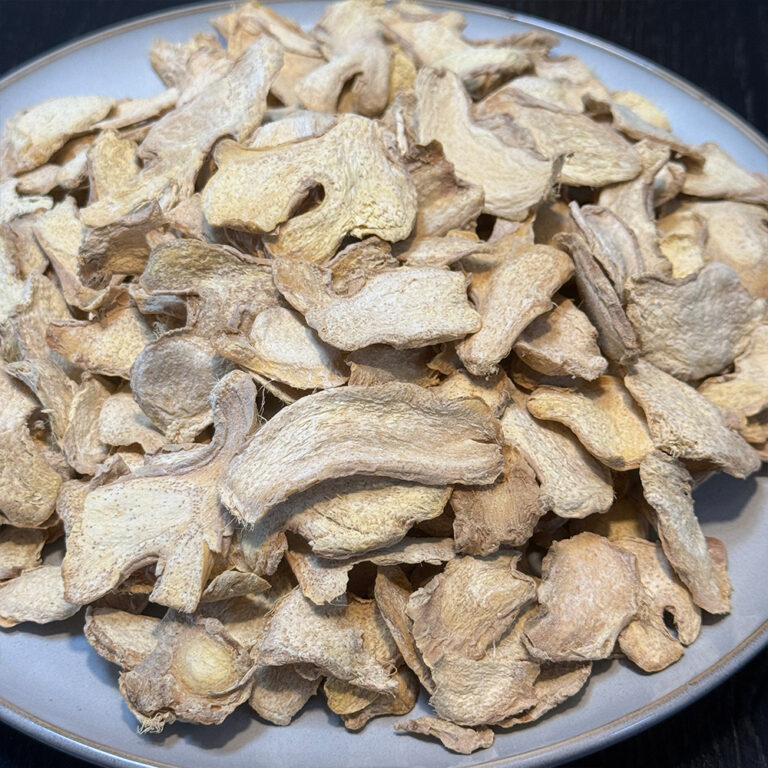
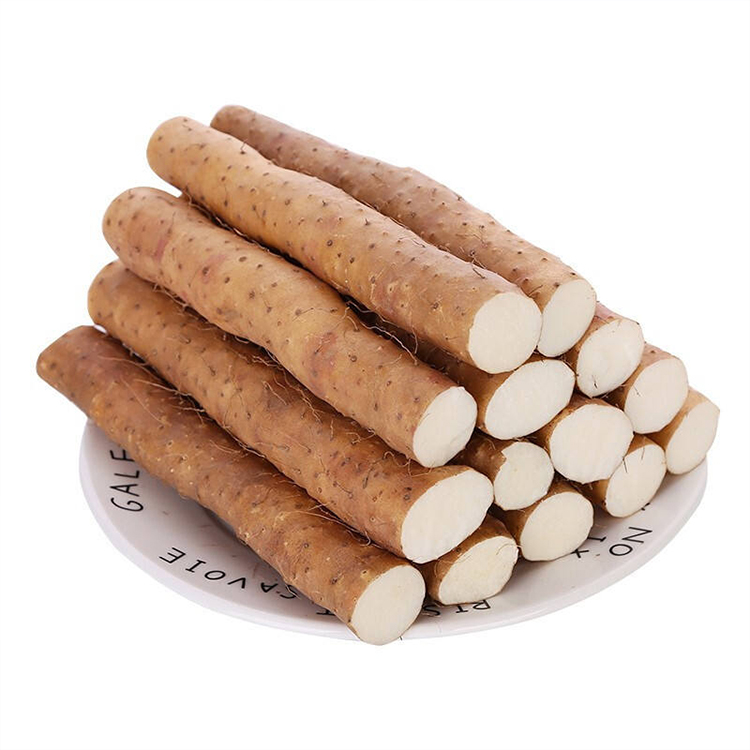
Cross-contamination: Botanical powders drift and settle. Segment lines by product family—e.g., Roots & Rhizomes, Flowers & Whole Herbs—and use dedicated LEV trunks to prevent flavor or actives carry-over.
Foreign matter & microbes: Good airflow control reduces re-entrainment; HEPA final filters help protect RTE zones.
Combustibility: Dry herb/spice dust can be combustible too. The same housekeeping, grounding, venting, and DHA logic applies in food plants.
Fit LEV where dust starts. Over-blade hoods, on-tool pickup, shrouds. Keep ducts short and smooth; avoid harsh 90° bends that kill capture velocity.
Balance the air. Provide make-up air so hoods actually, you know, capture. Negative pressure alone ain’t a plan.
Measure, don’t guess. Use airflow indicators and a dust lamp during trials; log weekly.
Housekeeping that doesn’t re-aerosolize. Class M vacuum, antistatic tools, no blow-downs.
RPE for the gap. APF 20 for higher-dust tasks until controls lock in; fit-test yearly.
Do a DHA if you’ve got fine dry dust. Document actions, train people, repeat.
Close the loop. SOPs, training, PM schedule on fans/filters, and internal audits. People change; processes drift. Keep it living.
Business value (why this pays back without crunching numbers)
Quality: Less dust in air = less dust on product. Fewer flavor cross-overs in botanicals.
Reliability: Motors and bearings last longer without fines. Downtime drops.
Compliance: Buyers ask about GMP/ISO and dust control. Be ready with records.
Brand: A clean, quiet, safe shop sells trust. Customers see it, staff feel it.
Throughput: Clear sightlines and fewer re-cleans keep takt time, well, on time.
Not hype. Just good ops.
GuoCao tie-in (who we are, why it helps you)
GuoCao is a global supplier of Chinese medicinal herbs and spices with GMP slicing lines, ISO 22000 food-safety systems, and third-party COA capability. Annual capacity is around 2,500 t. We support OEM/ODM for private label and have launched enzyme beverage production. Products move across the U.S., EU, Australia, Japan, Korea, Canada, Malaysia, the Philippines, and more than 30 regions. We serve pharma companies, nutraceutical makers, hospitals, beverage brands, cosmetics raw-material buyers, big distributors, local retailers, and global procurement teams. If you need dust-aware processing and clean documentation, we’re already set up for it.
Our low MOQ of 1 kg (2.2 lb) makes it easy to order Chinese herbal slices or wholesale Chinese medicine herbs. Private-label and bilingual labeling are also available.
Delivery Cycle & Support
We have a fast 7-day lead time. We provide free samples, COA reports, and technical support to help you bring high-quality bulk Chinese herbs to market.
Quality & Certifications
Our products are manufactured in a GMP-certified facility and meet ISO22000 standards. All Chinese herbs are third-party tested for heavy metals, pesticides, and microorganisms.