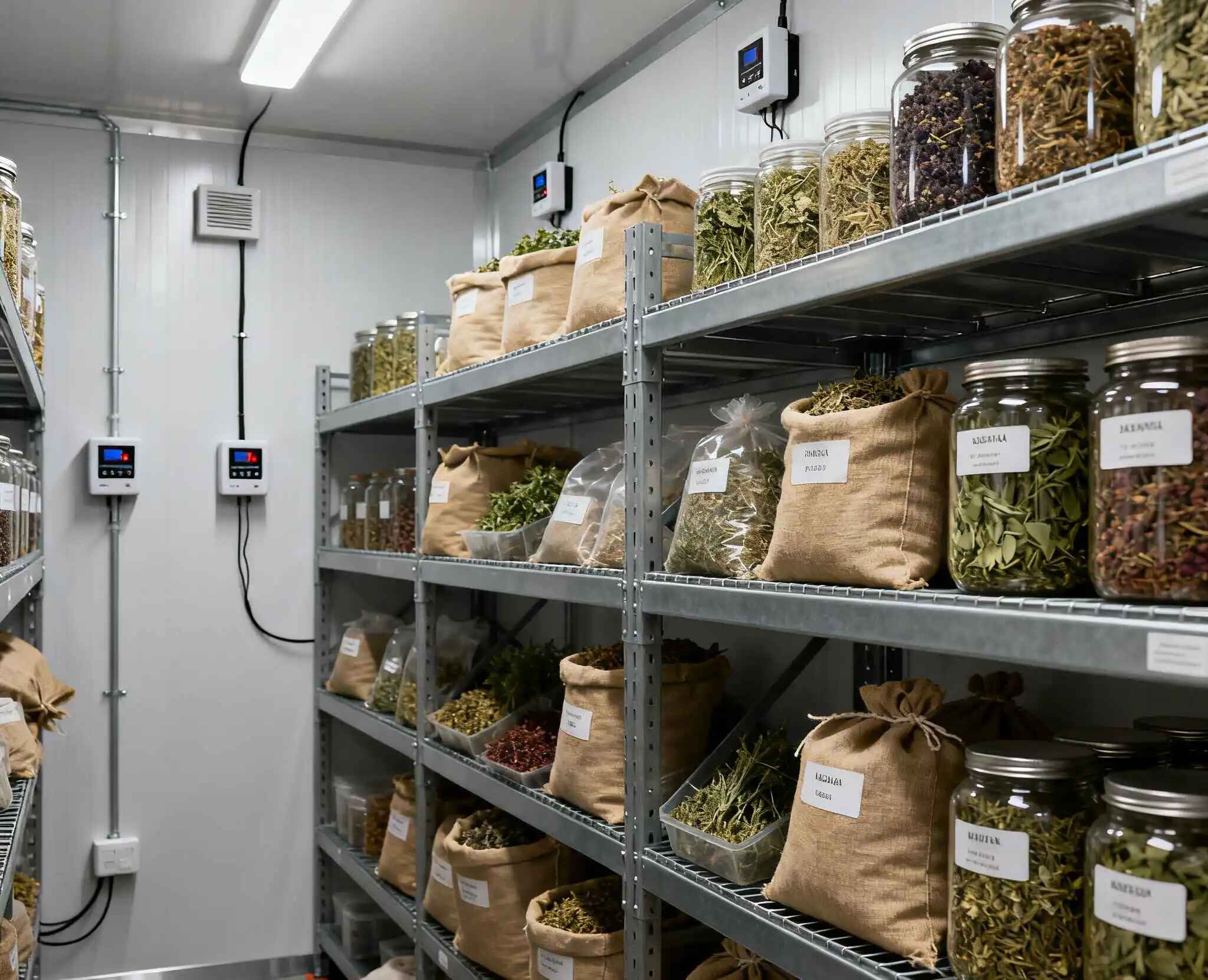
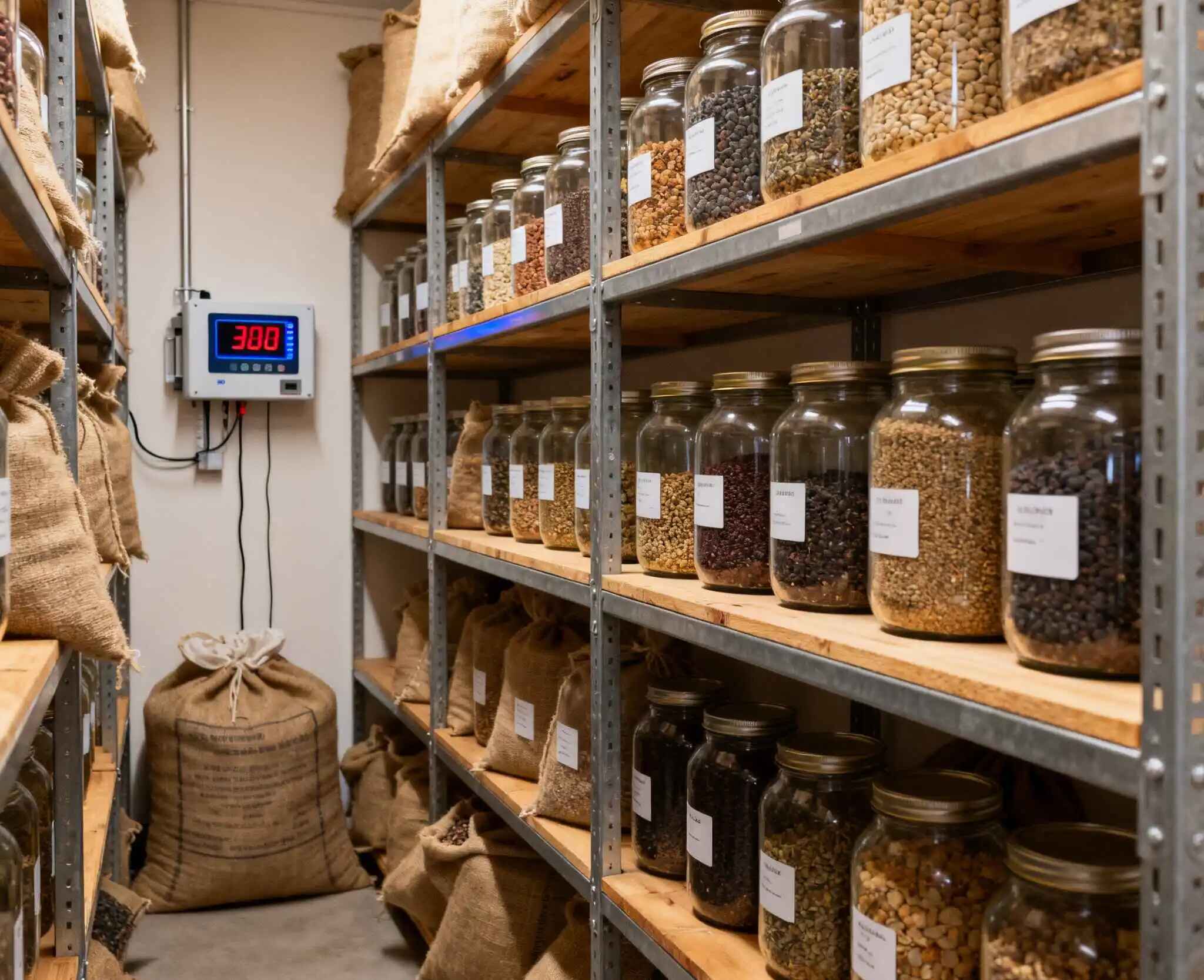
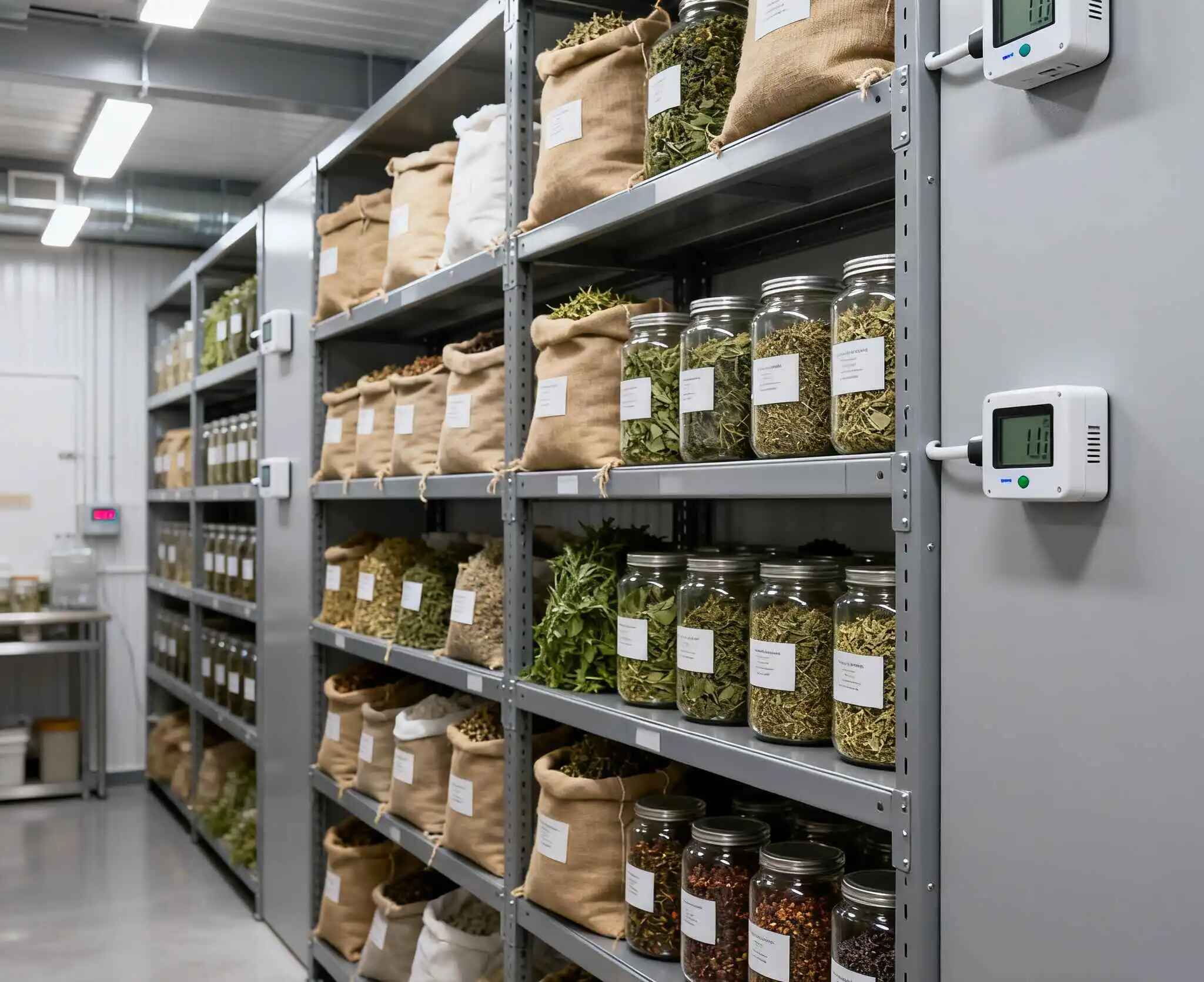
You import herbs or spices. You want them to land clean, stay stable, and ship fast. Simple idea, tricky in the real world. Containers sweat. Air flips from dry to sticky. A bag sits on a cold floor and, boom, moisture creeps in. This guide gives you a no-nonsense playbook you can actually run in your warehouse. We’ll talk water activity (aw), relative humidity (RH), packaging, segregation, FSVP, FEFO, and the unglam bits that save your margins. I’ll also point you to GuoCao pages so you can match storage to your actual SKUs.
Water Activity (aw) Control & Relative Humidity (RH) Targets
Low moisture ≠ zero risk. Keep your herbs dry enough to slow microbes, but not so dry you crush aroma or structure. Your warehouse need a simple playbook:
Control Point
Practical Target / Habit
Why It Matters
Tools / Notes
RH in storage
Keep the room in the mid-50s to low-60s % RH; cap spikes fast
High RH pulls moisture into product → mold risk; low RH can crack delicate botanicals
Dehumidifiers, RH data logger, weekly trend review
Ambient temperature
Stable “room temp” band (avoid big swings)
Temp swings cause condensation (“container rain”) inside bags
Insulated doors, night purge, airflow—not blasting cold at pallets
Water activity (aw) of herbs
Keep aw below the “growth threshold” for your category; spot-check lots
aw is the core safety knob for low-moisture foods
Handheld aw meter on QC cart, verify high-risk lots
Cuts wicking and dead-air pockets where moisture accumulates
10–15 cm off floor; 20–30 cm from walls
Dock discipline
Stage pallets in dry zone, not by open docks
Loading bays are RH and dust magnets
Door curtains, fast close cycles, “no park” tape lines
Quick sanity check: if RH sits >65% for 24h, open a CAPA ticket and start a mini-audit of seals, airflow, and bag integrity. Don’t wait. It won’t fix itself.
Barrier is king. Herbs breathe. Spices soak up odors. You fight that with high-barrier liners, tight seals, and smart pallet builds.
High-barrier liners stop “room air” from wandering into bags. Non-porous is the keyword.
Desiccant helps, but don’t let it mask a wet room. Think “belt and suspenders,” not “band-aid.”
MAP (Modified Atmosphere) buys you shelf life for sensitive botanicals—especially flowers and high-oil spices. If you’re scaling, a MAP room does the job better than random gas-flush trials.
Want categories to test your spec? Browse your product families and set barrier rules by group:
Kill-step treated lots get their own racks. Mark them. Don’t let them “visit” raw rooms.
Dedicated tools & cleaning kits per zone (color code them).
Closed containers when moving between rooms. Cross-drafts carry fines and spores farther than you think.
If you run a third-party warehouse, add a rack map and door discipline SOP so temp staff don’t re-slot treated goods in the wrong bay. Sounds small, saves you later.
FSVP for Importers: Supplier Verification, Records & Release
Import herbs into the U.S.? You live under FSVP. That means you document your hazard analysis, verify suppliers, and keep proof.
Approved supplier list with risk tiering (high oil spice ≠ same risk as mineral).
Lot-level COAs with heavy metals, pesticide residues, micro limits—filed against GRN (goods receipt note).
Release protocol: every pallet sits on QC hold until docs + checks clear. No “ship now, fix later.”
CAPA loop for any out-of-spec aw/RH or packaging breach. Close the loop, not just a sticky note.
You don’t need to drown in paper. A simple folder system with the right names works: SupplierName_YYYY-MM_Lot, GRN+COA+awCheck+ReleaseNote.
COA, ISO 22000 & GMP: Quality System in the Warehouse
Storage isn’t an island. It’s part of your food-safety system.
ISO 22000 backbone gives you hazard thinking and traceability.
GMP in the warehouse = hygiene, pest control, cleaning validation, staff practices.
COA on every lot = you spot-check and file. When a customer asks, you answer in minutes, not days.
GuoCao runs GMP slicing lines, ISO 22000, ambient/cool/MAP warehouses, and third-party COA for every batch. That’s why importers plug us directly into their compliance stack. If you need bulk categories with consistent docs, start here: All Herbs & Spices or jump to customizing: OEM/ODM Custom Solutions.
Inbound & Transport: Beat “Container Rain” and Temperature Swings
Most quality issues start before your pallet touches your floor.
Container prep: clean, dry, no odors. Lay desiccant and use container liners for long voyages.
Load pattern: keep air channels so warm air actually moves.
Arrival SOP: doors open slowly to equalize temp; if you see condensation, move pallets to a staging room with airflow—don’t unwrap in a wet dock.
Shock zones: dock plates, open doors, sunny walls. Mark a “no-park” zone.
Re-bagging station: If any outer bag is compromised, move quickly: weigh → inspect → re-bag with barrier liner → relabel. Document it.
FEFO, Lot Traceability & QC Hold (The Boring Stuff That Saves You)
Run FEFO (First-Expired, First-Out), not FIFO. Herbs age differently; oils fade; color drifts.
Shelf-life tags at pallet and case.
SKU-bin discipline so you don’t mix roots with flowers on a busy day.
Cycle counts tied to your FEFO lanes.
QC hold & release notes attached to the physical pallet (simple zip-tie cards work).
AQL sampling on weird lots (strange odor? off-color?). Decide when to rework (sift), when to reject.
Real-World Scenarios (No fluff, just what happens)
Coastal week, RH spikes. Your logger shows 72% RH overnight. Action: switch on dehumidifiers, close doors, add fans to break dead air along walls, and move flower-heavy SKUs (like chrysanthemum) to a cool room or MAP zone. Pull quick aw checks on two high-oil spices. Write a one-pager CAPA. Yes, paperwork, but short.
Container arrives cold, outside air is hot. Don’t rip doors wide open. Crack them. Let temps equalize to dodge condensation. Stage pallets in a buffer room. If any outer sacks got damp, re-bag right away and add a desiccant sachet inside the liner. Log it.
Customer flags a flavor dip. Check FEFO discipline and your barrier choice. If you used breathable bags on a high-oil spice, you basically invited oxidation. Next PO, switch to foil-laminate liners. Simple, done.
Category-Specific Storage Notes (Match the SKU to the Rule)
Importer Warehouse Checklist (Tie It to FSVP / HACCP)
Step
What You Do
Data to Capture
Release Rule
Supplier approval
Risk-tier vendors; lock approved list
Audit date, risk level
No approved supplier = no PO
Inbound inspection
Check bag integrity, odors, labels
GRN photos, count, temp on arrival
Damaged outer = re-bag + note
aw/RH checks
Spot-check high-risk lots; log RH daily
aw reading, RH trend, date/time
Out-of-range = CAPA + re-test
Segregation
Raw vs post-treatment zones
Rack map, zone color code
Mixed zones = quarantine
Packaging
High-barrier for high-oil herbs
Liner type in spec
Wrong liner = re-pack
Pest & cleaning
Routine schedule, bait logs
Cleaning log, pest log
Missed cycle = corrective clean
FEFO & traceability
FEFO lanes, lot IDs everywhere
Lot movement log
Missing lot ID = hold
QC hold and release
Physical tags + digital tick-box
Release note with initials
No release note = don’t ship
Keep it lean. One page per step is plenty. Don’t turn it into a novel.
Commercial Value: Where GuoCao Fits Your Storage Story
You can outsource headaches at the source. GuoCao is a global Chinese medicinal herbs & spices manufacturer with GMP production, ISO 22000 food-safety system, ambient/cool/MAP storage, and third-party COA workflow baked in. Annual capacity hits 2,500 tons. We support OEM/ODM (private label, blends, bilingual labels), plus enzyme-based functional beverage lines. And we ship to 30+ regions, serving pharma, nutraceutical, beverage, cosmetic raw materials, distributors, and big wholesalers.
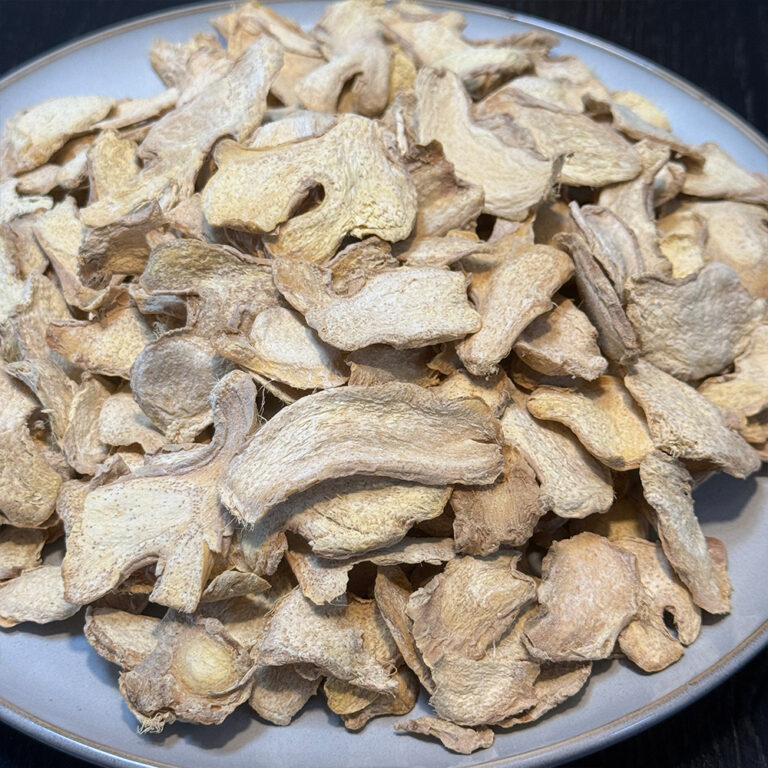
Our low MOQ of 1 kg (2.2 lb) makes it easy to order Chinese herbal slices or wholesale Chinese medicine herbs. Private-label and bilingual labeling are also available.
Delivery Cycle & Support
We have a fast 7-day lead time. We provide free samples, COA reports, and technical support to help you bring high-quality bulk Chinese herbs to market.
Quality & Certifications
Our products are manufactured in a GMP-certified facility and meet ISO22000 standards. All Chinese herbs are third-party tested for heavy metals, pesticides, and microorganisms.