You don’t process herbs for fun. In Traditional Chinese Medicine (TCM), paozhi—the whole toolbox of slicing, heat, adjuvants, and high-temperature treatments—changes chemistry, safety, and where an herb “lands” in the body. Choose the right method, you unlock performance; pick the wrong one, you blunt efficacy or, worse, keep toxicity. Below we go method by method—plain talk, real use cases, and a buyer’s QC checklist. I’ll also flag where GuoCao slots in as a manufacturing partner (GMP decoction-piece line, ISO 22000, third-party COA, modified-atmosphere storage, OEM/ODM, enzyme drink line).
TCM paozhi processing – mechanism and clinical intent
Heat, moisture, cut size, and helpers like honey, vinegar, wine, ginger can:
reduce or transform toxic fractions,
shift saponins/flavonoids/volatile oils,
change absorption and organ “guiding,”
make materials easier to decoct or extract.
Think simple: method ↔ target outcome. You don’t honey-fry because it’s cute—you do it to tilt actions (e.g., tonify Qi, moisten Lung). You don’t carbonize for flavor—you do it to enhance hemostasis. Keep that intent front and center.
Slicing (Qie Zhi) – decoction pieces & thickness
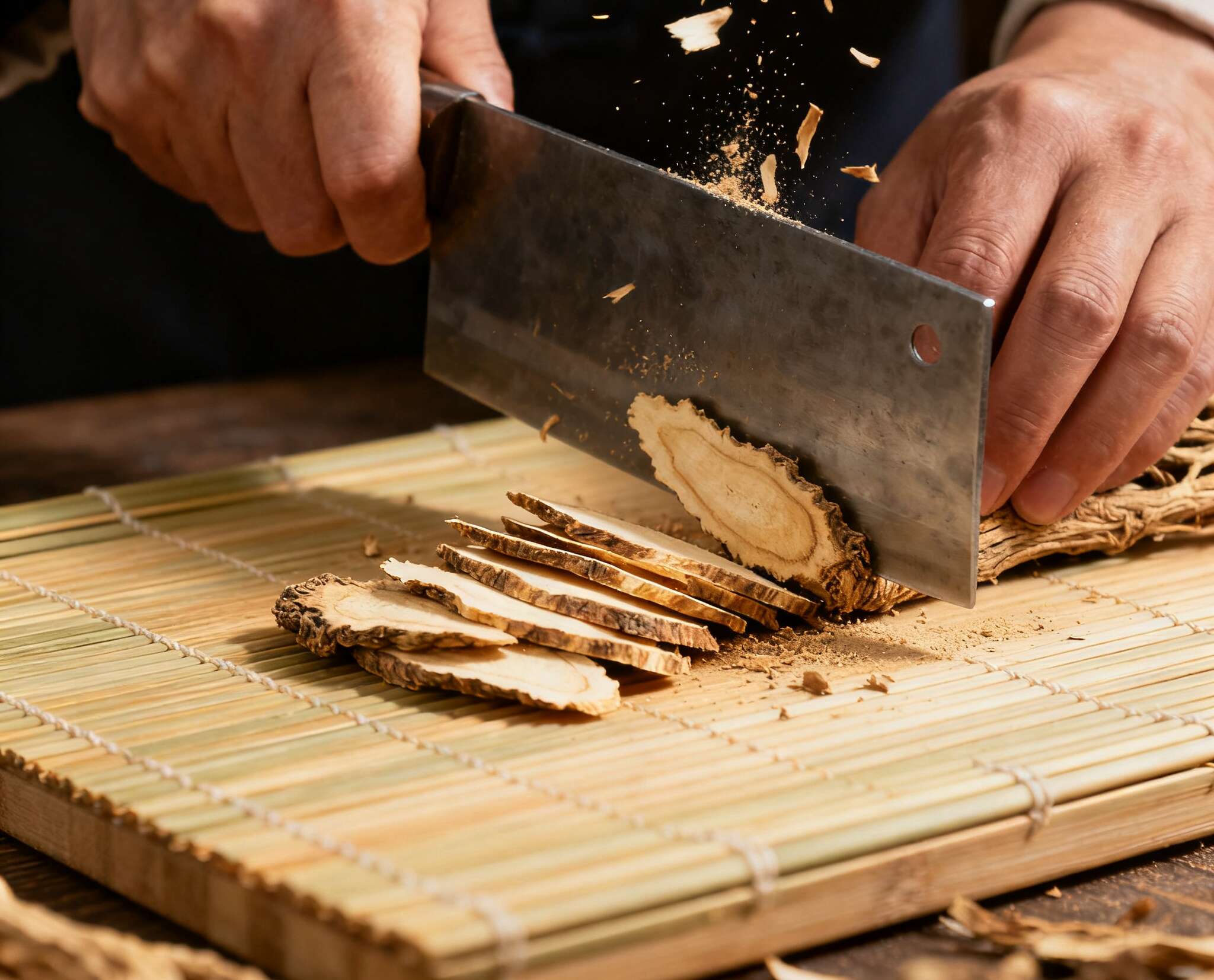
What it’s for. Standardize dose, speed extraction, stabilize storage. Thickness affects cooking time and handling; drying process often drives extractability more than thickness alone. In shop-floor slang: “piece spec,” “loss-on-drying,” “uniformity index.”
QC to ask: slice range (mm), drying type, sulfur-free statement, photos of retained samples, HPLC fingerprint and TLC markers (no need overly complex, just clean).
Why do it. Temper harshness, adjust “warmth,” open micro-structure so water gets in. Bran-fry can add a nourishing tilt; sand-fry increases porosity and surface changes.
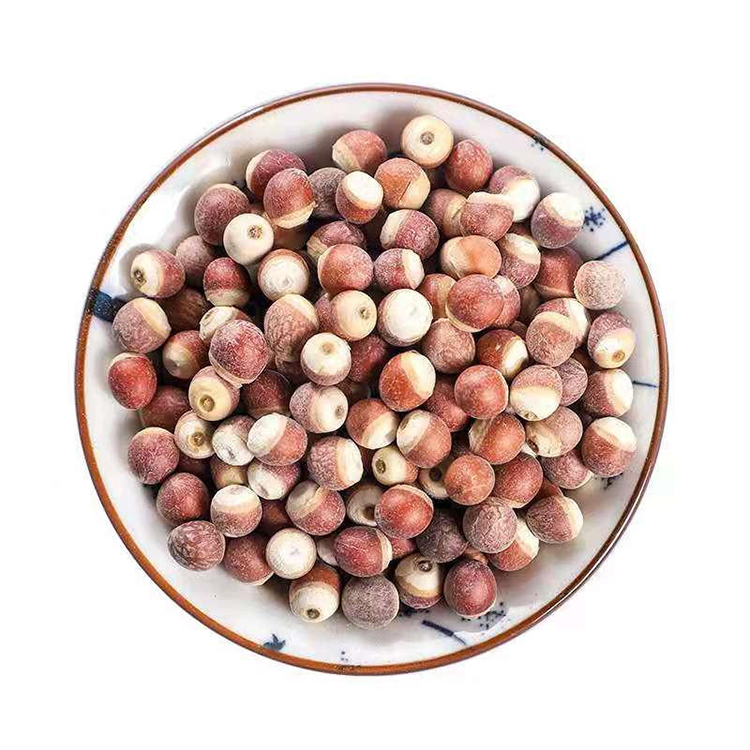
Use case.Coix seed or other grains feel less “damp-cold” post-fry and sit nicer in digestion. You’ll find seeds in Fruits & Seeds.
Process lingo for buyers: inlet temperature curve, end-point color, per-kg dwell time, pan loading, and a roast log. No log, no talk—this part get tricky without records.
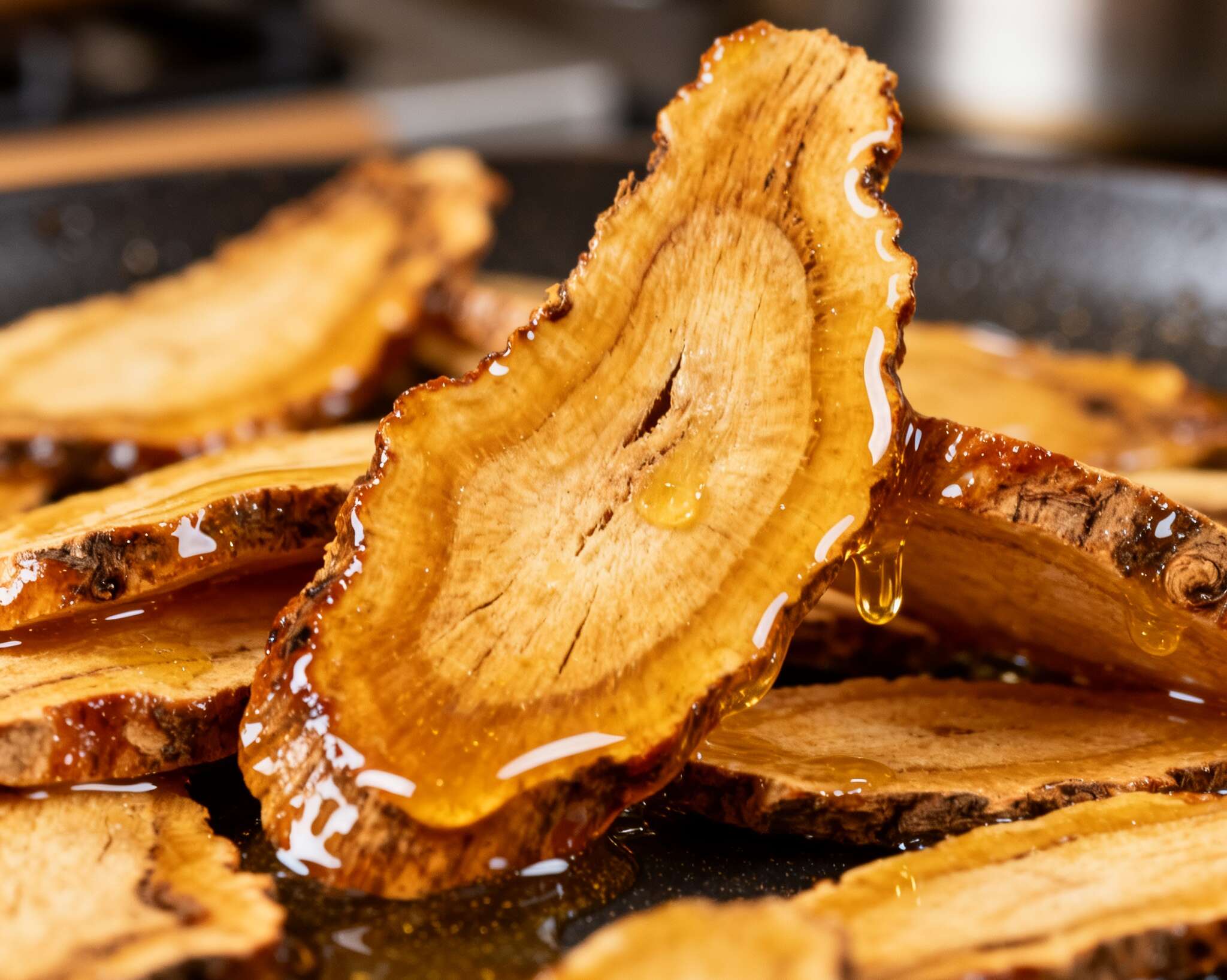
Honey-fried licorice (Zhi Gan Cao) – immunomodulation vs. cough relief
What changes. Honey-frying pushes immune/“tonifying” actions and can shift the absorption of flavonoid glycosides; some studies report weaker antitussive/detoxifying actions versus raw licorice. Translation: honey-fried is great when you want “support” and smoother GI; raw often shines in phlegm/cough blends.
Where on site: licorice appears across categories; start from All Herbs & Spices and filter.
Buyer notes: specify honey ratio, pan type, end-point color , moisture window, no-sulfur fumigation, and polysaccharide activity if your brand story leans immune. We’ll verify with COA + third-party.
What changes. Vinegar processing can boost saikosaponin b₂ and tilt distribution toward the liver. When your brief says “hepatic focus” or “detox liver” in a beverage shot, vinegar-baked makes sense.
Buyer notes: lock the vinegar:herb ratio, roast temperature profile, and post-bake moisture; ask for UPLC markers plus a small pilot decoction test. Don’t over-caramelize—bitterness spikes and nobody love that.
Ginger-processed Pinellia (Zhi Banxia) – irritation control
What changes. Ginger (esp. oxalic acid) plus heat reduces the acrid needle-like raphides that irritate mucosa. Net effect: safer mouthfeel and GI, better compliance. If your line has ready-to-drink herbal beverages, this matters a lot.
Where on site: Pinellia and friends live under Roots & Rhizomes.
Buyer notes: specify ginger type (fresh vs. dried), co-decoction vs. pre-process with ginger juice, and require microscopy pictures of raphide reduction if you want to get nerdy. We can do that.
What changes. Steaming/boiling transforms diester-diterpenoid alkaloids into less toxic forms. That detox is non-negotiable. With aconite, unprocessed equals unsafe. Period.
Buyer notes: ask for process sheet (time/temperature), HPLC alkaloid panel, and micro specs. If your SKU is “warming” or “yang-rescue,” insist on batch-level alkaloid data. We won’t ship without it.
What changes. Charred pieces gain hemostatic power. Emerging lab work ties part of the effect to carbon dots created during carbonization, along with tannin-like polymers and surface chemistry shifts. Good fit for “stop bleeding,” “cool blood,” or stool-looseness formulas, depending on plant.
Buyer notes: not over-char. You want (black outside, brown inside), not “ashed.” Log endpoint color, odor, snap test, and ash content. We’ll attach photos in the COA pack.
Calcined gypsum (Duan Shi Gao) – phase structure & function
What changes. Calcining gypsum swaps crystal phases. Different anhydrite forms show different porosity and surface area, which links to performance (e.g., antipyretic or topical cooling use in TCM context). In short: temperature program → phase → different clinical emphasis.
Buyer notes: request XRD phase proof, ignition program, and particle size. For topical OEM, also ask for microbial & heavy metals and a skin-contact statement.
Quick table – processing method → what changes → where to use → what to check
Traceability & docs. You need clean docs for customs and audits. We issue COA, phytosanitary, origin, MSDS, and provide batch codes mapped to farm lots.
Residues & fumigation. Ask for pesticide multi-residue, aflatoxin, SO₂ not detected (no sulfur fumigation), heavy metals, micro. We test, third-party.
Spec drift. Cut size creeping? Moisture high? We lock slice spec, moisture window, mesh size for powders, and keep a retained sample library.
Storage. For volatile-rich flowers and spices, we rely on (ambient/cool/modified-atmosphere) to hold aroma and color.
Formulation speed. Need a flavored functional drink or gummy base? Our enzyme/fermentation beverage line plus OEM/ODM trims dev time. Not so much heavy science; more what you can use.
Use cases(场景) & “why GuoCao” (commercial value, soft plug)
Pharmaceutical & hospital compounding: consistent decoction pieces with GMP processing and ISO 22000 food-safety system.
Dietary supplement makers & beverage brands: stable slice or cut size, predictable extraction, and private-label options.
Cosmetic raw-material buyers: cleaned, sifted, and micro-screened botanicals with TLC marker tracking.
Spice wholesalers & local retailers:Spices line for blends; we can match grind mesh and volatile retention targets.
Global distributors: multilingual labels, customs paperwork, and packaging formats from pouches to drums.
GuoCao ships to 30+ countries and regions. Annual capacity hits 2,500 tons across decoction pieces and spices, with OEM/ODM support end-to-end. Start at All Herbs & Spices or talk custom at OEM/ODM. We move quick, but keep it tidy.
Writing notes you can reuse (keywords = real, not imagined)
H2: “TCM paozhi processing – mechanism and clinical intent”
Tone: active voice, short lines, no fluff. Sprinkle one-liners and examples. A little human, a little shop-floor. We’ll keep things consistent across the page.
Our low MOQ of 1 kg (2.2 lb) makes it easy to order Chinese herbal slices or wholesale Chinese medicine herbs. Private-label and bilingual labeling are also available.
Delivery Cycle & Support
We have a fast 7-day lead time. We provide free samples, COA reports, and technical support to help you bring high-quality bulk Chinese herbs to market.
Quality & Certifications
Our products are manufactured in a GMP-certified facility and meet ISO22000 standards. All Chinese herbs are third-party tested for heavy metals, pesticides, and microorganisms.