Which B2B Buyers Need Animal and Mineral Chinese Medicinals
Pet and mineral Chinese medicinals are not informal directory fillers. They belong in the hands of purchasers that comprehend documentation, legal direct exposure, set screening, solution risk, and export controls. Here is the buyer map most suppliers are as well respectful to publish.
The Purchasers Are Not That Informal Importers Believe They Are
Pet and mineral Chinese medicinals are except every buyer of Chinese medicine natural herbs.
That seems obvious. But in the trade, noticeable truths are normally the first ones neglected, especially when a supplier sees a high-margin item like Di Long, Hai Piao Xiao, Long Gu, Ge Jie, or Shui Zhi sitting beside normal origins and flowers in a distributor brochure.
So that actually requires these products?
The serious customers are usually not way of life tea vendors, Amazon side-hustlers, or general health brands chasing exotic product names. They are B2B drivers with experienced purchase groups, set documentation discipline, and sufficient regulatory awareness to understand that one wrong animal-derived material can turn a profitable delivery right into a customs issue, a track record problem, or both.
I’ll be candid: pet and mineral Chinese medicinals separate actual B2B purchasers from pamphlet collection agencies.
If a buyer can not clarify why they need the product, what completed product it sustains, what documents they require, and which import guidelines apply in their market, they probably ought to not be getting it yet. Why wager with a classification that rests at the crossing point of typical medication, wild animals legislation, heavy-metal screening, personalizeds examine, and customer trust fund?
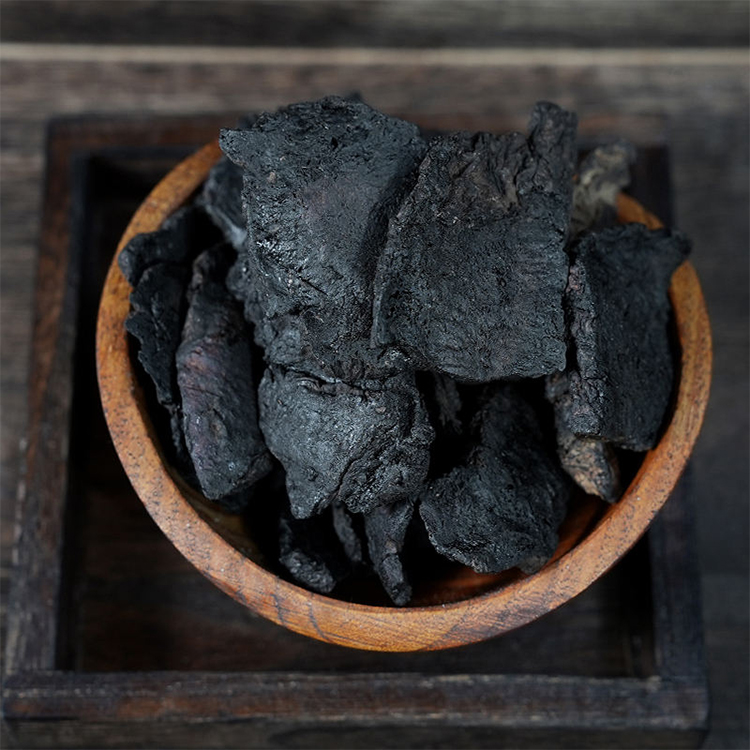
For businesses that do have the facilities, the category issues. GuoCao’s pet and mineral Chinese medicinals classification includes products such as Cuttlefish Bone, Dragon Bone, Dragon Pearly Whites, Dried Earthworm, Frankincense, Gecko, and Leech, all placed for wholesale and bulk supply instead of retail hobby usage.
The Hard Fact: This Category Carries More Margin, More Risk, and Much More Documents
Animal-based conventional Chinese medication is not just “an additional natural herb category.”
It is a procurement examination.
A buyer handling roots, roots, flowers, barks, and fruits might already comprehend dampness, sulfur dioxide, pesticide deposits, and microbial limits. But animal and mineral Chinese medicinals add another layer: varieties identity, origin paperwork, controlled-species testing, honest sourcing inquiries, customs category, hefty steels such as Pb, Cd, As, and Hg, plus different market expectations around animal-derived ingredients.
The FDA’s import system demonstrates how promptly “conventional” can become “detained.” The firm discusses that Import Notifies allow apprehension without physical examination when products have a history of known violations, implying importers may have to confirm conformity before release as opposed to after sale via the FDA Import Signals system.
That issues.
And not only for pet products. The FDA’s Import Alert 54-10 covers bulk and ended up dietary supplement items consisting of aristolochic acid, advising that Aristolochia-related misidentification has been linked to renal failing and that aristolochic acid is a powerful health hazard and nephrotoxin in its official import alert. The lesson is larger than one plant household: identification control is not documents cinema; it is survival.
So when a buyer requests wholesale Chinese medical natural herbs without requesting COA, Latin name, pinyin name, beginning, handling technique, examination limitations, packaging format, and export paperwork, I get suspicious.
Not due to the fact that the purchaser is dishonest.
Because the purchaser is underprepared.
Table of Contents
Customer Type 1: TCM Drug and License Medication Manufacturers
The first severe customer team is pharmaceutical and conventional patent medication suppliers.
These companies require pet and mineral Chinese medicinals due to the fact that their formulas might require specific materia medica inputs, not simply common herb replacements. In this customer section, procurement is formula-led. The purchasing group is not asking, “What is prominent this month?” They are asking whether the provider can supply the ideal material, in the best grade, with repeatable specs, for a signed up or semi-standardized ended up product.
That is a different discussion.
A producer considering Dried Earthworm Cut Di Long is denying a story. They require identification consistency, microbial control, moisture control, residue testing, and steady batch-to-batch appearance. The very same relates to mineral-heavy or calcium-rich materials like Cuttlefish Bone Hai Piao Xiao, where fragment type, sanitation, and processing viability affect downstream manufacturing.
Right here is the component several merchants do not like admitting: pharmaceutical customers are slow because they are supposed to be slow-moving.
They ask for examples. They test inside. They decline great deals. They ask annoying concerns. They compare providers. And if they are good at their job, they care much less about your “ideal price” than your ability to duplicate the exact same quality six months later on.
OEM manufacturing facilities are the 2nd major customer group.
They need pet and mineral Chinese medicinals when offering brand names that desire traditional-positioned capsules, powders, extracts, granules, or substance formulas. These purchasers are typically much more industrial than academic. They care about formula feasibility, MOQ, handling kind, product packaging, label cases, and whether an active ingredient can make it through the step from classical materia medica right into a contemporary item style.
Yet right here is where I push back tough: not every timeless material belongs in every modern supplement style.
Minerals may increase heavy-metal examination. Animal-derived products may trigger labeling problems, vegan/vegetarian restrictions, spiritual limitations, customs examine, and seller plan issues. A formula might be conventional in one market and commercially radioactive in another.
That is why OEM buyers must deal with providers that currently recognize personalized Chinese natural and spice remedies, not simply bulk bag shipping. The inquiry is not “Can you offer me 25 kg?” The question is “Can this product fit my finished-product channel without developing a compliance mess?”
Tiny difference.
Large effects.
Customer Type 3: Expert TCM Clinics and Expert Networks
Some B2B buyers are not factories in all.
They are professional networks, clinic groups, educating clinics, or local TCM dispensaries purchasing for controlled professional usage. These customers may require smaller quantities than pharmaceutical suppliers, but their criteria should still be high due to the fact that the end usage is close to the client.
In my point of view, this is where the market typically gets careless.
A clinic buyer may understand typical function quite possibly however underestimate import documentation. A distributor might know logistics yet not materia medica. A professional might identify pinyin names yet not Latin types complication. The weak spot adjustments from business to company.
So the right buyer profile is a facility or specialist network that can respond to four concerns prior to purchasing:
Customer Inquiry
Why It Matters
What a Serious Supplier Needs To Give
What specific material is required?
Common names develop confusion throughout languages and markets.
Latin name, pinyin name, typical name, pictures, and processing description
What market will get it?
Import guidelines differ dramatically between the united state, EU, ASEAN, Gulf, and domestic China.
Export documents, HS-code support, and compliance interaction
What examinations are called for?
Animal and mineral products may require tighter look for heavy steels, microorganisms, and deposits.
COA, third-party screening, heavy-metal testing, microbial data
What finished usage is planned?
Center dispensing, extraction, pills, and wholesale resale require various specs.
Bulk type choices, processing information, MOQ, and product packaging options
Is any kind of types regulated?
Wildlife-linked profession can become a lawful and brand-risk issue quick.
Variety affirmation and rejection to take care of restricted products
For customers that need broad directory insurance coverage, the main wholesale Chinese medication herbs web page is a better starting point than leaping directly right into unusual products. Construct the base first. Then add the more challenging classification.
Customer Kind 4: Regional Distributors With Real Compliance Teams
Distributors need pet and mineral Chinese medicinals when they offer drug stores, certified practitioners, traditional medication shops, makers, or specialized dealers that expect wide brochure depth.
However I suggest actual suppliers.
Not an individual with a forwarding agent and a spreadsheet.
A real B2B distributor has storage space controls, batch tracking, recall procedures, client segmentation, market-specific documents, and a determination to say no when a product is not appropriate for the location market.
The reputational danger is not theoretical. Reuters reported in October 2023 that three detailed Chinese drugmakers were amongst 72 companies recognized by the Environmental Investigation Firm as utilizing threatened leopard and pangolin parts in at least 88 TCM items, according to the Reuters examination.
That record needs to trouble every truthful representative.
Not due to the fact that all animal-based standard Chinese medication is illegal. It is not. Not due to the fact that all providers are careless. They are not. But due to the fact that the public does not make fine distinctions when jeopardized species, investor stress, and medication products appear in the very same heading.
And the headlines keep coming.
In November 2024, AP reported that Indonesian authorities confiscated 1.2 lots of pangolin ranges worth $1.3 million, presumably suggested to be sent out to China through Malaysia and Singapore, with officials estimating the ranges originated from at least 5,900 dead pangolins in the AP News situation report.
That is not a “advertising and marketing concern.”
That is a boardroom issue.
Purchaser Kind 5: Exporters Serving Regulated International Markets
Exporters require animal and mineral Chinese medicinals just when they can match the item to the location market’s lawful and documents needs.
The worldwide need tale is genuine, but it is unequal. A 2025 research on TCM trade amongst RCEP countries reported that China’s TCM profession value got to USD 3.461 billion from January to Might 2024, representing 4.3% of China’s total pharmaceutical trade value, according to this Frontiers in Public Wellness profession analysis.
Those numbers audio eye-catching.
Yet earnings does not eliminate rubbing. It develops friction.
The even more typical medication goes into mainstream channels, the more purchasers face formal standards. The That’s Global Traditional Medicine Strategy 2025– 2034, embraced by the Seventy-eighth World Health and wellness Setting up, highlights evidence, security, law, and accountable integration with the that standard medicine technique.
My read is easy: global demand for Chinese medicine natural herbs will continue, but the careless center of the marketplace will certainly shrink. Buyers that desire animal and mineral medicinals have to become a lot more documented, extra selective, and extra willing to reject dangerous products.
Which Purchasers Should Prevent This Category?
Some purchasers must steer clear of.
I mean it.
If you are a brand-new wellness brand name without regulative support, prevent pet and mineral Chinese medicinals up until you understand your market. If you are an importer that can not distinguish lawful animal-derived materials from regulated wild animals products, time out. If your sales team prepares to make disease cases in ads, stop. If your only sourcing inquiry is “How much per kilo?” you are not all set.
The wrong buyers normally share the very same routines: they request for uncommon materials too promptly, neglect documentation, avoid screening expenses, stress distributors for vague labeling, and treat conformity as something to solve after the shipment arrives.
That is backward.
Specialist customers do the opposite. They begin with the marketplace policies, then the formula, after that the distributor, then the batch.
For purchasers that prepare, GuoCao’s request a quote process is useful since it normally presses the discussion toward MOQ, modification, preparation, examples, COA records, and technical support instead of confidential cart checkout. That is how this classification ought to be acquired.
A Practical Buyer Map for Animal and Mineral Chinese Medicinals
Cases, ethics, merchant being rejected, consumer backlash
Start with much safer herbal categories initially
Casual online resellers
No
Fast-margin resale
Paperwork failure and market misunderstanding
Not suggested
What I Would Ask Before Offering to a Purchaser
I would certainly not offer pet and mineral Chinese medicinals to every questions.
That may seem readily severe, however the most effective suppliers protect themselves by shielding their purchasers. A weak purchaser can damage a solid supplier’s online reputation. A vague order can come to be a detained delivery. An inadequately identified animal-derived product can develop problems far past the billing value.
Right here is the screening reasoning I would make use of:
Does the customer recognize the exact materia medica?
A severe customer names the product clearly: Di Long, Hai Piao Xiao, Long Gu, Long Chi, Ge Jie, Shui Zhi, Ru Xiang. Even better, they request Latin identification, processing technique, and example photos.
Does the buyer recognize the destination market?
A buyer shipping to California, Dubai, Singapore, Berlin, or Jakarta may deal with different needs. If they can not call the location market, they are not all set for a final quote.
Does the customer need set testing?
For animal and mineral Chinese medicinals, I want to hear buyers inquire about heavy metals, chemicals where pertinent, microbial limitations, dampness, ash, identification, and COA. Silence right here is not self-confidence. It is danger.
Does the purchaser comprehend cases manage?
In many markets, the very same resources can be legal while the advertising and marketing claim is not. That is where inexperienced brand names get caught. They assume sourcing is the tough part. Actually, offering lawfully is harder.
FAQs
That gets pet and mineral Chinese medicinals in the B2B market?
B2B buyers of pet and mineral Chinese medicinals are generally TCM pharmaceutical producers, OEM supplement manufacturing facilities, accredited specialist networks, local representatives, and importers offering regulated conventional medication networks that need details materia medica inputs with documentation, screening, stable supply, and market-aware conformity support.
These customers are not buying for interest. They are getting because a formula, clinic system, wholesale magazine, or producing strategy requires products such as Di Long, Hai Piao Xiao, Ge Jie, Shui Zhi, Long Gu, or Ru Xiang.
Are animal-based typical Chinese medication components lawful to import?
Animal-based conventional Chinese medicine components can be lawful to import when the varieties is allowed, documentation is full, cases are regulated, and the shipment pleases the location nation’s custom-mades, health and wellness, wildlife, and product-category guidelines before business access.
The dangerous mistake is treating all animal-derived materials as one classification. Cuttlefish bone is not pangolin range. Gecko is not tiger bone. Leech is not rhino horn. Major buyers verify species condition, beginning, documents, screening, and local rules prior to acquisition.
What records should B2B purchasers request prior to buying?
B2B purchasers ought to request a COA, Latin and pinyin identification, origin details, handling approach, set number, heavy-metal examination information, microbial results, chemical or residue outcomes where pertinent, product packaging requirements, export files, and any type of species-related statements needed for personalizeds clearance.
For pet and mineral Chinese medicinals, the paper trail is not design. It is the only point standing between a smooth shipment and a conflict involving custom-mades, consumers, insurance companies, or regulators.
Why do OEM brand names need additional caution with mineral-based typical Chinese medicine?
OEM brands require added care with mineral-based traditional Chinese medicine since mineral-heavy materials may increase scrutiny for lead, cadmium, arsenic, mercury, ash content, particle uniformity, label cases, and suitability for pills, powders, removes, or functional products in controlled customer markets.
A formula can look beautiful theoretically and still fail as an industrial product. The trouble might be taste, texture, contamination limitations, store restrictions, or consumer assumption. The OEM group needs to test fact prior to marketing the story.
What is the safest initial step for a new B2B customer?
The safest primary step for a brand-new B2B purchaser is to specify the location market, product layout, formula need, needed records, testing restrictions, order quantity, and prohibited-material checklist prior to asking any distributor for cost or mass availability.
Cost comes later on. I know customers hate hearing that. However in this classification, the most affordable quote is often simply the fastest means to discover what your purchase process failed to remember to ask.
Last Ideas: Get This Group Like a Specialist, Not a Traveler
Pet and mineral Chinese medicinals belong in significant B2B supply chains.
Not every purchaser requires them. Not every supplier needs to offer them. And not every standard product deserves a modern-day business channel.
But for the right customer– a pharmaceutical maker, OEM manufacturing facility, practitioner network, compliant supplier, or regulated-market importer– these materials can load actual formula needs that average Chinese medicine natural herbs can not cover.
So right here is the call to action: prior to placing an order, build your customer data initially. Provide the specific product, location market, intended use, screening demands, documentation requirements, MOQ, packaging layout, and conformity red lines. Then call a provider that can discuss greater than price.
Our low MOQ of 1 kg (2.2 lb) makes it easy to order Chinese herbal slices or wholesale Chinese medicine herbs. Private-label and bilingual labeling are also available.
Delivery Cycle & Support
We have a fast 7-day lead time. We provide free samples, COA reports, and technical support to help you bring high-quality bulk Chinese herbs to market.
Quality & Certifications
Our products are manufactured in a GMP-certified facility and meet ISO22000 standards. All Chinese herbs are third-party tested for heavy metals, pesticides, and microorganisms.