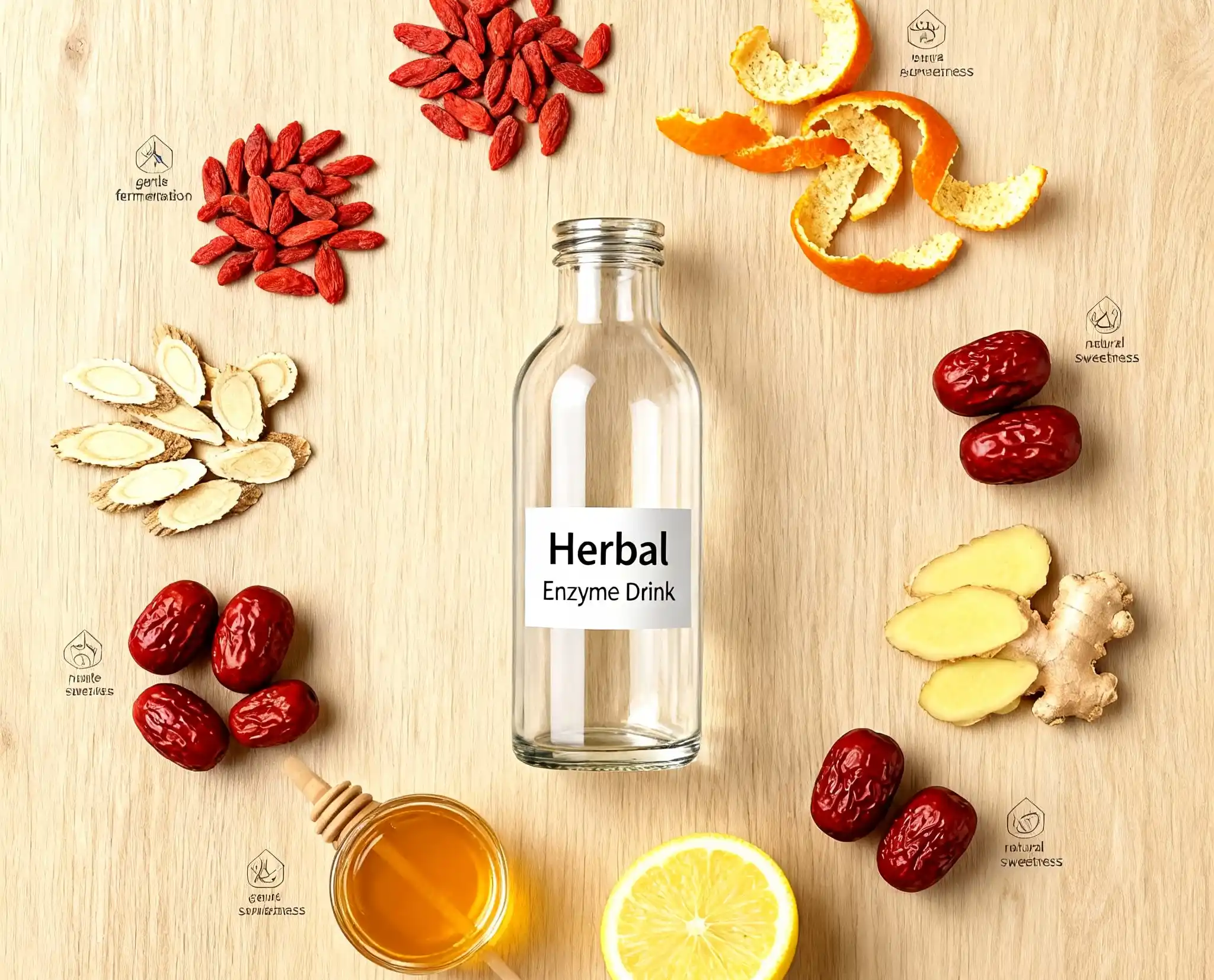
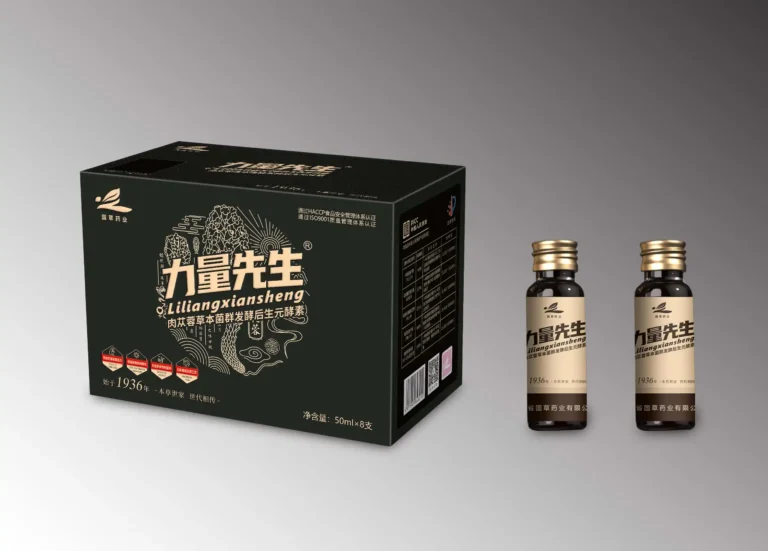
You might have seen them everywhere—bottles labeled “enzyme drink” or maybe “fermented essence.” The hype is real, and people are talking about gut health non-stop. But what are we really drinking? Is it just glorified fruit juice, or is there some serious science behind this new wellness application?
Let’s be honest: the language around these drinks often sounds like complex jargon, especially when you start mixing “Chinese Herbs” with “fermentation.” Don’t worry, we’re going to break it all down for you, plain and simple. We want you to understand the real commercial value here.
The Enzyme Drink Hype: What Are We Really Drinking?
First off, let’s clear up the word “enzyme.” When most people in Asia talk about “enzyme drinks,” they’re usually referring to a liquid that’s gone through fermentation. This process is the key.
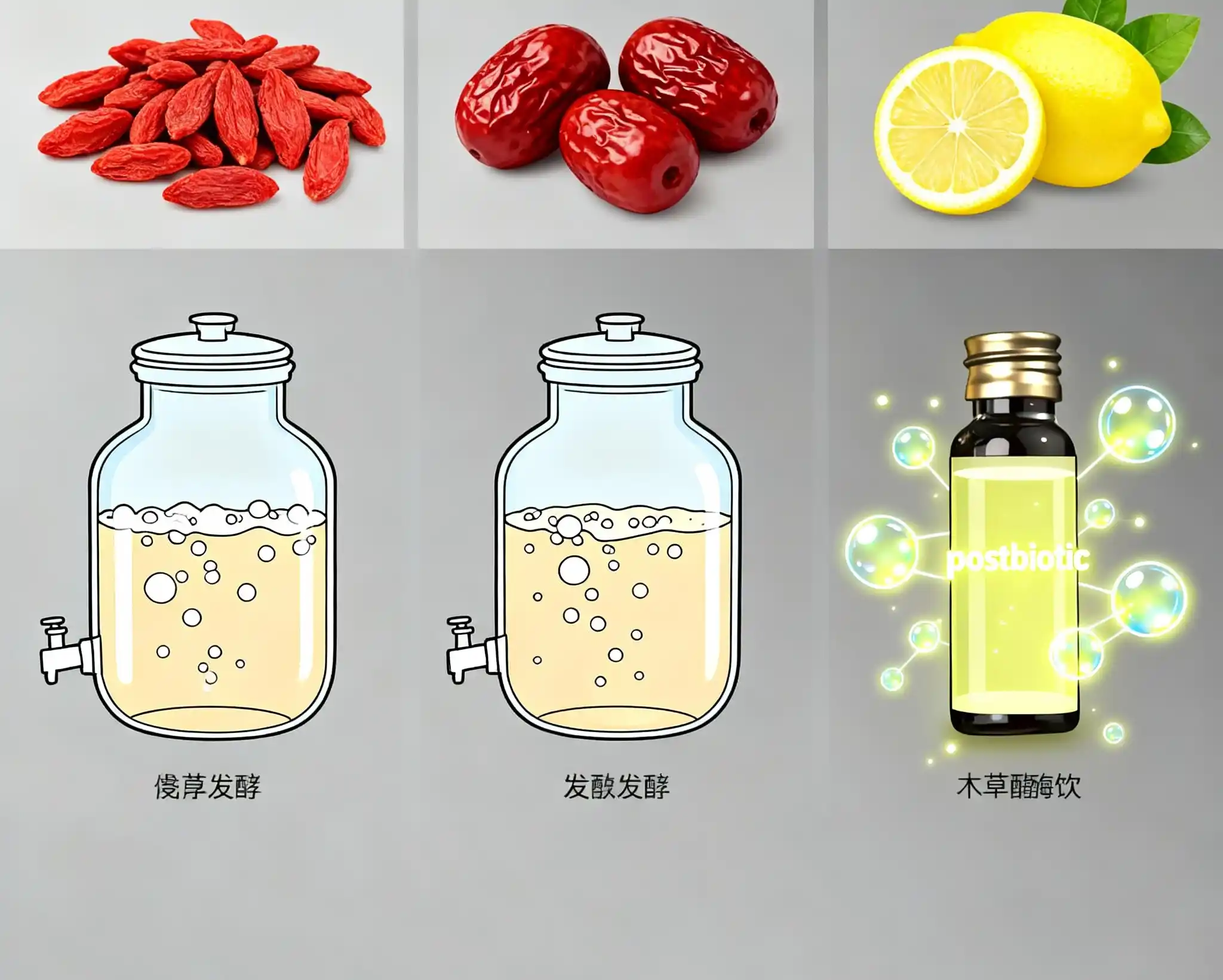
Fermentation happens when micro-organisms—mostly bacteria and yeasts—eat up the sugars in the raw materials. When they eat, they make byproducts. These byproducts are beneficial organic acids, enzymes, vitamins, and other compounds.
Think of it this way: Fermentation is Mother Nature’s slow cooker. It takes simple ingredients and converts them into something much more complex and often more potent.
Fermentation is Your Gut’s Best Friend: Bacteria as Tiny Alchemists
Why do people care so much about fermented drinks? It’s all about digestion and gut health.
The active bacteria and enzymes in these drinks help your body process food more efficiently. This isn’t just a marketing claim; it’s basic biology.
- It helps you digest by breaking down food into smaller, easier-to-absorb parts.
- It boosts your immune system because a happy gut is the foundation of a healthy body.
We know that some products contain things like Superoxide Dismutase (SOD)—a powerful antioxidant—and GABA, which people think helps relieve stress and maybe even helps you get better sleep. These aren’t minor benefits; they are selling points that drive the entire functional beverage market.
The Ancient Use of Chinese Herbs Meets Modern Bio-Applications
Now, here’s where things get interesting for us—and for our clients who handle roots and rhizomes or specialized fruits and seeds.
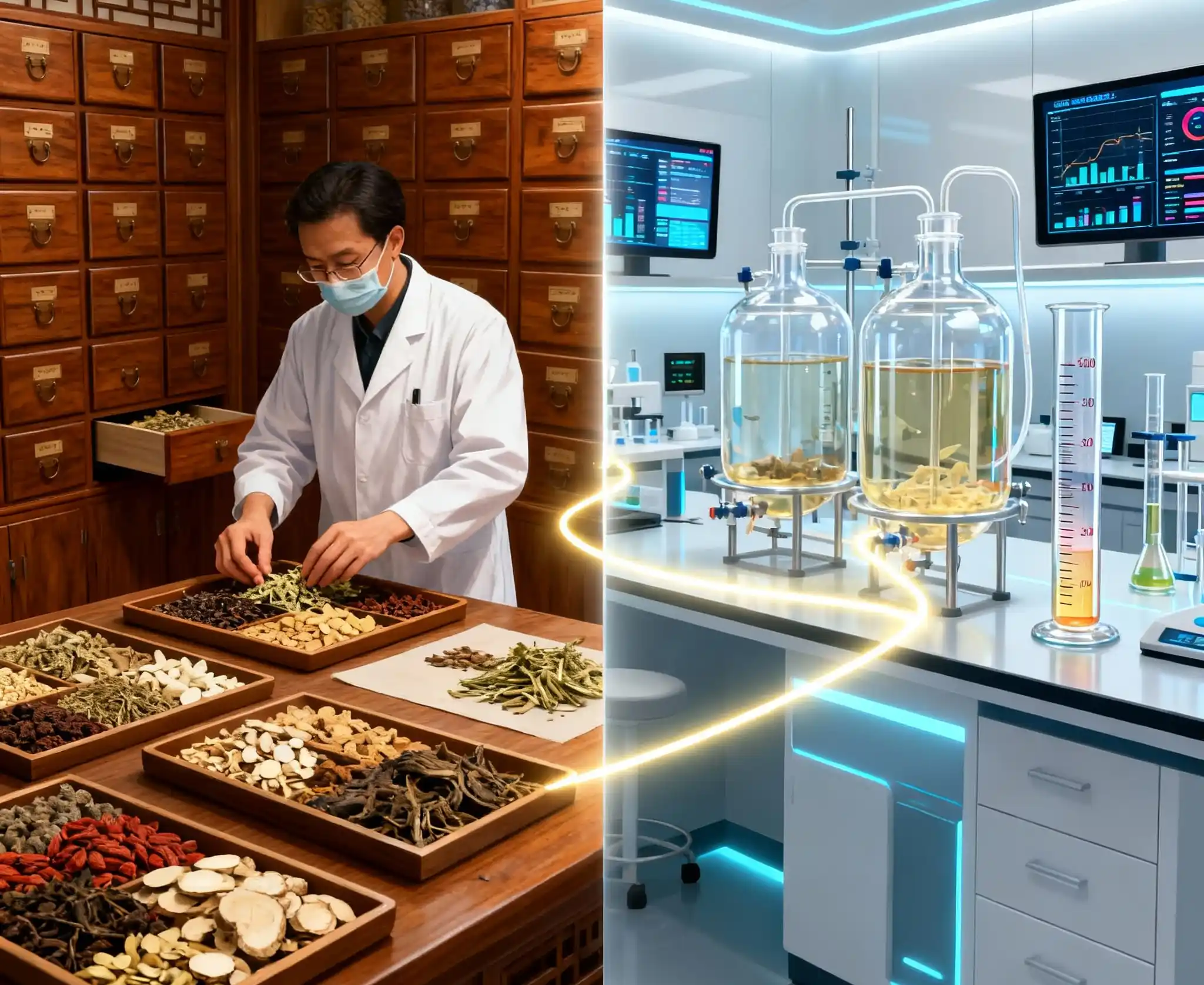
Traditionally, we brew Chinese Herbal Medicines (CHM) through a long decoction process. It works, but it’s not always the most efficient method.
Here’s the problem many pharmaceutical and supplement companies face: Some compounds in CHM are tough for the human body to access or absorb. They’re locked away in a complex chemical structure.
The Solution? Fermentation.
Scientists are exploring fermentation to supercharge the effectiveness of these herbs. Research shows that when you use friendly bacteria (probiotics) on CHM, the results are incredible:
- Increased Potency: Fermentation can transform inactive compounds into their more active forms. For instance, the complex ginsenosides found in ginseng can be changed into the highly bio-active compound Rd. The bacteria essentially unlocks that medicine for your body.
- Reduced Toxicity: Sometimes, raw herbs have components that can cause problems for some people. Fermentation often breaks down these compounds, making the final product safer and more agreeable.
This process significantly boosts the content of total bio-active compounds in the final product. We’ve seen studies where the total bio-alkaloids and polysaccharides increased by over 50%! That’s a big deal for efficacy claims and product formulation.
Beyond Probiotics: Why Postbiotics are the Real Secret Sauce
Here is a piece of industry jargon that you gotta know. It’s the difference between a simple probiotic and a high-value enzyme drink.
We all know probiotics (the live bacteria) and prebiotics (the food for the bacteria). But the true commercial value of a premium fermented drink lies in Postbiotics.
What are postbiotics? They are the beneficial compounds that the probiotics produce during fermentation. They’re the metabolic byproducts—things like organic acids, functional proteins, and enzymes—that are left over.
Think of it like this: If probiotics are the workers, postbiotics are the high-quality products those workers made.
When we look at advanced methods, like the combination of enzymatic hydrolysis and sequential fermentation, the output is superior to just a simple, natural brew. This method delivers the maximum level of potent, accessible postbiotics. This advanced technique is giving the final product much better antioxidant capabilities and a richer, more diverse amino acid profile.
For functional beverage manufacturers, focusing on postbiotic content is a game changer for justifying a higher price point and proving efficacy.
The Wholesale Scenario: Quality Control and Scaling the Supply Chain
If you’re a large commercial buyer—a pharma company, a supplement brand, or a functional drink manufacturer—your biggest pain point isn’t the concept; it’s the execution. You need quality, consistency, and scale.
The market has a lot of small-batch, homemade-style “enzyme drinks,” but you cannot build a global brand on that kind of inconsistency. You need a partner that can guarantee the microbial strain, the temperature control, and the final postbiotic concentration—batch after batch.
This is where the supply chain commitment comes in. You need to ensure the raw materials—from your barks to your essential whole herbs—are sourced responsibly and processed cleanly.
GuoCao’s Commitment: From Roots to Ready-to-Drink Solutions
At GuoCao, we understand the massive opportunity here. We don’t just supply raw materials; we’ve moved right into the advanced manufacturing space.
We have a massive 2500-ton annual capacity, and that includes dedicated production lines for these enzyme drinks and fermented herbal preparations. This means we can handle the scale you need, whether you are in the US, Europe, Japan, or anywhere else.
Our whole setup—the GMP lines, the ISO 22000 food safety system, the third-party COA testing—gives you the assurance that the active ingredients we start with will be consistent. We handle the toughest ingredients like specialized roots and rhizomes all the way through to delicate flowers and whole herbs, ensuring every batch meets the strictest global standards.
If you’re a global procurement manager looking for high-quality, verified ingredients or need a reliable OEM/ODM partner for your next enzyme product launch, talk to us. We’ve already done the heavy lifting on R&D for Chinese herbal fermentation.
The Wholesale Challenge: Cutting Through the Marketing Noise
Let’s keep it real: the enzyme drink market is also full of gimmicks. Some Asian “fruit enzyme” drinks are nothing more than simple fruit wines or highly sweetened syrups. They might look nice, but their postbiotic content is questionable.
As a serious buyer, you need to look past the fancy packaging. You must demand proof that the fermentation process was controlled and optimized—not just left in a jar to ferment naturally. Natural fermentation is great for a kitchen hobby, but it won’t cut it for a commercial-grade health product.
When we talk about commercial value, we’re talking about certified production, a guaranteed shelf life, and proven bio-activity. Don’t settle for less.
It’s Time We Get Serious About Quality
Herbal enzyme drinks are not a fad; they are the future of functional beverages and supplements. They represent the perfect convergence of ancient knowledge (Chinese herbal tradition) and modern biotechnology (controlled postbiotic fermentation).
This technology is allowing the industry to overcome long-standing issues of bioavailability and efficacy. For your customers, this means a product that works better and is easier on the stomach. For you, this means a premium product with defensible health claims and excellent market potential.
By choosing a verified, scalable partner like GuoCao, you can be sure that you are providing the best quality—from the initial roots and rhizomes all the way to the final bottled essence. We’re ready to help you formulate the next generation of effective, high-value herbal enzyme drinks.