
걱정하지 마시고 즉시 담당자에게 문의하세요.
서두르지 마시고 지금 바로 상사에게 직접 문의하세요. 보통 1시간 이내에 답변해 드립니다.
한방 허브와 향신료 제조업체
글로벌 한약재 및 향신료 도매
당사는 SSL/3.0을 사용하여 개인 정보를 암호화합니다.
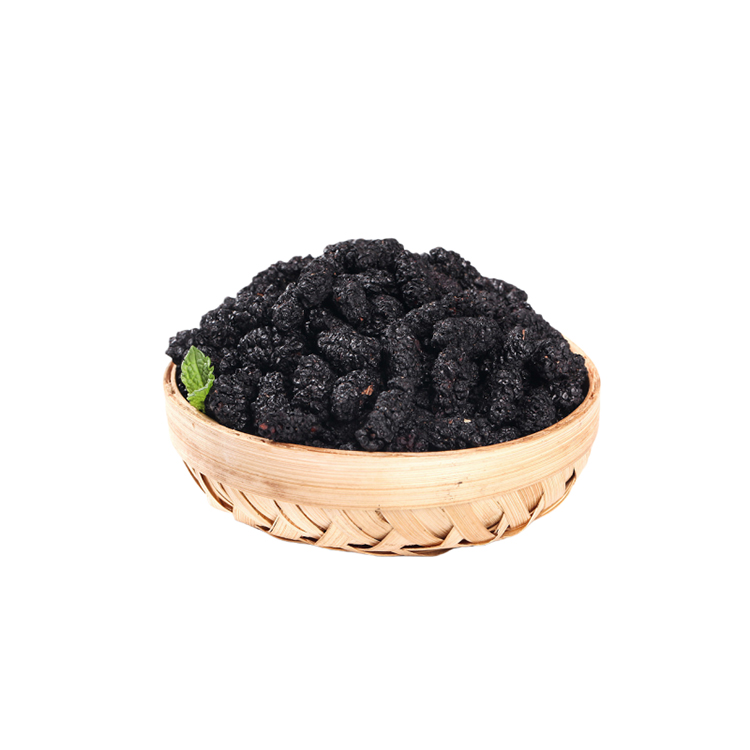
대량으로 공급되는 뽕나무 열매는 검사 당시에는 상태가 매우 좋아 보일 수 있지만, 몇 달 후에는 품질 기준에 미달할 수 있습니다. 이 구매자 중심 가이드에서는 상업용 물량을 승인하기 전에 품종 확인, 색상, 당도, 건조, 수분 활성도, 저장, 포장 및 공급업체 검증 등을 관리하는 방법을 설명합니다.
색깔은 거짓말을 할 수 있다.
A dark, glossy batch of 멀베리 열매 대량 may photograph beautifully, yet that appearance tells us surprisingly little about cultivar, soluble sugars, acid balance, drying severity, residual moisture, water activity, oxidation, microbial risk, or what the same fruit will look like after three months inside a sealed export liner.
So why approve a shipment from photographs?
그러지 않을 겁니다.
When I evaluate dried fruit for commercial sourcing, I treat appearance as a screening tool, not a release specification. “Dark,” “sweet,” “natural,” and “carefully dried” are sales language. Procurement needs numbers, methods, reference samples, lot codes, and rejection limits.
That distinction matters particularly with mulberry.
The first purchasing mistake happens before price negotiation: the buyer asks for “bulk mulberries” without defining what that actually means.
Commercial mulberry can refer to fresh fruit, frozen fruit, puree, juice material, freeze-dried fruit, conventionally dried fruit, or dried herbal 샹 쉔. Those products behave differently and require different specifications.
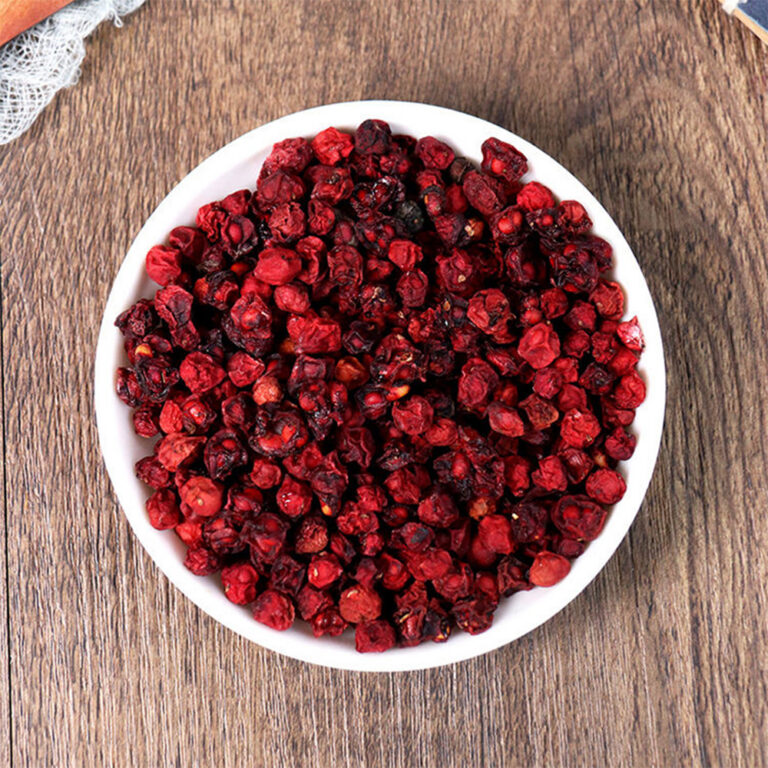
For herbal, tea, functional-food, and ingredient buyers, the relevant material is often dried 모루스 fruit. GuoCao’s bulk Mulberry Fruit (Sang Shen) product page identifies its commercial material as dried fruit associated with 모루스 알바, also traded as Fructus Mori or Sang Shen.
That plant-part distinction is important. 모루스 알바 leaves, root bark, and fruit are not interchangeable raw materials simply because the same botanical name appears somewhere on the COA.
이 사이트의 더 광범위한 Fruit and Seed Chinese medicinal ingredient category places mulberry alongside goji, schisandra, cassia seed, red dates, longan and other fruit-and-seed materials used in bulk ingredient programs.
For a serious RFQ, I would write the identity before discussing price:
Short specification. Big difference.
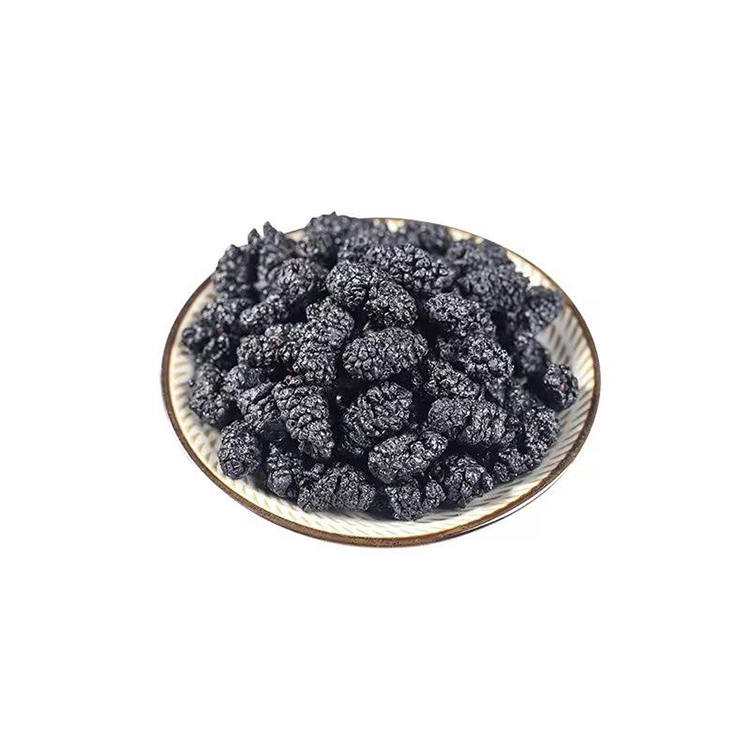
Dark purple and black mulberries attract attention because anthocyanin pigments contribute strongly to their appearance. But cultivar genetics matter enormously, which is precisely why buying from a color photo is weak quality control.
2025년 Frontiers in Plant Science 이 연구에서 평가한 바에 따르면 21 mulberry varieties and found substantial differences in appearance, nutritional traits, functional compounds, antioxidant characteristics, and enzyme activity. Its seven principal components explained 88.424% of total variance, while the final weighted quality scores ranged from 0.406 to 0.817. The top-ranked variety, Da 10, scored 0.817; Feng Guo Sang followed at 0.765.
That is not minor biological noise. It is a sourcing issue.
The same study found meaningful differences among cultivars in color-related and functional characteristics, illustrating why Morus alba fruit bulk cannot be standardized merely by ordering “dark mulberries.”
First: retain a physical reference sample.
Keep an approved production sample under controlled storage and lighting. Compare incoming composite samples against that reference, not against an edited supplier photograph.
Second: instrument the comparison.
For buyers where color consistency affects retail presentation, extraction color, tea appearance, or beverage development, I prefer CIELAB measurements using L*, a* 그리고 b* values.
An internal tolerance such as ΔE00 ≤ 3.0 can be considered as a starting point for a buyer-specific color program, but I would never call that a universal mulberry standard. It is a contractual tolerance that must be validated against the application.
Third: classify defects separately.
Do not hide defects inside an average color reading. Record pale immature fruit, heavily browned pieces, scorched material, visible mold, foreign berries, stems and abnormal surface spots independently.
The hard truth? A mathematically acceptable average can still describe an ugly lot.
Here is where suppliers often become vague.
Ask how the fruit was dried and you may hear “low temperature,” “natural,” or “advanced drying technology.”
None is a process specification.
A controlled 2024 study comparing mulberry drying methods reported that vacuum freeze drying retained 6.99 mg/g anthocyanins, 3.18 mg/g total flavones and 2.94 mg/g soluble sugars, while also producing the strongest measured DPPH radical-scavenging result at 81.2% and ABTS result at 79.9% among the treatments investigated. The researchers also reported better color and sensory performance under vacuum freeze drying. See the 2024 mulberry drying study indexed by PubMed.
Does this mean every buyer should demand freeze-dried mulberries?
아니요.
Freeze drying can preserve attributes extremely well, but the economics may make little sense for a commodity tea, decoction, or extraction program. Conventional hot-air drying may be commercially appropriate if temperature, duration, final moisture, water activity, cleanliness and sensory quality are controlled.
그게 바로 요점입니다.
Specify the outcome, not the marketing adjective.
For dried mulberries bulk purchasing, I would ask the supplier for:
Buyers looking at Chinese botanicals more broadly should apply the same logic described in this bulk Chinese herbal sourcing and supplier-control guide: define the material, obtain lot-level evidence and create rejection rules before money leaves the account.
“Sweet mulberries.”
That phrase is nearly useless in a purchase contract.
Sweetness changes with cultivar, maturity, growing conditions, drying concentration, fermentation, acid balance and whether sugar has been added during processing.
And sweetness is not the same thing as sugar concentration perceived in isolation. Acidity matters.
2025년 BMC 식물 생물학 cold-storage experiment harvested mulberries at approximately 15.2% soluble solids content (SSC) and then stored the fruit at approximately 0.5°C and 90% relative humidity for 5, 10 and 15 days. The researchers found that SSC, acidity, respiration, decay and other quality attributes changed during storage.
The study is useful evidence. It is not permission to write “15.2 °Brix minimum” into every mulberry contract.
Different cultivars and applications need different targets.
Fresh fruit can be screened efficiently using a calibrated refractometer for soluble solids.
Dried fruit is trickier.
Water removal concentrates soluble components, so comparing a refractometer reading from a poorly standardized dried-fruit extraction procedure can create false precision. For dried mulberries bulk, I would instead establish a validated laboratory method for total or reducing sugars, then pair it with a sensory reference.
Also ask one uncomfortable question:
Was sugar added?
For retail snack products, sweetening may be an intentional formulation choice. For an herbal tea, extraction, traditional ingredient, or clean-label program, undeclared added sugar may be completely unacceptable.
Put it in writing.
Fresh mulberries are notoriously delicate.
In the 2025 BMC 식물 생물학 study, researchers stored fruit for up to 15 days at approximately 0.5°C and 90% RH. A combined treatment using 1.0 mM melatonin plus 1.0 mM putrescine resulted after 15 days in 4.35% weight loss, 9.48% decay, and a respiration rate about 29.9% lower than the control.
That experiment concerns fresh-fruit postharvest treatment, not a standard commercial requirement for dried Sang Shen.
But it exposes something procurement teams often underestimate: storage behavior is dynamic.
Temperature, humidity, respiration, acids, sugars and decay are interacting variables.
For dried material, the controlling problem shifts. Moisture migration, water activity, packaging barrier, temperature, oxygen, insects, yeast, mold and condensation become much more important.
This distinction saves claims.
수분 함량 tells us how much water is present in the product.
수상 활동(aw) describes how available that water is for microbial growth and chemical reactions.
Two mulberry lots can therefore report similar moisture percentages yet behave differently during storage.
For a dried product intended for extended ambient storage, I would investigate an aw target below 0.60 as a conservative product-development starting point, then validate it against the real fruit, packaging system and shelf-life study rather than blindly copying that number into every contract.
FDA technical material distinguishes low-moisture products below aw 0.60 from intermediate-moisture products at aw 0.60–0.85, while noting that yeast and mold can become important shelf-life concerns as available water rises.
And this is where a related sourcing problem becomes useful. The site’s article on goji berry sugar bloom versus mold deals with a similar reality: dried berries can develop surface changes that buyers misclassify when moisture, sugars, storage and visual inspection are not separated systematically.
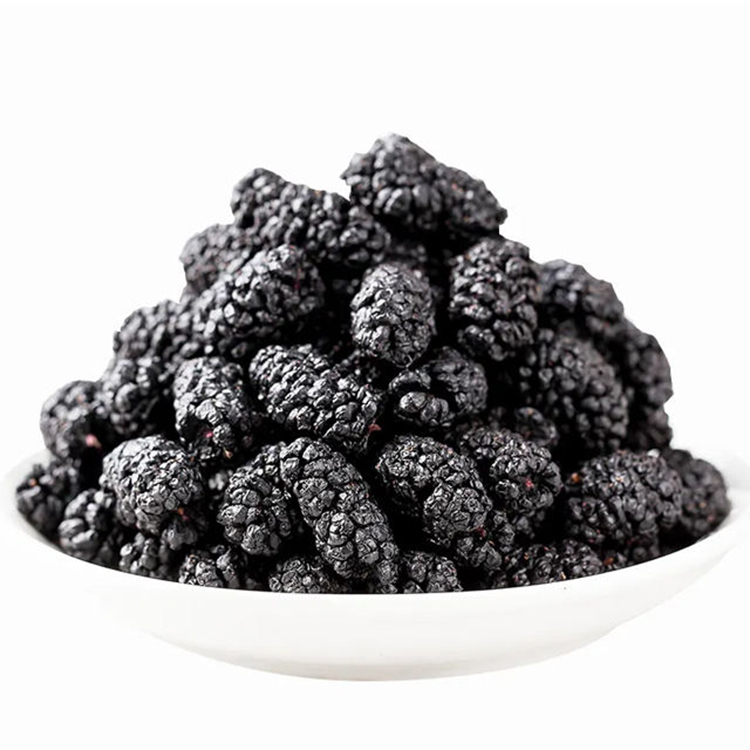
There is no universal commercial specification covering every mulberry application. The following is a buyer-specification framework, not a pharmacopoeial standard.
| 품질 특성 | 내가 지정할 내용 | 검증 방법 | 레드 플래그 |
|---|---|---|---|
| 식물학적 정체성 | 정확한 모루스 species and fruit plant part | Traceability + botanical ID | “Mulberry” only |
| 제품 형태 | Whole dried, pieces, powder, fresh or frozen | Visual/document review | Different form arrives |
| 품종 | Declared where sensory or storage performance matters | Farm/lot records | Supplier says cultivar is irrelevant |
| 색상 | Approved reference plus numeric range where needed | CIELAB L*, a*, b* | Photos only |
| Sweetness | Contracted sugar or SSC method appropriate to form | Refractometer or validated lab method | “Naturally sweet” |
| 첨가된 당분 | Explicitly present or absent | Ingredient/process declaration + testing if necessary | No declaration |
| 수분 | Product-specific maximum | 검증된 수분 측정법 | Average only, no lot data |
| 수상 액티비티 | Shelf-life target established by validation | 교정된 습도계 | Not measured |
| 이물질 | Written numerical limit | Composite inspection | “Clean” without definition |
| 상한 과일 | Written numerical limit | Representative sampling | No grading standard |
| 미생물학 | Limits appropriate to market and use | 공인 시험소 | 일반 COA |
| 살충제 | Market-specific residue program | LC-MS/MS / GC-MS/MS as applicable | Old report from another lot |
| 중금속 | Market-specific limits | Validated laboratory method | 공급업체 선언서만 |
| 패키징 | Liner, seal and barrier requirement | 포장 사양 | “Moisture-proof bag” |
| 추적 가능성 | Harvest/production lot through shipment | 기록 | Repacked lot loses origin |
| 유통 기한 | Defined conditions and supporting data | 안정성 프로그램 | Unsupported 24–36 month claim |
I would attach that table to the purchase specification before issuing a serious annual contract.
Not afterwards.
A supplier can dry the fruit correctly and still lose the lot in the packaging room.
Imagine dried mulberries leaving production at an acceptable water activity, being packed into a weak polyethylene liner, shipped through a humid port, and then stored for six weeks in an uncontrolled warehouse.
The original COA does not magically protect them.
For dried mulberry fruit, I want to know:
For private-label or formulated projects, packaging should be discussed at the ingredient-development stage. The site’s custom herbal and spice OEM/ODM service covers customized herbal products and packaging-related production support.
I would not approve twelve months of ingredient supply first and ask about packaging later.
That order is backwards.
A polished COA is useful.
그것은 증거가 아닙니다.
새로운 bulk mulberry fruit supplier, I would request the specification first and the certificate second. Then I would check whether the certificate actually corresponds to the sampled production lot.
For U.S. importers, this is more than purchasing discipline. FDA’s Foreign Supplier Verification Program requires covered importers to evaluate food hazards and supplier performance and to conduct appropriate supplier-verification activities. FDA specifically lists options such as on-site audits, sampling and testing, and review of supplier food-safety records.
A professional supplier-qualification file should therefore contain, as applicable:
And I would buy the sample from the same commercial grade being quoted.
“Special sample quality” defeats the purpose.
Price per kilogram is easy to compare.
Usable kilograms are harder.
Suppose Supplier A is 8% cheaper, but its lots show wider moisture variation, more stems, more broken fruit, inconsistent sugar intensity and weaker packaging. Your apparent saving disappears through sorting loss, extraction inconsistency, production downtime, complaints or inventory write-offs.
That is why I dislike procurement scorecards dominated by FOB price.
A better commercial comparison includes:
Landed cost + usable yield + testing cost + failure probability + inventory stability.
Cheap fruit is not cheap when QC keeps rejecting it.
For buyers building a larger botanical procurement program, the site’s Wholesale sourcing section provides related buyer-focused material across herbs, fruit ingredients and spices.
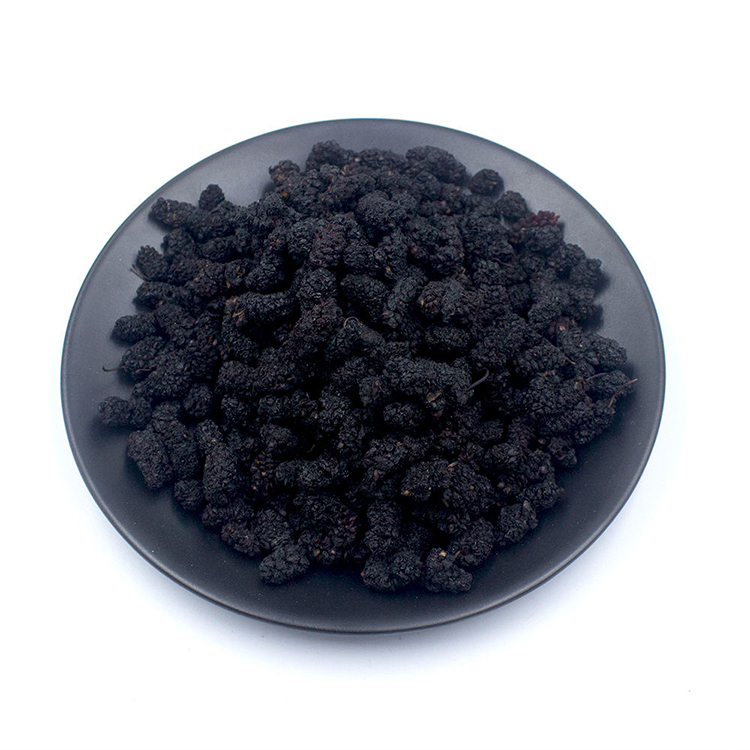
Mulberry Fruit Bulk is commercially supplied fresh, frozen, processed, or dried fruit from a defined 모루스 species purchased in larger quantities under agreed requirements for botanical identity, form, color, sweetness, moisture or water activity, contaminants, packaging, traceability, and storage rather than being accepted only according to visual appearance.
For traditional Chinese herbal sourcing, dried fruit is commonly traded as Sang Shen or Fructus Mori. Buyers should still identify the botanical species and processing form explicitly because fresh fruit, freeze-dried fruit, conventionally dried Sang Shen and sweetened snack mulberries require different quality-control programs.
Sweetness in dried mulberries bulk should be specified through a repeatable analytical method for sugars together with sensory acceptance criteria, because drying concentrates soluble solids and makes an uncontrolled refractometer reading difficult to compare reliably between lots, while cultivar, acidity, maturity, processing temperature, fermentation and added sugar can all change perceived sweetness.
For fresh mulberries, soluble solids measured with a calibrated refractometer can be useful. For dried material, define the extraction or analytical procedure, tolerance range and added-sugar policy directly in the contract.
Water activity for dried Mulberry Fruit Bulk should be established through a product-specific shelf-life program, with an aw below 0.60 worth evaluating as a conservative target for extended ambient stability, while packaging, temperature, contamination, formulation and destination climate must still be validated because water activity alone cannot guarantee commercial shelf life.
Do not confuse aw with moisture percentage. Measure both when the product’s stability risk warrants it, and specify the temperature at which water-activity testing is performed.
Darker mulberry color does not automatically mean better quality because cultivar genetics, maturity, anthocyanin development, drying temperature, oxidation, surface browning, storage duration and microbial deterioration can all alter appearance, so professional color evaluation should be combined with botanical identity, sensory testing, moisture, water activity, defects and microbiological assessment.
For color-sensitive programs, establish a retained reference sample and consider instrumental CIELAB measurements instead of relying on supplier photographs.
The best mulberry fruit supplier is the supplier that repeatedly delivers the contracted botanical identity, processing form, color, sugar profile, moisture or water activity, contaminant limits, packaging performance and traceability with lot-specific evidence, representative samples and corrective-action capability rather than simply offering the lowest price or the most attractive product photographs.
Before approving volume, request a representative sample, written specification, lot-specific COA, processing information and relevant contaminant reports. Then compare the next commercial shipment against exactly the same acceptance criteria.
Do not send a supplier one sentence saying, “Please quote your best price for premium dried mulberries.”
Send something they can actually manufacture and test against.
Specify the 모루스 species, product form, intended application, target color, sugar-testing method, added-sugar policy, maximum water activity, moisture requirement, defect limits, microbiological and contaminant standards, packaging format, annual volume, destination country and required documentation.
Then request a representative sample and the lot-specific COA before shipment approval.
소싱하는 경우 모루스 알바 fruit for tea, extraction, functional foods, herbal products or wholesale distribution, review the Mulberry Fruit Bulk product page 그리고 contact the bulk herbal supply team with your target specification, quantity, destination market and testing requirements. The site’s contact page supports bulk and OEM/ODM inquiries.
Buy the specification. Not the photograph.