
걱정하지 마시고 즉시 담당자에게 문의하세요.
서두르지 마시고 지금 바로 상사에게 직접 문의하세요. 보통 1시간 이내에 답변해 드립니다.
한방 허브와 향신료 제조업체
글로벌 한약재 및 향신료 도매
당사는 SSL/3.0을 사용하여 개인 정보를 암호화합니다.
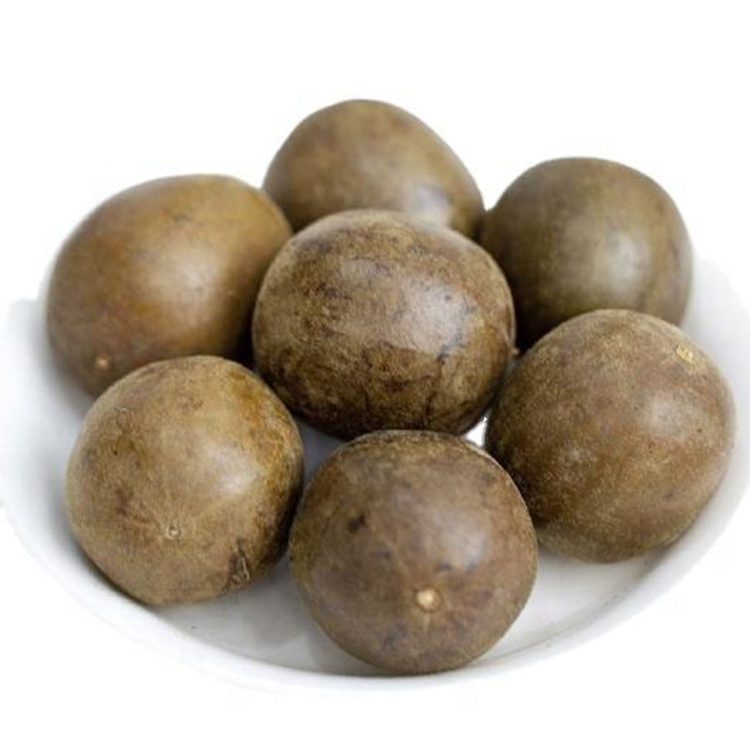
가격, 과일 크기 또는 일반적인 품질 증명서(COA)만을 기준으로 로한과를 구매하는 것은 미흡한 조달 전략입니다. 이 가이드에서는 허브차 및 음료 브랜드가 제품 형태, 모그로사이드 V, 추출 성능, 관능적 특성, 오염 물질 검사, 규제 현황, 그리고 배치 간 일관성 등을 기준으로 대량 로한과를 어떻게 평가해야 하는지 설명합니다.
Cheap fruit lies.
A monk fruit shipment can look perfectly respectable in a supplier photo, arrive with an impressive-looking certificate of analysis, and still become an expensive formulation problem because the buyer never defined whether sweetness, brewing yield, mogroside concentration, flavor, solubility, particle size, or finished-beverage clarity actually mattered.
So why do buyers still begin with price per kilogram?
그러지 않을 겁니다.
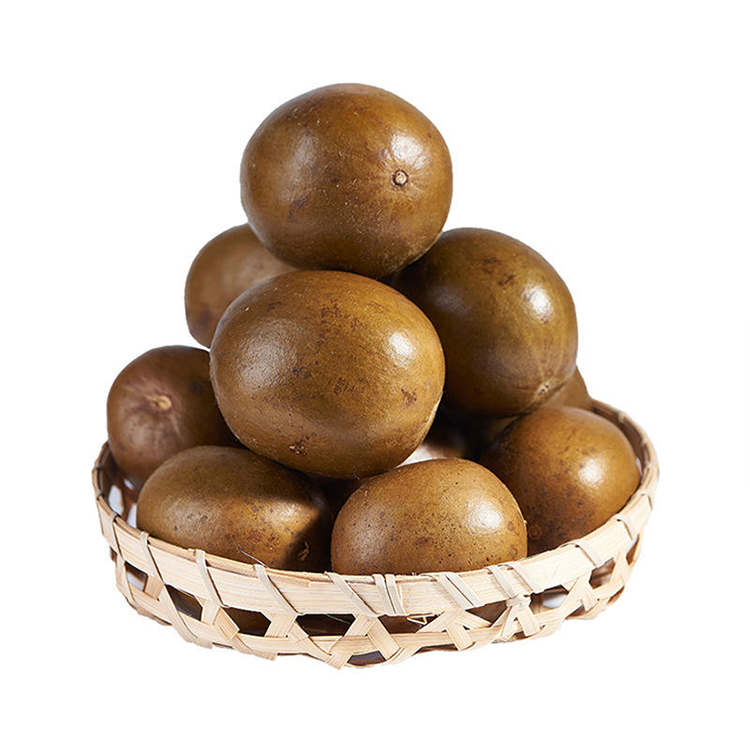
For a tea or beverage brand, 몽크프루트 대량 구매 is not a single standardized ingredient. 시라이티아 그로스베노리, commonly called Luo Han Guo or monk fruit, can enter your supply chain as whole dried fruit, broken fruit, coarse-cut material, powder, juice concentrate, or a purified extract containing a specified percentage of mogroside V.
Those formats are not interchangeable.
That distinction should shape everything that follows: your RFQ, sample protocol, laboratory testing, supplier comparison, formulation work, import review, and ultimately the price you are prepared to pay.
The first mistake in 몽크프루트 도매 procurement is using the words “monk fruit” as though everyone is selling the same thing.
그렇지 않습니다.
For a traditional herbal tea brand, the desired ingredient may be dried Luo Han Guo fruit that is cracked or cut before infusion. For a tea-bag operation, coarse cutting and controlled particle distribution may matter more because oversized pieces create fill-weight variation while excessive fines produce dust.
A beverage developer has a different problem entirely. If the goal is controlled sweetness in an RTD drink, syrup, beverage concentrate, powdered drink mix, or functional shot, a standardized extract may make far more sense than whole dried fruit.
The site’s existing 수도사 열매(루오한궈) 대량 공급 페이지 is a useful commercial starting point for understanding the raw material, while the broader Fruit and Seed Chinese Medicines category gives procurement teams context for neighboring botanical ingredients.
Here is how I would separate the formats before requesting quotations:
| Monk Fruit Format | Best-Fit Application | What Actually Matters | Typical Procurement Risk |
|---|---|---|---|
| Whole dried fruit | Loose herbal tea, decoction, traditional blends | Botanical identity, fruit integrity, aroma, moisture, brewing performance | Paying for attractive size rather than useful extraction |
| Broken or coarse-cut fruit | Tea bags, commercial brewing | Cut distribution, fines, sweetness consistency, moisture | Uneven filling and inconsistent cup strength |
| Powdered whole fruit | Instant botanical blends, extraction feedstock | Particle size, microbial condition, flavor, batch identity | Poor dispersibility and rapid flavor variation |
| Juice concentrate | Beverage formulation, flavor systems | Brix, sugars, mogrosides, microbiology, storage | Confusing concentrate with purified high-intensity extract |
| Standardized monk fruit extract | Reduced-sugar beverages and sweetening systems | Mogroside V, solubility, sensory profile, carrier status, microbiology | Buying on mogroside percentage alone |
That last point deserves attention.
According to the U.S. FDA, 시라이티아 그로스베노리 fruit extract contains mogrosides responsible for its characteristic sweetness, and commercial extracts can be approximately 100 to 250 times sweeter than sucrose, depending on mogroside concentration.
That is not a minor formulation detail.
It changes the economics completely.
Specs beat photos.
Mogroside V, CAS No. 88901-36-4, is one of the principal sweet-tasting cucurbitane glycosides associated with monk fruit extract. It is therefore reasonable for beverage buyers to request an HPLC result for mogroside V when purchasing a standardized extract.
But I would reject the idea that “higher mogroside V automatically means better ingredient.”
Better for what?
FDA documentation submitted in GRAS Notice 629 illustrates just how wide the commercial range can be. The submission covered monk fruit extracts containing roughly 7% to 95% mogroside V and reported progressively higher relative sweetness as concentration increased. One table in the submission listed approximately 45× sucrose sweetness for a 7% product, 80× for 12.5%, 130× for 20%, and 160× for 25%. These are notifier data rather than a universal potency table, but they demonstrate why concentration must be written into the purchase specification.
Then formulation reality arrives.
Sweetness intensity is not the same thing as sensory quality.
Virginia Tech sensory research found that monk fruit extract was perceived as significantly sweeter than sucrose under the study’s test conditions, while the literature reviewed in the same work noted the possibility of a lingering licorice-like aftertaste associated with mogroside V.
This is why I would never approve a 대량 몽크프루트 공급업체 from a COA alone.
The laboratory tells you what is in the drum.
Your sensory panel tells you whether customers will drink it.
Whole dried Luo Han Guo introduces another trap: visual size grades.
Large fruit is easy to market.
It is easy to photograph.
And it is easy for buyers to understand.
Unfortunately, circumference is not a direct assay for sweetness.
The site’s detailed analysis of Monk Fruit size grading and sweetness stability makes an important procurement distinction: S, M, L, or XL grading may describe physical dimensions, but that does not establish mogroside concentration or extraction performance.
For tea buyers, I would run a standardized comparative brew instead.
For example, an internal QC method might hold the following parameters constant:
The exact brew protocol should match your product.
The principle matters more than my numbers: change one variable at a time.
If Supplier A sends beautiful XL fruit and Supplier B sends slightly smaller fruit that delivers a cleaner, more repeatable cup at lower cost per finished serving, which one is actually premium?
The answer is not complicated.
Whole monk fruit behaves differently from purified sweetener extract because the infusion contains far more than isolated mogrosides.
That matters in herbal formulations.
A buyer developing 허브티용 몽크프루트 should evaluate the material inside the actual blend rather than tasting Luo Han Guo alone and assuming the same behavior will survive contact with chrysanthemum, licorice, ginger, jujube, citrus peel, hawthorn, mint, or other botanicals.
Interactions happen.
A little bitterness can make sweetness appear weaker. Acidity changes perception. Strong aromatic herbs can suppress the recognizable Luo Han Guo profile. And an ingredient that tastes balanced in a 250 mL laboratory cup may become cloying when a consumer leaves the tea bag in the mug for 20 minutes.
I prefer procurement specifications that describe performance.
For a tea program, that means asking the supplier for:
Require the accepted scientific name:
시라이티아 그로스베노리
Do not settle for “monk fruit powder” on a spreadsheet.
Also identify:
For tea bags, ask for a sieve profile or agreed cut-size range.
왜 그럴까요?
Because fill equipment does not care about marketing language.
A mixture containing large irregular shell pieces and a high percentage of fines can create weight variation across thousands of sachets. That eventually becomes a manufacturing problem, not an agricultural one.
Brands moving from loose herbs into private-label formats can also review the site’s bulk herbal blending, milling, and custom processing services when deciding whether raw monk fruit should be cut, milled, blended, or prepared specifically for tea production.
“Dry” is not a specification.
Require a measurable limit appropriate to the product and your destination-market requirements.
For context, commercial standardized extract specifications frequently work at very low moisture levels. An FSANZ technical assessment described monk fruit extract with moisture below 6% and particle size typically around 100–250 μm, while one commercial 50% mogroside V specification sets moisture at ≤5%. Those figures should not be copied blindly onto whole dried fruit, but they show what a real specification looks like: numerical, testable, and attached to a method.
Vague specifications create precise disputes.
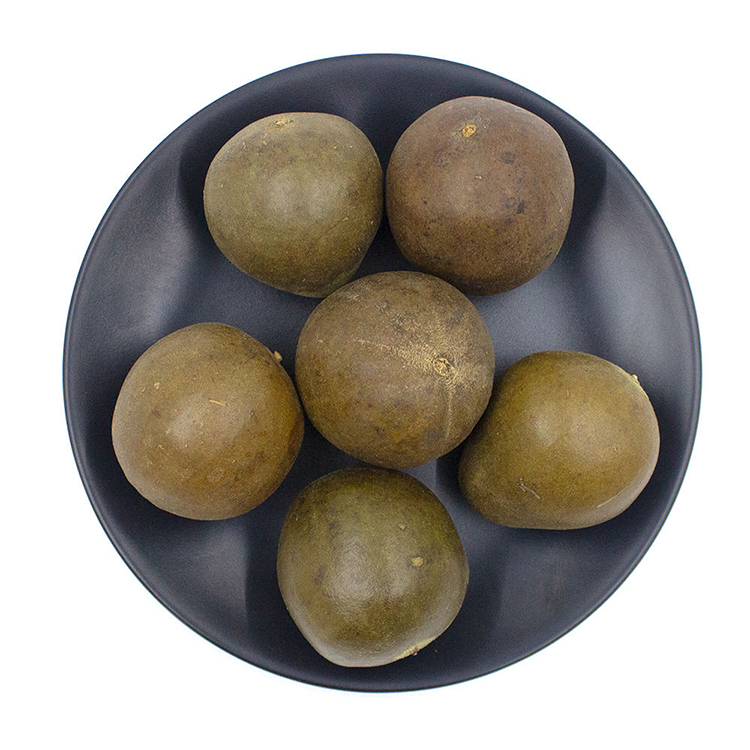
A beverage formulation does not care that a dried fruit looks beautiful.
It cares about repeatability.
For 음료용 몽크프루트, I would focus much more heavily on standardized active content, solubility, color, flavor interaction, thermal behavior, microbiology, and the exact regulatory identity of the ingredient being purchased.
The questions become more technical:
And one question buyers forget:
What does it taste like after everything else is added?
Wisconsin’s Department of Nutritional Sciences notes that non-nutritive sweeteners differ in heat stability, behavior in liquids versus solids, and aftertaste, and that manufacturers sometimes combine sweeteners to improve the final sensory profile.
That is the formulation reality.
A monk fruit extract can be chemically compliant and still be commercially wrong.
I would require at least three levels of evaluation:
The water test helps identify the ingredient itself.
The finished formula tells you whether you should buy it.
For a citrus beverage, acidity matters. For a tea drink, tannin and bitterness matter. For a protein beverage, texture and aroma matter. For a botanical shot, concentrated herbal notes may completely alter perceived sweetness.
Do not let a supplier’s standard tasting solution make your formulation decision.
Your product is the test.
There is no single COA format that suits every monk fruit product.
Still, a professional 로한과 도매 program should be more demanding than “appearance: conforms.”
For standardized extract, I would normally want the file to address:
| Test Area | 요청 사항 | 중요한 이유 |
|---|---|---|
| 정체성 | 시라이티아 그로스베노리, appropriate identity method | Prevents material confusion |
| Mogroside V | Percentage plus HPLC method | Controls sweetening strength |
| Moisture / Loss on Drying | Numerical result and limit | Stability and storage |
| Particle Size | Mesh or μm distribution | Processing and dissolution |
| Solubility | Defined test condition | Beverage manufacturing |
| 중금속 | Pb, As, Cd, Hg where applicable | 오염물질 관리 |
| 잔류 농약 | Destination-market appropriate screen | Import and brand compliance |
| Total Plate Count | Numerical result | Hygiene control |
| Yeast and Mold | Numerical result | Shelf-life and spoilage risk |
| 대장균 | Defined acceptance criterion | Pathogen/hygiene control |
| 살모넬라 | Defined sample basis | Pathogen control |
| Residual Solvents | Where the extraction process makes this relevant | Process verification |
| Batch Number | 로트별 | 추적 가능성 |
Here is the part I push hardest on:
Ask for results, not just limits.
“Lead ≤1 ppm” tells you the supplier’s specification.
“Lead 0.12 ppm” tells you something about this batch.
Those are different pieces of information.
A broader purchasing framework is available in the site’s Chinese herbal products procurement guide, which covers origin records, lot genealogy, drying controls, storage SOPs, and supplier documentation beyond a single ingredient.
This is where casual sourcing becomes dangerous.
The phrase “monk fruit is approved” is too vague for a professional procurement file.
Approved where?
Approved in what form?
Approved for what use?
The FDA currently describes 시라이티아 그로스베노리 fruit extract as a general-purpose and tabletop sweetener and states that it has evaluated multiple GRAS notices without questioning the notifiers’ GRAS conclusions under the specified conditions of use.
One current FDA GRAS inventory entry, GRN 784, concerns 시라이티아 그로스베노리 fruit juice concentrate intended as a general-purpose sweetener. The database lists a November 20, 2018 closure date and an FDA response of “no questions”; the inventory page itself was updated August 13, 2026.
That is useful evidence.
But it still does not mean every powder labelled “Luo Han Guo” automatically inherits the same regulatory position.
Identity matters.
Manufacturing process matters.
Composition matters.
Intended use matters.
Canada offers a perfect example of why global brands cannot copy a U.S. specification into every market.
Health Canada’s current List of Permitted Sweeteners lists Monk Fruit Extract for table-top sweeteners at 8,000 ppm calculated as mogroside V.
Even more revealing, the Canadian Food Inspection Agency explicitly distinguishes monk fruit extract from other monk fruit ingredients. Its current guidance says monk fruit extract is authorized as a sweetener in table-top sweeteners, while lower-mogroside monk fruit ingredients such as monk fruit juice concentrate may be treated differently as food ingredients.
같은 과일.
Different regulatory identity.
That should change how your procurement team writes product descriptions, specifications, and customs documentation.
Europe deserves even more caution.
켜짐 July 20, 2026, the European Commission recorded a decision terminating the procedure concerning an application for the fruit of 시라이티아 그로스베노리 as a traditional food from a third country without updating the Union list of novel foods.
At the same time, a 2024 Food Safety Authority of Ireland assessment concluded that certain monk fruit decoctions, defined as non-selective water extracts of fresh or dried fruit, were not novel foods.
Read those two facts carefully.
They are not contradictory. They show why “monk fruit” is an inadequate regulatory description.
A whole fruit, a traditional decoction, a juice concentrate, and a 50% mogroside V purified extract may travel through different regulatory reasoning.
Before launching in the EU, UK, Canada, United States, Australia, or another market, have the exact ingredient specification reviewed against the rules that apply there.
Do this before ordering several tons.
Not afterward.
그리고 Best Monk Fruit Supplier is not automatically the farm with the biggest fruit, the processor with the whitest extract, or the trader quoting the lowest FOB price.
I would score suppliers on six things.
Can they answer a technical RFQ without converting every question into “yes, no problem”?
Good suppliers are comfortable with limits.
Very good suppliers are comfortable with methods.
Ask for a current COA from a real production lot.
Then compare it against the master product specification.
A templated COA where every result says “conforms” tells me less than buyers think.
If your first commercial lot performs beautifully and the second does not, can the supplier retrieve retained samples and investigate?
If not, repeat purchasing becomes guesswork.
A whole-fruit supplier may be excellent for loose tea and unsuitable for a tea-bag line.
A processor capable of controlled cutting, milling, blending, and standardized packaging gives manufacturers more options.
사이트의 wholesale Chinese herbs supplier catalog provides a broader view of available fruit, seed, root, flower, bark, spice, and botanical formats for brands consolidating ingredients under one sourcing program.
Ask what documentation is available before sending the deposit:
Your importer may need only part of that file.
Your QA department may need all of it.
This one matters most.
Can the supplier send the same thing again?
A sample can be selected.
A production system has to repeat itself.
A low quotation can be completely rational.
It can also be meaningless.
For an herbal tea brand, the useful comparison may be cost per standardized finished cup, not cost per kilogram of fruit.
For an RTD beverage producer, it may be cost per equivalent sweetness unit.
I would model it like this:
Tea ingredient cost per serving = landed ingredient cost ÷ validated servings produced from one kilogram
For standardized extract:
Relative sweetening cost = landed cost per kilogram ÷ validated sweetness performance in the finished formula
The important word is validated.
Do not calculate from a marketing claim such as “200× sweeter than sugar” unless your own formulation work supports the assumption.
An extract priced at $80/kg can outperform one at $55/kg if the first delivers cleaner sweetness at a lower dosage and reduces the amount of masking flavor required.
And a beautiful whole fruit can be expensive at $6/kg if the brew yield is poor.
Price is data.
It is not the decision.
If I were building a new sourcing program, I would use this sequence:
Simple process.
Expensive mistakes avoided.
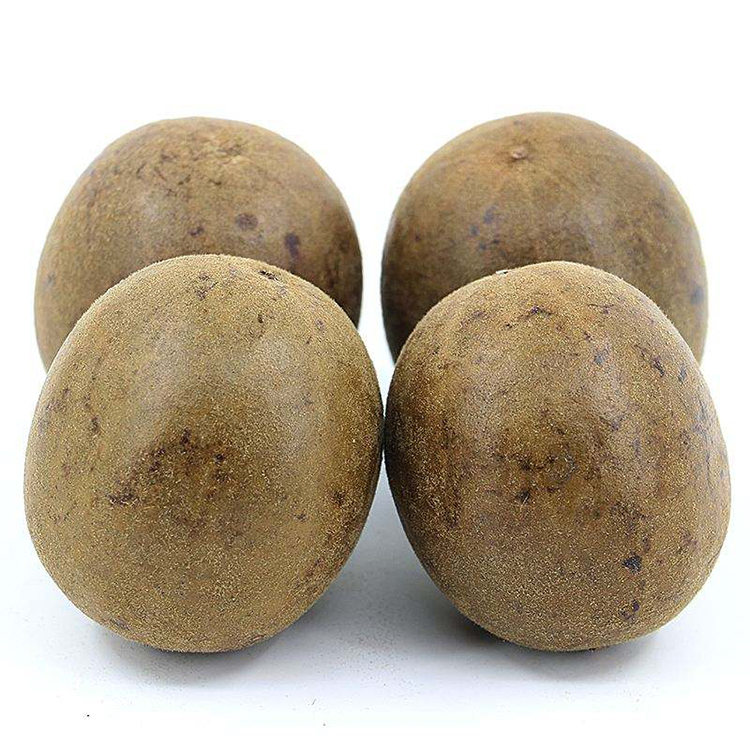
A qualified bulk monk fruit supplier should provide the botanical identity 시라이티아 그로스베노리, product form, plant part, origin, processing method, batch-specific COA, moisture result, microbiological data, contaminant testing, packaging specification, storage conditions, shelf life, and mogroside V concentration by an appropriate analytical method when standardized extract is being purchased.
For tea products, also ask about cut size, fines, brewing behavior, and repeat-batch appearance. For beverage extracts, add solubility, color, carrier ingredients, residual solvents where relevant, sensory performance, and a clear definition of whether the product is an extract, juice concentrate, or another monk fruit preparation.
Monk fruit extract and dried Luo Han Guo are different commercial ingredients: dried Luo Han Guo is whole or processed 시라이티아 그로스베노리 fruit containing its natural fruit matrix, while standardized monk fruit extract is produced through extraction and concentration steps designed to deliver a more controlled level of sweet mogrosides such as mogroside V.
The difference matters to tea brands because dried fruit contributes brewing character as well as sweetness. Beverage companies often need extracts because dosage and sweetness can be controlled more precisely.
The two products should not share one purchasing specification.
The best mogroside V percentage for a beverage is the concentration that delivers the required sweetness, flavor profile, solubility, regulatory fit, process stability, and cost in the finished formulation; 25%, 50%, or another standardized grade cannot be judged as universally superior simply because its numerical mogroside V concentration is higher.
FDA-related documentation shows commercial monk fruit extracts across a very wide concentration range, reinforcing the need to compare actual formulation performance rather than percentage alone.
A higher-potency extract can reduce dosage, but the sensory result still has to work.
Monk fruit extract is commonly reported as roughly 100 to 250 times sweeter than sucrose, but this range refers to concentrated 시라이티아 그로스베노리 fruit extracts rather than every form of dried monk fruit, and actual perceived sweetness changes with mogroside concentration, dosage, beverage composition, acidity, bitterness, temperature, and sensory testing conditions.
The FDA currently uses the same broad 100–250× range when describing monk fruit extract.
For procurement, use that number as technical context rather than a production dosing instruction.
A reliable monk fruit supplier is one that can repeatedly supply material matching an agreed written specification and support each shipment with traceable batch information, credible analytical results, consistent processing, contamination controls, representative pre-shipment samples, appropriate export documentation, and a clear investigation process when a commercial batch differs from the approved reference.
That is a stronger test than website design, factory photographs, trade-show claims, or a single successful sample.
Reliability is repeatability.
Monk fruit is not regulated identically in every country, and buyers must verify the exact ingredient form, manufacturing process, intended technological function, concentration, food category, and destination market before commercial use because a dried fruit, decoction, juice concentrate, standardized extract, and purified mogroside ingredient can receive different regulatory treatment.
The United States, Canada, and European jurisdictions already demonstrate these differences.
“Allowed in one country” is not an export strategy.
소싱하는 경우 몽크프루트 대량 구매 for herbal tea, tea bags, functional beverages, beverage concentrates, or botanical formulations, start with the finished product and work backward.
Define the form.
Define the sensory target.
Define the testing.
Define the destination market.
Then compare suppliers.
GuoCao supplies Luo Han Guo and other wholesale Chinese herbs, fruit-and-seed botanicals, tea ingredients, and customized cut, milling, blending, and processing formats for commercial buyers. Send your target application, required monk fruit format, expected order quantity, destination country, testing requirements, and packaging needs so the supply team can recommend a suitable specification and prepare a sample for evaluation.
Request a Monk Fruit sample and COA before approving your bulk order.