
걱정하지 마시고 즉시 담당자에게 문의하세요.
서두르지 마시고 지금 바로 상사에게 직접 문의하세요. 보통 1시간 이내에 답변해 드립니다.
한방 허브와 향신료 제조업체
글로벌 한약재 및 향신료 도매
당사는 SSL/3.0을 사용하여 개인 정보를 암호화합니다.
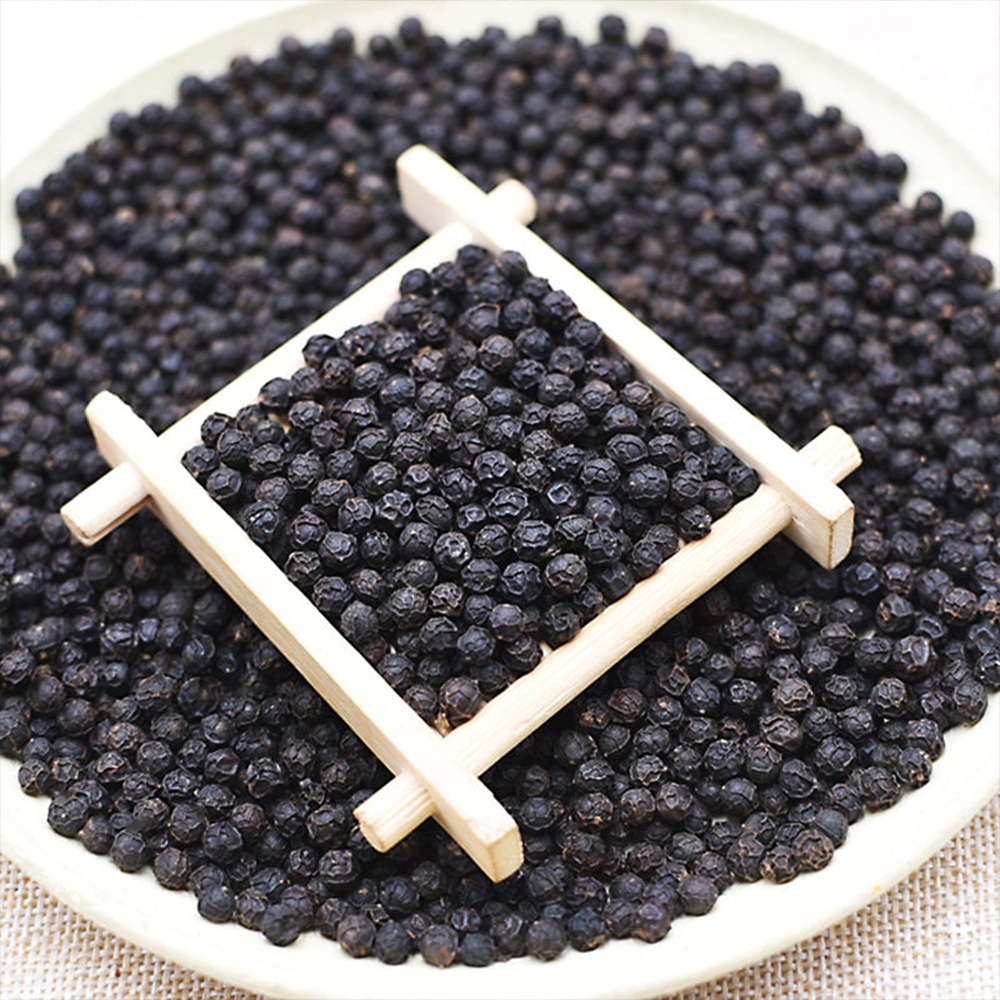
Choosing black or white pepper is more than a flavor decision. Learn how pepper type, grinding method, particle size, and supplier quality affect industrial food production.
Appearance misleads buyers.
When manufacturers compare black pepper vs white pepper, the purchasing decision often begins with color and price, although the choice also affects flavor release, blending performance, microbial exposure, processing costs, and the consistency of thousands of finished products.
But what happens when the cheapest pepper creates the most expensive production problem?
Both ingredients come from 후추나무., yet their processing methods produce different sensory characteristics.
Black pepper typically delivers a stronger aromatic profile with woody and citrus-like notes. White pepper offers a lighter appearance and a different, sometimes earthy pungency.
For industrial buyers, however, choosing between whole peppercorns and ground pepper can be just as important as choosing between black and white.
The correct format must work in the finished formulation, on the production line, and under the manufacturer’s food-safety controls.
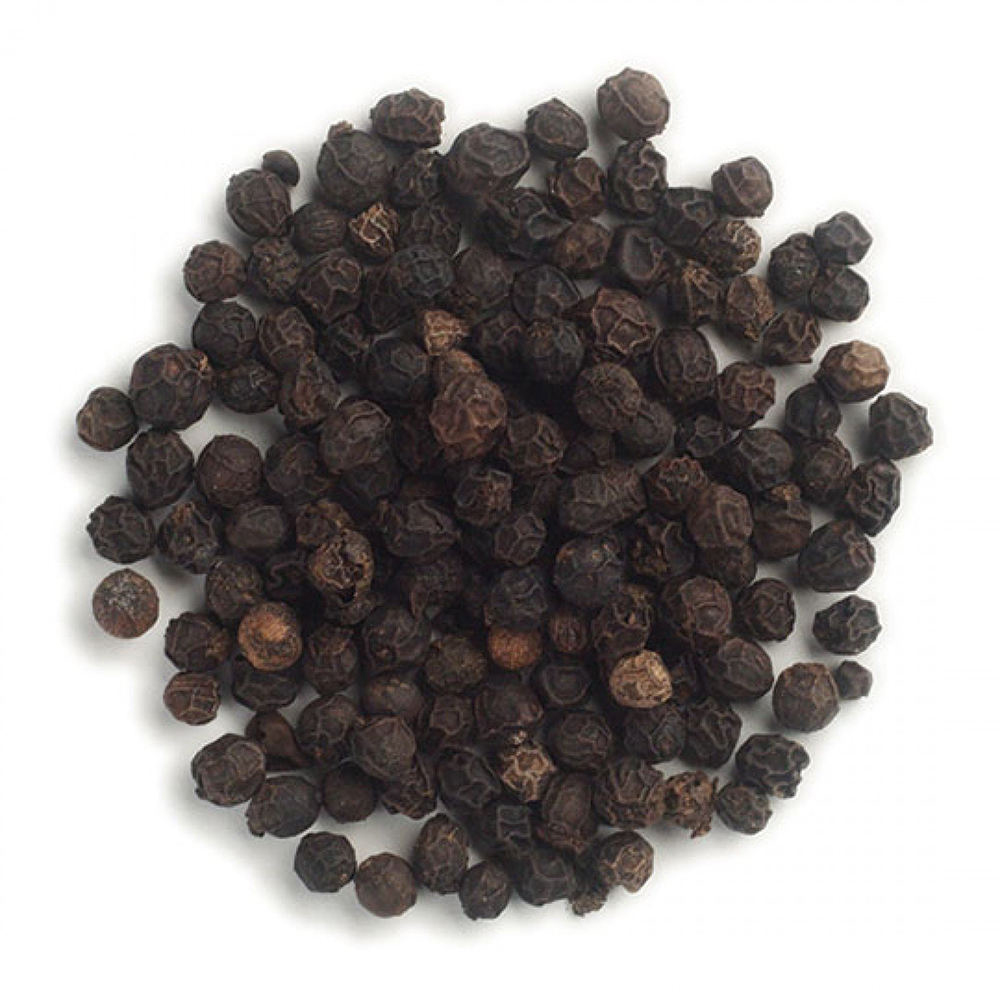
Black pepper is produced from mature, generally unripe green pepper berries that are dried with their outer fruit layers intact.
White pepper is commonly made from ripe berries that undergo soaking or other processing to remove those outer layers, leaving a pale seed.
That difference influences aroma chemistry, appearance, and consistency.
Black pepper generally retains more of the complex aroma associated with the outer fruit layers. White pepper often has a less prominent aroma but can deliver distinctive pungency and fermented or earthy notes.
Neither ingredient is universally stronger.
Piperine (C17H19NO3), the primary compound responsible for pepper pungency, occurs in both types. Its concentration varies with origin, growing conditions, and processing.
The practical distinction is application:
Manufacturers can compare commercial options through bulk black pepper (Hei Hu Jiao) 그리고 wholesale white pepper (Bai Hu Jiao).
White pepper’s peeling and soaking stages can introduce undesirable odors when processing is poorly controlled.
This matters particularly in light-flavored foods, where an unpleasant fermented note may be more noticeable.
I would not approve a white pepper lot based only on its clean appearance.
For buyers, the proper approach is to establish an approved aroma reference and evaluate incoming samples against it.
For a more detailed assessment, see our guide to white pepper odor control and microbial strategy.
The difference between whole and ground pepper is not merely convenience.
It affects aroma retention, grinding costs, particle-size consistency, and the way an ingredient moves through manufacturing equipment.
| 형식 | Primary advantage | Main limitation | Suitable applications |
|---|---|---|---|
| 통후추 | Flexible in-house grinding and generally better aroma protection during storage | Requires milling equipment and controls | Meat processing, coarse seasonings, custom spice blends |
| Ground black pepper | Ready for dosing and blending | Greater exposure to aroma loss, dust, and segregation | Snack seasonings, marinades, processed foods |
| Whole white pepper | Control over final particle size and pale appearance | Requires milling; odor consistency needs attention | Custom white-pepper formulations |
| Ground white pepper | Convenient distribution in light-colored products | Caking, dust, and off-odor risks | Cream soups, sauces, instant noodle seasoning |
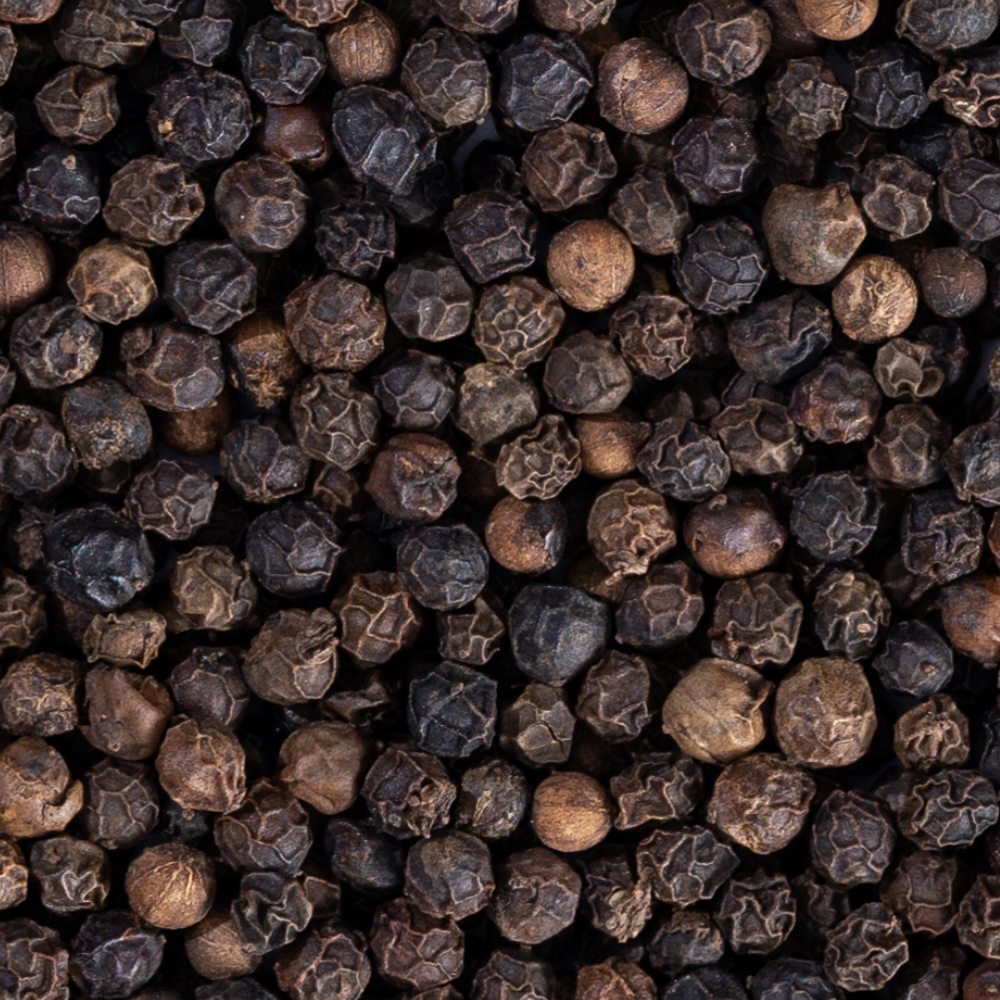
Grinding temperature deserves more attention than it receives.
A 2018 peer-reviewed study published in the Journal of Food Science and Technology compared conventional hammer milling with cryogenic grinding of black, white, and green pepper.
Researchers found that cryogenic grinding generally retained more essential oil and piperine than hammer milling.
For the specific cryogenically ground samples tested, essential oil concentrations were:
These are experimental measurements, not standard specifications for all commercial pepper.
The researchers also observed losses of important chemical constituents after six months of storage at 4°C.
The manufacturing lesson is straightforward: grinding method and storage conditions can change ingredient quality even when the botanical material is unchanged.
For companies purchasing ground pepper, I recommend evaluating the grinding process, time between milling and packaging, and aroma retention during the intended shelf life.
For manufacturers processing whole peppercorns internally, bulk density and grind yield deserve equal attention.
Our technical guide to black pepper density grades and grinding consistency explains why the same grinder settings may produce different results across incoming lots.
Dry spices are not automatically microbiologically safe.
A pepper ingredient can appear clean, smell normal, and still carry pathogens.
에 따르면 CDC investigation into Salmonella-contaminated pepper used in salami, an outbreak involving ready-to-eat meat products resulted in 272 reported infections across 44 U.S. states and Washington, D.C., between July 2009 and April 2010.
Investigators identified contaminated black and red pepper associated with the affected products.
The critical finding was that contaminated pepper was applied after the meat’s microbial lethality step.
That detail changes the purchasing conversation.
A manufacturer cannot assume a finished food is adequately protected if an untreated or contaminated seasoning is introduced after the principal pathogen-reduction process.
The concern remains relevant.
FDA의 Import Alert 28-04, published March 5, 2026, addresses Salmonella concerns involving black and white pepper shipments from Brazil.
The alert covers whole, ground, crushed, and other forms of pepper, with specified exceptions for eligible firms and products.
It does not mean every shipment from Brazil is contaminated. It demonstrates that both pepper types and multiple physical formats require appropriate controls.
For industrial procurement, I would prioritize three questions:
A certificate of analysis is important. But a laboratory result alone cannot replace a documented food-safety system.
I would use a three-stage qualification process rather than choosing solely from a supplier’s catalog.
Start with the finished product’s flavor, appearance, and processing requirements.
A pale cream soup may favor fine white pepper. A coarse meat seasoning may perform better with cracked black pepper.
Conduct sensory trials before and after the intended manufacturing process.
For thermally processed products, evaluate the finished flavor after heating rather than relying only on the aroma of the raw pepper.
A professional specification should address:
For ground pepper, avoid vague descriptions such as “fine powder.”
Specify the required sieve distribution or percentage passing designated screens.
For whole peppercorns, establish incoming quality parameters that relate to milling behavior and usable yield.
The lowest price per kilogram may not represent the lowest production cost.
Consider a hypothetical example.
If one ground pepper supplier charges $2/kg more than another, and the finished product contains 0.5% pepper, the additional ingredient expense is only $10 per metric ton of finished product.
That is an illustrative calculation, not a market price quotation.
If the higher-priced pepper improves blending consistency, reduces milling requirements, or prevents quality rejections, its additional cost may be justified.
But quality must be demonstrated, not assumed from price.
For manufacturers with specific requirements, GuoCao offers custom spice formulation and OEM/ODM solutions, including sample development and pilot production evaluation.
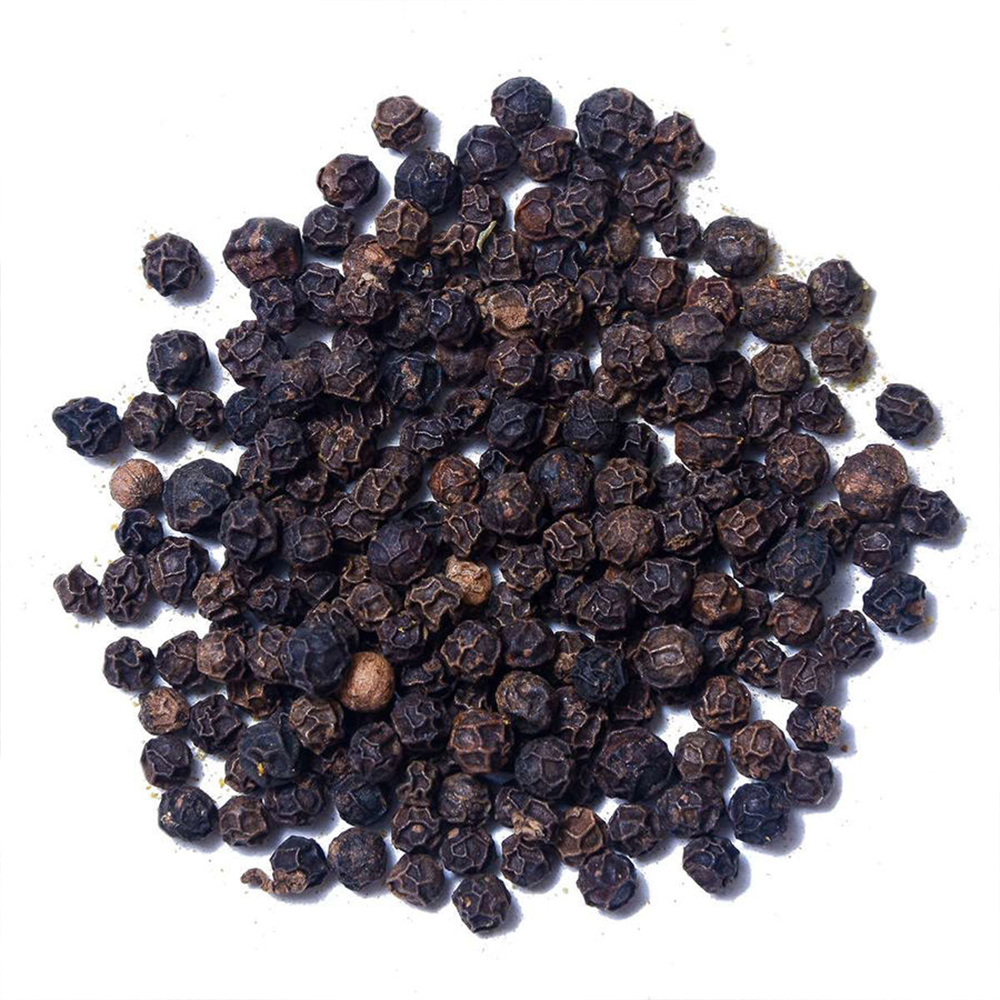
Black pepper and white pepper come from the same plant, 후추나무., but differ in how their outer fruit layers are processed. Black pepper retains these layers during drying, while white pepper has them removed, resulting in differences in appearance, aroma, pungency, and manufacturing applications.
Black pepper generally suits products requiring a recognizable pepper aroma. White pepper is useful when a lighter appearance is important.
Black pepper is generally better for products requiring a strong aromatic profile or visible seasoning, while white pepper is often preferred for light-colored formulations. The correct manufacturing choice depends on the finished product’s flavor requirements, processing conditions, particle-size specifications, food-safety controls, and ingredient consistency.
Neither variety should be approved without application-specific testing.
Whole peppercorns are usually preferable when manufacturers have controlled milling equipment and want flexibility over particle size and aroma retention, whereas ground pepper is more convenient for direct blending and automated dosing. The better option depends on production capabilities, quality specifications, handling losses, hygiene controls, and total manufacturing costs.
Evaluate both formats using representative production trials rather than relying solely on supplier quotations.
Black pepper vs white pepper is not a contest with one universal winner.
Black pepper often provides the aromatic intensity expected in savory foods. White pepper offers a distinct flavor profile and advantages in light-colored products.
Whole peppercorns provide milling flexibility. Ground pepper simplifies processing.
The right decision is the format that consistently meets your finished-product specifications, food-safety requirements, and production economics.
At GuoCao, we supply black pepper, white pepper, and other bulk spices for manufacturers and wholesale buyers.
Before committing to a production order, request a sample and define your preferred pepper type, particle size, annual volume, packaging requirements, and destination-market standards.
Contact GuoCao to discuss bulk pepper sourcing and request a sample.
A verified sample and a measurable specification are better foundations for manufacturing than a low quotation alone.