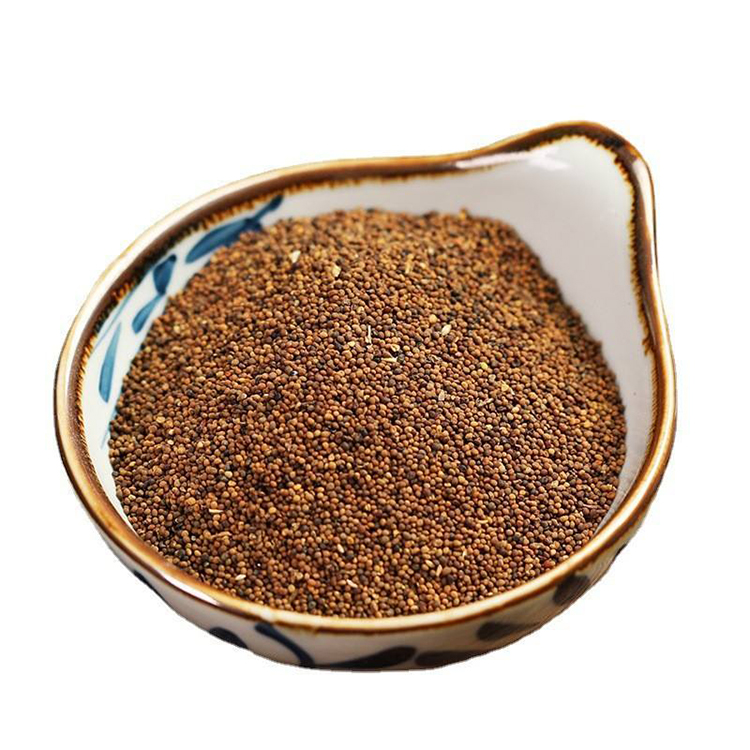
Jujube Seed (Suan Zao Ren): split rate and rancidity control for long shelf-life
Most buyers still treat jujube seed breakage as a cosmetic issue. I don’t. Once kernels split, oxidation accelerates, fines rise, and the lot gets harder to defend months later. The smarter play is simple: tighter split-rate control, lower oxygen, stable dryness, and lot-level rancidity checks.
The quiet shelf-life killer nobody specs tightly enough
Most buyers miss it.
They obsess over origin, color, and price-per-kilo, then sign off on a seed lot without forcing a real conversation about kernel integrity, headspace oxygen, packaging barrier, or oxidation markers, which is exactly how a “good-looking” Suan Zao Ren shipment turns dull, dusty, and stale long before the paper shelf-life says it should. Why do we keep pretending breakage is just cosmetic?
I’ll say it flatly: split rate is not a tidy little QC footnote. It is a shelf-life variable. The site you gave me already points in that direction. Its bulk Jujube Seed (Suan Zao Ren) page places the product inside the broader fruit and seed Chinese medicines category, while the company-wide pages stress GMP production, ISO 22000, third-party COA testing, customizable packaging, bilingual labeling, and a 1 kg MOQ with 7-working-day lead time. That combination tells me the commercial frame is already there; what is missing is a harder spec for split rate and oxidation risk.
Table of Contents
And the chemistry is not subtle. A 2024 Foods study on jujube seed oil oxidative stability found jujube seed oil had acidity of 0.762, higher polyphenol content than the comparison oils, about 90% scavenging capacity at 10 µg/mL, and the best thermal-oxidation stability among the tested seed oils over 60 days at 60°C. That is the good news. The bad news is baked into the same fact pattern: jujube seed is lipid-bearing material, so every extra crack increases exposed surface area and makes your warehouse discipline matter more, not less.
So what happens when you tolerate too much breakage?
We do not have a nice public 2024 pharmacopeial rule that says “Suan Zao Ren must stay below X% split rate,” and I’d rather be honest about that than invent one. But the storage logic is strong. In a 2024 study on soybean storage, broken-kernel content above 15% started to matter commercially, and 30% breakage increased acidity, moldy beans, and other loss markers during storage. Different seed, same commercial lesson: damaged kernels age worse. I treat that as a warning flare for jujube seed lots, especially if the buyer wants long transit, hot-climate distribution, or retail packs rather than quick turnover in bulk.
Split rate is a procurement issue before it becomes a warehouse problem
This is where buyers get lazy.
A weak purchase spec invites a weak outcome, because once the lot lands you can complain about odor, dust, or uneven decoction performance all day long, but you are arguing after the economic damage has already started. I would rather write the spec so tightly that the argument never begins.
What I would force into the purchase spec
I would ask for intact-kernel dominance, a stated maximum split/broken rate, a fines limit, a retained reference sample, and a packaging declaration that says more than “bagged for export.” On this site, the best internal pages to support that conversation are the Chinese herbal procurement guide, the custom Chinese herbal spice solutions page, and the bulk-herbs FAQ, because they align the commercial side—MOQ, OEM/ODM, documents, technical support—with the quality side—GMP, ISO 22000, and contaminant testing. That is the real internal-link spine for this article.
And I would not stop at “looks okay.”
For rancidity control, sensory review still matters, but not by itself. A 2024 paper on watermelon seed kernel rancidity identified 42 volatile compounds and 220 lipid molecules changing across rancidity development, with 1-pentanol and styrene standing out as practical biomarkers, while also noting that acid value and peroxide value remain common production indicators. That lines up with what serious buyers already know: odor is late-stage evidence, not early-stage control.
Rancidity control is really oxygen control, moisture control, and discipline
Here is the hard truth.
A clean COA cannot rescue a careless warehouse, and a beautiful origin story cannot rescue a bag that breathes, sweats, and warms up in transit.
The seed-storage literature is blunt about this. A 2024 review in Seeds says seed life is mainly governed by moisture content and temperature, and summarizes two rules that buyers should tape to the wall: for orthodox seeds, storage life roughly doubles with each 1–2% drop in moisture content across the relevant range, and doubles again for each 10°F (5.6°C) drop in storage temperature. The same review also notes hermetic storage is recommended to hold water content steady. A Wageningen-linked 2024 presentation based on multi-year seed-storage experiments adds something even more useful for packaging decisions: halving oxygen extended shelf life by a factor of 1.8, cutting oxygen from 21% to 1% produced about a 13x life extension under the tested conditions, and the practical tools were vacuum packaging, oxygen absorbers, or nitrogen flushing. That is not marketing copy. That is storage math.
Now look back at the site. The home page says GuoCao can provide kraft bags, vacuum pouches, and cartons, while the service pages emphasize technical guidance, COA reports, flexible customization, and third-party contaminant testing. For Suan Zao Ren, that means the right question is not “Can you sell me jujube seed?” It is “Can you pack my jujube seed for low oxygen uptake and stable dryness over my full channel timeline?” Big difference. Big financial difference.
The operating matrix I would use for jujube seed shelf life
These are buyer-side control bands, not statutory limits, and I am deriving them from the storage evidence above plus the broken-kernel evidence from oilseed handling. I would rather be conservative than explain away stale inventory six months later.
Control point
Working target
Why I care
Red flag
Jujube seed split rate
Preferably ≤15% broken/split material
Exposed lipid surfaces age faster and generate more fines
>30%
Fines / dust
As low as commercially possible
Dust carries aroma loss, uneven extraction, and faster oxidation
Visible dusting in bag corners
Packaging oxygen
Low headspace O₂ via vacuum, N₂ flush, or absorber
Lower oxygen materially extends dry-seed life
Loose-fill packs with air space
Storage temperature
Cool, dark, stable
Every 5.6°C drop can roughly double life in orthodox seed storage
Warm warehouse or container cycling
Moisture control
Dry lot + hermetic barrier
Moisture and oxygen together speed deterioration
Paper sacks in humid channels
Release testing
Sensory + acid/peroxide marker + contaminants
Odor alone catches problems too late
“Visual only” release
The regulatory mood is harsher now, and buyers should act like it
Dry botanicals do not get a free pass anymore.
In May 2024, Reuters reported that MDH had seen an average 14.5% of its U.S. shipments rejected since 2021 over bacterial presence, based on U.S. regulatory data analysis. Days later, Reuters also reported that the UK had applied extra control measures on all spice imports from India after ethylene oxide allegations, with the Food Standards Agency stating that ethylene oxide is not allowed there and that residue limits apply to herbs and spices. Different product family, same lesson for Suan Zao Ren buyers: dried plant materials are under sharper scrutiny than many sellers admit.
And the U.S. FDA has been equally plain. In a 2024 warning letter to Far East Summit LLC, FDA stated that botanical dietary ingredients are frequently at risk for heavy metal, microbial, and pesticide contamination due to growing, harvesting, and processing factors, citing the need for contaminant limits under 21 CFR 111.70(b)(3). That matters here because rancidity and contamination are often managed by different teams, and that split is a mistake. A lot that is microbiologically acceptable but oxidation-sloppy still burns your brand. (U.S. Food and Drug Administration)
So yes, I want contamination controls. But I also want the boring stuff buyers skip: split rate, barrier packaging, headspace control, and stored reference samples. That is how you stop “mystery aging” before it becomes returns, discounts, or silent customer churn.
FAQs
What is jujube seed split rate?
Jujube seed split rate is the share of a lot made up of cracked, chipped, or broken kernels after cleaning, drying, and packing, and it matters because exposed internal lipids oxidize faster, create fines, raise moisture sensitivity, and make Suan Zao Ren age unevenly during storage and transit. I treat it as a shelf-life KPI, not a cosmetic grading detail.
How do you prevent jujube seed rancidity?
Preventing jujube seed rancidity means reducing oxygen, moisture swings, heat exposure, and mechanical damage at the same time, because Suan Zao Ren is a lipid-bearing seed and the stale, dusty off-notes appear faster once kernels split and packaging allows oxygen exchange. In practice, that means tighter breakage control, hermetic packaging, cool storage, and lot-level oxidation checks instead of relying on appearance alone.
What is the best storage method for Suan Zao Ren?
The best storage method for Suan Zao Ren is hermetic, moisture-proof packaging kept cool, dark, and stable, preferably with low headspace oxygen through vacuum sealing, nitrogen flushing, or oxygen absorbers, because lower temperature, lower moisture, and less oxygen consistently extend seed life in dry-storage systems. If your route is hot or slow, ordinary loose bags are asking for trouble.
Which tests should buyers request for long shelf-life jujube seed?
The minimum buyer test set for long-shelf-life jujube seed is a lot-level split-rate check, moisture, sensory review, microbiology and contaminant screening, plus oxidation markers such as acid value, peroxide value, or retained reference samples, because a clean identity test alone will not tell you whether the batch will smell old in ninety days. That is the difference between legal compliance and commercial durability.
Our low MOQ of 1 kg (2.2 lb) makes it easy to order Chinese herbal slices or wholesale Chinese medicine herbs. Private-label and bilingual labeling are also available.
Delivery Cycle & Support
We have a fast 7-day lead time. We provide free samples, COA reports, and technical support to help you bring high-quality bulk Chinese herbs to market.
Quality & Certifications
Our products are manufactured in a GMP-certified facility and meet ISO22000 standards. All Chinese herbs are third-party tested for heavy metals, pesticides, and microorganisms.