You sell animal- and mineral-based medicinals. You want real market access, not headaches at customs. Let’s cut the fluff and go straight to what regulators actually look for—and how GuoCao fits in. I’ll keep it plain, a bit chatty, and very practical. Some sentences short. Some longer. That’s how we talk.
Quick note: links below point only to your site: GuoCao. No outside links, no cost talk.
CITES compliance for animal-derived ingredients (Hippocampus, pangolin, bear bile): what it really means
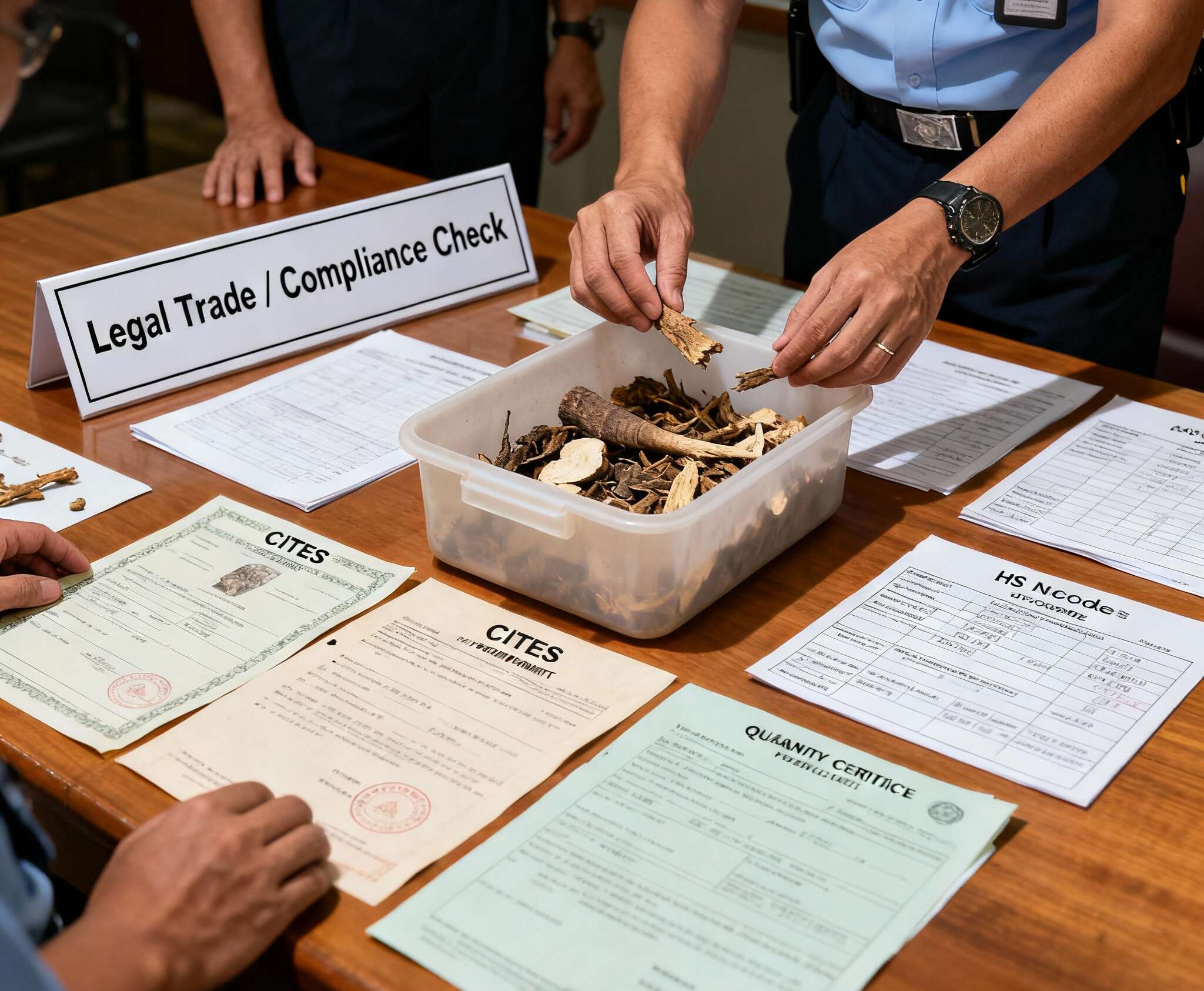
If a material comes from a protected species, CITES rules apply to the animal, its parts, and any finished product. Customs doesn’t care that your batch is “tiny.” They care that permits exist and the source is legal and traceable.
What to do, in plain steps
Map every animal-source input against CITES Appendix (I/II/III).
Check local wildlife trade laws (they mirror CITES but differ in paperwork).
Prepare USFWS/port permits (US) or EU wildlife trade docs (EU).
Put HS code + Latin binomial + country of origin on your shipping docs.
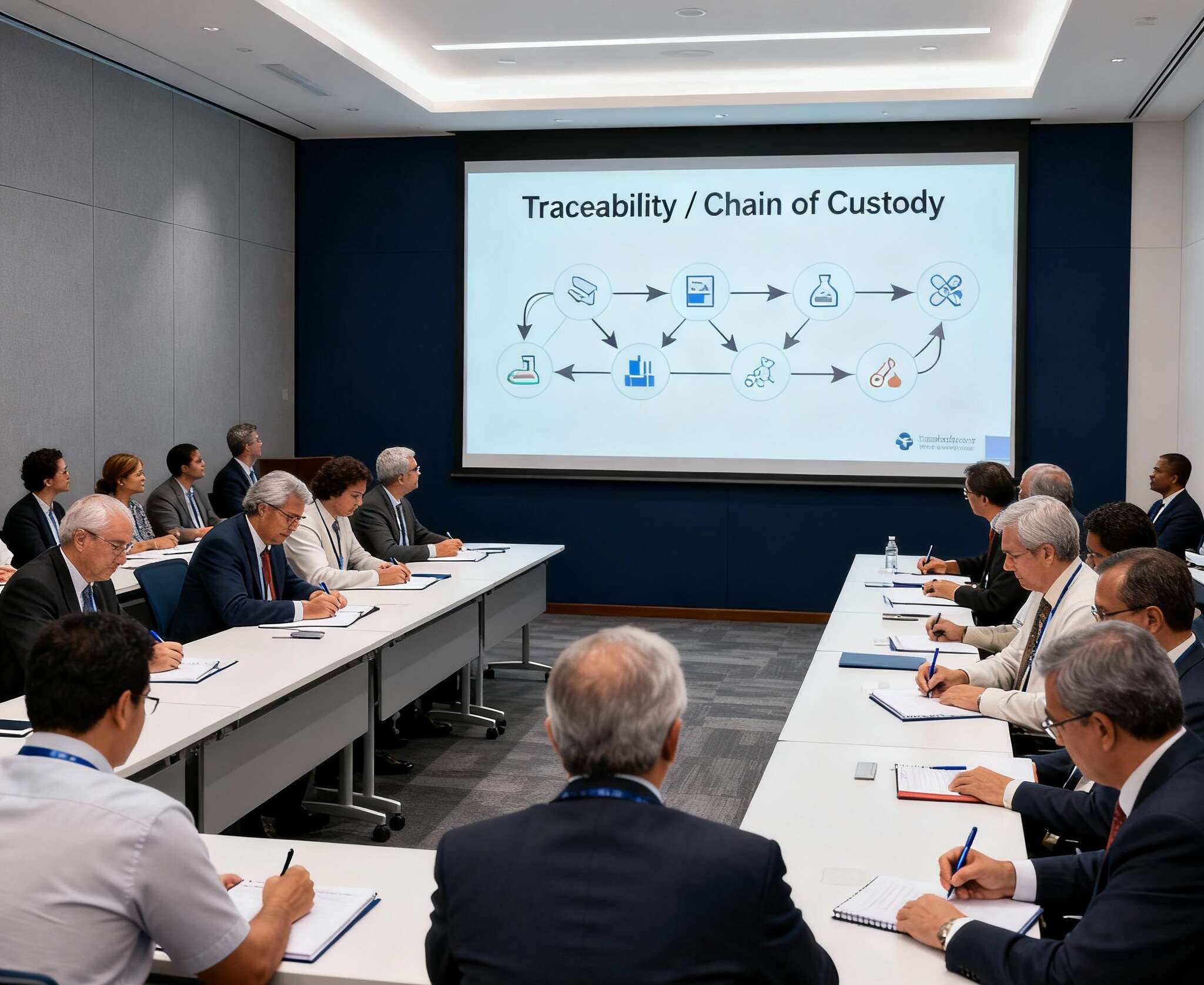
Keep a permit–batch crosswalk in the batch record. No permit? Don’t ship.
Real-world patterns (no names, no drama): shipments with seahorse (Hippocampus spp.) get flagged without Appendix II paperwork. Pangolin-related goods? Ultra-high risk. Even “ancient stock” stories don’t help if the paper chain is broken.
Why GuoCao helps here
GuoCao runs a GMP decoction pieces line, ISO 22000 food safety system, climate-controlled warehouses, and third-party COA capability. That makes traceability and document hygiene easier. When customs calls, you answer with data, not stories.
Explore categories like Animal & Mineral on your site to align SKU planning with compliance scope:
Product classification: DSHEA vs EMA Traditional Herbal Medicinal Products (THMP)
Classification drives everything—claims, testing, dossier, and labeling.
United States (DSHEA): Animal/mineral materials can fall under dietary supplements if intended for ingestion as “supplements,” but you cannot make disease treatment claims. You use structure/function claims with the standard disclaimer and keep substantiation files.
European Union / UK: The THMP route is for herbal products (plant-based). Many animal/mineral products sit outside the herbal registration path and land either as foods/food supplements (with strict claim rules) or medicines (full marketing authorization). Classification dictates your MAH responsibilities and pharmacovigilance.
Bottom line: Nail the category first, or you’ll rework labels, websites, even cartons. Time sink.
Labeling & claims: FDA structure/function and EU Regulation 1924/2006
Keep labels clean, consistent, and defensible. Don’t promise to cure. Don’t imply diagnosis or prevention.
Table 1 — Claims & label quick rules (US/EU)
Topic
United States (DSHEA)
EU / UK (Reg. 1924/2006)
Practical tip
Disease claims
Not allowed for supplements
Not allowed for foods/supplements
Use structure/function (“supports…”) not “treats…”.
Structure/function claims
Allowed with disclaimer & substantiation
N/A (use only authorized health claims)
Keep files: literature pack, internal memo, QC batch data.
Disclaimers
Required (“This statement has not been evaluated…”)
Not the same mechanism; rely on authorized list
Pre-print disclaimers on cartons to avoid foil waste.
Label core
Identity, net contents, directions, Supplement Facts, ingredients, allergens, firm info
Align font sizes with local regs; yes, they measure.
Copywriting tip: Swap “improves liver disease” for “supports healthy liver function.” It’s boring, but it keeps your listing live.
Elemental impurities: ICH Q3D, USP <232>/<233>, and USP <2232> (supplements)
Animal and mineral inputs naturally carry heavy-metal risk. Regulators expect a risk assessment (per ICH Q3D), then suitable controls.
Table 2 — Elemental impurities playbook
Item
What regulators expect
What you implement
GuoCao edge
Risk assessment
Identify elements of concern by route (oral), dose, duration
QRM per ICH Q9; supplier qualification; incoming testing
Established vendor QA, long-term trending, COA bank
Limits
Q3D-based PDEs; USP <232> limits for drug products; USP <2232> for dietary supplements
Set release specs; align with worst-case intake
In-house & 3rd-party COA, report units readers understand
Methods
Validated ICP-MS per USP <233>
Method verification; system suitability; matrix spikes
Tech transfer templates; stability protocol libraries
Ongoing control
Annual Product Review, CAPA when OOS
Trending charts, lot genealogy, mock recall
ISO 22000 + GMP records simplify audits
Real-world issue you’ve seen in the news: certain traditional products got flagged for lead/mercury/arsenic. That’s why you test and why you keep the papers. No papers = no market. Simple.
At the border, good paperwork beats “good intentions.” You need to know who inspects what.
US: Animal-derived parts—CITES or not—can trigger U.S. Fish & Wildlife Service checks. Some animal by-products also touch APHIS rules (veterinary). Be ready with CITES permits, declarations, and HS code right the first time.
EU/UK: EU wildlife trade rules implement CITES; Member States enforce. Your importer of record must keep the file and update it upon request.
Checklist you can paste into your SOP
Ingredient list with Latin names and CITES status.
Deviation path: if any doc missing at port, who pauses the shipment? Who calls who?
Quality system that scales: GMP + ISO 22000 + third-party COA
This is where GuoCao quietly earns trust. The company runs:
GMP decoction-pieces production lines,
ISO 22000 food safety system,
Normal/cool/modified-atmosphere warehousing,
Third-party COA testing access,
Annual capacity ~2500 tons, OEM/ODM, and functional beverage with microbial cultures/enzymes already in production.
That stack supports supplier audits, batch records, lot release, CAPA, stability, and mock recalls. It also supports multi-region labeling so one SKU doesn’t explode into ten. If you sell to the US, EU, Australia, Japan, Korea, Canada, Malaysia, Philippines and beyond, you need that backbone. Otherwise, one recall and the brand’s gone. Yea, it hurts.
Point buyers to the relevant ranges on your site so they can self-serve:
Case snapshots (real regulatory themes, no made-up stories)
CITES paperwork missing for seahorse parts → shipment detained. Importer had product ID data but no permits. Resolution took months. The lesson: verify Appendix status before P/O, not after packing.
Supplements website with disease claims (e.g., “treats, cures, prevents…”) → platform takedown + warning. Quick fix was to rewrite claims into structure/function and add the standard disclaimer, then submit a 30-day notification (US context).
Elemental impurities exceed limits in mineral-heavy formula → batch failed. The team used supplier change control and matrix-matched ICP-MS to pass on re-manufacture. Don’t rely on a single quarry or single region; source diversity reduces risk.
Buyer checklist (B2B): from sourcing to lot release
H3 — Sourcing & vetting
Screen CITES status + local wildlife laws.
Lock HS code early.
Qualify vendors: audit + samples + COA verification.
Set release specs including elemental impurities, micro, and ID.
H3 — Manufacturing & docs
Batch record with permit numbers and COA attachments.
Label proofs: one for US (DSHEA), one for EU (authorized claims), others as needed.
Hold prints until QA approves the artwork matrix.
Stability plan if you claim shelf life.
H3 — Pre-ship & post-market
Port file: invoice, packing, permit set, HS, origin.
Website claim review (pre-launch).
Complaint/AE intake and PV/Yellow Card awareness (UK context).
Annual Product Review + CAPA trending.
Data-backed quick table you can drop into decks
Table 3 — Compliance snapshot for animal & mineral products
Dimension
What regulators expect
Actions that work
Source names (for your internal ref)
Protected wildlife
Legal, traceable origin; valid permits for parts/products
CITES Appendix check → permit → batch mapping
CITES, EU Wildlife Trade Guidance, USFWS
Classification
Correct route (supplement vs medicine vs food)
Gap assessment by market; lock dossier type
DSHEA, EMA THMP framework
Claims & labels
No disease claims; only authorized health claims (EU)
(We’re naming sources, not linking. Keep the PDFs in your Regulatory Library.)
Commercial value (why this matters for buyers)
Compliance isn’t just defense. It’s speed to shelf and channel stability.
Distributors want predictable port clearance and clean labels.
Hospitals/clinics want COA stack and traceable lots.
Supplement houses want turnkey OEM/ODM with copy that survives platform audits.
Functional beverage brands need consistent organoleptics and micro/metal control.
GuoCao already ships to 30+ countries/regions and supports private label. Less friction to onboard. Less rework. You spend time selling, not re-printing cartons. We dont count the hours, but you feel the difference.
Our low MOQ of 1 kg (2.2 lb) makes it easy to order Chinese herbal slices or wholesale Chinese medicine herbs. Private-label and bilingual labeling are also available.
Delivery Cycle & Support
We have a fast 7-day lead time. We provide free samples, COA reports, and technical support to help you bring high-quality bulk Chinese herbs to market.
Quality & Certifications
Our products are manufactured in a GMP-certified facility and meet ISO22000 standards. All Chinese herbs are third-party tested for heavy metals, pesticides, and microorganisms.