Safflower Bulk Supply Guide: Color Strength, Moisture, and Foreign Matter
Buying safflower by color alone is a mistake. This guide explains how professional buyers should evaluate Carthamus tinctorius bulk supply using color strength, moisture, foreign matter, botanical identity, chemical markers, drying records, and lot-specific quality evidence.
A sack of bright red safflower can photograph beautifully and still be the wrong lot to buy.
That is the uncomfortable starting point.
When I evaluate safflower bulk material, I care about color, but I care even more about what created that color, how the flowers were harvested and dried, how much moisture remains, what percentage of stems and unrelated material traveled with the petals, and whether the supplier can connect the shipment to actual analytical results rather than a generic certificate.
Why should a buyer accept less?
Safflower, botanically identified as Carthamus tinctorius L., belongs to the Asteraceae family. Washington State University notes that the crop was historically valued for its flowers as coloring materials and dyes long before seed oil became its dominant modern agricultural use. Washington State University’s safflower reference
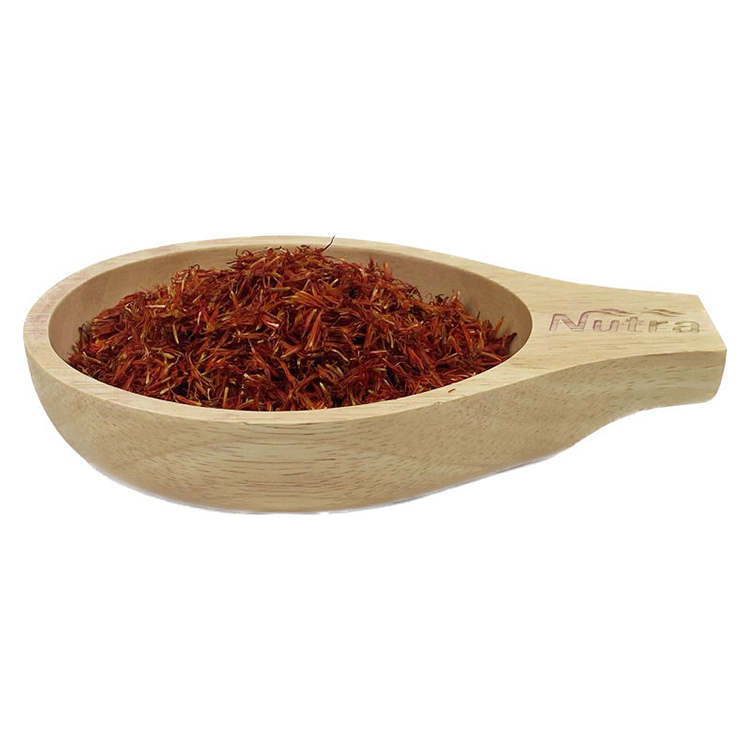
For herbal buyers, however, the trade is not really about the oilseed crop. The relevant material is the dried flower, commonly traded as Hong Hua, Carthami Flos, safflower flower, or bulk safflower petals. Buyers evaluating Chinese-origin material can compare those naming conventions with the site’s Safflower (Hong Hua) bulk supply page, which identifies the botanical source as Carthamus tinctorius and the pharmacopoeial material as Carthami Flos.
Safflower Color Strength Is Useful, but Visual Redness Is Not a Specification
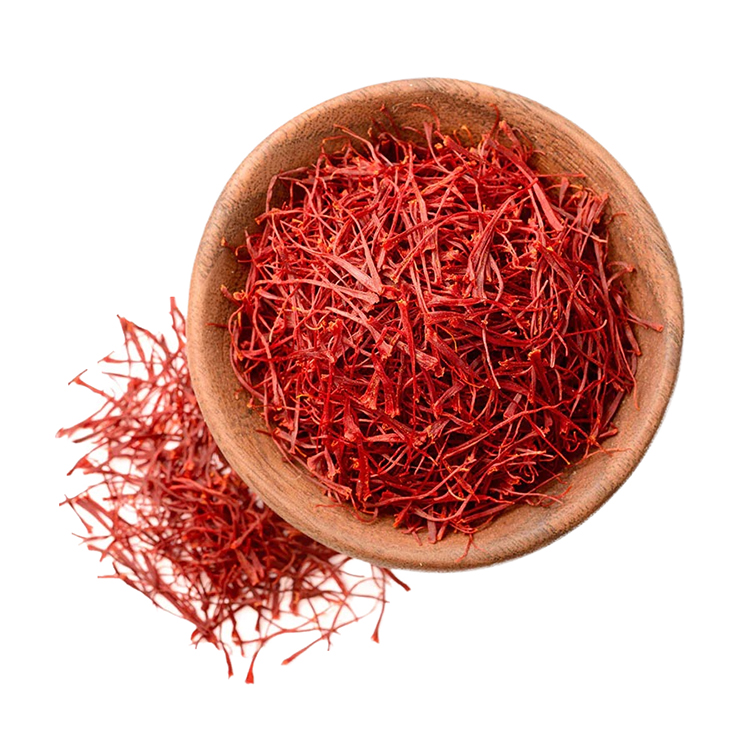
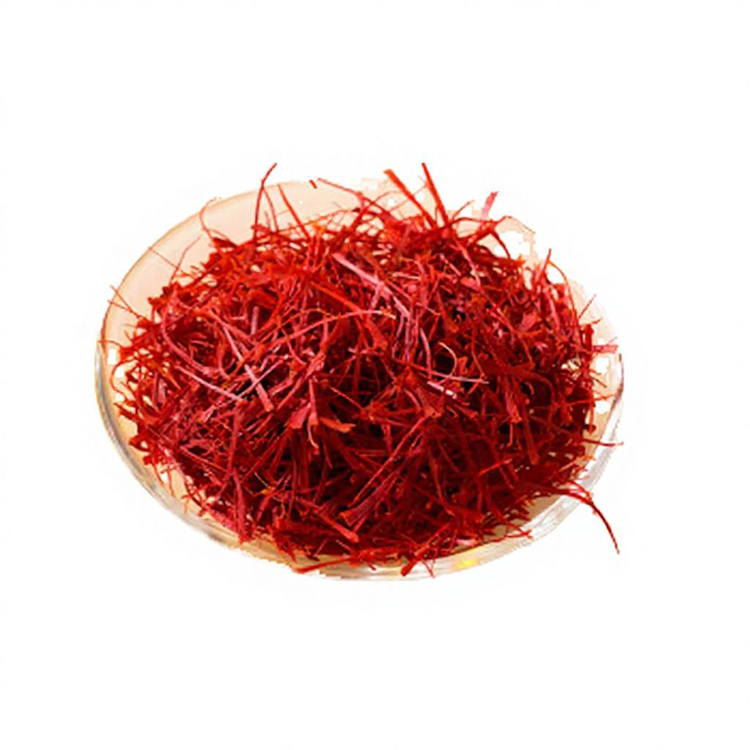
Color sells safflower.
It also fools buyers.
Specs beat stories.
A supplier can photograph one brilliant handful under warm lighting, increase saturation during editing, and then ship a heterogeneous lot containing orange flowers, faded florets, brown fragments, stems, dust, and material exposed to excessive heat during drying; unless the purchase specification defines how color will actually be judged, the argument after delivery becomes subjective and expensive.
So what exactly does “strong color” mean?
Color Should Be Measured Against Chemistry, Not Just a Photograph
Two important safflower pigment groups are commonly discussed in quality research: hydroxysafflor yellow A (HSYA) and carthamin. They do not behave as a simple “redder equals stronger” equation.
A study covering 144 safflower cultivars examined 370 floret samples and found that HSYA and anhydrosafflor yellow B changed significantly as flowers moved through yellow, orange, and red developmental stages. The researchers found relationships between pigment composition and visual color, but the relationship was compound-specific rather than a simple universal color score. Read the safflower pigment study in Food Research International/PubMed
A 2025 study went further by comparing HSYA and carthamin across different petal colors and developmental stages using CIELAB color-space parameters. That matters commercially because CIELAB gives buyers measurable L*, a*, and b* values instead of vague phrases such as “deep red” or “premium orange-red.” Review the 2025 safflower color and pigment research
My preference is simple: if color genuinely affects your finished tea, extract, herbal formulation, dye application, or consumer-facing product, approve a retained reference sample and an instrumental color range.
Do not write “bright red” and call the specification finished.
A Better Color Approval System
For commercial bulk safflower petals, I would separate color control into four layers:
Visual reference: approve a sealed retained sample from the accepted lot or pre-shipment sample.
Instrumental measurement: use CIELAB L*, a*, and b* values when color uniformity materially affects the finished product.
Chemical markers: use HPLC or the applicable pharmacopoeial method when medicinal-grade specifications require marker compounds.
A lot can show strong average redness while still containing unacceptable brown petals. Average color cannot hide defects if the specification separately limits them.
Safflower Moisture Is a Storage Risk, Not Just a COA Number
Moisture problems rarely look dramatic when the goods leave the factory.
They become dramatic later.
Bulk dried flowers have large surface areas, fragile structures, and repeated exposure to ambient air during harvesting, drying, sorting, packing, repacking, sampling, warehouse storage, container loading, and customs inspection. A lot that leaves the processing site reasonably dry can gain moisture again if packaging and storage are weak.
This is why safflower moisture content belongs in the purchase contract.
Pharmacopoeial Numbers Give Buyers a Useful Reference Point
A peer-reviewed comparison of Chinese and European pharmacopoeial standards reports that the Chinese Pharmacopoeia uses hydroxysafflor yellow A ≥1.0% and kaempferol ≥0.050% as chemical quality parameters for Carthami Flos. The same review reports the European Pharmacopoeia approach as total flavonoids ≥1.0%, expressed as hyperoside. See the pharmacopoeial comparison study
Published material referring to the Chinese Pharmacopoeia 2020 edition also reports a water-content limit of no more than 13.0% for Carthami Flos.
That does not mean every food, tea, cosmetic, extraction, or international herbal buyer should blindly copy 13.0% into a contract.
I would often ask for tighter commercial control when long-distance shipping, warm climates, long storage periods, or highly moisture-sensitive packaging conditions justify it.
Why buy right against the maximum?
Drying Method Can Change More Than Water Content
A recent study indexed by PubMed examined safflower dried using different processes and found significant differences in chemical composition, color, morphology, odor, and microstructure. Freeze-dried material retained higher levels of certain safflower yellow pigments than samples produced with other drying treatments. See the safflower drying-process study
This does not mean every buyer should demand freeze-dried safflower.
That would be commercially unrealistic for many applications.
It does mean the drying process belongs in supplier qualification because a supplier cannot credibly promise repeatable color and chemical performance while changing drying conditions without control.
Ask:
Was the material sun-dried, shade-dried, hot-air dried, or processed by another controlled method?
What temperature range was used?
How long did drying take?
Was material piled while still warm?
How was moisture checked before packing?
Was the tested COA sample collected before or after final packing?
What packaging prevents moisture reabsorption?
A supplier who cannot explain the drying process is giving you a commodity story, not a quality system.
For a broader framework, the site’s 2026 bulk herb procurement plan explains why moisture, lot identity, traceability, laboratory proof, and storage conditions should be managed together rather than as isolated COA fields.
Foreign Matter Is Where Cheap Safflower Gets Expensive
Foreign matter sounds boring.
Good.
Boring specifications prevent expensive claims.
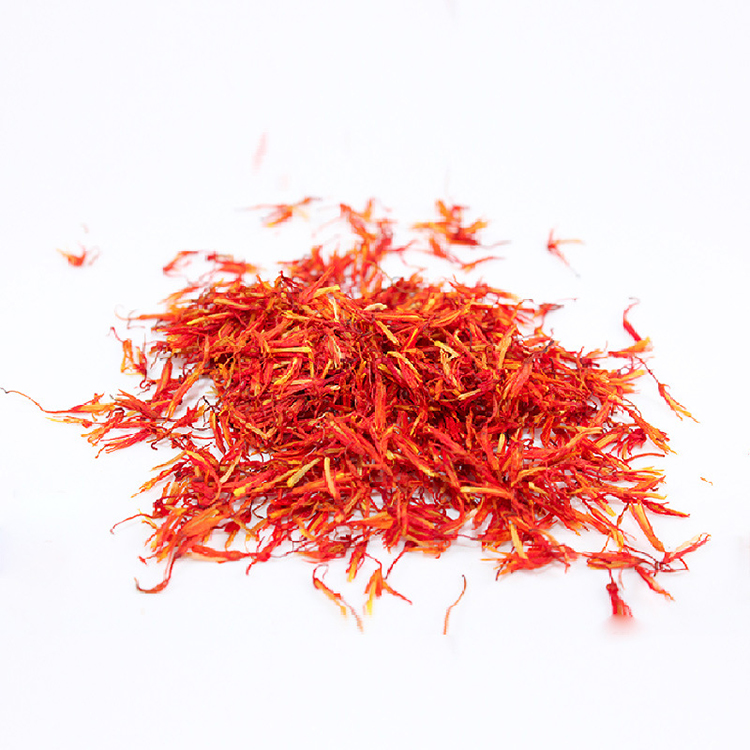
In safflower bulk trade, foreign matter may include stems, receptacle fragments, leaves, unrelated plant material, soil particles, stones, fibers, packaging debris, excessive dust, insects, or other material that does not belong in the purchased flower specification.
And there is another category buyers should track separately: safflower material that belongs botanically but fails the selected grade.
Think thick stem pieces, excessively brown petals, degraded florets, or immature material.
Do not hide everything under one number.
Use Separate Limits for Foreign Matter and Grade Defects
I would structure the physical specification like this:
Approved reference sample plus CIELAB range where necessary
Makes “strong color” measurable
Moisture / water
Define contractual maximum; medicinal programs may reference applicable pharmacopoeial limits
Controls storage and deterioration risk
HSYA
Test when pharmacopoeial or formulation requirements apply; ChP literature reports ≥1.0%
Connects appearance with chemical quality
Kaempferol
Test where ChP-based specification applies; literature reports ≥0.050%
Additional identity/quality marker
Foreign matter
Set a measurable buyer-defined maximum by weight
Controls stems, debris and unrelated material
Brown/damaged material
Specify separately from foreign matter
Stops defective safflower from hiding inside the purity result
Insects / mold
No visible infestation or mold; microbiological testing based on intended use
Supports storage and food/herbal safety controls
Lot traceability
Batch number, origin, harvest/processing data and matching COA
Makes claims investigable
I deliberately do not call one foreign-matter percentage the “international safflower standard.”
There is no reason to pretend one universal number fits every safflower use and every destination market.
A strict tea buyer may demand cleaner visual material than an extraction facility. A medicinal program may prioritize pharmacopoeial conformity. A natural-color processor may care far more about pigment yield than whether every petal looks attractive in a transparent retail pouch.
The contract should follow the use.
For buyers building specifications across multiple botanicals, the site’s Chinese herbal slices supplier checklist is useful because it pushes the same principle: define botanical identity, plant part, processing, analytical requirements, origin, and documentation before negotiating the commercial order.
The Safflower Supply Market Is Bigger Than Medicinal Petals
One statistic deserves context.
USDA estimated 130,000 acres of safflower planted in the United States in 2025, up 11% from 2024, while noting that this was still the third-lowest U.S. planted area since national records began in 1991. Forecast harvested area was 122,000 acres. See USDA’s 2025 safflower acreage report
California alone reported 33,500 planted acres, 33,000 harvested acres, an average yield of 2,200 lb/acre, and 72.6 million pounds of safflower production for 2025. See USDA/NASS California agriculture data
But buyers should not misuse those numbers.
Most agricultural safflower statistics describe the oilseed crop, not pharmaceutical-grade Carthami Flos or carefully sorted bulk safflower petals.
That distinction matters.
A country can produce large volumes of safflower seed without automatically creating a large supply of properly harvested, dried, cleaned, traceable flower material. Flower collection adds labor. Timing matters. Drying matters. Petal damage matters. Medicinal processing adds another specification layer.
This is why “safflower-producing region” and “reliable Carthami Flos origin” are not interchangeable phrases.
How I Would Qualify a Safflower Wholesale Supplier
Finding a safflower wholesale supplier is easy.
Qualifying one is not.
Step 1: Freeze the Botanical Description
The purchase order should identify:
Botanical name:Carthamus tinctorius L. Plant part: dried flower / florets as applicable Trade name: Safflower / Hong Hua Pharmacopoeial name where applicable: Carthami Flos Physical form: whole dried flower material, petals/florets, tea cut, powder, or extraction grade Origin: country and, where commercially relevant, growing region
Do not accept a quotation that simply says “Safflower Red Flower.”
Names travel badly across languages.
Step 2: Approve the Actual Grade Before Price Negotiation Is Finished
Ask for a representative sample.
Then record:
Color
Aroma
Petal integrity
Stem percentage
Foreign material
Brown or damaged material
Moisture
Particle distribution
Batch number
Photograph the approved sample under controlled lighting.
Keep it.
A reference sample resolves arguments faster than twenty emails about what “Grade A” was supposed to mean.
Step 3: Demand Numerical COA Results
I dislike COAs that say:
Moisture: Pass Heavy metals: Pass Pesticides: Pass Microbiology: Pass
Pass against what?
A useful safflower COA should identify the lot, analytical method, unit, specification limit, numerical result, laboratory, report date, and approval status.
If the product enters herbal, tea, food, supplement, or other regulated supply chains, the testing plan may also include:
Botanical identification
Moisture or loss on drying
Total ash
Acid-insoluble ash where applicable
Foreign matter
HSYA
Kaempferol or other required markers
Pb, Cd, As, and Hg
Pesticide residues
Total aerobic microbial count
Yeast and mold
E. coli
Salmonella
Aflatoxins where risk assessment requires them
Sulfur dioxide where processing risk justifies testing
The test panel should follow intended use and destination regulation, not an internet checklist.
Step 4: Match the COA to the Shipment
This sounds obvious.
It is routinely mishandled.
The lot number on the COA should match the bags, cartons, invoice, packing list, and internal traceability record.
For international sourcing, review the site’s detailed guide to documents needed to import Chinese herbal ingredients. Its central point is exactly right: customs paperwork, regulatory records, and quality evidence are separate layers, and a COA cannot repair mismatched shipment descriptions.
How to Source Safflower in Bulk Without Buying the Wrong Lot
If someone asks me how to source safflower in bulk, I would reduce the process to eight decisions.
Third, approve a physical grade using a representative sample.
Fourth, define color numerically if color affects product performance.
Fifth, establish a moisture maximum appropriate to the market and storage period.
Sixth, set separate limits for foreign matter and damaged safflower material.
Seventh, define the analytical panel before requesting the final quotation.
Eighth, make shipment acceptance dependent on lot-specific evidence.
Simple.
Not easy.
The best safflower supplier is not necessarily the supplier showing the reddest sample or quoting the lowest price per kilogram. It is the supplier capable of repeating an agreed specification across commercial lots and explaining deviations when nature refuses to behave exactly like a spreadsheet.
That repeatability is what buyers are actually purchasing.
FAQs
What is safflower bulk?
Safflower bulk refers to commercial quantities of dried Carthamus tinctorius flower material purchased for herbal, tea, extraction, natural-color, food, cosmetic, or traditional medicine production under an agreed botanical, physical, chemical, contaminant, packaging, and lot-traceability specification.
In Chinese herbal trade, the flower is commonly called Hong Hua and may be specified as Carthami Flos for pharmacopoeial applications. Buyers should distinguish dried flower material from safflower seed, oil, and extracts because each follows a different quality system and commercial specification.
What should buyers check when purchasing bulk safflower petals?
Buyers purchasing bulk safflower petals should verify botanical identity, plant part, origin, color consistency, moisture, foreign matter, damaged or brown material, drying method, lot traceability, packaging, contaminant testing, and any chemical markers required by the intended market or pharmacopoeial specification.
For medicinal-grade Carthami Flos, chemical assays become especially important. Published pharmacopoeial comparisons report HSYA and kaempferol as Chinese Pharmacopoeia quality markers, while European Pharmacopoeia specifications use a total-flavonoid approach.
Does darker red safflower mean higher quality?
Darker red safflower does not automatically mean higher quality because visible flower color is influenced by pigment composition, developmental stage, drying conditions, storage, variety, and degradation, while different chemical markers do not always correlate with visual redness in the same way.
Research on 144 cultivars demonstrated that HSYA, anhydrosafflor yellow B, and visible color change together during flower development, but not as one simple “redder is better” relationship. Instrumental color measurement plus chemical testing provides stronger evidence than appearance alone.
What is an acceptable safflower moisture content?
Acceptable safflower moisture content is the maximum water level defined by the buyer’s intended use, applicable pharmacopoeia, storage conditions, packaging system, and destination requirements; published references to the Chinese Pharmacopoeia 2020 standard for Carthami Flos report water content not exceeding 13.0%.
Commercial buyers may choose a tighter internal target when long transit times, humid climates, or extended warehouse storage increase risk. The important point is to write the limit into the contract and verify the shipped lot rather than relying on “well dried” as a description.
What is safflower foreign matter?
Safflower foreign matter is material present in a commercial safflower lot that does not belong to the agreed dried flower specification, potentially including unrelated plants, soil, stones, fibers, packaging fragments, excessive stems, insects, or other extraneous debris depending on how the purchase specification defines the grade.
I recommend separating true foreign matter from damaged safflower material. Brown petals, degraded florets, and excessive stem pieces may originate from the correct plant yet still fail the buyer’s visual or processing grade.
What is HSYA in safflower?
Hydroxysafflor yellow A, commonly abbreviated HSYA, is a water-soluble quinochalcone pigment found in Carthamus tinctorius flowers and used as an analytical quality marker for Carthami Flos in Chinese pharmacopoeial quality control.
A pharmacopoeial comparison published in the scientific literature reports a Chinese Pharmacopoeia requirement of HSYA ≥1.0% for Carthami Flos, alongside kaempferol ≥0.050%. Buyers should verify the current applicable pharmacopoeia and test method for their market before placing commercial orders.
How do I find the best safflower supplier?
The best safflower supplier is a supplier that can repeatedly deliver the correct Carthamus tinctorius flower grade with controlled moisture, agreed color, low foreign matter, lot-specific testing, traceable origin, stable processing, suitable packaging, and documentation matching the buyer’s destination and intended use.
Do not rank suppliers by sample color and kilogram price alone. Compare analytical results, drying control, retained samples, complaint handling, batch consistency, laboratory evidence, packing conditions, and the supplier’s ability to explain exactly what will happen if a commercial lot misses specification.
Build the Safflower Specification Before You Request the Final Price
Do not send a supplier a message saying:
“Please quote your best safflower.”
Send a specification.
State Carthamus tinctorius L. State the plant part. State the intended use. Define the required color or approve a reference sample. Set moisture and foreign-matter limits. List required chemical markers and contaminant tests. Specify packaging. Require a lot-specific COA. Then ask for price.
That changes the conversation immediately.
If you are currently sourcing Carthamus tinctorius bulk, Hong Hua, or dried safflower petals, start by reviewing the Safflower (Hong Hua) bulk supply specification and product page and request a representative sample, current batch COA, origin information, moisture result, foreign-matter specification, and available analytical data before approving a commercial shipment.
Our low MOQ of 1 kg (2.2 lb) makes it easy to order Chinese herbal slices or wholesale Chinese medicine herbs. Private-label and bilingual labeling are also available.
Delivery Cycle & Support
We have a fast 7-day lead time. We provide free samples, COA reports, and technical support to help you bring high-quality bulk Chinese herbs to market.
Quality & Certifications
Our products are manufactured in a GMP-certified facility and meet ISO22000 standards. All Chinese herbs are third-party tested for heavy metals, pesticides, and microorganisms.