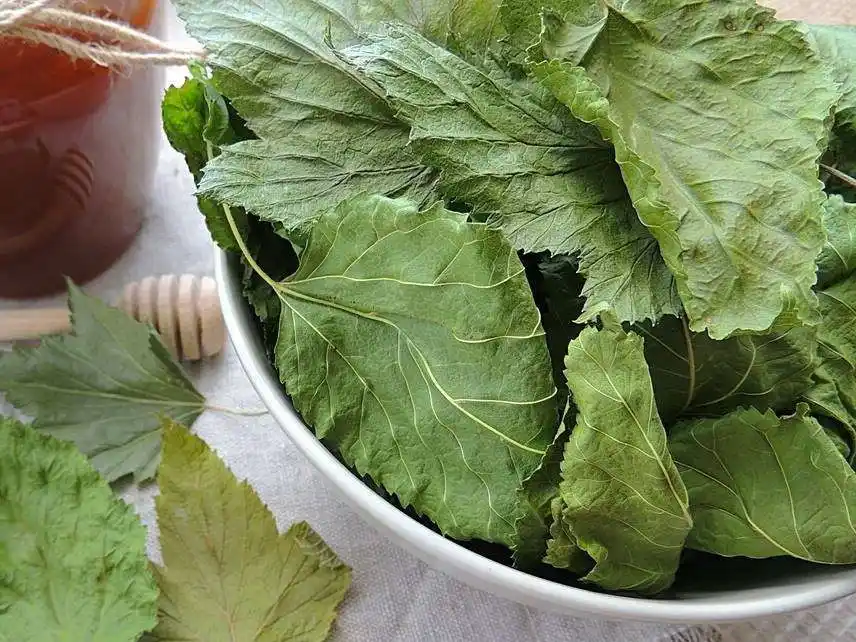
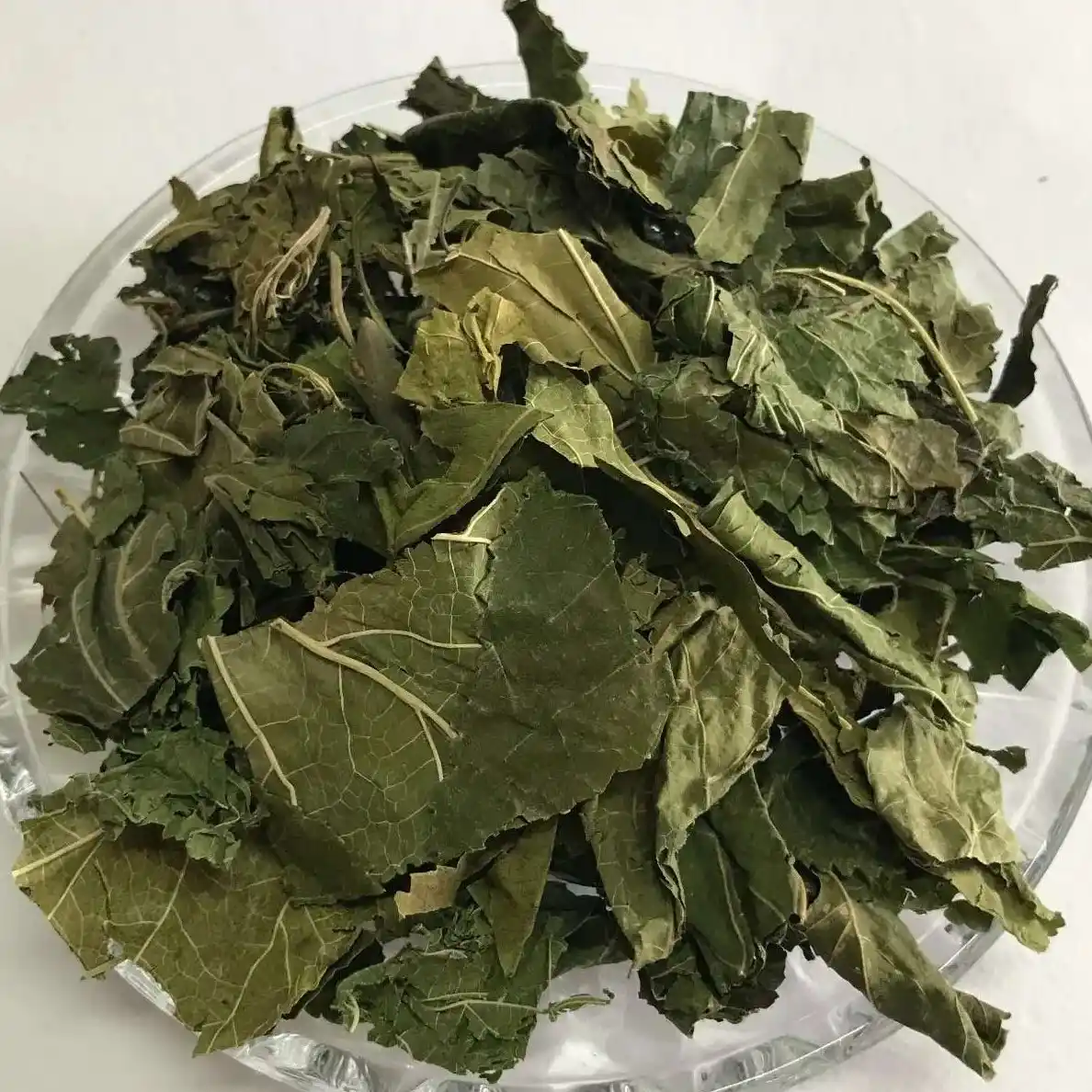
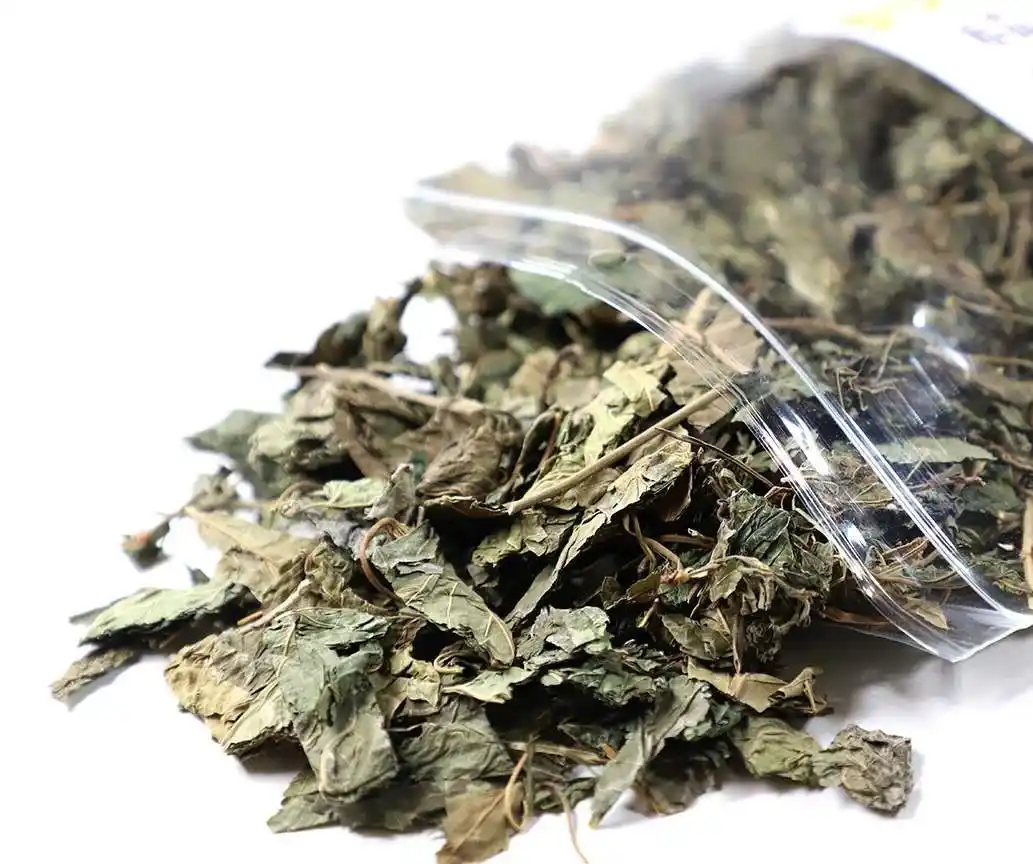
If you work in TCM, supplements, or functional drinks, you probably see Mulberry Leaf (Sang Ye) in a lot of formula drafts. On the surface it’s just a light green leaf. In Lung formulas, it’s a quiet workhorse: cools heat, eases dry cough, and gives a clean story for “breath support”.
This piece argues a simple point:
Mulberry Leaf (Sang Ye) makes real sense in lung-clearing and cough-relief products when you match it to the right pattern and control the raw-material quality.
We’ll look at traditional theory, modern data, real product scenes, and where GuoCao adds commercial value.
Mulberry Leaf (Sang Ye) in Traditional Chinese Medicine for Lung Heat and Cough
In Traditional Chinese Medicine, Mulberry Leaf (Sang Ye) is:
Wind-heat cold, office “air-con” flu, school outbreaks
Moisten Lung dryness
Dry, irritating cough with almost no mucus
Post-viral dry cough, city smog, long screen time
Disperse wind-heat
Headache, red eyes, more fever than chills
Early cold stage, seasonal change weather
Cool Liver and clear eyes
Dry red eyes, a bit of irritability
“Screen-tired eyes” tea, office workers, drivers
So from classic TCM alone you already see the first key argument:
Sang Ye is not for every cough. It shines when there is heat + dryness + wind-heat.
If your brief says “chronic cold cough, thin clear phlegm”, then Sang Ye is the wrong actor. That clarity saves wasted SKUs.
Wind-Heat Cough Pattern and Mulberry Leaf (Sang Ye)
Wind-heat cough looks like this:
Onset is fast, often after wind, fan, or climate jump
Throat is sore or burning
Cough is strong, sometimes barking
Sputum is yellow or sticky
Face and eyes feel hot or flushed
Here, Mulberry Leaf (Sang Ye) helps:
Clear Lung heat
Release wind-heat through the surface
Calm the throat a bit
In real life you see this pattern in open offices, schools, warehouses, public transport workers. Many TCM formulas for this stage combine Sang Ye with other light herbs like chrysanthemum and mint.
From a sourcing side, these leaves usually sit in your Flower and Whole Herbs category, ready for decoction pieces or direct extraction.
Lung Dryness Pattern and Mulberry Leaf (Sang Ye)
Lung dryness is a bit softer but very common:
Cough is dry or with tiny bits of hard sputum
Throat feels scratchy, not super painful
Maybe low heat in afternoon, but no big fever
Lifestyle: late nights, dry air, lots of speaking or singing
Here the “moisten dryness” function of Sang Ye is more important. It doesn’t hit like a heavy cough suppressant. It’s more like a gentle cool mist on irritated airways.
Typical scenes:
White-collar workers living in air-conditioned apartments
Teachers and livestream hosts using their voice all day
Smoky or dusty working environments
For this you often see Sang Ye in daily tea blends with chrysanthemum or licorice. Many of our partners use Mulberry Leaf (Sang Ye) in Chinese herbal tea bags for this exact pattern.
You can position it as a light, daily Lung care ingredient rather than only “emergency cough herb”.
Mulberry Leaf (Sang Ye) Pharmacology and Cough Relief
TCM talks about heat and dryness. Modern science uses other words, but the picture points in a similar direction.
Mulberry Leaf (Sang Ye) Active Compounds and Lung Support
Mulberry Leaf contains:
Flavonoids like quercetin and rutin
Phenolic acids like chlorogenic acid
Alkaloids such as DNJ
Vitamins and trace minerals
These compounds show several actions in lab and animal work:
Anti-inflammatory – reduce pro-inflammatory markers in cell and animal models.
Antioxidant – scavenge free radicals and protect tissues from oxidative stress.
Respiratory protection – extracts can reduce lung damage and inflammation in some viral or chemical injury models.
You don’t have to write all the pathways on your label. But you can confidently say that Sang Ye brings cooling and protective chemistry that matches the old TCM story.
Table 2 – Mulberry Leaf (Sang Ye) Compounds and Meaning for Cough Products
Component Group
Main Lab Effect
What It Supports in Marketing
Flavonoids
Anti-inflammatory, antioxidant
“Helps calm irritated airways and supports recovery after seasonal stress.”
Phenolic acids
Strong antioxidant
“Protects cells from oxidative stress in modern research.”
Alkaloids (DNJ etc.)
Support metabolic balance
“Broader wellness support, useful when Lung and metabolic health meet in one SKU.”
Whole leaf extract
Less lung tissue damage in models
“Backs up the traditional lung-clearing story, even if human data is still catching up.”
So a fair, non-hype line for your brochure might be:
“Mulberry Leaf (Sang Ye) brings cooling, antioxidant and anti-inflammatory compounds that match its long use in TCM cough and Lung formulas. Research is growing, but it’s not a medicine by itself.”
No black-box miracle, just decent science lining up with tradition.
Mulberry Leaf (Sang Ye) Usage Scenarios for Cough Relief Products
Now let’s move from lab and theory back to the factory floor and product planning table.
Mulberry Leaf (Sang Ye) in Cough Syrups and TCM Formulas
For pharma and clinic channels, Mulberry Leaf (Sang Ye) shows up mainly in:
Because GuoCao runs an ISO 22000 food safety system with third-party COA, you don’t need to fight every single farm for each parameter. This is small, but in real life it saves a lot of email.
Mulberry Leaf (Sang Ye) Safety, Quality Control and GuoCao Bulk Supply
Mulberry Leaf (Sang Ye) Safety and Contraindications
Even mild herbs need a safety paragraph.
From a TCM view:
Sang Ye is cold.
Great for heat and dryness.
Not ideal alone for cold, weak, chronic cough.
So common cautions are:
People with weak digestion or loose stool
Very cold-sensitive body types
Pregnant women or people on multiple medicines
Most brands use simple wording like:
“If you’re pregnant, nursing, on medication or have a chronic illness, please talk with your doctor or licensed TCM practitioner before use.”
That’s enough in most markets and keeps you honest. Your product is support, not a stand-alone cure. We dont want users to ignore real treatment.
Mulberry Leaf (Sang Ye) OEM, ODM and GuoCao Commercial Value
Now the business angle.
GuoCao is not just selling one herb. It’s a one-stop wholesale Chinese medicinal herbs and spices supplier with:
GMP lines for TCM herb slices
ISO 22000 food safety system
Cool / normal / modified-atmosphere warehouses
Third-party COA for each batch
Annual capacity around a few thousand tons
OEM / ODM support for tea bags, herbal enzymes, and more
For you this means:
You can design a Lung-clearing line around Mulberry Leaf (Sang Ye) plus other categories:
You can push one brief across several formats: decoction pieces for hospital, granules for clinics, tea bags for OTC, enzyme drinks for wellness chains.
You reduce vendor count. One partner handles raw herbs, slicing, COA, and OEM packing.
And that ties back to our main claim:
If you match Mulberry Leaf (Sang Ye) to the right Lung pattern and pair it with serious quality control and OEM support, it becomes a very solid choice for cough and respiratory-support SKUs.
No loud buzzwords, no magic cape. Just a leaf that has done its job for a long time, plus a supply chain that actually works.
Our low MOQ of 1 kg (2.2 lb) makes it easy to order Chinese herbal slices or wholesale Chinese medicine herbs. Private-label and bilingual labeling are also available.
Delivery Cycle & Support
We have a fast 7-day lead time. We provide free samples, COA reports, and technical support to help you bring high-quality bulk Chinese herbs to market.
Quality & Certifications
Our products are manufactured in a GMP-certified facility and meet ISO22000 standards. All Chinese herbs are third-party tested for heavy metals, pesticides, and microorganisms.