Chinese Yam Bulk Sourcing for Functional Food and Herbal Products
A practical procurement guide for functional food, supplement, beverage, and herbal product manufacturers buying dried Chinese yam or Chinese yam powder in commercial quantities.
When buyers compare Chinese yam only by price per kilogram, they ignore botanical identity, peeling losses, moisture, sulfite treatment, starch behavior, particle size, microbiological risk, and the uncomfortable possibility that two visually similar lots will perform differently in the same formulation.
Quindi, che cosa state comprando in realtà?
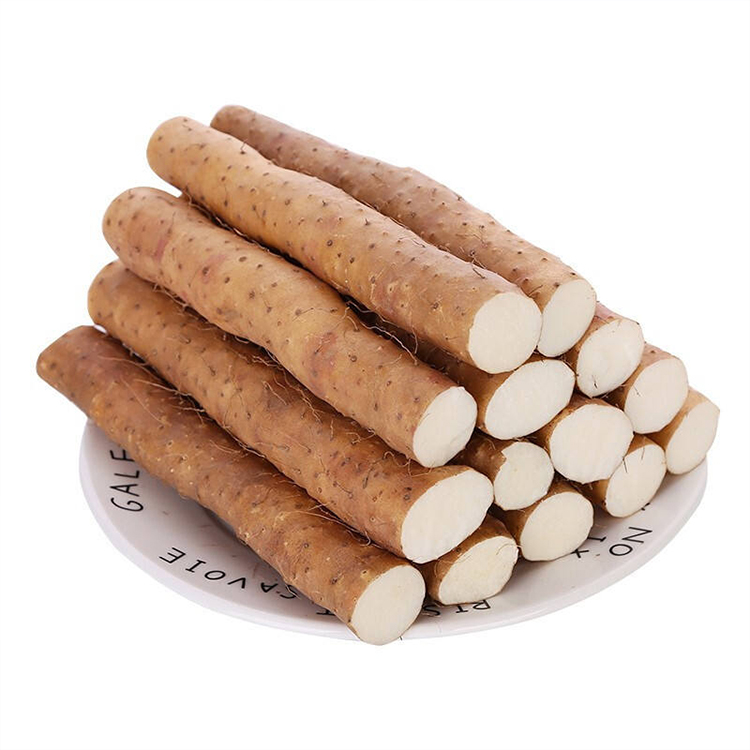
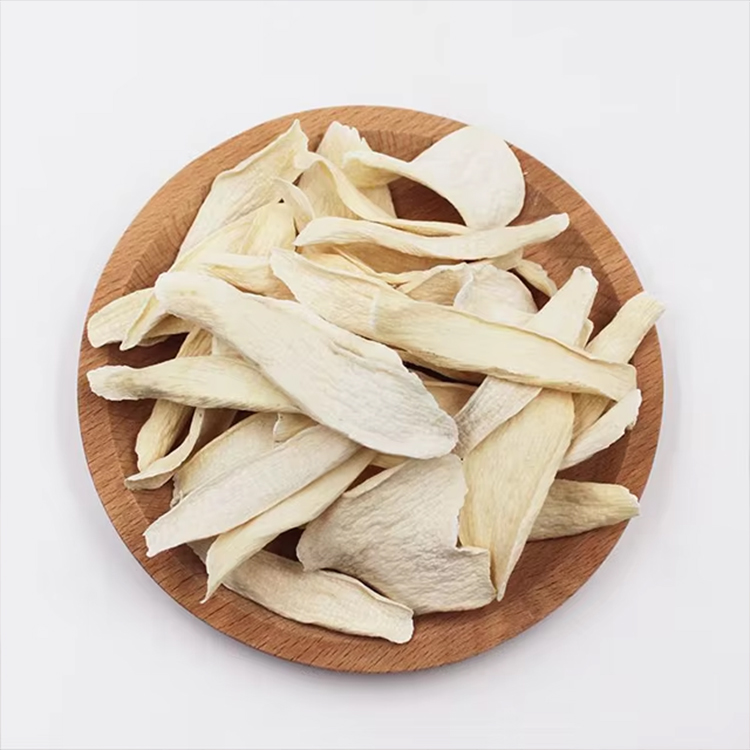
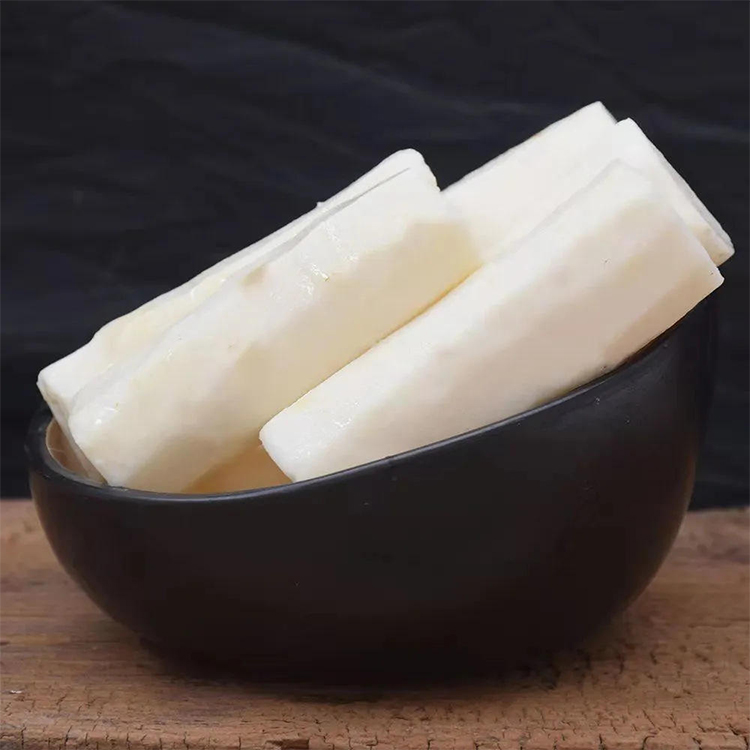
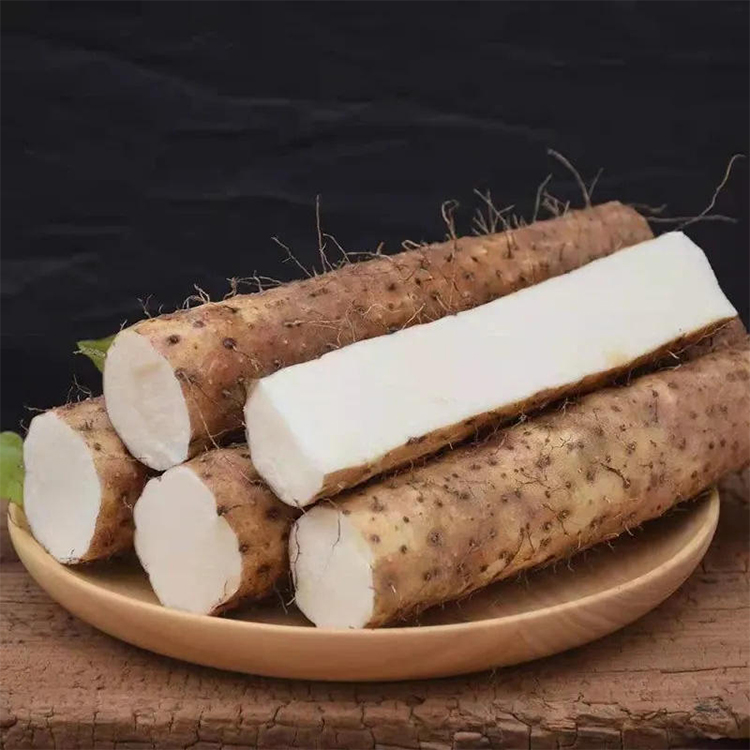
Chinese yam is sold as fresh tuber, peeled dried slices, unpeeled slices, granules, flour, powder, or extract. Those forms are not interchangeable. A sliced herbal-tea ingredient must survive visual inspection and brewing; a beverage powder must disperse consistently; an extract manufacturer cares more about dry-matter yield and processing behavior.
The scientific name also needs attention. Dioscorea polystachya Turcz. is widely accepted for Chinese yam, while Dioscorea opposita Thunb. still appears in commercial documents, older literature, and supplier catalogs. “Shan Yao,” “Chinese yam,” and “wild yam” are not sufficiently precise purchase specifications on their own.
Our blunt view is simple: approve the species, process, and end-use performance before negotiating the final price.
Why Chinese Yam Is Attracting Functional Food Buyers
Chinese yam sits between an ordinary starch-rich food and a traditional herbal ingredient. That dual identity explains its commercial appeal—and its sourcing complications.
A 2020 scientific review archived by the Biblioteca Nazionale di Medicina degli Stati Uniti identifies Chinese yam as Dioscorea polystachya and describes its tubers as sources of starch, resistant starch, storage proteins, polysaccharides, steroidal sapogenins, allantoin, and phenolic compounds. That makes it relevant to several product categories:
Functional food powders
Instant cereal and meal-replacement blends
Botanical beverages
Herbal soups and cooking products
Traditional herbal formulas
Nutrition bars and powdered mixes
Fermented botanical products
Extracts and nutraceutical ingredients
But composition is not fixed. Cultivar, origin, maturity, peeling, drying temperature, cooking, and milling can all change the final material.
Processing matters enormously.
A 2024 review on nutraceutical Chinese yam reports that boiling may reduce resistant starch by approximately 80%. That figure should stop buyers from treating raw powder, pre-cooked powder, and extract powder as interchangeable ingredients. If resistant starch or texture is part of your product concept, processing history belongs in the specification.
What works in a laboratory paper may also fail in a commercial drink. A powder can carry an attractive composition yet settle rapidly, produce a gritty mouthfeel, darken after processing, or create unacceptable viscosity at the intended serving level.
That is why a sample should be tested inside the real formulation—not merely inspected in a clear plastic bag.
Start With Botanical Identity, Not the Sales Name
The name “Chinese yam” can conceal more than it reveals.
Commercial yam materials may come from several Dioscorea species, and regional names are used inconsistently. The first line of a purchase specification should identify the required botanical name and plant part. For most Chinese yam programs, buyers will encounter:
Nome botanico: Dioscorea polystachya Turcz.
Common commercial synonym: Dioscorea opposita Thunb.
Chinese name: Shan Yao
Plant part: Tuber or rhizome
Commercial forms: Whole dried material, slices, granules, powder, or extract
Species confirmation should be supported by traceable raw-material records and, when the risk or order value justifies it, macroscopic or microscopic identification, thin-layer chromatography, or DNA-based testing.
DNA testing sounds decisive. It is not magic.
Highly processed powders and extracts may contain degraded DNA, while a correct species result does not establish low pesticide residues, safe microbial levels, acceptable moisture, or formulation performance. Authentication and contaminant testing answer different questions. A serious approval program needs both.
The “Wild Yam” Label Can Mislead Buyers
“Wild yam” is an especially weak term because it may refer to other Dioscorea species in Western markets. If the ingredient is intended to be Chinese yam, the invoice, COA, specification, label copy, and shipping documents should use the same botanical identity.
One mismatched Latin name can delay a compliance review. Worse, it may reveal that the supplier’s traceability system is being assembled after the buyer asks questions.
That is a warning sign.
Choose the Form Around the Finished Product
A Chinese yam supplier may quote several forms from the same raw tuber. The cheapest format is not automatically the lowest-cost ingredient after screening losses, milling, testing, freight, and production downtime are included.
For dried Chinese yam, appearance still matters. Buyers commonly evaluate color, odor, slice uniformity, broken-piece rate, insect damage, visible mold, foreign matter, and signs of excessive chemical treatment.
Yet visual quality can be manipulated. Very white slices may look premium while raising questions about bleaching or sulfite use. A duller natural color is not automatically inferior.
The correct response is testing, not guesswork.
Ask whether sulfur fumigation or sulfite treatment was used. If the supplier declares “sulfur-free,” require a written processing statement and appropriate analytical verification rather than relying on photographs.
Chinese Yam Powder for Functional Foods
Powder specifications should go beyond “100 mesh” and “food grade.”
At minimum, define particle-size distribution, moisture, water activity where relevant, bulk density, dispersibility, color range, flavor, microbial limits, pesticide requirements, heavy-metal limits, packaging barrier, and storage conditions. If the powder will enter a beverage, test it at the intended pH, temperature, mixing speed, and dosage.
I would also request a retained sample from the approved production lot. Without one, investigating a later color, odor, or microbial complaint becomes needlessly argumentative.
“Premium dried Chinese yam” cannot be measured. “Natural color” cannot be enforced unless both parties agree on a reference sample or numerical color range. And “free from heavy metals” is scientifically meaningless because laboratory methods have detection limits.
A workable bulk Chinese yam specification should cover the following.
Identity and Origin
State the botanical name, accepted synonym, plant part, country of origin, growing region if required, cultivation status, harvest season, and lot number. Decide whether you need farm-level traceability or processor-level traceability.
For higher-risk programs, request:
Raw-material supplier approval records
Harvest and processing dates
Lot-coding logic
Chain-of-custody records
Pesticide application history
Storage and fumigation declarations
Physical and Sensory Requirements
For slices, define thickness tolerance, broken-piece percentage, foreign matter, color, odor, and visible-defect limits.
For powder, define mesh distribution, caking tolerance, bulk density, solubility or dispersibility, and an approved sensory reference. Do not approve powder solely from a COA. Put it into water. Heat it. Taste it. Leave it standing for 30 minutes.
That small trial exposes a remarkable amount of nonsense.
Chemical and Microbiological Testing
Testing should follow the destination market and finished-product category. A practical risk-based panel may include:
Umidità o perdita all'essiccazione
Attività dell'acqua
Conteggio totale delle piastre
Lievito e muffa
Escherichia coli
Salmonella specie
Heavy metals, including lead, cadmium, arsenic, and mercury
Multi-residue pesticide screening
Sulfur dioxide or sulfites when processing risk exists
Mycotoxins when the risk assessment supports testing
Residual solvents for extracts
Undeclared carriers or additives in powders
European buyers should map the ingredient and finished-food category against Regolamento (UE) 2023/915 della Commissione, which establishes maximum levels for specified contaminants in food. A generic “EU compliant” statement is not enough; the relevant food category and numerical limit must be identified.
And no, a supplier-created COA is not always sufficient. High-value or high-risk lots should be checked by an independent laboratory using validated methods, with sampling tied to the actual shipment lot.
How to Audit a Chinese Yam Supplier
The most polished quotation often tells us the least.
A capable Chinese yam supplier should be able to connect the farm or raw-material collector, processing batch, laboratory result, packaging code, and export documents without changing the story halfway through the audit.
Ask these questions before issuing a commercial order:
Which botanical species and plant part are supplied?
Is the name consistent across the specification, COA, invoice, and label?
Where was the crop grown, harvested, dried, milled, and packed?
Was sulfur fumigation, bleaching, irradiation, or another treatment used?
Is the powder raw, cooked, gelatinized, concentrated, or extracted?
Are carriers, anticaking agents, or processing aids present?
Which laboratory performed the tests, and which methods were used?
Does the COA belong to the offered lot or to a previous reference lot?
Can the supplier provide a pre-shipment sample from the finished batch?
How are complaints, recalls, and retained samples managed?
Buyers comparing adjacent ingredients can also study the procurement logic in this monk fruit bulk sourcing guide. The ingredient is different, but the commercial discipline—application-specific specifications, contaminant controls, sensory testing, and repeat-lot verification—is directly relevant.
A COA Is Evidence, Not Proof
I have a strong opinion here: buyers trust COAs too easily.
A clean PDF proves that someone created a clean PDF. It does not prove that the sample came from the shipment, that the laboratory was independent, or that the analytical method was suitable.
Verify the laboratory name, report number, test method, sample date, batch number, units, limits of quantification, and authorization signature. Then compare those details with the bag labels and shipping documents.
For recurring purchases, trend results across lots. Gradual movement in moisture, microbial count, color, or bulk density may expose process drift before a batch actually fails.
Import Compliance Can Change the Buying Decision
Food and herbal imports are not cleared simply because the material is edible in the country of origin.
In the United States, importers subject to the Foreign Supplier Verification Program must evaluate known or reasonably foreseeable hazards and perform appropriate supplier-verification activities. The FDA’s FSVP industry guidance explains how the rule applies to imported food for humans and animals.
That responsibility sits with the importer. It cannot be outsourced by adding “FDA approved” to a supplier quotation.
Canadian buyers face an additional plant-health issue. The Canadian Food Inspection Agency’s current Chinese yam import requirements state that viable Dioscorea polystachya tubers for human consumption are prohibited. Dried slices or non-viable processed material may be treated differently, but importers should confirm the applicable commodity status and documentation before shipment.
This distinction matters: fresh viable tubers, sterilized dried slices, and fine powder may look like one ingredient to a product developer while being very different commodities to plant-health authorities.
Claims Need Separate Review
Chinese yam has a long history of food and traditional herbal use. That does not authorize disease claims.
Functional food brands should distinguish among ingredient composition, traditional-use statements, general wellness positioning, and disease-treatment claims. The legal classification may depend on destination, dosage form, labeling, presentation, and intended use.
A supplier can provide raw-material records. The brand owner still controls the final claim.
Calculate the Real Landed Cost
The lowest EXW price is rarely the lowest landed cost.
A serious comparison should include usable yield, inspection, analytical testing, packaging, inland freight, international freight, customs clearance, tariffs, broker fees, warehouse handling, financing time, and rejection risk.
Use this working formula:
Landed cost per usable kilogram = Total procurement and logistics cost ÷ Accepted usable weight
Consider two hypothetical offers:
Supplier A quotes $3.20/kg but delivers 8% dust and broken material.
Supplier B quotes $3.45/kg with 2% processing loss and stronger batch consistency.
Before freight and testing, Supplier A costs approximately $3.48 per usable kilogram, while Supplier B costs approximately $3.52. The apparent $0.25 gap has already narrowed to $0.04. One failed microbial test destroys the supposed saving.
Price still matters. But price without yield and risk is theater.
A Practical Bulk Approval Workflow
Our preferred sourcing sequence is deliberately unforgiving:
Define the destination market and finished-product classification.
Confermare Dioscorea polystachya or the required botanical identity.
Select slices, granules, raw powder, pre-cooked powder, or extract.
Issue measurable physical, chemical, and microbiological limits.
Review supplier questionnaires and supporting certificates.
Test a representative sample in the actual formulation.
Approve a reference sample and packaging format.
Request lot-specific pre-shipment testing.
Conduct independent verification based on risk.
Retain samples and monitor results across repeat orders.
For broader formulation planning, buyers can compare the site’s full range of Chinese herbs and spices rather than forcing one ingredient to perform every technical role.
Domande frequenti
What is Chinese yam?
Chinese yam is the edible tuber of Dioscorea polystachya Turcz., also widely identified in commerce as Dioscorea opposita and Shan Yao. It is sold fresh, dried, powdered, cooked, or extracted for use in foods, traditional herbal preparations, beverages, supplements, and other formulated products.
Its starch content, mild flavor, and processing flexibility make it commercially useful, but its behavior changes with cultivar and manufacturing method. Buyers should therefore specify the botanical identity, plant part, product form, and processing status rather than ordering by the common name alone.
How do I source Chinese yam in bulk?
Bulk Chinese yam sourcing is the process of defining the required species, form, quality limits, testing program, documentation, packaging, and delivery terms before approving a commercial supplier. It should include sample evaluation, formulation trials, lot-specific records, contaminant testing, import checks, and a written procedure for rejecting nonconforming material.
Start with your final application. A tea-cut specification will not suit an instant beverage, and a visually attractive slice may be inefficient for extraction. Request measurable limits, test the material under real production conditions, and confirm that the commercial batch matches the approved sample.
What should a Chinese yam COA include?
A Chinese yam certificate of analysis should identify the supplier, botanical species, plant part, country of origin, batch number, manufacturing date, test methods, specifications, actual results, and authorized approval. Depending on the intended market, it should also report moisture, microbiology, heavy metals, pesticides, sulfites, and other risk-based parameters.
Reject reports that contain only “Pass,” lack analytical methods, or do not match the shipment lot. For high-risk orders, use an independent accredited laboratory and preserve a sealed retention sample from the delivered batch.
Is Chinese yam powder the same as dried Chinese yam?
Chinese yam powder is milled material made from dried or otherwise processed tubers, whereas dried Chinese yam usually refers to intact pieces or slices. Powder may also be raw, pre-cooked, gelatinized, extracted, or blended with carriers, so its composition and manufacturing performance cannot be inferred from the ingredient name alone.
Ask for the flow chart, mesh distribution, heat-treatment status, carrier declaration, bulk density, microbiological results, and dispersibility data. Then run a bench trial at the intended serving level before authorizing full production.
What is the best Chinese yam for functional foods?
The best Chinese yam for functional foods is a correctly identified, traceable lot whose processing method and measurable properties match the intended formulation. For powders, buyers should evaluate particle size, starch behavior, viscosity, taste, color, dispersibility, moisture, microorganisms, contaminants, packaging stability, and repeat-batch consistency—not appearance or price alone.
Raw powder may suit products seeking minimal processing, while pre-cooked powder may perform better in instant applications. Extracts offer concentration but introduce questions about extraction ratios, carriers, solvents, and marker methods. There is no universally superior format.
What documents should a Chinese yam supplier provide?
A qualified Chinese yam supplier should provide a product specification, lot-specific COA, botanical identity statement, process flow, country-of-origin documentation, allergen and additive declarations, traceability records, packaging details, shelf-life data, and relevant food-safety certificates. Export orders may additionally require phytosanitary, customs, fumigation, or market-specific compliance documents.
Document requirements depend on whether the material is imported as food, herbal material, supplement ingredient, or plant commodity. Confirm the classification with a qualified importer or regulatory adviser before production and shipping begin.
Request a Chinese Yam Sample and Technical Review
Do not approve bulk Chinese yam from a photograph and a generic price sheet.
Prepare your target application, annual volume, destination country, preferred format, particle size or slice dimensions, testing limits, packaging requirements, and expected delivery schedule. Then contact our Chinese herbal sourcing team to request a sample, lot documentation, and a tailored bulk Chinese yam quotation.
Il nostro basso MOQ di 1 kg (2,2 lb) rende facile ordinare fette di erbe cinesi o erbe medicinali cinesi all'ingrosso. Sono disponibili anche etichette private e bilingue.
Ciclo di consegna e supporto
Abbiamo tempi rapidi di consegna di 7 giorni. Forniamo campioni gratuiti, rapporti COA e supporto tecnico per aiutarvi a portare sul mercato erbe cinesi sfuse di alta qualità.
Qualità e certificazioni
I nostri prodotti sono fabbricati in uno stabilimento certificato GMP e soddisfano gli standard ISO22000. Tutte le erbe cinesi sono testate da terzi per verificare la presenza di metalli pesanti, pesticidi e microrganismi.