Eucommia Bark: How to Describe Appearance in a Product Specification
How to write the appearance section of a Eucommia bark (Du Zhong) specification: raw vs salt-fried bark, surface colour, rubber threads, thickness and defect limits.
A specification line such as “dark brown, fibrous texture” sounds precise, but it can describe raw bark, salt-fried pieces, or a lot that was fried too long. Eucommia bark (Eucommiae Cortex, Du Zhong) is the dried stem bark of Eucommia ulmoides. Its visible traits carry both identity and processing information: surface colour, fracture behaviour, and the silvery rubber threads that appear when a piece is broken. A usable appearance specification names the form (raw or salt-fried), the outer and inner surface, the fracture, the cut size and thickness, and the visual defects that justify rejection. It also ties every statement to a reference sample. This guide shows procurement, QA, and OEM teams how to write each of those fields so that a supplier, an incoming-inspection team, and a customer’s auditor read the same document the same way.
Why “Dark Brown, Fibrous” Is Not a Specification
A colour word is only an opinion until it is tied to a form, a surface, and a method of checking. Eucommia bark shows why. The outer and inner faces of one piece of raw bark are different colours, and processing changes the colour again. A buyer who writes “dark brown” and a supplier who ships raw bark with a pale outer face can both be acting in good faith, and the lot still ends up on hold.
Here is a short illustrative scenario (not a real customer case). A supplement plant orders “Du Zhong, dark brown, fibrous” for a decoction-style blend. The supplier ships raw, unfried bark. The plant’s QA team expected salt-fried pieces with brittle threads. Neither side broke any written rule, because the written rule did not say which form was meant.
There is also a conventional assumption worth qualifying: that the neater and more uniform the bark looks, the better the lot. Appearance tells you whether the material matches the expected identity and processing state. It does not tell you moisture, contaminant levels, or marker content. The ISO 8959:2024 standard for Eucommia ulmoides stem bark reflects this in its structure. Its published scope covers minimum requirements and test methods, and the contents of the final-draft text list macroscopic and microscopic characteristics next to moisture, ash, thin-layer chromatography, extractives, heavy metals, pesticide residues, and sulfur dioxide. Appearance is one layer of a specification, not a substitute for the others.
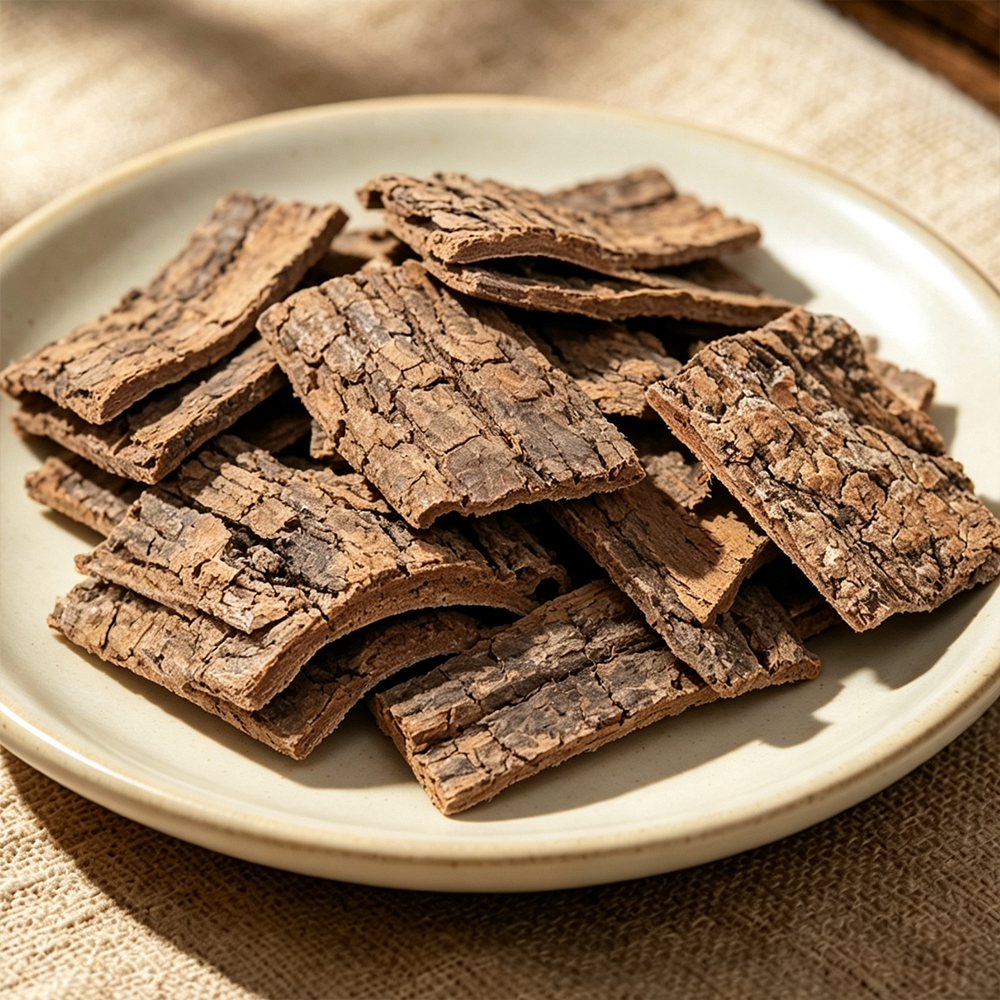
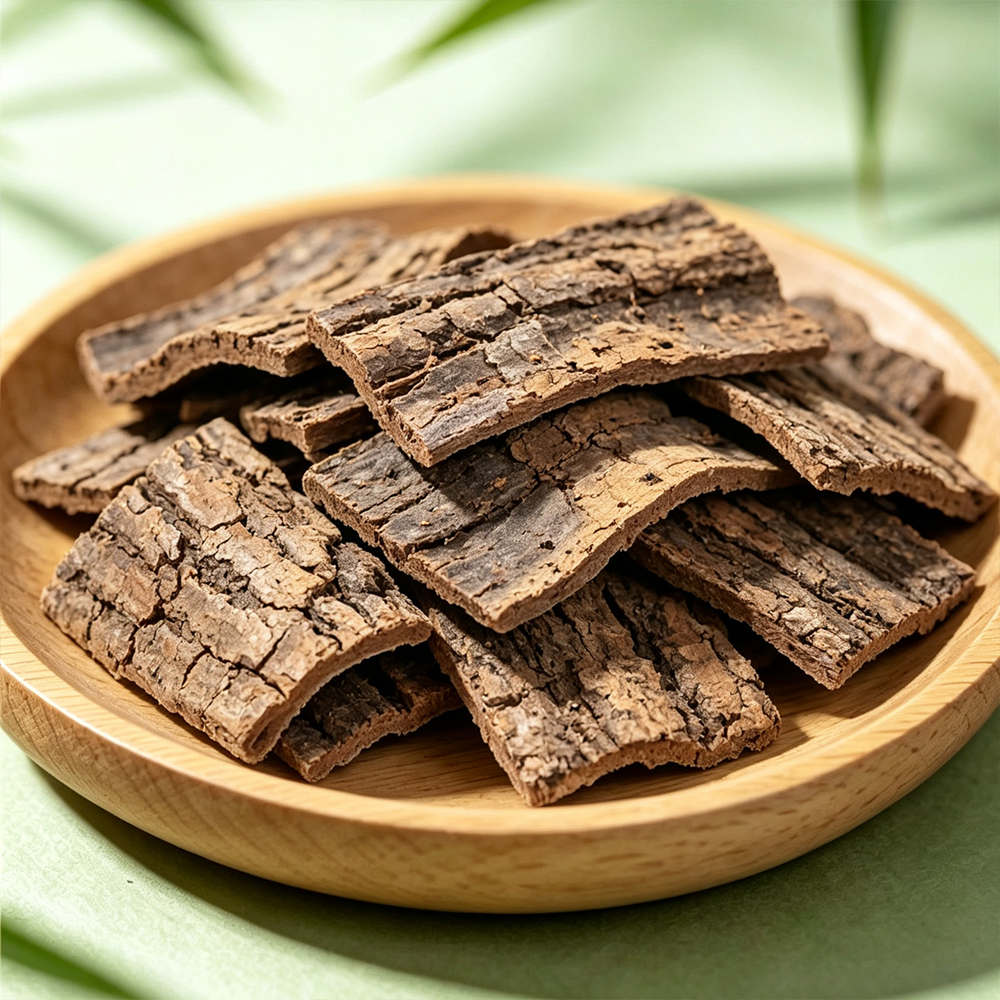
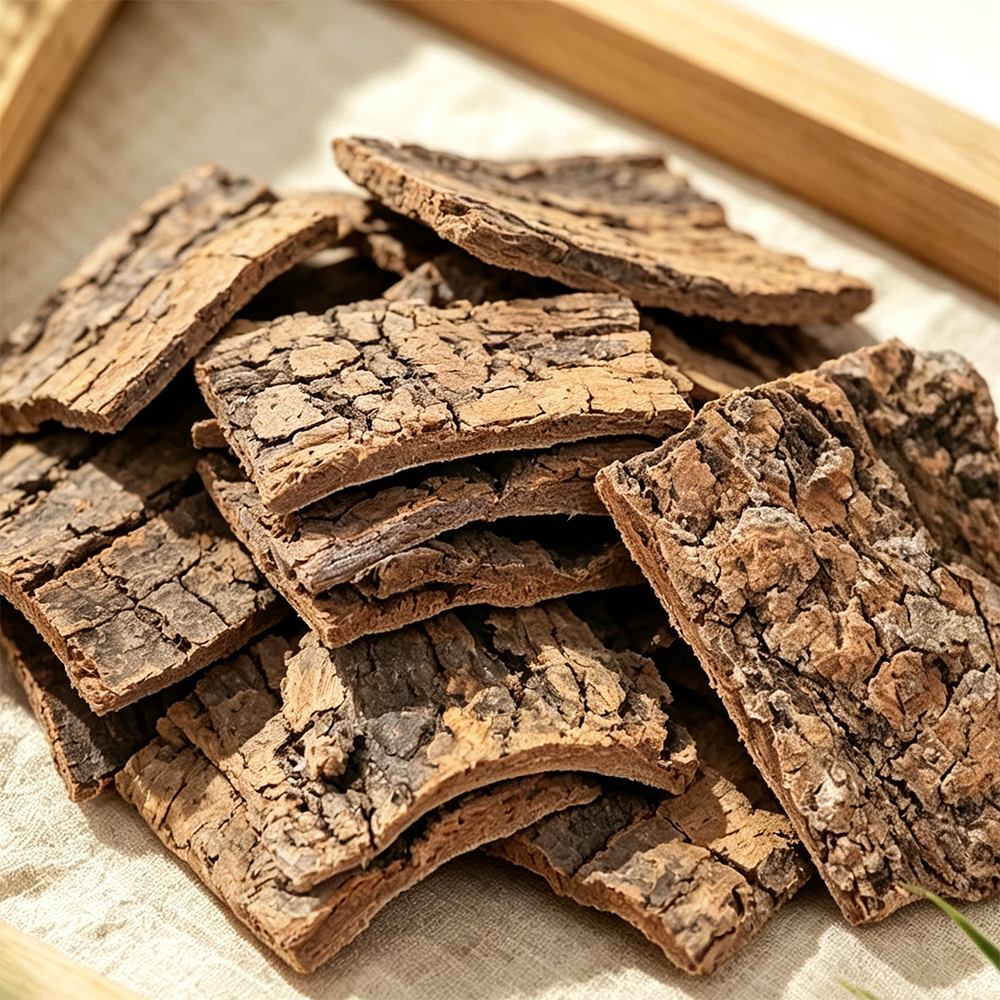
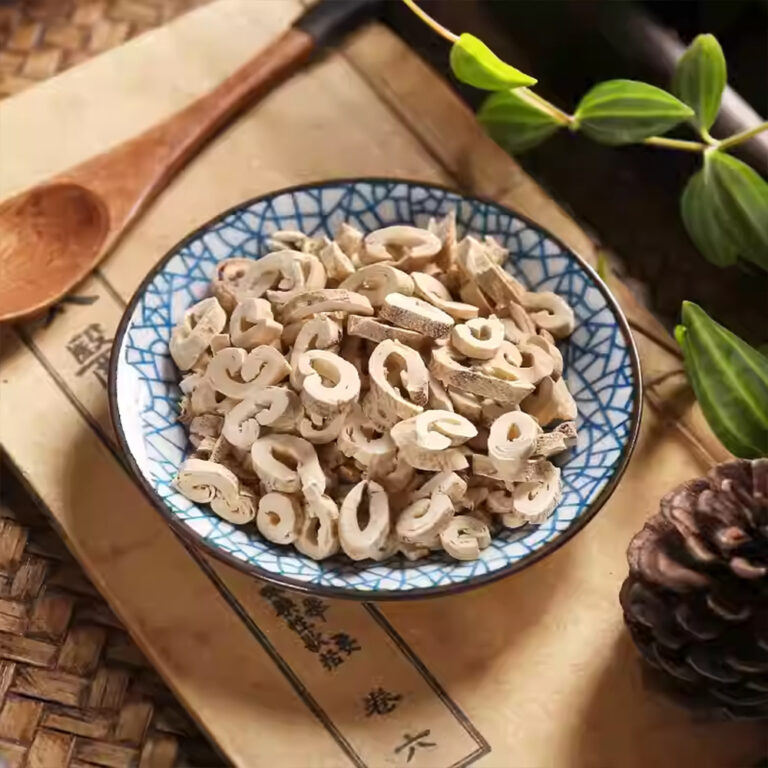
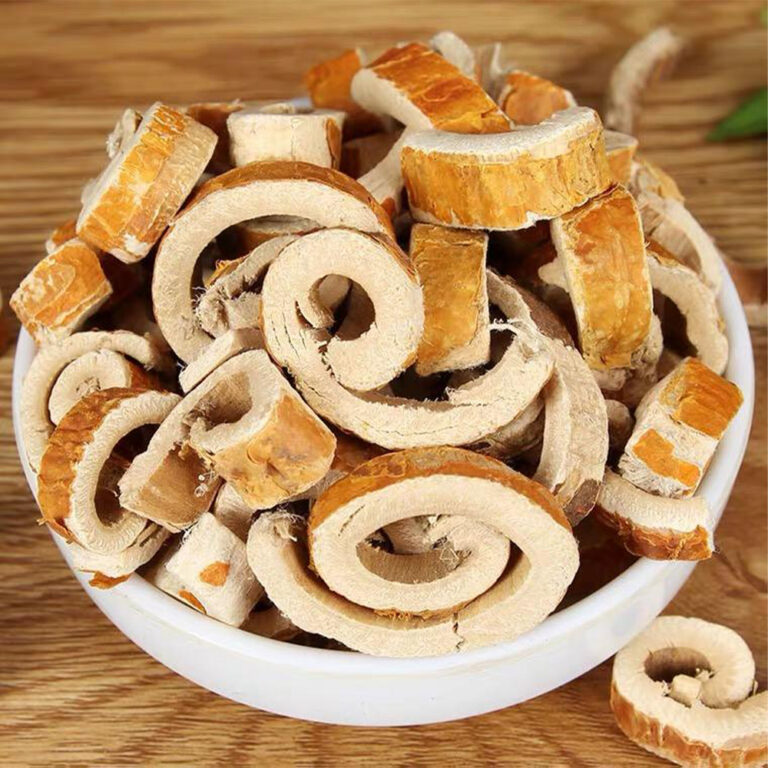
Shape and thickness: flat pieces, or pieces with both edges curved slightly inward, in varying sizes and 0.3 cm to 0.7 cm thick.
Surface extérieure : pale brown or greyish-brown, clearly wrinkled or fissured, with longitudinal channels. Thinner pieces can show distinct lenticels when the coarse outer bark has not been scraped off.
Surface intérieure : dark purple and smooth.
Texture et fracture : fragile and easy to break, with the broken faces linked by fine, dense, silvery, elastic, resinous threads.
Odour and taste: slight odour, slightly bitter taste.
Three points about how to use this description.
First, it is a reference for raw material. The published standard states that it applies to whole medicinal materials and raw decoction pieces, and that it does not apply to processed decoction pieces. A salt-fried product needs its own appearance description (see below).
Second, the thickness range describes the bark piece itself. Cut length, width, and the thickness of cut pieces are separate fields.
Third, the text above comes from the final-draft preview. Buyers who copy figures into a contract should check them against the purchased, published edition of the standard or against the monograph of their target market.
Raw Bark vs Salt-Fried Bark: Write Two Different Appearance Specs
Eucommia bark is traded raw and as a salt-processed product. A recent machine-learning study of Eucommiae Cortex processing degrees describes the key indicators of successful salt processing as a darker colour and lower elasticity of the gum silk. The same study separates four states: raw, under-processed, moderately processed, and over-processed. Those four states are the practical risk for a buyer. If the specification only says “salt-fried,” a lot can be anywhere on that scale.
Under-fried (too raw) or over-fried (too dark) pieces mixed in one lot
Maximum share of out-of-range pieces, agreed by count or weight
Typical verification
Visual, break test, identity test
Visual, break test, optional colorimeter reading
State method and sample size
The study cited above measured powder colour (L*, a*, b*) with a spectrophotometer, so a colorimetric limit is technically workable. Whether it is necessary depends on how strict the downstream customer is. For most buyers, a signed reference sample with a stated tolerance and a photo record is the practical first step. Add L*a*b* limits only if a customer or a recurring dispute demands them, and set the range from the buyer’s own approved samples rather than from a generic figure.
The Appearance Fields a Eucommia Bark Specification Should Contain
A complete appearance section answers ten questions. Use the table as a template and delete fields that do not apply to the product format.
Champ d'application
Que faut-il écrire ?
Pourquoi c'est important
How it is checked
Identité botanique et partie de la plante
Eucommia ulmoides Oliv., stem bark (not leaf)
The Chinese Pharmacopoeia lists bark and leaf as separate materials, so “Eucommia” alone is ambiguous
Documents, macroscopic and microscopic ID, TLC
Forme et traitement
Raw, or salt-fried, with the processing reference
Changes colour, threads, and decoction behaviour
Reference sample, supplier process record
Cut form and size
Pieces, strips, or slices, with a length and width range
Affects dust, packing, and extraction
Sieve or ruler on a defined sample
Épaisseur
Measured value, method, and acceptance rule
Prevents “too thick” arguments
Defined gauge, spot vs average, sample plan
Outer surface
Colour range, wrinkles or fissures, whether coarse bark is scraped
Distinguishes scraped from unscraped material
Visual against reference
Inner surface
Colour and smoothness
Part of the raw-material identity description
Visual against reference
Fracture
Presence and character of silvery rubber threads; break-test method
Identity and processing-state indicator
Break test against reference
Propreté
No live insects, mould, or visible foreign matter
The ISO draft requires clean, dry material with none of these present
Visual, odour, sieve
Fines and breakage
Maximum share of powder or fragments below an agreed size
Drives dusting, weight drift, and complaints
Sieve test
Reference photo and retained sample
Lot-matched photo set and sealed sample kept by both sides
Gives disputes an objective baseline
Contrôle des documents
The Chinese Pharmacopoeia point comes from a review of Eucommia ulmoides polysaccharides in Frontiers in Pharmacology, which notes that the 2020 edition includes the bark and the leaves as two distinct Chinese medicinal materials. In practice this means a spec and a COA should always state “bark” explicitly.
Thickness and Cut Form Need Their Own Rules
Appearance wording alone cannot settle thickness. A bark piece can be compressible, curled, or uneven, so two inspectors can measure the same piece and record different numbers. GuoCao’s guide on defining bark thickness by measurement method argues that a thickness figure should travel with the gauge, the foot size, the force, the dwell time, the sampling plan, and a stated acceptance rule. For Eucommia, decide whether you need spot thickness (relevant to cutter or filling-line jams) or average thickness (relevant to extraction consistency).
Cut form is a separate decision. Strips, blocks, and slices behave differently in decoction, tea-bag filling, and extraction, and the trade-offs are covered in choosing between bark slices, strips, or chunks. The cut form you choose also changes what “appearance” means: a strip is judged on width, length, and shedding, while a block is judged on size range and inner dryness.
Common Appearance Disputes and What to Write to Prevent Them
Wrong form delivered. Raw bark arrives where salt-fried pieces were expected, or the reverse. Prevent it by naming the form in the product name line and the appearance section.
Lot-to-lot colour drift in salt-fried pieces. Under- and over-fried pieces are mixed. Prevent it with a reference sample, an agreed share of out-of-range pieces, and a statement of how that share is counted.
Weak or missing rubber threads. Threads are the headline visual identity trait, but they are not conclusive on their own. One TCM reference page on Du Zhong notes that regional substitutes such as Pottsia laxiflora are rubber-containing vines that also show thread-pulling but differ in pharmacology. Pair the break test with a documented identity test, such as the TLC identification listed in the ISO draft.
Mouldy or musty material. Visible mould, living insects, and external contaminants are all excluded by the draft’s general requirements. Write “no mould, no live insects, no visible foreign matter” as an explicit reject condition and link it to a moisture limit.
Scraped vs unscraped bark. The ISO description notes lenticels on thinner pieces when coarse bark has not been scraped. If your customer cares about rough outer cork, state whether the outer layer is scraped.
Excess fines. Dust at the bottom of a sack can be a bigger practical problem than slight colour variation. State a maximum fines share and a test sieve.
From Description to Contract: A Sample Appearance Clause
The wording below is an illustrative template. Replace bracketed items with figures from your own pharmacopoeia, customer requirement, or approved reference sample.
Raw bark:Eucommia ulmoides Oliv. stem bark, dried. Flat or slightly inward-curved pieces. Outer surface pale brown to greyish-brown, wrinkled or fissured, [scraped / unscraped]. Inner surface dark purple, smooth. Fracture shows fine, silvery, elastic threads when broken by [defined method]. Free of live insects, mould, and visible foreign matter. Thickness measured by [gauge, foot size, force, dwell time], [target range], [acceptance rule]. Fines below [mesh/size]: not more than [X]%.
Salt-fried pieces: As above, processed with salt solution by [stir-frying method]. Colour within the approved reference range; threads reduced in elasticity and break readily. Under-processed and over-processed pieces: not more than [X]% by [count/weight]. Reference sample No. [ ] and lot photo set attached.
Two practical details strengthen the clause. Take reference photographs on a neutral background, under consistent lighting, and with a scale visible, and keep a sealed retained sample from the same lot. And for incoming inspection, open cartons across the lot rather than the most convenient two or three. The sampling logic in GuoCao’s Guide d'approvisionnement en gros pour les écorces utilisées en médecine traditionnelle chinoise is useful here, including its recommendation to request a pre-shipment sample from the same lot.
Match the Appearance Spec to the End Use
The same bark does not need the same visual specification in every channel. For decoction pieces, recognisable morphology and clean cut form matter most because practitioners and pharmacists inspect the pieces. For tea bags, fines and dust control matter because they cause weight drift and sealing problems. For extraction or milling feedstock, visual neatness matters less than identity testing and consistent processing state. For readers mapping those channels, GuoCao’s overview of how Du Zhong is used in decoction slices, tea bags, and supplement formats is a useful companion. That overview covers appearance only briefly, so use a pharmacopoeial or ISO description as the technical reference when drafting the appearance section.
Appearance fields also have to sit inside the wider document. A factory’s incoming-quality team will check the appearance statement against the COA, the label, and the lot code. The structure for that wider document is set out in GuoCao’s guide to creating a specification sheet for Chinese herbal slices for pharma and supplement factories, which separates identity, physical, chemical, contaminant, microbial, traceability, and storage sections.
Que doivent préciser les acheteurs avant de demander un devis ?
Send these items with the RFQ so the supplier can quote the right material and the first sample is comparable:
Forme : raw or salt-fried, and the monograph or reference used.
Cut form and size: pieces, strips, or slices, with a length, width, and thickness range and the thickness method.
Appearance reference: photos or a sealed reference sample, and the share of out-of-range pieces you will accept.
Identity and test package: identity test, moisture, ash, contaminants, microbiology, and the COA format you expect.
Use and market: decoction, tea bag, extraction, or capsule feedstock, and the target country.
Quantity, delivery, and packaging: order size, shipping method, and packing that protects against moisture.
Buyers who want to see what is currently offered can start from the Eucommia bark (Du Zhong) bulk supply page. Treat the one-line appearance and form fields on any product page as a starting point, then ask the supplier to confirm each field in your own specification, with a lot-matched sample and COA, before the first order.
Questions fréquemment posées
How do you describe the appearance of Eucommia bark in a specification?
State the form (raw or salt-fried), outer surface colour and texture, inner surface colour, fracture behaviour with silvery rubber threads, cut size, measured thickness, and defect limits. Attach a reference sample or photo set and name the pharmacopoeia or standard used.
What does authentic raw Eucommia bark look like?
The ISO 8959 final-draft description gives flat or slightly inward-curved pieces, 0.3–0.7 cm thick, with a pale brown to greyish-brown wrinkled outer surface, a smooth dark purple inner surface, and fine silvery elastic threads at the fracture.
Are rubber threads enough to confirm identity?
No. Threads are a strong visual indicator, but other rubber-containing plants can also produce threads. Combine the break test with documented identity testing, such as macroscopic and microscopic identification or TLC, and with plant-part and origin records.
Does ISO 8959:2024 cover salt-fried Eucommia bark?
No. Its scope covers whole medicinal materials and raw decoction pieces and excludes processed decoction pieces. For salt-fried pieces, specify the target-market monograph or your own approved reference, and define colour and thread brittleness.
How can a buyer tell raw from salt-fried Eucommia bark?
Salt-fried pieces are darker and the gum silk is less elastic than in raw bark. Pieces outside the agreed colour and brittleness range may be under- or over-processed, so the spec should include a reference sample and an agreed share of out-of-range pieces.
Should a spec simply say “dark brown”?
Not on its own. Raw bark has a pale outer face and a dark purple inner face, and processing darkens the colour further. Write colour by surface and form, and anchor it to a signed reference sample.
Is appearance enough to accept or reject a lot?
No. Appearance checks identity, processing state, and cleanliness. Moisture, ash, chemical identification, contaminants, and microbiology need separate tests, which is why a COA should list methods and acceptance criteria next to the visual statement.
Notre faible QMo de 1 kg permet de commander facilement des tranches d'herbes chinoises ou des herbes médicinales chinoises en gros. Des étiquettes privées et bilingues sont également disponibles.
Cycle de livraison et soutien
Notre délai de livraison est de 7 jours. Nous fournissons des échantillons gratuits, des rapports COA et une assistance technique pour vous aider à mettre sur le marché des herbes chinoises en vrac de haute qualité.
Qualité et certifications
Nos produits sont fabriqués dans une usine certifiée GMP et répondent aux normes ISO22000. Toutes les herbes chinoises sont testées par une tierce partie pour détecter les métaux lourds, les pesticides et les micro-organismes.