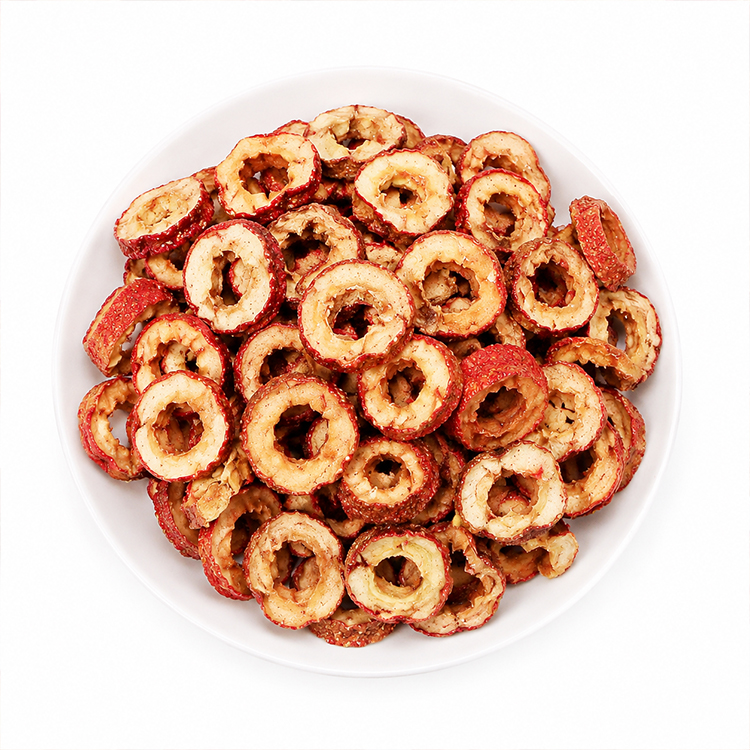
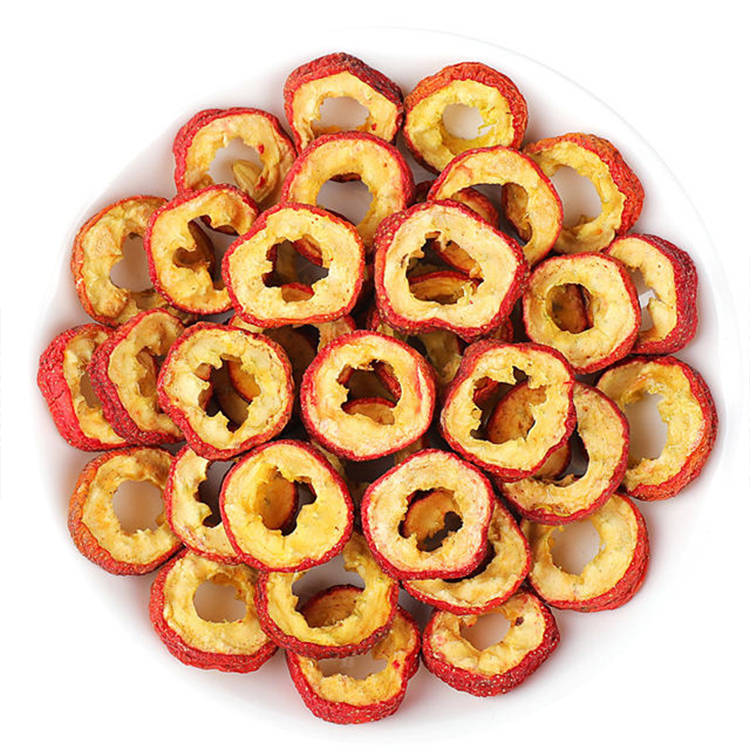
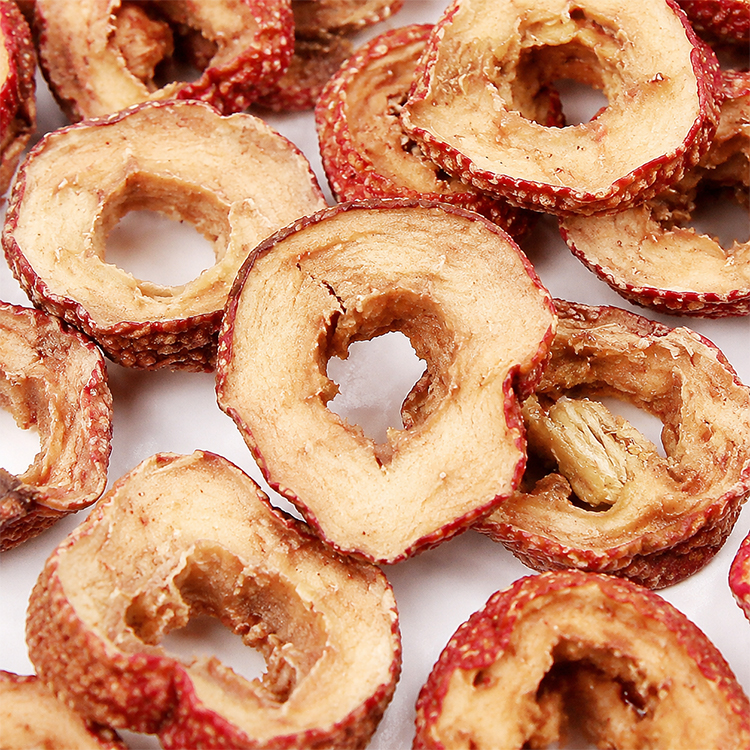
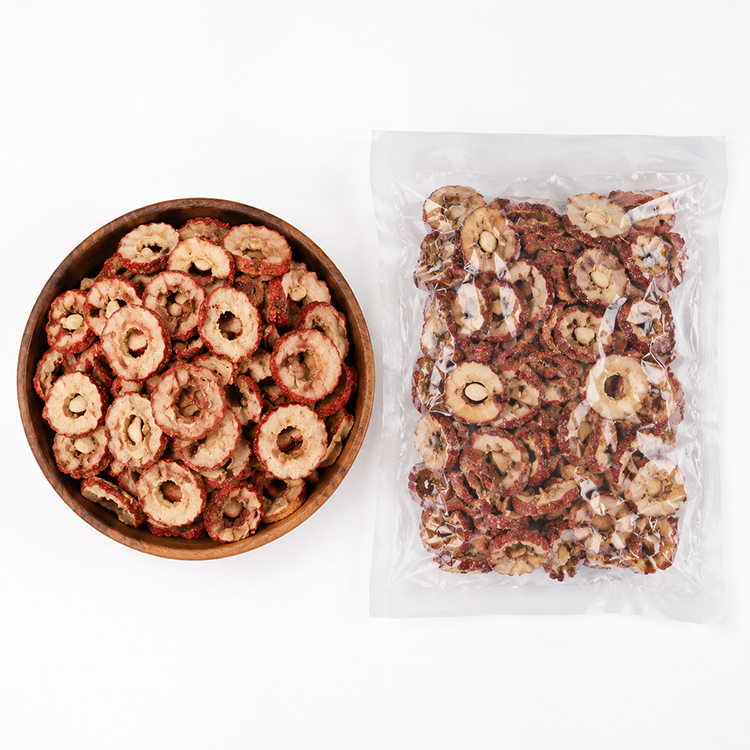
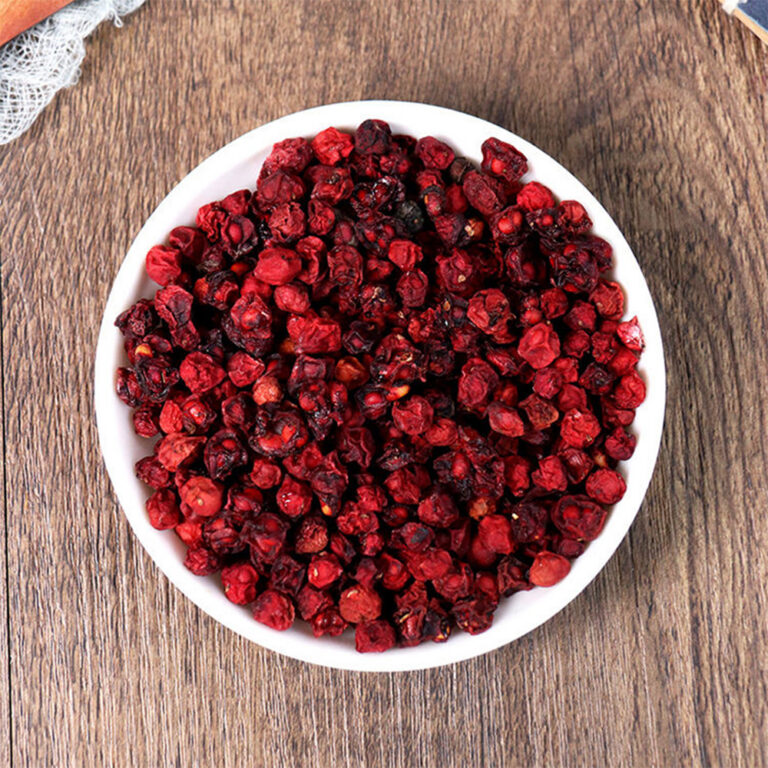
Guía de compra al por mayor de bayas de espino para marcas de té y bebidas
El espino blanco es fácil de adquirir, pero sorprendentemente difícil de estandarizar. Esta guía muestra a las marcas de té y bebidas cómo evaluar las bayas de espino blanco a granel en función de su identidad botánica, variedad, acidez, comportamiento durante el procesamiento, calidad física, riesgo de contaminación y documentación específica del lote proporcionada por el proveedor.
Sin embargo, una bolsa de fruta seca roja puede presentar variaciones comerciales considerables en cuanto a la variedad, el grado de maduración, el equilibrio entre azúcar y acidez, el grosor del corte, el comportamiento de la pectina, la presencia de materias extrañas, el historial de almacenamiento, las condiciones microbianas y la trazabilidad, incluso cuando dos proveedores envían muestras que parecen casi idénticas en las fotografías.
Entonces, ¿por qué los compradores siguen eligiendo el espino solo por el color y el precio?
Yo no lo haría.
En el caso de las marcas de té y bebidas, Bayas de espino a granel debería adquirirse como ingrediente alimentario regulado por especificaciones, y no como una fruta deshidratada cualquiera. Esa distinción es importante porque un té a granel, una bolsita de té, un zumo de frutas turbio y una bebida lista para tomar transparente no exigen que el ingrediente se comporte de la misma manera.
Hay otro problema.
“Espino” es un nombre común a nivel de género. El Centro Nacional de Salud Complementaria e Integrativa de EE. UU. incluye varias especies bajo este término, entre ellas: Crataegus pinnatifida, C. monogyna, C. mexicanay C. laevigata.
Si en tu pedido solo pone “bayas de espino secas”, has dejado sin responder una de las preguntas más básicas sobre la identidad del producto.
«Bayas de espino a granel» es una especificación de sabor, no solo un pedido de fruta.
En el caso de los programas de bebidas de origen chino, Crataegus pinnatifida es uno de los nombres con los que los compradores se encontrarán con frecuencia. Pero el nombre botánico por sí solo no resuelve el problema.
La variedad es importante.
La madurez de la cosecha es importante.
El procesamiento es importante.
Un estudio de 2025 realizado por investigadores de la Universidad Agrícola de Shenyang analizó 16 Crataegus pinnatifida variedades cultivadas y descubrieron que el azúcar predominante variaba según la variedad, mientras que El ácido cítrico fue el ácido orgánico predominante en todas las variedades estudiadas.. Los investigadores también señalaron que la elevada acidez de este fruto es una de las razones por las que el espino blanco se suele transformar en zumos, bebidas y mermeladas, en lugar de consumirse únicamente como fruta fresca. Puedes leer el estudio en Oxford Academic’s Calidad y seguridad alimentaria.
Eso es una cuestión de abastecimiento, no una curiosidad botánica.
Si el proveedor A suministra un lote con un sabor muy ácido, mientras que el proveedor B suministra una variedad más dulce o un lote de maduración más tardía, tu equipo sensorial podría compensar esta diferencia ajustando las dosis de azúcar, fruta del monje, estevia, concentración de té o aromas. De repente, la materia prima “más barata” obliga a ajustar la fórmula.
La fruta es auténtica.
La bebida sigue cambiando.
En el caso de las marcas que compran varios ingredientes botánicos, aplicaría la misma disciplina en materia de especificaciones que se describe en la sección más general de la página web Guía de compra de medicina china en lugar de considerar que los ingredientes frutales son, por naturaleza, más fáciles de controlar que las raíces, las hojas o las flores. Esa misma lógica ya se aplica en los programas de abastecimiento para hoja de morera utilizada por marcas de té y bebidas funcionales: el uso previsto debe determinar las especificaciones, y no al revés.
Qué deben incluir los compradores de té y bebidas en las especificaciones del espino blanco
“Espino de buena calidad” no es una especificación.
Tampoco es “apto para uso alimentario”.”
Y “color rojo premium” me dice aún menos.
Elaboraría un pliego de condiciones comercial para el espino blanco basándome en criterios cuantificables que guarden una relación directa con el producto final.
Área de especificación
Té a granel / Bolsitas de té
Bebidas / Extracción
¿Qué puede salir mal?
Identidad botánica
Exacto Crataegus especies
Exacto Crataegus especies
Sustitución de nombres comunes
Parte de la planta
Fruta seca
Fruta seca
Material de raíz, hoja o mixto suministrado con una denominación imprecisa
Origen
País y, preferiblemente, región de producción
País y, preferiblemente, región de producción
Variación sensorial inexplicable entre lotes
Variedad
Indicar si está disponible
Más útil para los programas de control de bebidas
Cambios en el equilibrio entre el azúcar y el ácido
Información sobre la cosecha / los cultivos
Registro preferido
Se valora muy positivamente
Variación debida al envejecimiento o a la madurez
Formulario
Entos, mitades, rodajas, corte para té
Láminas, gránulos, polvo, materia prima para extracción
Diferentes velocidades de extracción
Tamaño del corte
Definido por el comprador
Definido por el proceso
Polvo, sobreextracción, filtración deficiente
Color
Controlado mediante muestra de referencia
Indicador de proceso secundario
Es posible que no se detecte la oxidación o el producto caducado
Aroma
Limpio, afrutado, ácido; sin olor a humedad
Limpio, reproducible
Secado o almacenamiento inadecuados
Humedad
Probado por lotes según el método acordado
Probado por lotes según el método acordado
Aglutinamiento, deterioro, problemas de almacenamiento
Materias extrañas
Límite de compradores establecido por escrito
Límite de compradores establecido por escrito
Tallos, piedras, tierra y material vegetal ajeno
Microbiología
Específico para cada destino
Específicos para cada proceso y destino
Etapa de eliminación de microorganismos limitada en la fase posterior del proceso
Pesticidas
Panel de mercados de destino
Panel de mercados de destino
Rechazo por parte del importador o del minorista
Metales pesados
Panel de compradores basado en el riesgo
Panel de compradores basado en el riesgo
Contaminación medioambiental
COA
Específico de cada lote
Específico de cada lote
Documentación genérica no incluida en el envío
Conservar la muestra
Recomendado
Recomendado
Las disputas se vuelven difíciles de resolver
Embalaje
Envases interiores en contacto con alimentos
Envases con barrera contra la humedad, según sea necesario
Pérdida de aroma y absorción de humedad
Fíjate en lo que he hecho no incluir en la tabla: un límite mágico de humedad, una especificación microbiana universal o un panel de plaguicidas para cada país.
Eso parecería una cuestión técnica, pero seguiría siendo una mala gestión de las compras.
Una bolsita de té canadiense, una bebida convencional de EE. UU., una bebida botánica de la UE y un ingrediente destinado a un procesamiento térmico posterior pueden estar sujetos a distintos requisitos legales y de fabricación. Los compradores deben establecer los límites en función de su destino real, el proceso, el plazo de conservación, las normas del cliente y la evaluación de riesgos.
La guía de la web sobre importación de hierbas chinas a EE. UU. y a la UE Esto resulta útil en este caso porque la documentación sobre contaminantes debe formarse parte de las negociaciones sobre el abastecimiento antes de que se firme la orden de compra, y no después de que el envío llegue a la aduana.
La acidez es el primer problema relacionado con las bebidas que analizaría
La acidez del espino no es un defecto.
La acidez no controlada es...
El estudio sobre variedades de 2025 resulta valioso porque confirma lo que los desarrolladores de bebidas deben comprender desde el punto de vista comercial: la composición de azúcares del espino blanco no es uniforme en todo el material genético, mientras que el ácido cítrico, C6H8O7, fue el ácido orgánico más abundante en las 16 variedades estudiadas.
Esto afecta al menos a cuatro aspectos:
acidez percibida;
requisito relativo a los edulcorantes;
compatibilidad con el té verde, el té negro, el hibisco, el azufaifo, el goji o los sabores afrutados;
el pH final de la bebida y el desarrollo del proceso.
Por lo tanto, pediría a los proveedores que me facilitaran muestras representativas de los parcela comercial, no es una muestra permanente de la sala de exposición.
A continuación, prepáralas una al lado de la otra.
La misma dosis.
La misma agua.
La misma temperatura.
El mismo tiempo de extracción.
Una simple cata controlada puede poner de manifiesto diferencias entre proveedores que un certificado de análisis (COA) por muy atractivo que sea nunca revelará. En el caso de las bebidas industriales, yo iría más allá y mediría el pH, los sólidos solubles, el rendimiento de extracción, la turbidez y la acidez titulable durante la fase piloto.
Y yo me quedaría con la muestra ganadora.
Ese es el punto de referencia.
La pectina puede convertir un buen espino blanco en un ingrediente difícil de utilizar en bebidas listas para tomar
Aquí es donde el espino blanco se vuelve más interesante.
Se ha descrito que los frutos frescos del espino blanco contienen hasta 6,41 TP3T de pectina, según una revisión científica disponible en la Biblioteca Nacional de Medicina de EE. UU. La pectina de espino blanco resulta útil en geles y productos derivados de la fruta, pero este mismo ingrediente puede provocar turbidez y precipitación en los sistemas de zumos.
Para las marcas de té, eso puede ser irrelevante.
Para ser una bebida embotellada transparente, puede resultar cara.
Un estudio resumido en la revisión analizó la degradación de la pectina utilizando 0,91 TP3T de pectinasa a 48 °C durante cuatro horas. Se trata de una condición experimental publicada, no de una receta de producción universal, y me opondría rotundamente a copiarla directamente en un procedimiento operativo estándar (SOP) de fábrica sin validarla previamente. La lección útil es otra: la clarificación del espino blanco puede requerir una gestión activa de la pectina.
Por eso he dividido las tres aplicaciones.
Té de espino blanco a granel
En este caso, los trozos de fruta visibles pueden formar parte del valor del producto.
Puedes establecer las siguientes prioridades:
un atractivo color de la fruta, que va del rojo al marrón;
porciones identificables;
bajo nivel de polvo;
agradable aroma a fruta ácida;
licor puro;
concentración aceptable de la infusión.
El cliente ve el ingrediente.
La apariencia importa.
Bolsitas de té de espino blanco
Ahora la geometría empieza a interferir en el marketing.
Las porciones grandes y apetecibles pueden no llenarse bien. Las partículas muy finas pueden extraerse rápidamente, pero se escapan del material filtrante, aumentan los sedimentos y provocan irregularidades en la dosificación.
Si tuviera que analizar bayas de espino secas a granel para su uso en saquitos, probaría al menos dos cortes deliberadamente diferentes y anotaría:
variación del peso de llenado;
color de la infusión tras un tiempo determinado;
acidez;
sedimento;
ampliación de la bolsa;
multas visibles.
A continuación, especificaría la distribución de partículas ganadora.
Las marcas que pasan de los ingredientes botánicos en bruto a los formatos acabados pueden comparar esta lógica con la información que ofrece la página web Fabricación de bolsitas de infusiones de hierbas chinas y gama de productos. El cambio importante pasa de “¿Qué aspecto tiene la fruta deshidratada?” a “¿Cómo se comporta este corte dentro del formato final?”.”
Bases para bebidas concentradas y listas para tomar de espino blanco
Esto es más difícil.
La pectina, los sólidos en suspensión, las partículas de fruta, los polifenoles, la acidez, la exposición al calor y la oxidación comienzan a influir en el aspecto visual de la bebida final.
Si el concepto del producto requiere un líquido claro y transparente, es posible que el espino blanco tenga que someterse a un proceso de clarificación o a un tratamiento enzimático.
Si se puede hacer que el producto tenga un aspecto turbio a propósito, la formulación ofrece más libertad.
El análisis técnico que ofrece la página web sobre Ingredientes a base de flores y hierbas para tés listos para beber (RTD) transparentes explica este mismo conflicto de fabricación desde otro punto de vista: los sólidos botánicos y los materiales ricos en polifenoles pueden suponer problemas de filtración y turbidez cuando una marca busca al mismo tiempo una extracción intensa y claridad visual.
La claridad cuesta dinero.
Planifícalo.
La identidad botánica no es una mera formalidad burocrática
He aquí un caso que todo comprador de productos botánicos debería conocer.
A partir de los informes publicados en Septiembre de 2023, Las autoridades reguladoras estadounidenses investigaron productos comercializados como «raíz de tejocote» o «espino mexicano», Crataegus mexicana. Las pruebas de la FDA revelaron que algunos productos habían sido sustituidos por adelfa amarilla, una planta tóxica, y la agencia siguió añadiendo productos positivos a su alerta de seguridad hasta el 3 de noviembre de 2025. La FDA ha advertido de que el consumo de adelfa amarilla puede provocar graves problemas de salud y llegar a ser mortal. Consulte el Investigación de la FDA sobre la adelfa amarilla y el tejocote.
Distinción importante: esto fue Raíz de espino mexicano, y no una prueba de que los chinos Crataegus pinnatifida La fruta suele estar adulterada.
Pero la lección es dura.
El hecho de que se tratara de un nombre común y reconocible no protegió al comprador.
Una etiqueta con un nombre de carácter botánico no protegía al consumidor.
Además, el hecho de que un producto se vendiera comercialmente no demostraba su identidad.
Así que, cuando un proveedor de bayas de espino me dice: “Todo el mundo sabe lo que es el Shan Zha”, mi respuesta sería sencilla: que ponga el nombre latino en la ficha técnica de todos modos.
Lo primero es la identidad.
Siempre.
Un COA solo constituye una prueba cuando corresponde a tu lote
Desconfío de los COA perfectos con relaciones entre lotes poco claras.
Un certificado útil debería estar vinculado a:
nombre del producto del proveedor;
especies botánicas;
parte de la planta;
número de lote o de serie;
fecha de la prueba;
método analítico;
límite de las especificaciones;
resultado numérico real;
identidad del laboratorio;
documentación de envío o de producción.
No se trata de burocracia por el simple hecho de serlo.
La guía de la FDA sobre los programas de verificación de proveedores extranjeros describe específicamente las pruebas de verificación de los proveedores, tales como registros de control de procesos, ensayos ambientales o de productos, registros de aplicación de plaguicidas cuando proceda, registros de auditorías, registros de pasteurización, registros de medidas correctivas y documentación relativa a la seguridad alimentaria de los lotes.
La guía incluso hace hincapié en un aspecto que los compradores con experiencia deberían tener muy presente en los procedimientos de contratación: los registros deben demostrar que el proveedor está aplicando efectivamente los controles y que el riesgo identificado está bajo control.
Un folleto de un proveedor no puede hacer eso.
Tampoco puede servir un informe de laboratorio de hace cinco años que no tenga relación alguna con el envío.
En el caso de los programas con varias hierbas, el sitio web... Lista de verificación para proveedores de hierbas chinas sigue el mismo enfoque basado en las pruebas: la identidad, la trazabilidad, los análisis, el tratamiento de la información y la repetibilidad tienen prioridad sobre la comparación de precios.
Cómo seleccionaría a un proveedor de bayas de espino
Olvídate del catálogo de páginas brillantes durante diez minutos.
Envía tus preguntas.
Un proveedor serio de bayas de espino debería poder responder a estas preguntas sin tener que desaparecer durante tres días en un debate interno por WhatsApp:
¿De qué país y de qué región de producción procede este lote?
¿Se puede declarar un cultivar o una variedad comercial?
¿A qué cultivo o período de cosecha corresponde este lote?
¿Se trata de fruta entera, fruta cortada por la mitad, en rodajas, en gránulos o en polvo?
¿Qué rango de tamaños de corte puedes controlar realmente en la producción?
¿Cómo se seca la fruta?
¿Cómo se comprueba el nivel de humedad?
¿Cómo se controla la presencia de materias extrañas?
¿Qué panel de plaguicidas hay disponible para mi mercado de destino?
¿Qué análisis microbiológicos se realizan?
¿Qué metales pesados se incluyen en el panel analítico?
¿Puedo recibir un certificado de autenticidad específico para cada lote?
¿Puedo recibir una muestra comercial representativa?
¿Se vinculará la muestra de referencia aprobada con la producción?
¿Podéis conservar una muestra del lote enviado?
¿Qué tipo de envase interior apto para el contacto con alimentos se utiliza?
¿Cómo se evita que se acumule humedad durante el almacenamiento?
¿Qué ocurre si falla la inspección de entrada?
La pregunta 16 es más importante de lo que creen los compradores.
Cualquiera puede enviar por correo una impresionante muestra de 300 gramos.
La cuestión comercial es si el proveedor puede reproducirlo en cantidades de 100 kg, 500 kg o en la próxima cosecha.
Por eso compararía los proveedores de espino blanco utilizando la misma lógica básica que se aplica en la página web de sección de abastecimiento botánico al por mayor: comprueba la identidad, la categoría física, la calidad sensorial, el riesgo de contaminación y la documentación del lote antes de considerar el precio como la variable decisiva.
La oferta al por mayor más barata de bayas de espino blanco puede salir más cara
El precio por kilogramo resulta atractivo porque se adapta perfectamente a Excel.
La realidad no.
Supongamos que un proveedor mayorista de bayas de espino es 8% más barato.
A continuación, llega el lote con:
multas excesivas;
una acidez superior a la prevista;
porciones irregulares;
un informe sobre plaguicidas que tu cliente no aceptará;
mayor pérdida de nitidez;
un perfil de taza diferente al de la muestra de aprobación.
¿Cuánto has ahorrado?
Nada.
El coste efectivo incluye el precio de la materia prima, más los gastos de transporte, el muestreo, los ensayos, los cambios en la formulación, las pérdidas por clarificación, los sólidos descartados, los paros de producción, las investigaciones de calidad, el stock rechazado y las reclamaciones de los clientes.
Yo lo llamaría coste de adquisición utilizable.
Es mucho más útil que el precio de cotización.
Y esa es una de las razones por las que el mejor proveedor de bayas de espino rara vez es la empresa con la cifra más baja de la columna E.
La química es útil; las afirmaciones sobre la salud son un problema aparte
El espino blanco resulta atractivo para los profesionales del marketing porque la bibliografía científica aborda los polifenoles, entre los que se incluyen el ácido clorogénico, la epicatequina, las procianidinas, los flavonoides y otros componentes relacionados. Las investigaciones chinas sobre el espino blanco han identificado compuestos como la epicatequina y varias procianidinas en Crataegus pinnatifida frutas.
¿Hay química entre ellos?
Sí.
¿Se permite convertir un té de espino blanco envasado en un tratamiento cardiovascular?
No.
El NCCIH de EE. UU. afirma que hay hay poca o ninguna evidencia de alta calidad sobre el espino blanco para la mayoría de los problemas de salud, señala la existencia de datos contradictorios en la investigación sobre la insuficiencia cardíaca y distingue entre la regulación de los productos a base de plantas y la autorización de medicamentos.
Esta distinción evita que las marcas cometan errores costosos.
Un análisis del contenido de ácido clorogénico puede resultar útil para la caracterización de la materia prima.
Una especificación de polifenoles puede resultar útil para garantizar la uniformidad de los lotes.
Ninguna de las dos cosas autoriza automáticamente una afirmación sobre el tratamiento de una enfermedad.
Yo dividiría el trabajo en tres archivos:
Expediente de contratación: ¿Qué vamos a comprar?
Ficha técnica: ¿Cómo se comporta en la fórmula?
Expediente reglamentario: ¿Qué podemos decir según la ley?
Si se mezclan ambos, el departamento de marketing suele salir ganando en la discusión hasta que el departamento de cumplimiento normativo lee la etiqueta.
Señales de alarma que no pasaría por alto
“El mismo espino blanco, la misma calidad”
No.
El estudio, realizado con 16 variedades, ya pone de manifiesto diferencias significativas en el metabolismo del azúcar entre C. pinnatifida variedades. La fruta auténtica no es fruta químicamente idéntica.
Pregunta qué es lo que controla el proveedor.
“El color es la nota”
El color es una señal de detección.
Puede ayudarte a detectar signos evidentes de envejecimiento, oxidación, quemaduras o materiales anómalos. No permite determinar de forma independiente la especie, la acidez, la presencia de plaguicidas, la calidad microbiana ni el historial de almacenamiento.
“Sin pesticidas”
¿Qué compuestos?
¿Qué método?
¿Qué límites de notificación?
¿Qué lote?
¿Qué norma de destino?
Esas cinco preguntas tienen más valor que la frase.
“Un certificado de origen cubre el producto”
Quiero la parcela comercial.
En teoría, no es esa especie.
No es la cosecha del año pasado.
No es la muestra más bonita que haya analizado nunca el laboratorio.
“Este grado sirve para todo”
Esa es una de mis señales de advertencia favoritas.
El té a granel necesita una presentación atractiva.
Las bolsitas de té requieren un tamaño de partícula controlado.
La extracción requiere eficiencia en los procesos.
En el caso de las bebidas RTD transparentes, es posible que se preste especial atención a la pectina, los sólidos, el comportamiento de filtración, la acidez y la turbidez.
¿Por qué habría de ser un único nivel físico el ideal para los cuatro?
Probablemente no lo sea.
Preguntas frecuentes
¿Qué es la baya de espino a granel?
El término «bayas de espino a granel» hace referencia a cantidades comerciales de bayas secas Crataegus fruta —a menudo— Crataegus pinnatifida en los programas de abastecimiento en China: se adquieren conforme a unas especificaciones por escrito que definen la identidad botánica, la parte de la planta, el origen, la forma física, el perfil sensorial, el contenido de humedad, los contaminantes, el envasado, la trazabilidad de los lotes y la idoneidad para el proceso de fabricación del té o la bebida al que están destinados.
Para los compradores profesionales, la palabra clave es «especificación». Dos lotes pueden ser ambos de espino auténtico, pero diferir en la variedad, el grado de madurez, la acidez, el tamaño del corte, el comportamiento de la pectina o el historial de almacenamiento, lo que puede alterar el rendimiento en la elaboración y la formulación de la bebida.
¿Cómo se pueden adquirir bayas de espino al por mayor?
Para adquirir bayas de espino a granel, lo primero es determinar la cantidad exacta Crataegus especie, parte de la planta destinada exclusivamente a la producción de fruta, aplicación prevista, forma física, tamaño del corte, parámetro sensorial objetivo, requisitos relativos a los contaminantes, mercado de destino, envasado y documentación; a continuación, comparar muestras representativas de los lotes en condiciones controladas de elaboración de cerveza o de procesamiento de bebidas antes de autorizar la producción comercial.
Yo solicitaría el certificado de análisis (COA) específico del lote antes de negociar los últimos céntimos por kilogramo. A continuación, analizaría la muestra utilizando las mismas condiciones de tiempo, temperatura, dosificación, filtración y agua que se prevé utilizar en la producción.
¿Qué deben tener en cuenta las marcas de té a la hora de comprar bayas de espino secas a granel?
Las marcas de té que compren bayas secas de espino a granel deben verificar la especie botánica, la identidad del fruto, el origen, la información sobre la cosecha, el aspecto de las rodajas, el aroma, la acidez, la consistencia del corte, el nivel de polvo, la humedad, la presencia de materias extrañas, el estado microbiano, los plaguicidas, los metales pesados, el embalaje en contacto con los alimentos, la documentación específica de cada lote y si el envío comercial se ajusta de forma sistemática a la muestra de referencia aprobada.
Los fabricantes de bolsitas de té deben prestar especial atención a la distribución de las partículas, ya que los trozos grandes, aunque resultan atractivos, pueden no llenar bien la bolsita, mientras que un exceso de partículas finas puede aumentar los sedimentos y alterar la velocidad de extracción.
¿Cuál es el mejor proveedor de bayas de espino para las marcas de bebidas?
El mejor proveedor de bayas de espino es un productor o un transformador autorizado que pueda suministrar de forma constante la cantidad especificada Crataegus especie, calidad física, perfil sensorial, controles de contaminantes, muestras comerciales representativas, certificados de análisis vinculados a cada lote, registros de producción trazables, documentación de exportación adecuada y un rendimiento fiable de un lote a otro, en lugar de limitarse a ofrecer el precio por kilogramo más bajo.
Para mí, la repetibilidad es más importante que la presentación comercial. Una muestra impecable demuestra que existió una muestra concreta, pero no garantiza que el siguiente envío comercial vaya a comportarse de la misma manera.
¿Son las bayas de espino adecuadas para las bebidas listas para tomar?
Las bayas de espino pueden ser adecuadas para bebidas listas para tomar (RTD), ya que su acidez natural y su carácter afrutado combinan bien con los sistemas de zumos, tés, bebidas botánicas y de frutas; sin embargo, los desarrolladores deben tener en cuenta la pectina, los sólidos en suspensión, la intensidad de la extracción, la filtración, la turbidez, el procesamiento térmico, la oxidación, el equilibrio del dulzor, el envasado y el comportamiento durante la vida útil antes de dar por concluida una fórmula comercial.
Dado su contenido en pectina, merece especialmente la pena probar la clarificación cuando el producto final debe mantenerse visiblemente transparente. Las pruebas piloto deberían determinar si la mejor opción es la filtración, el tratamiento enzimático o una formulación deliberadamente turbia.
¿Tiene el Crataegus pinnatifida el mismo sabor en todos los lotes?
Crataegus pinnatifida no presenta un perfil sensorial idéntico en todos los lotes, ya que la variedad, la madurez del fruto, las condiciones de cultivo, el momento de la cosecha, el secado, el almacenamiento, la acumulación de azúcar y la concentración de ácidos orgánicos pueden variar, lo que significa que dos lotes de espino blanco botánicamente auténticos pueden presentar diferencias notables en cuanto a dulzor, acidez, aroma, color y comportamiento de extracción en la bebida final.
Un estudio realizado en 2025 con 16 variedades reveló diferencias en los azúcares dominantes en función de la variedad, mientras que el ácido cítrico siguió siendo el ácido orgánico predominante, lo que ofrece a los compradores una razón de peso para evaluar los lotes comerciales en lugar de limitarse a aprobar únicamente el nombre botánico.
Tu próximo paso: compra el lote, no la historia
Antes de solicitar tu próxima Bayas de espino a granel cita, redacta un pliego de condiciones de una página.
Ponga Crataegus especies en la parte superior.
A continuación, añade el origen, el tipo de fruto, las especificaciones de corte, las referencias sensoriales, el análisis de humedad, los requisitos relativos a materias extrañas, el alcance de los residuos de plaguicidas, los análisis microbiológicos, el perfil de metales pesados, el envasado, los requisitos del certificado de análisis (COA), la trazabilidad de los lotes, las normas sobre muestras de retención y el uso previsto: té a granel, bolsitas de té, extracción, bebida turbia o bebida lista para tomar (RTD) transparente.
A continuación, solicita muestras representativas y somételas al proceso real.
Nuestro bajo MOQ de 1 kg (2,2 lb) facilita los pedidos de rodajas de hierbas chinas o de hierbas medicinales chinas al por mayor. También disponemos de etiquetado privado y bilingüe.
Ciclo de entrega y asistencia
Nuestro plazo de entrega es de 7 días. Ofrecemos muestras gratuitas, informes COA y asistencia técnica para ayudarle a introducir en el mercado hierbas chinas a granel de alta calidad.
Calidad y certificaciones
Nuestros productos se fabrican en instalaciones con certificación GMP y cumplen las normas ISO22000. Todas las hierbas chinas se someten a pruebas de metales pesados, pesticidas y microorganismos realizadas por terceros.