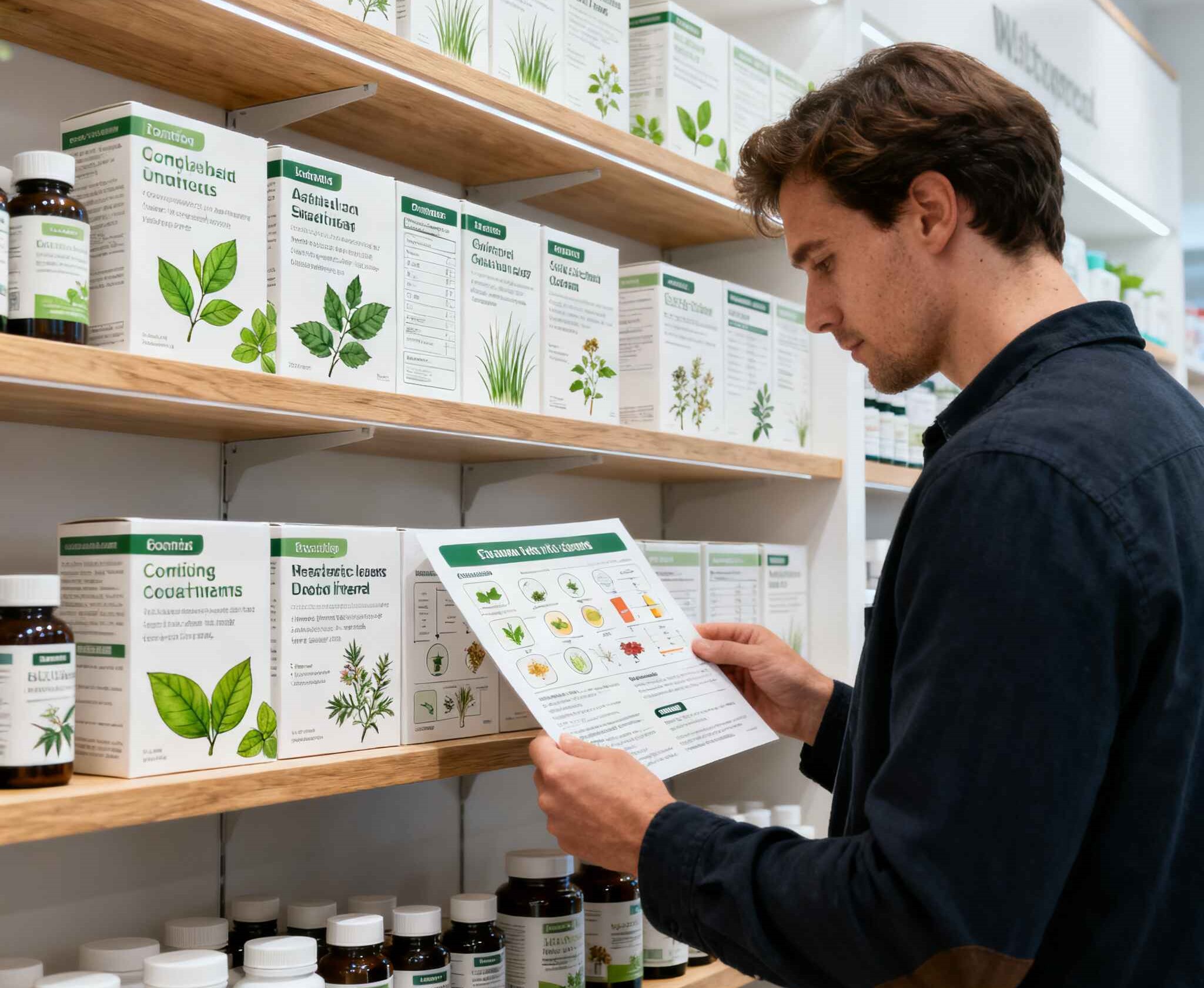
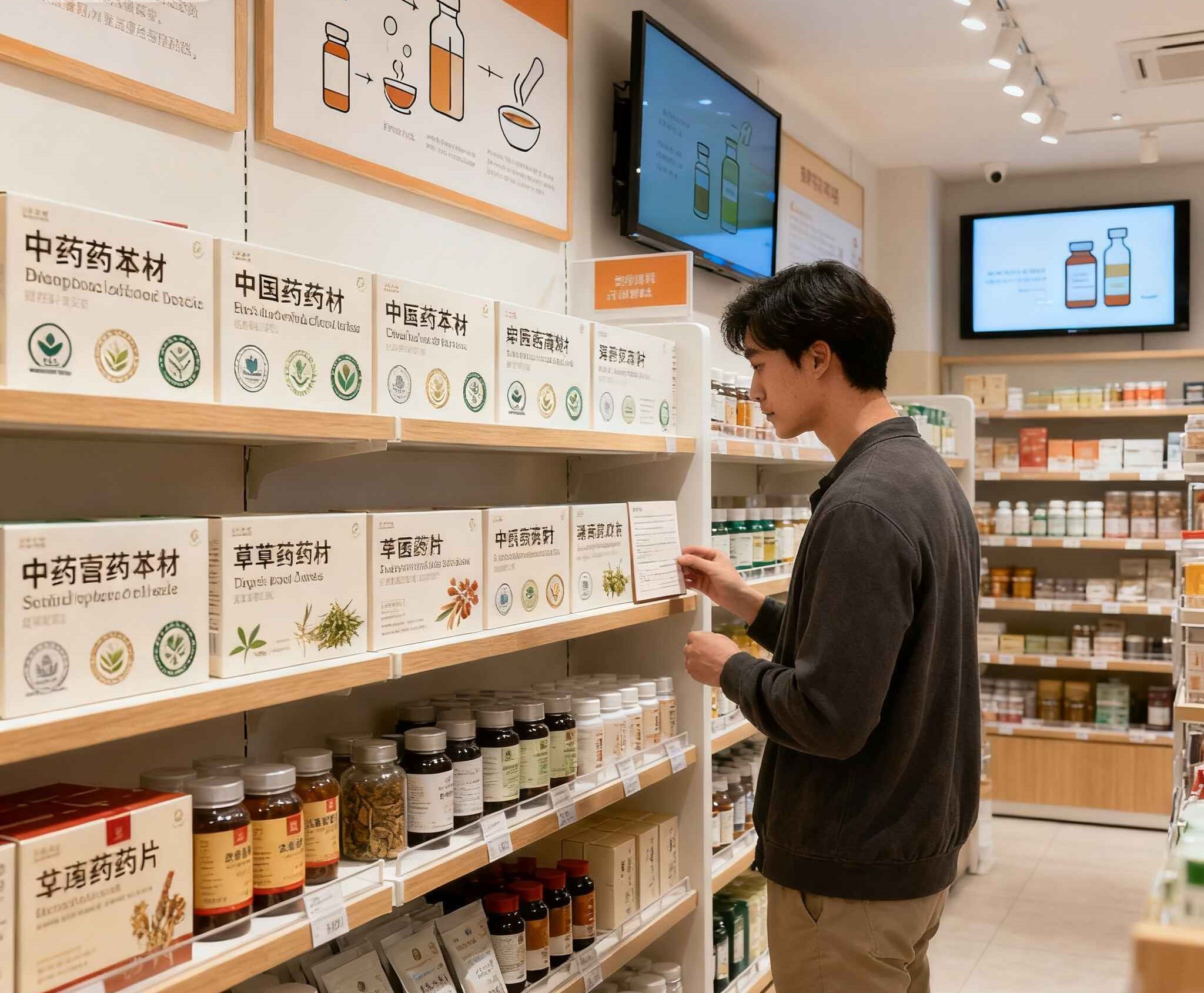
You want Chinese herbal products to sit on Western shelves, sell through, and stay compliant. Two pillars do the heavy lifting: labeling and education. The label wins you the gatekeepers. Education wins you the shopper. Miss either one, and you’ll fight returns instead of repeat orders.
FDA Dietary Supplement Labeling: Latin Binomial, Plant Part, and Supplement Facts
If you market botanicals in the U.S. as dietary supplements, you need clean identity. Use the Latin binomial (or a standardized common name) and state the plant part—root, bark, flower, seed, whole herb. List the herb inside the Supplement Facts panel as “other dietary ingredient,” with amount per serving where applicable. Keep the statement of identity, net quantity, ingredient list, and name/place of business on the right panels. Type size and panel placement aren’t suggestions; they’re rules.
21 CFR 101.93 Structure/Function Claims and the Disclaimer
You can say “supports immune health” or “helps maintain digestive comfort.” That’s a structure/function claim. Don’t cross the line into disease treatment. Add the exact FDA disclaimer and keep your substantiation file. Notify within the required window after first marketing. Boring? Maybe. Essential? Completely.
21 CFR Part 111 cGMP: What Retailers Expect
If you manufacture/pack/label/hold supplements, you’re inside Part 111. That means master manufacturing records, identity testing, lot traceability, QC release, complaint handling, and a recall-ready posture. Retail buyers ask for it because it protects their shelf—and your reputation.
Health Canada NHP Labelling: Product Facts Table (PFT)
Canada treats many botanicals as Natural Health Products (NHPs). Your label includes a standardized Product Facts Table (PFT) with clear headings, font rules, and bilingual presentation. If you plan to sell in both the U.S. and Canada, design the artwork once with a PFT-ready layer. You won’t want to redo packaging later because the table didn’t fit. Trust me, that hurts timelines.
EU Traditional Herbal Medicinal Products: Directive 2004/24/EC
In the EU, some herbal goods live under the Traditional Herbal Medicinal Products (THMPD) route. Leaflets, outer cartons, and labels follow a defined template: posology, indications under “traditional use,” warnings, and quality files. If you go the food/tea route instead, different playbook. Decide your regulatory path first; write your label second.
Quality & Safety: Heavy Metals and Aristolochic Acid (AA) Risk Management
Real life, not theory. The last few years saw high-profile lead issues in spice and herb powders and multi-state recalls. That news moves fast, and it’s brutal on brand trust. Another evergreen risk is aristolochic acid (AA) associated with certain Aristolochia species—linked historically to serious safety concerns. Your defense is dull and beautiful: qualified sourcing, identity testing, targeted exclusion lists, third-party COAs, and batch-level traceability.
GuoCao keeps that front and center: GMP Chinese herbal slices lines, ISO 22000 food safety, third-party COAs, and lot-level documentation. We support OEM/ODM and ship to 30+ countries/regions. You want clean inputs and fast compliance sign-offs? Start with the COA and traceability story; buyers listen.
Labeling Requirements Snapshot (U.S./Canada/EU)
Requirement
U.S. (Dietary Supplement)
Canada (NHP)
EU (Traditional Herbal Medicinal Products)
Identity
Latin binomial or standardized common name; plant part required
Medicinal ingredient naming per NHP rules; bilingual
Herbal substance/preparation as per monograph/dossier
Facts Box
Supplement Facts; botanicals as “other dietary ingredients”
Product Facts Table (PFT)
Package leaflet + label statements per Directive
Claims
Structure/function only + required disclaimer
Licensed NHP claims
“Traditional use” wording; strictly defined
QMS/GMP
21 CFR Part 111
NHP GMP
EU GMP/quality file
Safety
Heavy metals, pesticides, micro; recall-ready
Same, with license controls
Same, aligned with EU pharmacopeial/monograph specs
(No external links. For source names: “FDA Dietary Supplement Labeling Guide,” “21 CFR 101.93,” “21 CFR Part 111,” “Health Canada NHP Labelling,” “Directive 2004/24/EC.”)
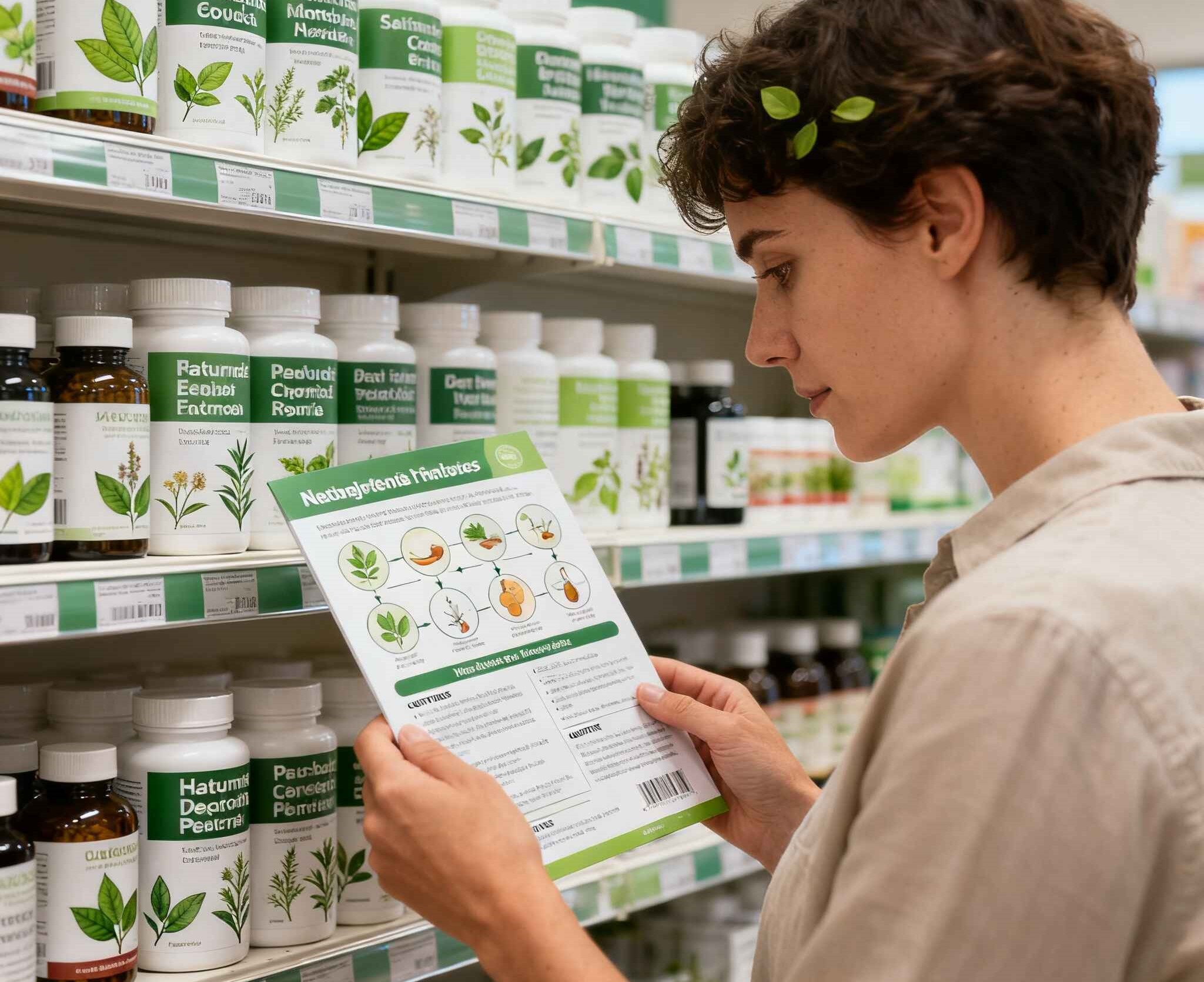
Retail Education: Staff and Shopper Playbook
Consumers love simple language. Team members do, too. Keep education tight and repeatable:
What it is: species + plant part + form (slice, bark, seed).
What it supports: structure/function, not disease.
How to use: brewing, dosage form, timing (food? empty stomach?).
Proof: QR to batch COA. Not glossy words—actual test results.
QR-Linked COA and PDP Content
Put a QR code on every label. Link it to the product detail page (PDP) that holds species, part, origin, tests, and FAQs. That’s your single source of truth. Update COAs as lots change. Keep the PDP consistent with label language—no random copy drift.
Shelf Talkers, Endcaps, and Planogram Compliance
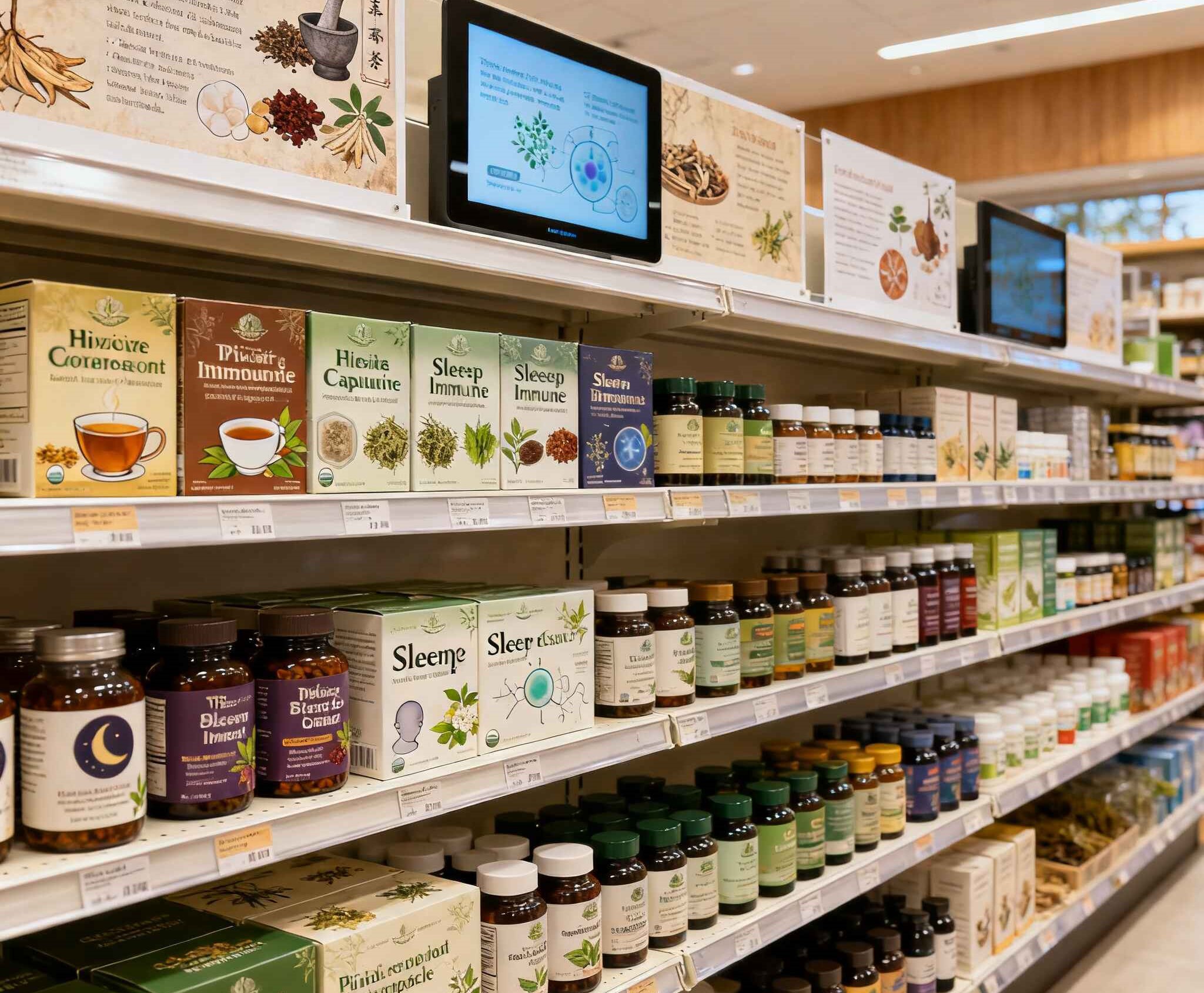
A neat shelf moves units. A messy one leaks. Create planogram shots per category; give stores shelf talkers with one-line function statements, the plant part, and a small “scan for COA” box. Endcaps should group by use-case (sleep, digestion, vitality) while staying inside structure/function rules. It ain’t rocket science—but it is discipline.
What Trips Brands Up (and How to Fix It)
On-Shelf Problem
Red Flag Seen by Retail QA
Fix (Label + Ops)
Missing plant part or Latin name
“Which species is this exactly?”
Add Latin binomial + part on PDP and label; match AHPA naming practice.
Claims creep into disease
Copy says “treats ___”
Rewrite to structure/function + disclaimer; keep substantiation file tidy.
Surprise metals in intake
Lab screens spike; buyer balks
Tighten supplier spec; pre-ship COA + random verification; batch-level QR.
Canada retrofit late
Artwork redo needed
Build PFT variant from day one; bilingual layout in template.
EU route confusion
Food vs. THMP ping-pong
Choose route, then write; don’t mix claim styles across packs.
Tie the Guidance to Real SKUs (use-case navigation)
Don’t make shoppers guess the plant part or form. Organize and link your categories so buyers find what they expect:
Those links keep discovery simple. They also reduce support tickets (“is this bark or root?”). Less friction = higher velocity.
Education Stack & KPIs (Retail-friendly)
Channel
Content Block
KPI to Watch
Label
Latin name + part + serving; compliant claim + disclaimer; QR → COA
Fewer compliance notes; fewer “what is this?” emails
Shelf talker
1-line function, part, brew/use note; QR mention
Dwell time on shelf; sell-through vs. control
PDP (site)
Species, part, origin, COA, FAQs, brewing guide
PDP→cart conversion; bounce ↓
Staff micro-training
15-min script: what, how to say, what not to say
Mystery-shop score; returns allowance ↓
Post-purchase email/SMS
“How to brew/use,” safety reminders, storage tips
Repeat purchase rate; CS tickets ↓
(No costs disclosed. No external links.)
GuoCao OEM/ODM: How We De-Risk Launches
GuoCao is built for regulated shelves, not just pretty photos. We run GMP Chinese herbal slice lines, ISO 22000, and third-party COA workflows. We maintain ambient/cool/modified-atmosphere warehouses for stability. Capacity scales to serious volumes, with OEM/ODM formats across dried slices, granules, concentrates, and fermented fungal enzyme beverages. We supply commercial companies, hospitals, dietary supplement makers, functional beverage brands, cosmetics raw-material buyers, distributors/agents, and more—across the U.S., Europe, Australia, Japan, Korea, Canada, Malaysia, Philippines, and other regions.
Build PFT art layer (Canada) and EU leaflet language early if needed.
Wire the QR to a live PDP with batch-level COAs. No dead pages, ever.
Planogram the shelf: by scenario/application, not random A-Z.
Train the team: 15 minutes, then a quick quiz. Repeat monthly; it sticks.
Run a pilot: small set of doors, watch returns/feedback, then scale.
Keep a change log: labels, specs, COAs—so audits are not scary.
Data Table: Label Elements vs. Risk Reduction
Label Element
What It Does
Risk It Reduces
Latin binomial + plant part
Pins exact identity
Adulteration, look-alike swaps
Supplement Facts alignment
Clarifies dosing & category
Misuse; “is this food or drug?” confusion
Structure/function + disclaimer
Educates without disease claims
Regulatory action; buyer pushback
Batch-level QR → COA
Shows heavy metals/pesticides/micro at a glance
Recall exposure; retailer audits
Country/region of origin
Context for quality specs
Sourcing disputes; geo-risk flags
Storage directions
Keeps quality stable
Returns from caking/mold
Contact/lot fields
Enables traceability
Complaint handling; recall execution
How to Talk on Shelf (tone template)
Keep it human. Short lines. Clear verbs. Something like this:
This is Cinnamomum bark—yep, the bark part. It supports everyday digestive comfort. Brew as tea or add to a decoction. Scan for the COA if you want the full test details. This isn’t a medicine; it won’t treat or cure disease. If you’re on meds or pregnant, talk to your healthcare pro first.
That’s it. Real, not hypey. Easy to say out loud.
Internal Navigation for Buyers (reduce friction)
Point wholesale buyers and retail partners straight to the goods:
Our low MOQ of 1 kg (2.2 lb) makes it easy to order Chinese herbal slices or wholesale Chinese medicine herbs. Private-label and bilingual labeling are also available.
Delivery Cycle & Support
We have a fast 7-day lead time. We provide free samples, COA reports, and technical support to help you bring high-quality bulk Chinese herbs to market.
Quality & Certifications
Our products are manufactured in a GMP-certified facility and meet ISO22000 standards. All Chinese herbs are third-party tested for heavy metals, pesticides, and microorganisms.